
Tech
TikTok says it will go dark on Sunday unless Biden intervenes ‘immediately’

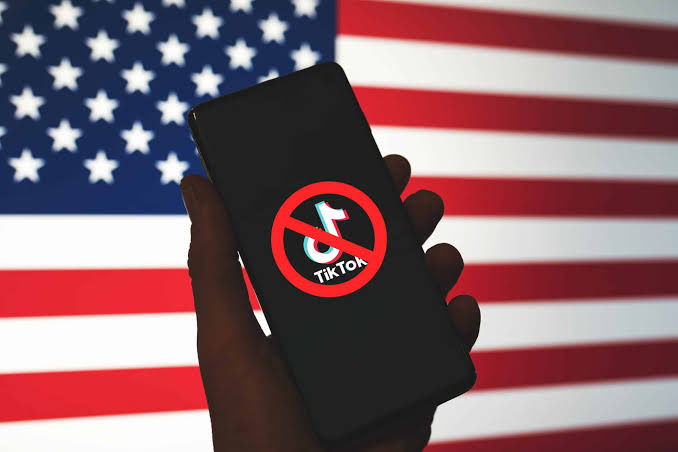
TikTok on Friday said that it would turn off more than 170 million Americans’ access to the super popular video app on Sunday, unless President Joe Biden’s administration acts urgently to assure the company it will not be punished for violating the terms of its looming ban.
A bipartisan law, signed by Biden in April, requires TikTok to sell to American buyers by Sunday or face a ban in the United States. The Supreme Court earlier in the day allowed the controversial ban to stand.
The Biden administration has made clear it would leave enforcement of the ban to President-elect Donald Trump, who will be inaugurated on Monday, and a White House official reiterated Friday night that its position on the matter has been sufficiently clear.
While the official did not rule out further action before the Sunday deadline, they said the administration had clearly signaled that it would not penalize service providers like Google and Apple for hosting TikTok on Sunday.
Still, TikTok said that was not enough.
“The statements issued today by both the Biden White House and the Department of Justice have failed to provide the necessary clarity and assurance to the service providers that are integral to maintaining TikTok’s availability to over 170 million Americans,” the company said in a statement Friday evening. “Unless the Biden Administration immediately provides a definitive statement to satisfy the most critical service providers assuring non-enforcement, unfortunately TikTok will be forced to go dark on January 19.”
Trump has suggested – but not outright stated – that he will not enforce the ban. He had asked the Supreme Court to stay the ban so his incoming administration could work out a deal to sell TikTok to American buyers. But the Supreme Court rejected an appeal from the app’s owners that claimed the law violated the First Amendment, allowing the ban to take place.
So TikTok could turn itself off Sunday, only to turn itself back on at a later date if Trump gives it assurances it will go unpunished for violating the ban.
The company’s Friday night warning was driven by concerns from service providers that face steep fines for allowing access to the app in the event of a ban.
Some service producers – companies that would face exorbitant fines for allowing access to TikTok once the ban takes effect – told TikTok Friday that they still feel vulnerable, according to a person familiar with the matter, who added that the service providers “do not feel that they’ve been given enough assurance that they will not be liable.”
Of course, the Biden administration’s power runs out on Monday, and White House aides have made clear that implementation of the law is entirely up to the incoming administration.
In the meantime, TikTok executives seem to be operating out of an abundance of caution, fearing legal and financial penalties and exerting maximum pressure to keep the app alive in the United States over the long term.
The Supreme Court won’t intervene
Earlier Friday, the high court handed down an unsigned opinion in the TikTok case, and there were no noted dissents.
The decision, which followed warnings from the Biden administration that the app posed a “grave” national security threat because of its ties to China, will allow the ban to start Sunday. But there are a lot of lingering questions about how the ban would work in practice because there’s no precedent for the US government blocking a major social media platform. And how exactly the government would enforce it remains unclear.
In its opinion, the Supreme Court acknowledged that for 170 million Americans TikTok offers “a distinctive and expansive outlet for expression, means of engagement, and source of community.”
But the court said, Congress was focused on national security concerns and that, the court said, was a deciding factor in how it weighed the case.
“Congress has determined that divestiture is necessary to address its well-supported national security concerns regarding TikTok’s data collection practices and relationship with a foreign adversary,” the court wrote.
In a TikTok video responding to the decision, TikTok CEO Shou Chew suggested the company will continue its efforts to ensure the app remains accessible for Americans — potentially now with an assist from President-elect Trump.
“We have been fighting to protect the constitutional right of free speech for the more than 170 million Americans who use our platform every day to connect, create, discover and achieve their dreams,” Chew said. “On behalf of everyone at TikTok, and our users across the country, I want to thank President Trump for his commitment to work with us to find a solution that keeps TikTok available in the United States.”
He added: “We are grateful and pleased to have the support of a president who truly understands our platform, one who has used TikTok to express his own thoughts and perspectives, connecting with the world and generating more than 60 billion views of his content in the process.”
Trump tells CNN: ‘I’ll be making the decision’
The ruling also puts the spotlight on Trump, who spoke with CNN’s Pamela Brown after the decision came down.
“It ultimately goes up to me, so you’re going to see what I’m going to do,” Trump said.
Asked if he would try to reverse the pending ban, Trump said: “Congress has given me the decision, so I’ll be making the decision.”
Trump also confirmed he spoke with Chinese President Xi Jinping, saying they had “a great talk about TikTok and a great talk about many other subjects.”
But the Biden administration – which ends in less than 72 hours – said it was time for Trump to take the baton on the ban.
White House press secretary Karine Jean-Pierre said in a statement Friday morning that “President Biden’s position on TikTok has been clear for months, including since Congress sent a bill in overwhelming, bipartisan fashion to the President’s desk: TikTok should remain available to Americans, but simply under American ownership or other ownership that addresses the national security concerns identified by Congress in developing this law.”
“Given the sheer fact of timing, this administration recognizes that actions to implement the law simply must fall to the next administration, which takes office on Monday,” she added.
Companies and content creators connected to TikTok’s operations in the US – caught in limbo between the two administrations – are seeking assurances that a ban on the popular app and any penalties won’t be enforced right away.
The law penalizes companies that “distribute” or “update” the app with fines of up to $5,000 for each user affected, an equation that could easily reach hundreds of millions of dollars – and potentially billions of dollars – in penalties. The law requires the Department of Justice to investigate potential violations and pursue enforcement.
“From what we’ve heard already … that the implementation is up to the new administration already suggests that they don’t plan on enforcing it,” Jeffrey Fisher, who represented TikTok users in the challenge to the ban, said on CNN’s “The Lead with Jake Tapper.”
“But just given the nature of the law and how many people in the country are watching this,” Fisher said, “we’re just seeking additional clarification that there’s a little breathing space for the new administration to come in and take a fresh look at this.”
A US law enforcement official, however, told CNN that the current Biden administration is leaving it to companies and their attorneys to interpret how to comply with the law on Sunday. In practical terms, the Justice Department isn’t going to file lawsuits over the holiday weekend, with Martin Luther King Jr. Day on Monday, the law enforcement official added.
In his video, Chew told viewers, “Rest assured we will do everything in our power” to ensure the popular app remains available, adding: “More to come.”
The TikTok CEO is set to be seated on the dais, alongside other leading tech CEOs, at Trump’s inauguration — perhaps a sign of just how serious the incoming president is about trying to save the app.
And with some in Congress now suggesting that TikTok might need more time to find a buyer, Trump could find support in trying to push off the ban to a later date.
The law gives the president the option to extend the ban by 90 days, but triggering the extension requires evidence that parties working on purchasing have made significant progress, including binding legal agreements for such a deal — and TikTok’s parent company, ByteDance, hasn’t publicly updated its stance that the app is not for sale.
Decision focuses on ‘extensive’ data collection and security concerns
The Supreme Court decision focuses heavily on concerns about the app’s data collection.
The Biden administration had made two national security arguments about TikTok. One was a fear that the China could access users’ information as potential blackmail material. Another was that the company could manipulate content in a way that benefits the Chinese government’s talking points.
The Supreme Court, which often defers to the executive branch on matters of national security, leaned heavily into the data collection argument.
TikTok does “not dispute that the government has an important and well-grounded interest in preventing China from collecting the personal data of tens of millions of U.S. TikTok users,” the court wrote. “Nor could they. The platform collects extensive personal information from and about its users.”
The court was careful to note the “inherent narrowness” of its ruling given the specific concerns regarding TikTok and the Chinese government. In another similar case, the justices said, the ruling could look different.
“Data collection and analysis is a common practice in this digital age. But TikTok’s scale and susceptibility to foreign adversary control, together with the vast swaths of sensitive data the platform collects, justify differential treatment to address the Government’s national security concerns,” they wrote.
The ruling also noted that justices are “conscious that the cases before us involve new technologies with transformative capabilities.”
Gorsuch and Sotomayor discuss level of scrutiny
Conservative Justice Neil Gorsuch wrote a concurrence sketching out distinctions in how he viewed the case from a legal perspective, while stressing that these thoughts came with just a very limited time that the court had to review and decide the case.
He said that he had “serious reservations” about the level of scrutiny the court’s opinion applied to the law, indicating that he thought “strict scrutiny” – which sets a higher bar for the government to overcome to prove the law’s constitutionality – may have been the more appropriate approach.
But even under that high bar, Gorsuch said he thought the government had met its burden.
“Speaking with and in favor of a foreign adversary is one thing. Allowing a foreign adversary to spy on Americans is another,” he wrote.
Liberal Justice Sonia Sotomayor, also concurring in the court’s opinion, wrote separately to air her disagreement with the court’s decision to “assume without deciding” that the law implicates the First Amendment.
The court’s line of cases dealing with the First Amendment, she said, “leaves no doubt that it does.”
This story has been updated with additional developments.







A jury in Los Angeles has ruled that tech giants YouTube and Meta are liable for negligence in a closely watched case involving a young woman who said she became addicted to their platforms from childhood.
The panel awarded the plaintiff $3 million in compensatory damages, assigning 70 percent of the liability to Meta. Jurors also determined that both companies could face additional punitive damages, with a decision on that yet to be made.
The lawsuit, filed in 2023, alleged that platforms such as Instagram were deliberately designed to create addictive user experiences, particularly for young audiences. According to court filings, the plaintiff began using YouTube at age six and Instagram at nine.
During the trial, a therapist who treated the woman testified that prolonged social media exposure contributed to significant mental health challenges, including social phobia and body image issues.
Both companies have rejected the verdict. Meta argued that teen mental health is influenced by multiple factors and cannot be attributed to a single platform. YouTube, meanwhile, maintained that its service is not inherently addictive.
Legal experts expect both companies to appeal the decision, setting the stage for a potentially influential battle over the responsibility of tech platforms in safeguarding young users.
Google is acquiring energy infrastructure company ‘Intersect’ for $4.75 billion (approximately 7 trillion Korean won) to secure the power needed for its AI (artificial intelligence) data centers. The move aims to address the power issue, the biggest hurdle in expanding data centers. Google, which developed the ‘Gemini’ AI, is a so-called ‘AI full-stack’ company equipped with all AI-related technologies and services, including AI chips and cloud (virtual servers). The strategy is to directly manage the energy infrastructure needed to actually operate AI as well.
Reuters reported on the 22nd (local time) that Google is acquiring Intersect for $4.75 billion in cash. Google already holds a minority stake in Intersect, and through this acquisition, it will also secure the gigawatt (GW)-level energy and data center projects that Intersect is developing and constructing. Intersect is expected to be responsible for building Google’s data center power infrastructure in the U.S., based on its technology linking power generation facilities and power grids.
Sundar Pichai, CEO of Google and Alphabet, said, “Intersect will enable us to build power infrastructure more quickly and flexibly in line with the increasing demand for AI data centers,” adding, “It will also be an important partner in strengthening America’s energy innovation and technological leadership.”
Bloomberg reported that Intersect’s energy assets currently in operation or under construction in the U.S. amount to $15 billion (approximately 22.2 trillion Korean won).
◇Google increasing energy investments
Google has recently been increasing its investments in the energy sector. Although the company possesses AI chips (TPUs), Gemini, and search and cloud services, stable energy supply is essential to support these businesses.
To this end, Google is also investing in nuclear power technology. In October of last year, it signed a long-term cooperation agreement with small modular reactor (SMR) startup ‘Kairos Power’ to secure up to 500 MW (megawatts) of power. It is noted as the first case among big tech companies to publicly declare securing SMR-based power. Additionally, in August, Google and Kairos Power announced plans to build the next-generation SMR ‘Hermes 2’ in Oak Ridge, Tennessee. The goal is to commence operation in 2030.
Google is also restarting previously shut-down nuclear power plants to secure energy. In October, it announced that it will collaborate with ‘NextEra Energy’ to restart the Duane Arnold Nuclear Generating Station in Iowa, which was closed in 2020. The target restart period is between 2028 and 2029.
Google is also investing in renewable energy such as geothermal power. Since 2023, it has been supplying power to data centers through geothermal power generation with ‘Fervo Energy’ in Nevada, U.S.
Google is also actively investing in next-generation energy technologies that are not yet commercialized. In 2022, it made a large-scale investment in ‘TAE Technologies,’ which possesses nuclear fusion technology. Nuclear fusion power generation is a technology that applies the principle of energy creation in the sun, combining atomic nuclei to produce energy. It is called the ‘dream energy’ because it has abundant fuel resources, emits no carbon, and, unlike conventional nuclear power plants, does not produce high-level nuclear waste. However, it is assessed that more time is needed for commercialization due to technical challenges. Recently, TAE Technologies has accelerated the commercialization of fusion energy by merging with Trump Media Group (TMTG).
Tech
“I Lost $1.2 Million To Hackers On One Of My Apps. I Caught One Of The Hackers, And Instead Of Handing Him Over To The Police, I Employed Him To Work For Me.”- BLord

Anambra Born tech entrepreneur and businessman Linus Williams, popularly known as BLord, has shared an unusual story about how he handled a major cyberattack on one of his applications.
According to BLord, he lost $1.2 million to hackers who infiltrated one of his digital platforms. In the course of tracking the incident, he successfully identified one of the individuals involved in the breach.
Rather than handing the suspect over to security agencies, BLord said he made a strategic decision: he employed the hacker.
He explained that the hacker’s skills, though misapplied, were exceptional and could be redirected towards strengthening his company’s cybersecurity systems.
BLord noted that the decision was driven by a desire to turn a negative experience into an opportunity for growth and to better secure his business infrastructure.

Bandits behind Ogbomoso school abduction will face full wrath of the law- President Tinubu

PDP to screen Goodluck Jonathan on Tuesday as its sole Presidential aspirant For 2027 race

Oshiomhole wins Edo APC senatorial primaries unopposed

-
Business2 years ago
US court acquits Air Peace boss, slams Mayfield $4000 fine
-

 Trending2 years ago
NYA demands release of ‘abducted’ Imo chairman, preaches good governance
-

 Politics2 years ago
Mexico’s new president causes concern just weeks before the US elections
-

 Politics2 years ago
Putin invites 20 world leaders
-

 Politics2 years ago
Russia bans imports of agro-products from Kazakhstan after refusal to join BRICS
-
Entertainment2 years ago
Bobrisky falls ill in police custody, rushed to hospital
-
Entertainment2 years ago
Bobrisky transferred from Immigration to FCID, spends night behind bars
-
Education2 years ago
GOVERNOR FUBARA APPOINTS COUNCIL MEMBERS FOR KEN SARO-WIWA POLYTECHNIC BORI