
Politics
Donald Trump to be inaugurated as US president

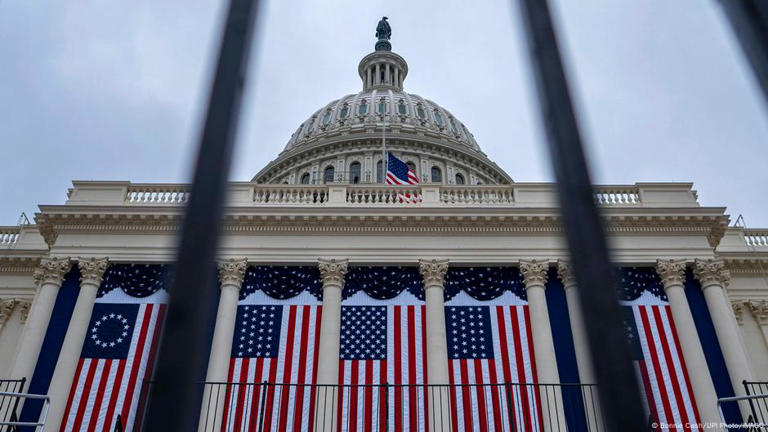
Donald Trump will be sworn in for a second term as president of the United States on Monday, as the world braces itself for the return of an unpredictable leader. Follow DW for the latest.
Donald Trump due to be sworn in as 47th US president at 12 p.m. local time (1700 GMT) Ceremony in Washington, DC to be attended by outgoing President Joe Biden, Argentine President Javier Milei, Italian Prime Minister Giorgia Meloni and others Trump vows to issue flurry of executive orders on issues ranging from energy to immigration on Monday
Below you can read a roundup of the latest developments regarding Donald Trump’s inauguration on January 20, 2025:
Inauguration Day: What you need to know
Trump’s swearing-in ceremony is just hours away.
If you’re wondering what happens during the event, who is invited, or who pays for it all, DW has you covered.
We’ve compiled everything you need to know about the inauguration right here.
Can Trump keep pledge to end war in Ukraine?
During the 2024 campaign, Trump repeatedly said he would end the war between Russia and Ukraine.
But since his election, he has not repeated that pledge, and his aides now concede that it will take months to reach a peace agreement.
While there is no fully developed Trump peace plan, most of his key advisers support taking Ukraine’s NATO membership off the table as part of any deal, at least for now. They also broadly support freezing the battle lines at their current locations.
Trump has also indicated that Kyiv may have to cede some territory in order to reach a peace agreement.
In early January, Trump said he was optimistic the war would end within six months. He also said preparations were underway for a meeting with Russian leader Vladimir Putin.
However, Russian Foreign Minister Sergey Lavrov said the Kremlin had received no proposals from Trump’s team for a meeting with Putin.
According to Lavrov, Russia has not yet seen any concrete proposals on how Trump intends to bring the two sides to the negotiating table.
US ties ‘vital,’ says Germany’s chancellor ahead of inauguration
German Chancellor Olaf Scholz has stressed the importance of trans-Atlantic relations as well as European self-reliance.
He made the comments in the Rheinische Post newspaper ahead of Trump’s inauguration on Monday.
Scholz said that “trans-Atlantic relations are vital for Germany and Europe.”
He also highlighted the US’ role in the development of democracy in West Germany and NATO’s role as a guarantor of Germany’s security, reaffirming the US as Germany’s closest ally.
“That is why we need stable relations with the US,” he said.
Scholz also emphasized Europe’s strategic advantages, saying that “as a community of more than 400 million Europeans” the region has economic might and can “build on our own strength.”
The chancellor’s remarks came after a cable by the German ambassador to the US was leaked in which he said that Trump’s presidency would be “driven by vengeance” and that the new US president would undermine “fundamental democratic principles.”
What are Trump’s promises on Day 1?
Trump says he plans to issue a flurry of executive orders and directives on issues ranging from energy to immigration after his inauguration.
The incoming president has pledged to deport a record number of immigrants living in the US illegally, and many of the actions he plans to take on his first day as president are aimed at ramping up immigration enforcement.
The executive actions would give federal immigration agents more leeway to arrest people without criminal records, send more troops to the US-Mexico border and restart construction of the border wall. Trump is also expected to declare illegal immigration a national emergency to free up military funds for border wall construction.
On energy, Trump is expected to reduce support for electric vehicles and charging stations and withdraw from the Paris climate agreement, an action he also took during his first term.
Another move Trump could make is to follow through on threats to raise tariffs on imports from America’s largest trading partners.
He has also vowed to sign an executive order ending transgender rights in the US military and in US schools.
Who will be at Trump’s inauguration?
Outgoing President Joe Biden is expected to attend the ceremony, despite Donald Trump’s refusal to appear at Biden’s 2021 inauguration.
All living former presidents — Bill Clinton, George W. Bush and Barack Obama — are expected to attend with their wives, with the exception of Michelle Obama.
Heads of state are not traditionally invited to US presidential inaugurations. But Trump has sent invitations to the presidents of China, El Salvador and Argentina, plus the prime ministers of Italy and Hungary.
Argentine President Javier Milei and Italian Prime Minister Giorgia Meloni are expected to be present.
Chinese President Xi Jinping will not attend, but sent Vice President Han Zheng to represent him.
Three of the world’s richest men — Tesla and SpaceX CEO Elon Musk, Amazon CEO Jeff Bezos and Meta Platforms CEO Mark Zuckerberg — will also be in attendance.
Donald Trump to be sworn in as 47th US president
Donald Trump is scheduled to be sworn in for his second term as US president in Washington, DC at 12 p.m. local time (1700 GMT) on Monday.
The inauguration comes two and a half months after the Republican defeated outgoing Vice President Kamala Harris in the presidential election.
The ceremony was originally due to take place outdoors on the west side of the Capitol. However, it was moved indoors due to freezing temperatures in Washington.
After taking the oath of office, administered by Chief Justice of the United States John Roberts, Trump will deliver his inaugural address.
He is only the second president in US history to win non-consecutive terms and return to office after a four-year hiatus. The first was Grover Cleveland in the 1890s.
Outgoing President Joe Biden defeated Trump in 2020 and hoped to repeat the feat in 2024, but stepped down as the Democratic nominee in mid-2024 amid concerns about his age and mental fitness.
Trump, who long refused to concede defeat in the 2020 election, broke with tradition by staying away from Biden’s swearing-in ceremony in January 2021. Biden, however, has said he plans to attend Trump’s inauguration and witness the transfer of power.
dh/nm (AP, AFP, dpa, Reuters)






The Independent National Electoral Commission, INEC, has announced the postponement of the proposed nationwide voter revalidation exercise until after the 2027 General Election.
This follows a meeting with the Resident Electoral Commissioners, RECs, on Friday, April 10.
A statement signed by INEC’s National Commissioner, Chairman, Informationa and Voter Education Committee, Mohammed Kudu Haruna, said
“the voter revalidation exercise is a critical component of the Commission’s mandate to maintain a credible and up-to-date National Register of Voters.
It is designed to verify and review existing voter records, ensure the accuracy of personal data, eliminate duplicate and ineligible entries, and strengthen the overall integrity of the voter register.
The exercise also aims to provide an opportunity for registered voters to confirm their details and make necessary corrections where required.
INEC remains committed to the conduct of free, fair, credible, and inclusive elections.”
Following the just conducted ADC Congress, the African Democratic Congress (ADC) in Ideato South Local Government Area, Imo State, has announced its new leadership team. The team, led by Chairman Hon. Eze Chijioke, includes:
– Chairman: Hon. Eze Chijioke
– Secretary: Chief Duru Maurice
– Youth Leader: Mr. Obinwanne Okwara
– Woman Leader: Mrs. Anueyiagu Ogechi
– Organizing Secretary: Hon. Godian Egemba
The team is expected to lead the party to victory in future elections.
Politics
ADC Owerri Municipal Gets New Chairman: Hon. Success Opara Emerges Amidst State Leadership Tussle
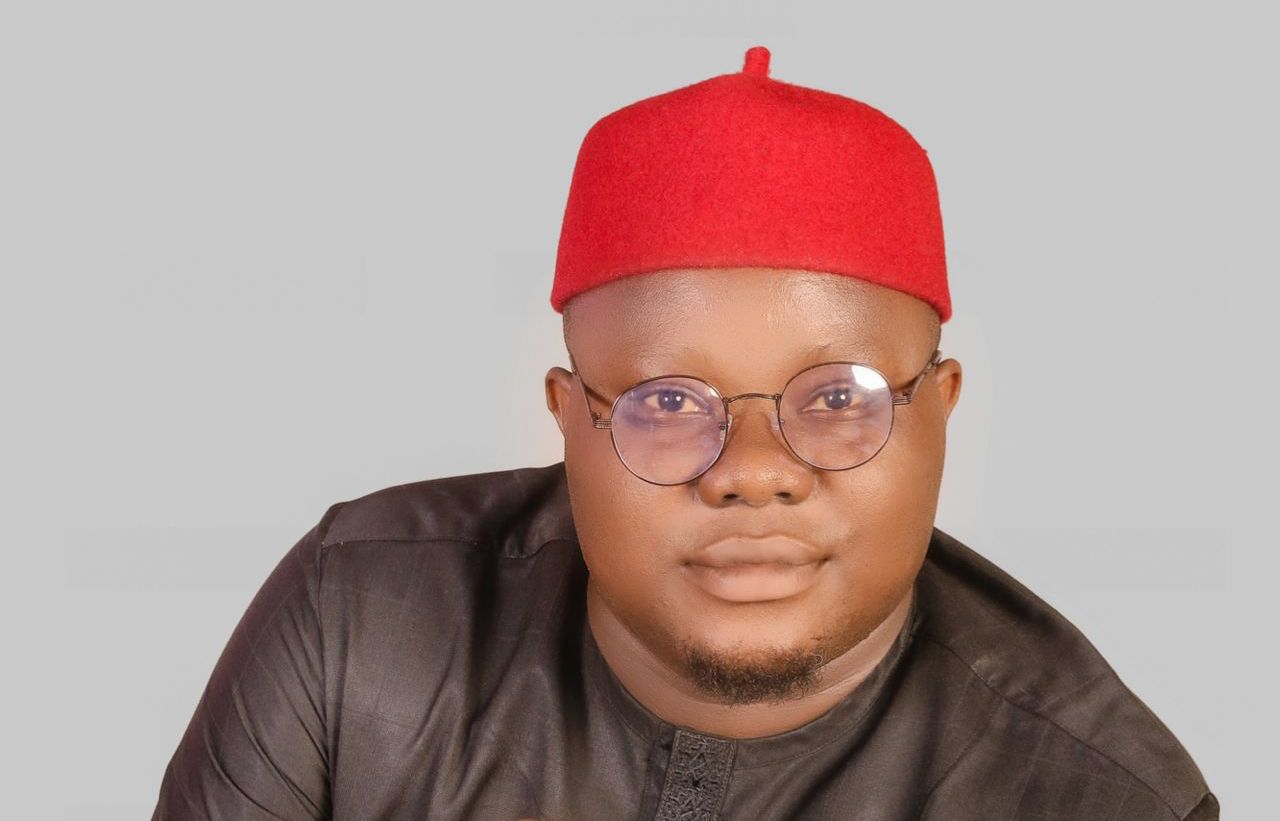
The African Democratic Congress (ADC) in Owerri Municipal, Imo State, has concluded its Local Government Area Congress, with Hon. Success Opara emerging as the new Chairman. The congress, conducted in all wards across Owerri Municipal, saw party faithfuls voting for Opara, who is expected to lead the party to victory in future elections.
However, there’s an ongoing leadership tussle within the Imo State ADC, with Chief Emmanuel Amushie claiming to be the authentic state chairman, recognized by the Independent National Electoral Commission (INEC). On the other hand, Prof. James Okoroma has also been declared the authentic state chairman by the national leadership of the ADC.
Furthermore the Independent National Electoral Commission (INEC) has removed the faction led by Prof. James Okoroma as the recognized leadership of the African Democratic Congress (ADC) in Imo State, as of April 9, 2026. INEC recognizes only the Amuchie-led Executive as the lawful and legitimate leadership of the ADC in Imo State.
The removal follows a Court of Appeal ruling directing parties to maintain the status quo pending the determination of a substantive suit before the Federal High Court. INEC has also suspended recognition of all leadership factions of the ADC until the court reaches a final decision.

INEC postpones nationwide voter revalidation until after 2027 elections

ADC Congress Ideato South: New Leadership Team Emerges

Fuel may hit N2000/litre. Subsidize crude feedstock now – TUC tells FG

-
Business1 year ago
US court acquits Air Peace boss, slams Mayfield $4000 fine
-
 Trending1 year ago
NYA demands release of ‘abducted’ Imo chairman, preaches good governance
-

 Politics1 year ago
Mexico’s new president causes concern just weeks before the US elections
-
 Politics1 year ago
Putin invites 20 world leaders
-
 Politics1 year ago
Russia bans imports of agro-products from Kazakhstan after refusal to join BRICS
-
Entertainment1 year ago
Bobrisky falls ill in police custody, rushed to hospital
-
Entertainment1 year ago
Bobrisky transferred from Immigration to FCID, spends night behind bars
-
Education2 years ago
GOVERNOR FUBARA APPOINTS COUNCIL MEMBERS FOR KEN SARO-WIWA POLYTECHNIC BORI