Thursday, 29th October 2026
BACKGROUND:
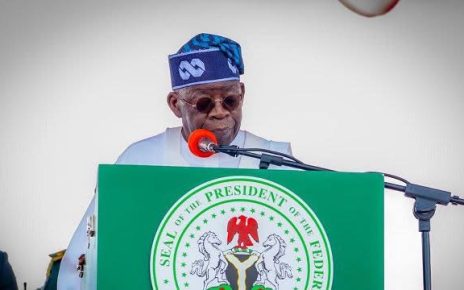
The Federal Government has defended the 21.7 billion dollars borrowing proposal transmitted to the National Assembly by President Bola Tinubu, insisting it is an investment in assets and not for spending.
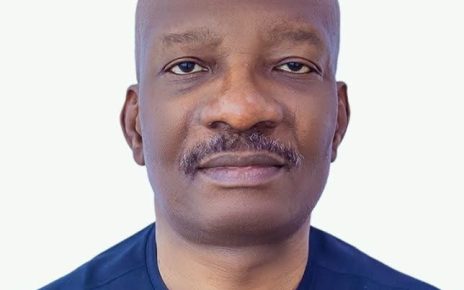
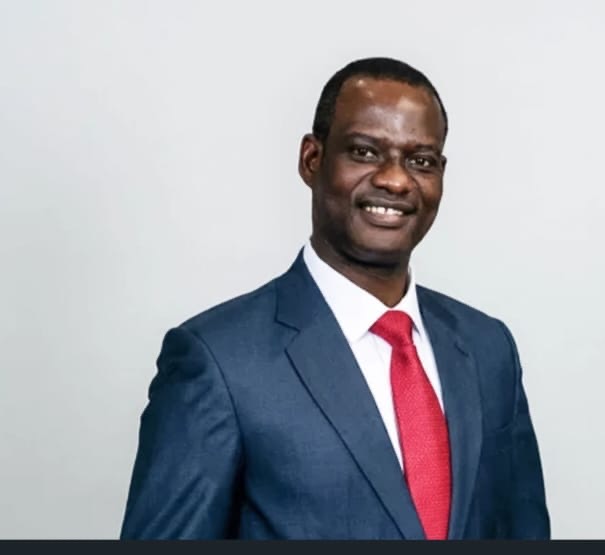
The Minister of Finance and Coordinating Minister of the Economy, Mr Taiwo Oyedele, stated this shortly after the Federal Executive Council Meeting at the Presidential Villa in Abuja on Wednesday, October 28, 2026.
The proposal, made up of 20.52 billion dollars and 1.045 billion euros, has been referred by the Senate to its committees on Local and Foreign Debts and Appropriations, with a one-week deadline for report.
WHAT THE GOVERNMENT IS SAYING:
1. It is a multi-year plan, not immediate borrowing
Oyedele clarified that the proposed 21.7 billion dollars represents a multi-year investment plan spanning roughly five years, rather than an immediate drawdown. Approval does not mean the entire amount has been borrowed or will necessarily be drawn in full.
2. It is for assets, not consumption
“Borrowing to consume is harmful, but borrowing N1 to build transformative assets worth more than N1 creates net positive wealth for the country,” Oyedele argued.
He compared the approach to strategic corporate financing, using the Dangote Refinery as an example – that large-scale projects typically rely on outside financing to be completed in good time.
He went further to say: “This does not qualify as borrowing. This qualifies as investment.”
3. Where the money will go
The plan covers 46 projects across 11 sectors, including transportation, defence and security, health, agriculture, energy, digital infrastructure, small businesses, social protection, environmental protection and education.
Transport takes the largest share:
– 10.6 billion dollars for critical transport links
– Sokoto-Badagry Highway
– Lagos-Calabar Coastal Highway
– Kano-Kaduna Metro Rail
Other beneficiaries:
– 3.3 billion dollars earmarked directly for state government projects
– 1.45 billion dollars set aside for the Federal Capital Territory (FCT)
– About 4.8 billion dollars in total for states, FCT, agencies and development finance institutions
Oyedele stressed that the Federal Government is constitutionally the interface for all external borrowing, so a significant chunk is not for the Federal Government alone.
4. Cost of the borrowing
– Over 7.9 billion dollars will be sourced from multilateral and bilateral development partners
– Led by 5 billion dollars from the World Bank
– Average interest rate on concessional portion: about 2.1 percent
– Indicative average rate on commercial portion: 7.8 percent, which the Minister said is lower than what Nigeria paid on its November 2025 Eurobond
5. Link to wider economic reforms
Oyedele also defended reforms launched in May 2023, recalling that inflation was 22.41 percent at the time, net foreign reserves were about 859 million dollars, multiple exchange rates were in use, and debt service was swallowing about 97 percent of revenue.
He said FEC has adopted the 90-day execution framework established by the National Economic Council (NEC), with commitment to strict fiscal discipline, and a target to reduce inflation to single digits by end of 2027 or earlier, while prioritising food-price stability, critical infrastructure, human capital development and job creation.
He also cited social interventions, including 372.6 billion naira disbursed under NELFUND to over 1.5 million students and over 600 billion naira distributed under other programmes.
CRITICAL ANALYSIS: THE STRENGTHS AND THE RISKS
What supports the Government’s argument:
– Productive vs Consumptive debt: Economic theory supports the distinction. Borrowing for roads, rail, energy and digital infrastructure can expand productive capacity, reduce transport costs, improve trade and logistics, attract private investment and create jobs.
– Concessional terms: A large portion at about 2.1 percent is relatively cheap, long-term financing that Nigeria could not easily get from commercial markets.
– Spread over time: Spreading over about five years reduces immediate pressure and allows projects to be phased.
– Subnational inclusion: Including states and FCT means infrastructure benefits are not concentrated only at the federal level.
What critics and analysts are watching:
– Debt burden is real: Calling it investment does not remove the repayment obligation. Nigeria must still repay principal plus interest in dollars, which exposes the country to exchange rate risk.
– Execution risk: Nigeria’s history of abandoned and delayed projects raises questions. Roads must actually reduce travel costs, rail must generate economic activity, and power investments must improve supply for the value to exceed the cost.
– Transparency and value for money: The decisive questions remain – what exactly will each loan finance, what is the full repayment cost, procurement process, and what measurable benefits will Nigerians see?
– Fiscal discipline: The plan will only create net positive wealth if projects are completed on time, on budget, and maintained properly. Cost overruns and poor maintenance can turn an asset into a liability.
– Commercial portion: At 7.8 percent, the commercial component is still expensive, especially if naira depreciates.
CONCLUSION:
The Federal Government’s core message is clear: this is not borrowing to pay salaries or fund recurrent spending, but borrowing to build long-term assets that should be worth more than their cost.
That argument is economically sound in principle, but its success will depend entirely on execution – project selection, transparency, timely completion, cost control and maintenance.
If delivered well, the plan could strengthen Nigeria’s balance sheet and productive base. If poorly executed, it will add to an already heavy debt burden without corresponding benefits.
In short, the debate is no longer about whether to borrow, but whether Nigeria will get value for every dollar borrowed.