October 9, 2026
For millions of Nigerians who have watched transportation costs climb, the prospect of cheaper petrol offers some relief.
The Federal Government yesterday rolled out measures to lower the cost of living for Nigerians through fuel price modulation.
The relief package includes a 30-day discount on petrol pump prices and a proposed ceiling of N1,350 per litre on petrol landing costs.
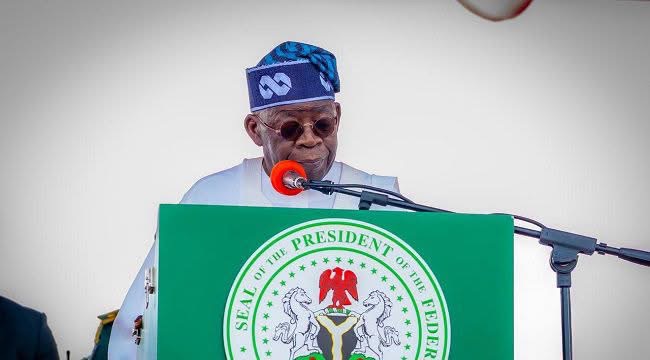
The government said the measures are not a reversal of the petrol subsidy removal announced by President Bola Tinubu on May 29, 2023.
The Presidency says restoring the subsidy would expose the country to renewed fuel scarcity, smuggling, currency instability and a fiscal crisis.
The competing positions have put the administration’s latest response to the global energy crisis at the centre of the debate over how to provide immediate relief to Nigerians without undermining its economic reforms.
In all parts of the world, countries are taking measures to mitigate the spiralling cost of petrol and diesel to give relief to their citizens. The rising energy cost is due to the U.S./Israel versus Iran war in the Middle East.
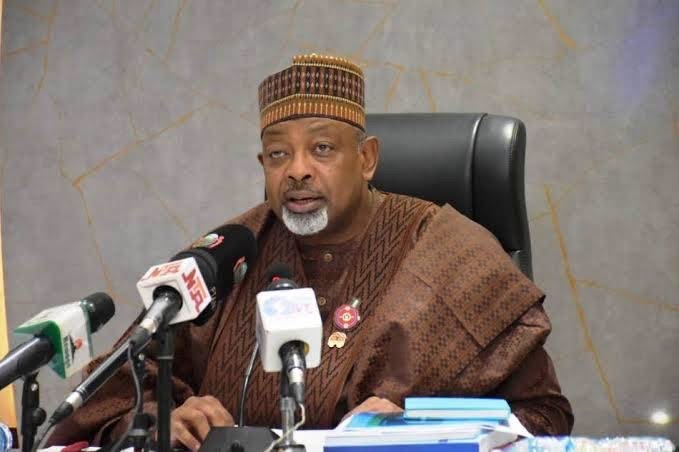
Minister of Finance and Coordinating Minister of the Economy, Taiwo Oyedele, said the government was introducing targeted interventions to cushion the effects of rising international crude oil and petroleum product prices.
The Nigerian National Petroleum Company (NNPC) Retail, which the government says already sells petrol at the lowest prices in the market, will dispense the product without adding its retail profit margin during the initial 30-day period, with priority given to public transport operators.
The minister illustrated the arrangement with a hypothetical example: if NNPC’s landing cost was N1,300 per litre, the company would sell at that price rather than add a retail margin.
The government hopes the arrangement will reduce operating costs for commercial transporters and encourage them to lower fares, providing indirect relief to commuters who have borne much of the impact of higher fuel prices.
Oyedele expressed the hope that other marketers would follow NNPC’s example, arguing that the current surge in global crude oil and petrol prices was not expected to persist indefinitely.
The intervention, backed by Tinubu, is part of a broader package, which, according to the government, will protect vulnerable Nigerians from energy-price volatility without returning to a blanket subsidy regime.
N1,350 ceiling to moderate price swings
Beyond the 30-day discount, the government is negotiating a ceiling of N1,350 per litre on the ex-gantry or landing cost of petrol.
Under the proposed arrangement, refiners and importers would bear costs above the ceiling and recover the difference later when international crude oil prices or exchange rates become more favourable.
The objective, according to Oyedele, is to prevent sharp increases in the cost of petrol from being immediately passed on to consumers, while allowing marketers to recover their costs over time.
“This is neither a subsidy nor a price control: it is designed to smooth prices over time rather than suppressing them,” he said.
The minister explained the rationale by contrasting a stable price with one that rises and falls sharply.
“The reasoning is simple. 1,400 naira a litre today and 1,400 tomorrow is better than 1,500 today and 1,300 tomorrow, because volatility itself adds to uncertainty and cost. And when fares rise sharply, they rarely fall as fast,” he said.
The ceiling, he added, would be reviewed monthly, adjusted as costs require and published to promote transparency.
However, the proposal leaves important questions about its implementation, including how the difference absorbed by refiners and importers would be calculated, the terms under which it would be recovered and how compliance would be monitored.
The government has not presented the arrangement as a fixed pump-price guarantee.
Rather, it says the mechanism is intended to moderate sudden movements in prices while preserving the commercial framework established after subsidy removal.
Forward sales of crude to refiners
The Federal Government is also considering forward sales of crude oil to domestic refineries as production rises and previously committed crude volumes become available.
It expects the arrangement to improve local refiners’ access to crude and reduce their exposure to international market volatility.
The administration also points to the naira-for-crude arrangement as a way of reducing refiners’ demand for dollars and limiting the effect of exchange-rate movements on domestic fuel costs.
Cash transfers, CNG and tax relief
The intervention extends beyond the petroleum market.
Oyedele said the government was increasing funding for cash transfers to vulnerable households and expanding subsidised credit for small businesses and consumers.
It also plans to accelerate the deployment of compressed natural gas (CNG) in collaboration with state governments, with the expectation that transport operators will pass the savings on to passengers.
The minister said CNG was between 60 and 70 per cent cheaper than petrol.
According to figures presented by the government, more than 120,000 vehicles are now running on CNG, supported by more than 400 conversion centres, 96 refuelling stations and 18 liquefied-to-compressed natural gas stations. More than 550 CNG buses have also been deployed.
The government said fares had fallen by between 30 and 50 per cent in areas where CNG buses operate.
It is also working with state governments and security agencies to curb illegal road taxes and levies that increase transportation and logistics costs. The initiative is being pursued under the 2025 tax reform laws.
Excess-profit tax on operators
Another proposed measure is an excess-profit tax on operators found to be taking undue advantage of consumers along the energy value chain.
The government says proceeds from such a tax would be used exclusively to cushion the impact of high fuel prices through transport support or vouchers for urban minimum-wage earners.
It will also work with the National Assembly to consider enhanced tax relief for low-income earners under the 2027 Finance Bill.
Future establishment of strategic fuel reserve
To address future disruptions, the administration plans to establish a National Strategic Fuel Reserve from which refined products could be released under published rules whenever global supply shocks, hoarding or artificial scarcity threaten market stability.
The government said the reserve would not be used to fix pump prices or subsidise consumption, but to improve supply security and discourage market manipulation.
Other measures include cutting regulatory costs, improving traffic management in major cities to reduce fuel consumption and using the Nigerian Postal Service’s newly introduced address codes to improve logistics efficiency.
The Nigerian Midstream and Downstream Petroleum Regulatory Authority is also expected to intensify oversight of the market, particularly on hoarding, diversion, unjustified margins, product quality and under-dispensing at filling stations.
Presidency: No return to subsidy
While acknowledging the burden imposed by high fuel prices, the Presidency reaffirmed that the latest measures will not lead to a restoration of the subsidy.
In a statement by the Special Adviser to the President on Information and Strategy, Bayo Onanuga, the administration said the current disruption did not justify reversing what it considers a necessary economic reform.
“Removing the fuel subsidy came at a price. But the alternative has been tried. Nigeria has already lived through that cycle: scarcity, smuggling, a collapsing currency and a fiscal crisis.
“We cannot afford to live through it again, least of all in response to a temporary disruption, and at the very moment the results of reform are gathering pace,” the Presidency said.
The statement maintained that the administration’s objective was not to abandon the reform but to ensure that its benefits reached more Nigerians in practical ways.
“Government is not out to reverse a necessary reform designed to set our country on the path towards sustained prosperity.
“It is to ensure its gains reach more Nigerians, faster and in more tangible ways. That is our work, and we are committed to doing it,” it said.
The Presidency also added that the government was working on a comprehensive package of fiscal measures aimed at bringing inflation down to single digits sustainably in the near term.
Oyedele said Nigeria’s petrol prices are between 20 and 30 per cent below those in Benin, Togo and Cameroon, and between 30 and 40 per cent below prices in Ghana, Kenya and South Africa.
The government maintains that reinstating a blanket subsidy could weaken revenue, increase borrowing costs, put pressure on foreign reserves and the naira, and threaten progress in bringing inflation under control.
Oyedele said the administration remained open to alternative proposals but insisted that they must demonstrate how the intervention would be funded and what price consumers would ultimately pay.
“We remain open to ideas. But any credible proposal should answer three questions. What will it cost? How will it be funded sustainably? And what pump price will it deliver?” he said.
What measures mean, by Muda Yusuf, Adonri
Chief Executive Officer, Centre for the Promotion of Private Enterprise (CPPE), Dr Muda Yusuf said: “Whether described as discount, subsidy or palliatives, I think it’s a question of nomenclature. But the key distinction is that this is very limited in scope. And possibly more targeted at the vulnerable segments of society who would not mind long queues.
“The fiscal burden would be much less than a blanket subsidy where about 50 million litres were covered by subsidy. This is also time-bound. It also has a significant symbolic value.”
Managing Director, HighCap Securities, Mr David Adonri said: “The minister’s intellectual engagement with the populace on this topical economic issue is commendable, and his submissions are quite illuminating.
“The tendency to situate Nigeria’s economic woes around the price of petroleum products by many commentators may in fact be misleading.
“Many other basic economic goods like foodstuffs, housing and healthcare which are more important for survival, surpass energy in fueling inflation yet, they are not commanding due attention.
“From time past, the prices of these goods have been market-determined, enabling them to adjust seamlessly to changing supply and demand forces.
“The power of the market mechanism will always prevail in the long run over the administrative allocation of economic goods.
“This is why the government should not dabble in manipulating the forces of supply and demand, especially at the consumption level.
“The market reforms that deregulated the petroleum industry and proposed the privatisation of NNPC are game-changing economic achievements that even future generations will applaud.
“The figures reeled out by the minister on the monumental impact of deregulating the energy sector justify the position that the government should continue to steer clear of the industry and allow it to operate like the agricultural, housing and healthcare sectors, where prices are market-driven.
“Any panic-driven move to cave in to populist pressure by introducing public policies that mask the true market price of any economic good in Nigeria, including petroleum products, would disrupt the allocative efficiency that has stabilised the economy and put it on the growth path.
“To address the cost-of-living crisis currently confronting Nigerians, the government must adopt a holistic approach.
“Supply gaps in several sectors of the economy have been identified as causes of rising inflation and the underutilisation of factors of production, including labour.
“With the Dangote Refinery and other modular refineries operating at full capacity, I doubt whether the high prices of petroleum products can be attributed to supply gaps.
“These factors are beyond the control of the government and producers, and the market should be allowed to run its course.
“Instead of the administrative intervention the government is contemplating to influence energy prices, the market should be allowed to correct itself through its own mechanisms.”
ADC, NDC, APM reject relief plan
The opposition rejected the government’s argument that temporary, targeted measures offer a more sustainable response to the crisis.
Former Vice-President Atiku Abubakar, the African Democratic Congress (ADC) presidential candidate, described the proposed 30-day discount as inadequate and questioned what would happen when it expired.
In a statement by Phrank Shaibu, Director of Strategic Communication of the ADC Presidential Campaign Council, Atiku argued that Nigerians needed lasting relief from high fuel prices, transport fares and food costs, rather than a temporary intervention.
“What happens on Day 31? Nigerians wake up to the same brutal prices, the same punishing transport fares and the same rising cost of food. The government cannot manufacture relief for one month and expect Nigerians to applaud while the hardship remains,” he said.
The Nigeria Democratic Congress (NDC) also faulted the intervention, describing it as inadequate and warning that it could amount to a return to subsidy through the “backdoor”.
In a statement, the party’s National Publicity Secretary, Osa Director, described the measure as “tokenism” and questioned whether NNPC’s retail outlets could adequately serve a population of more than 200 million.
“Even the bogus promise to dispense discounted fuel at designated NNPC retail outlets is not pragmatic. How many such outlets exist in Nigeria to serve over 200 million Nigerians?” the party asked.
The NDC also raised the prospect of congestion at NNPC filling stations if demand for discounted petrol exceeded available supply.
It argued that the intervention did little to address the broader economic consequences of subsidy removal, including job losses, business closures and declining household purchasing power.
“Nigerians cannot be deceived,” the statement said.
The Allied Peoples Movement (APM) also rejected the intervention, questioning the value of a temporary discount that it said would offer little relief against prevailing pump prices of about N1,400 per litre.
In a statement by Richard Ihediwa, Director of Strategic Communications of the Makinde/Daura Presidential Campaign Organisation, the party questioned why the administration was offering only a N60-per-litre reduction after years of high fuel prices.
It argued that a discount restricted to NNPC-owned retail stations for one month would not deliver the sustained reduction in fuel prices needed to ease pressure on households and businesses.