
Politics
2027: Count me out of coalition against Tinubu, APC — Peter Obi

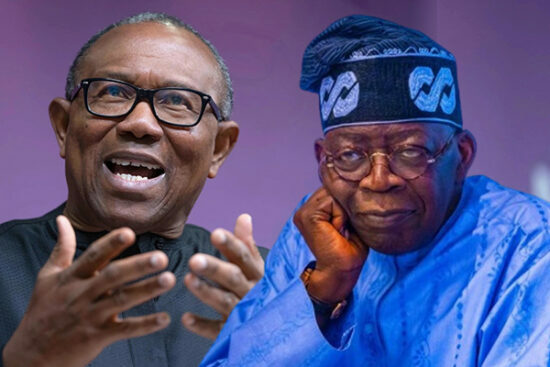
Former Presidential candidate of the Labour Party, Peter Obi has denied involvement in coalition against the ruling President Bola Tinubu and All Progressives Congress in 2027.
Obi made the clarification on Monday in Abuja while speaking with newsmen at the sideline of a two-day National Conference on Strengthening Democracy in Nigeria.
Checks revealed that certain chieftains in predominant opposition political parties and the ruling All Progressives Congress have been involved in discussions to form a coalition towards dislodging the APC.
The former governor of Anambra State stated that what should be paramount to politicians should be eradication of poverty, fixing public schools, hospitals and security of lives and property.
He said: “Well, for me, what is important is let’s discuss Nigeria. Whether we are going to do coalition… let’s talk about the future of the country, but often we abandon the country and what we need to do and talk about power grab.
“I’m not interested in any coalition for purpose of taking power. It is about discussing Nigeria. “How do we care about securing the Nigerians?
“How do we care about the common person in Nigeria? “How do we care about our children being in school? That is the most important thing for now.”
Obi also called for concerted efforts to stop financial inducement in politics.
“That’s what we need to remove, because what you’re doing is that you’re encouraging stealing of public money.
“Because if I steal it and use it to win election, then I get all the power and everything, including immunity not to be prosecuted. So we must stop it. That is what driving the stealing.”
Presenting his key note address, on the theme of the discourse, “Strengthening Nigeria’s Democracy: Pathway To Good Governance And Political Integrity,” former Vice President of Republic of Ghana, Dr Mahamudu Bawumia, who incidentally was Presidential candidate of Ghana’s New Patriotic Party in last general election in the West African country, identified bastardization of state institutions as a big threat to democracy.
He said “Mr. Chairman, one of the most important determinants of a flourishing democracy is the quality of institutions; institutions capable of guaranteeing rights, including property rights, and checking wanton abuse of power.
“These institutions include the Independent Election Management bodies, the Judiciary, the Ombudsman, the Police, other law enforcement agencies, and many others…
“Celebrated Economists like Dani Rodrick, Daron Acemolgu, and others, have come to a firm conclusion that, when it comes to the determinants of growth, the quality of institutions towers above everything else.
“Unfortunately, whilst the culture of peacefully choosing leaders is being entrenched, these institutions are becoming weak and endangered. ”
The former presidential candidate equally expressed concern over growing poverty in the West African sub-region and by extension, the continent as a threat to democracy as he noted that the electorate are beginning to lose faith in representative government.
He said: “Mr. Chairman, one of the biggest threats to democracy today is what I call the Next Meal. Before I make my point, I need to reecho the words of one of Africa’s greatest sons, the distinguished Nelson Mandela, to wit, ‘As long as poverty, injustice, and gross inequality exist in our world, none of us can truly rest.’
“Ladies and gentlemen, democracy must be a means to an end. The best democracy is the one that delivers public goods and services effectively and efficiently and creates opportunities for citizens whilst making conscious efforts to leave no one behind.
“For Sub-Saharan Africa, the data suggests that we do not have an option to do nothing. In 2024, the World Bank estimated that two-thirds of the world’s population in extreme poverty live in Sub-Saharan Africa.
“Back home, the World Bank’s 2024 review reveals that more than half of Nigerians live in multidimensional poverty.
“For Nigeria, and indeed much of Sub-Saharan Africa, our work is cut out for us. We need to take decisive actions to demonstrate that to govern is to advance the interest and welfare of the people.
“We need to reconfigure our economic systems, processes, and institutions in a manner that prioritizes the next meal for majority of our people. For far too long, the focus has been on ticking the boxes on democratic institutions much to the neglect of what those institutions have been able to produce for the ordinary citizen.
“The person who is unable to afford the next ‘Eba’ meal is unlikely to appreciate any data on democratic progress.
“Ladies and gentlemen, there is growing apprehension among the citizenry about the relevance and usefulness of government institutions, with many people losing faith in these institutions.
“This is concerning and portends a bleak future for democratic sustenance if we do not rise to the occasion, and quickly too.
“For our democracy to remain relevant and sustainable, actors need to ensure that citizens have confidence in the democratic system to address their needs and concerns, particularly basic needs, which I call the next meal principle.”
In his paper, ” Democracy in Nigeria: Challenges, Prospects and the 2027 Elections, ” Professor Jibrin Ibrahim bemoaned the absence of ideologically based parties, leaving an indifferent and confused electorate at the mercy of political platforms which he claimed are run by drug barons and warlords.
He said:” The most serious threat is the way the party system has developed.
“The key characteristics is that parties don’t have members but barons, warlords who impose their interests. The political parties that we have had lost their identities in terms of their manifestoes and what they stand for.
“The moment people can’t identify what parties stand for, it becomes impossible to have democratic commitment.
“A situation where they ( political parties) have no commitment to ideals of democracy.
“The real outcome is increasing apathy. The people have lost the right to exercise power because it has been confiscated from them. That creates the crisis of apathy.
“We must revive the belief that it is possible for Nigerians to regain their political power through the ballot.”
In his goodwill message, Vice president, Kashim Shettima, represented by Alhaji Hakeem Baba Ahmed, urged those entrusted with mandate to govern to live up to peoples’ expectations by protecting their interest.
He maintained that transparent governance and genuine commitment to needs of the citizenry would guarantee democracy against military dictatorship.
He added, “There is a huge responsibility on the shoulders of elected leaders in Nigeria to market our democracy in terms of the quality of governance and their conduct and disposition towards the rule of law and respect for the welfare and security of citizens.
“Nigerian democracy must mean a lot more than asking Nigerians to line up every four years to elect leaders. It must mean, in practical terms, that leaders commit to the demands of elected leadership in very transparent manners, that mandates given to them to govern make them servants to interests of the people, custodians of their assets, and protectors of their interests.
“The best leaders are people who exercise power only only to promote interests of their people. These interests include making laws that are consistent with the economic welfare and security of the citizen; that the judiciary is free from interference and corruption; that institutions and structures of governance function with the highest standards of efficiency and integrity; that citizens’ voices are heard and respected not just during elections; and the basic rules of competition between parties and interests are respected.
“The challenge for leaders in democratic systems is to lead with the vision which identifies a path and destination that ultimately benefit the citizens, even where some have legitimate reservations, or have issues with them.
“I would like to assure Nigerians that our administration is acutely aware of many concerns over our direction and goals, particularly given the difficulties which some of our policies inevitably generate.”

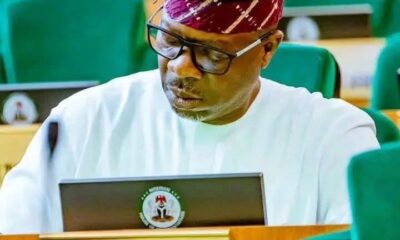



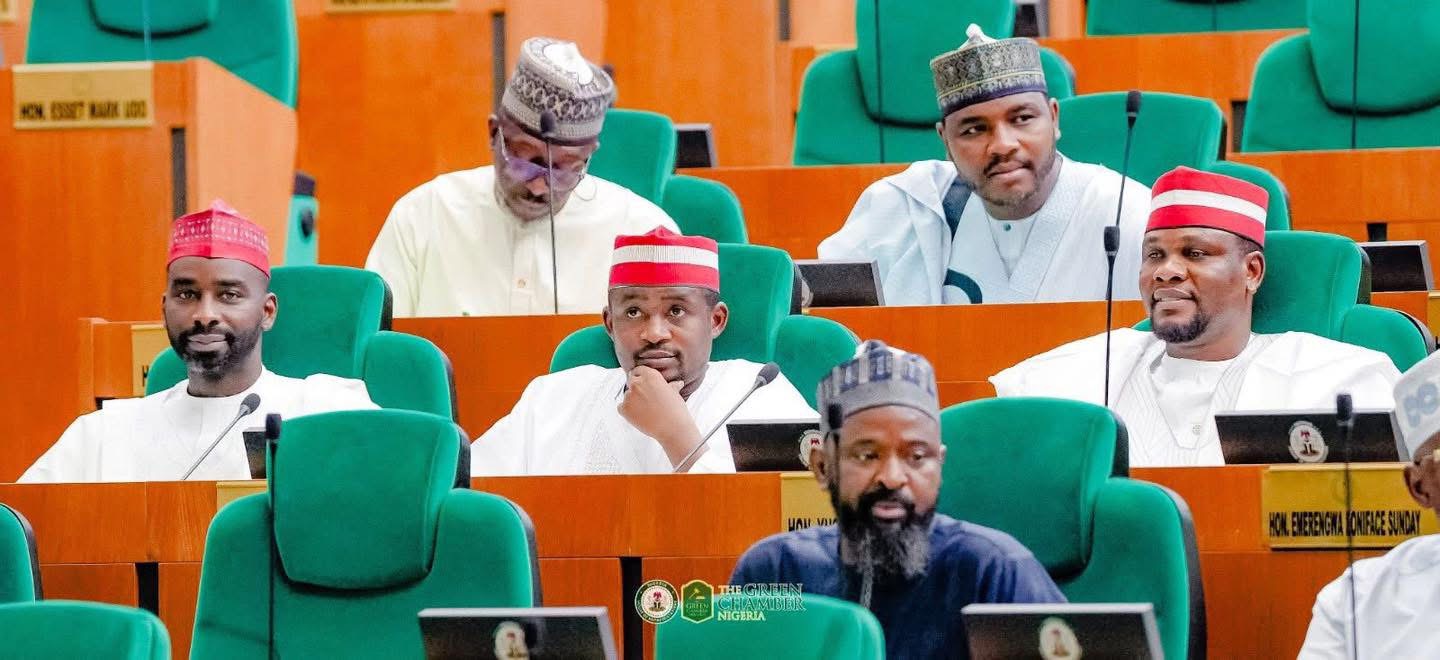
No fewer than 50 members of the 10th House of Representatives are unlikely to be part of the 11th Assembly after losing out in the All Progressive Congress (APC) primaries held on Saturday.
This marks one of the largest turnovers of sitting federal lawmakers since 2015 and signals intensifying internal competition within the ruling party eight months to the 2027 general elections.
While House Speaker Tajudeen Abbas (Kano) and Deputy Speaker Benjamin Kalu (Abia) successfully defended their tickets, several ranking and long-serving lawmakers were defeated, exposing strong anti-incumbent sentiment and the decisive role of state governors in candidate selection.
Major casualties
One of the biggest upsets was the defeat of House Majority Leader Julius Ihonvbere in Edo State’s Owan Federal Constituency. He polled 1,005 votes out of 7,587 cast, finishing third behind Andrew Ijegbia, who scored 3,695 votes. Abdul Oroh placed second with 1,740 votes.
In Delta State, veteran lawmaker Nicholas Mutu, who has represented Bomadi/Patani Federal Constituency since 1999, lost his re-election bid. Ngozi Okolie also lost the Aniocha/Oshimili ticket to former House Minority Leader Ndudi Elumelu.
Cross River State recorded one of the highest casualty rates, with five of eight incumbents failing to secure re-nomination.
They include three-term member Mike Etaba (Obubra/Etung), Godwin Offiono (Ogoja/Yala), Emil Inyang (Akamkpa/Biase), and Bassey Akiba (Odukpani/Calabar Municipality).
Only Peter Akpanke, Joseph Bassey, and Victor Abang won return tickets.
In Plateau State, conflicting results in Pankshin/Kanke/Kanam Federal Constituency triggered early confusion. One returning officer declared challenger John Tongshinen winner with 29,968 votes against incumbent Yusuf Gagdi’s 5,849.
The APC Plateau State primaries committee, chaired by Stella Okotete, later dismissed that declaration as unauthorised and affirmed Mr Gagdi as the authentic winner with 29,207 votes.
At a press briefing, Mrs Okotete stated that Nandom Kura was the recognised returning officer. “The returning officer approved by my committee that has gone to do fake declaration is null and void,” she said.
Other significant losses occurred in Ogun State (at least five incumbents, including Deputy Chief Whip Ibrahim Isiaka and Tunji Akinosi) and Ekiti State (three sitting members).
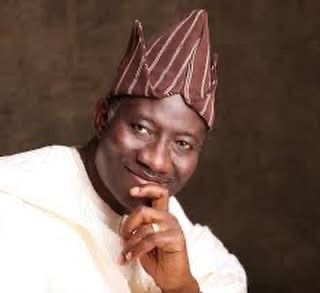
The Peoples Democratic Party (PDP), led by Tanimu Turaki, SAN, has scheduled to screen former president Goodluck Jonathan tomorrow, Tuesday, aMay 19, as the lone presidential candidate of party.
According to a statement from the PDP faction backed by the Oyo State Governor, Seyi Makinde, Former Vice-President Namadi Sambo, former governor of Plateau State, Jona Jang and a former Minister of Foreign Affairs, Tom Ikimi have been listed among a committee of 14 members to screen Jonathan described as a lone candidate by the party.
Other members of the committee were Chief Olabode George, Babangida Aliyu, Maryam ciroma, Zainab Maina, Josephine Anenin, Dr. Abdul Bulama, Dr. Esther Uduehi, Edo State PDP chairman, Tony Aziegbemi, Dr. Sunday Solarium and Chief Anicho Okoro, who would serve as administrative secretary of the committee.
Last week, the national Publicity Secretary of the faction, Ini Ememobong, disclosed that former president Jonathan has successfully registered as a member of the party in the fresh digital registration exercise directed by INEC.
The PDP faction also announced that it was set to screen 748 house of representatives aspirants, 198 senatorial aspirants, and 112 governorship aspirants.
The screening committee would screen 2122 states houses of assembly aspirants. The exercise will commence tomorrow, Tuesday in different states.
According to the statement, the screening exercise would take place nationwide on Tuesday, May 19, 2026, at 10:00 a.m.
The statement said the Interim National Working Committee (iNWC) has also released the names of members to serve on the Screening Committees and Screening Appeal Panels.
It added that the publication of the screening details “is in accordance with the party’s guidelines and timetable for the conduct of the 2027 general elections.”
A former governor and incumbent Senator, Adams Oshiomhole, along with his counterpart Senator Joe Ikpea, sailed through the All Progressives Congress senatorial primary in Edo unopposed, and securing their tickets without a single vote cast against them.
Also Omoregie Ogbeide-Ihama emerged the winner in the APC primary for the Edo South senatorial district.
Ogbeide-Ihama won in the seven local government areas of Edo South in the results announced by the Chairman of APC National Assembly Primary Election, Muhammed Ajana at the Urokpota Hall, Benin.
He polled 27,154 votes while his opponents, Senator Neda Imasuen, got 13,580, and Pastor Osagie Ize-Iyamu got 6785.
The elections were hitch-free in Edo North and Edo Central, where there was no contest against the incumbents, Senators Oshiomhole of Edo North and Ikpea of Edo Central, respectively.
Ajana at the Urokpota Hall said the collation arose from votes cast in the seven local government areas made up of 77 wards where elections were conducted by members of the committee.
He said, “There are seven local governments that make up the Edo South Senatorial District. We have heard from the Returning officers from the seven local government areas. From the collation, the cumulative result we have for Edo South Senatorial District is this; Ogbeide-Ihama with 27,154 votes, Imasuen with 13,580 votes and Ize-Iyamu with 6, 785.
“This is the total reflection of what has transpired from the ward level to the local government and the Edo South senatorial district collation centre. With this we await further directives from the National Secretariat, we have done our best by collating the results which is our mandate, to collate the results and send them to the National Secretariat.”
However, it was gathered that Ize-Iyamu emerged as the APC candidate for Edo South Senatorial race. He claimed to have clinched the party’s ticket after defeating Ogbeide-Ihama and Imasuen.
It was claimed that the Chief Returning Officer, Abubakar Muhammad Kabiru, officially declared Ize-Iyamu the winner after securing the highest number of votes cast.
On his part, the senator representing the district condemned the exercise describing it as a sham allegedly designed to favour a preferred aspirant.
Imasuen spoke while reacting to events at his polling unit in Umagbae North Ward 5, Urhokuosa where he said he was denied the opportunity to vote following what he described as a chaotic and manipulated process.
The lawmaker accused leaders of the party of openly adopting a preferred candidate ahead of the exercise and intimidating members into supporting that aspirant.
He said, “There is nothing satisfactory about this sham of election they did today and it is very unfortunate because as a loyal party member, I expected something better than this.”
He said the warning signs emerged days before the primary when some ward chairmen allegedly informed him that they had been directed not to receive him during consultations.
Imasuen claimed that some ward leaders openly told him the party had already adopted a preferred aspirant, identified as Hon. Omoregie Ogbeide-Ihama, making further consultations unnecessary.

2027: More Than 50 Lawmakers Lose APC Reps Tickets in Major Primary Election

Bandits behind Ogbomoso school abduction will face full wrath of the law- President Tinubu

PDP to screen Goodluck Jonathan on Tuesday as its sole Presidential aspirant For 2027 race

-
Business2 years ago
US court acquits Air Peace boss, slams Mayfield $4000 fine
-

 Trending2 years ago
NYA demands release of ‘abducted’ Imo chairman, preaches good governance
-

 Politics2 years ago
Mexico’s new president causes concern just weeks before the US elections
-

 Politics2 years ago
Putin invites 20 world leaders
-

 Politics2 years ago
Russia bans imports of agro-products from Kazakhstan after refusal to join BRICS
-
Entertainment2 years ago
Bobrisky falls ill in police custody, rushed to hospital
-
Entertainment2 years ago
Bobrisky transferred from Immigration to FCID, spends night behind bars
-
Education2 years ago
GOVERNOR FUBARA APPOINTS COUNCIL MEMBERS FOR KEN SARO-WIWA POLYTECHNIC BORI