
Politics
INTERNATIONAL VIEW – As Trump fights to acquire Greenland, the island’s population assesses its options

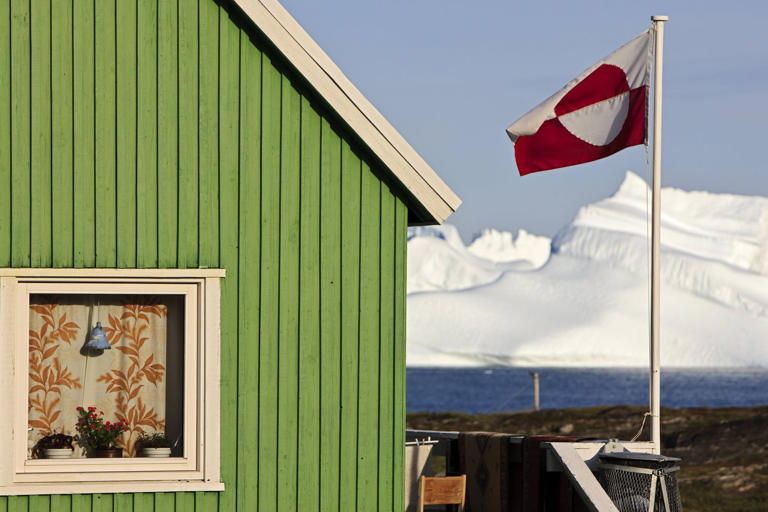
Story by Andreas Ernst, Marco Kauffmann Bossart, Andreas Rüesch
Perhaps some had doubted his sincerity on the matter. But U.S. President Donald Trump made his intentions clear right at the start of his second term of office: The U.S. is laying claim to Greenland. That is the best solution, Trump said. The U.S. would «get» Greenland, he told reporters. But how? Under international law, the island is an autonomous territory of the Kingdom of Denmark. The president wants to change this: If Copenhagen refuses to sell the resource-rich island, he wants to levy punitive tariffs against the trading nation. Nor has Trump ruled out military pressure. Meanwhile, the Greenlanders are pursuing their own plans.
1. What scenarios are under discussion?
a) Independence
By taking this path, Greenland would give up its status as a largely autonomous region within the Danish kingdom and declare itself to be independent state. Up to today, Copenhagen has determined Greenland’s foreign and defense policy.
b) Integration into the U.S.
In this case, Trump would facilitate the integration of Greenland into the United States. However, in a treaty signed in 1951, the U.S. government pledged to respect Danish sovereignty over Greenland. At the same time, Copenhagen agreed to allow Washington to use the Arctic island for military purposes.
c) Remaining part of the Danish kingdom
Under the status quo, Denmark provides annual transfer payments of around €500 million for the island, which has been largely autonomous since 1979. These subsidies finance around half of the island’s government budget.
d) Loose connection to Denmark
Greenland could emancipate itself more strongly from Denmark. A loose connection between the two is conceivable, similar to the relationship between the United States and the Pacific states of Palau, Micronesia and the Marshall Islands. The three countries are formally independent, but their foreign and security policies are codetermined by Washington. In return, citizens of the three microstates are allowed to work and settle in the United States.
2. How could Greenland be separated from Denmark?
As a first step, Greenland’s 57,000 residents would have to vote in favor of independence from Denmark. Copenhagen has agreed to accept such a verdict. However, Denmark’s population and parliament would also have to approve a withdrawal agreement of this kind.
The so-called Statute of Autonomy of 2009 states that Greenland has the right to seek independence. In 2023, a commission of experts appointed by the government in Nuuk presented a draft constitution outlining the institutional framework for an independent Greenland.
3. What is Greenland’s position on these scenarios?
In a recent survey of Greenland residents jointly conducted by the newspapers Sermitsiaq (Greenland) and Berlingske (Denmark), 85% of respondents were against Greenland becoming part of the United States. Previous surveys have shown that a majority are in favor of independence – provided, however, that Greenland is able to stand on its own two feet economically.
In his latest New Year’s speech, Greenland’s Prime Minister Mute Egede called for the island to shake off the «shackles of colonialism.» The status quo is not an option, he said. However, Egede has also rejected a future under U.S. control: «We don’t want to be Danes or Americans, we want to be Greenlanders,» he said. Many Greenlanders are critical of efforts to exploit their raw materials. This is likely to contribute to their mistrust of Trump’s plans.
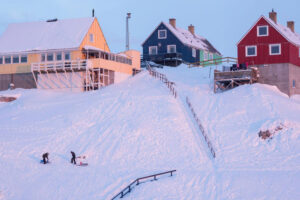
Playing in the eternal snow: Almost 80% of the island is covered by an ice sheet. However, global warming is causing the ice to melt at record speed. Reda / UIG / Getty
4. What is Denmark doing to keep Greenland?
The Danish government has emphasized that it is up to Greenland to determine its own future. However, it is clear that Copenhagen is eagerly catering to Greenlanders’ sensitivities in response to Trump’s threats. It transfers between 400 million and 500 million euros a year to Nuuk, which roughly corresponds to between one-third and one-half of Greenland’s budget. At the end of January, the Danish government additionally presented a comprehensive action plan aimed at combating discrimination against Greenlanders living in Denmark.
Denmark has also been forced to admit that it has badly neglected the military protection of Greenland in recent years. The four frigates patrolling the waters off the world’s largest island are said to be so decrepit that they frequently break down. To reduce maintenance costs, their sonar systems for detecting submarines have been removed. Copenhagen is now promising new investments totaling the equivalent of 1.8 billion Swiss francs (a bit under $2 billion). The government’s plans also include the procurement of new naval vessels and long-range drones, as well as the modernization of airports so as to enable the deployment of F-35 fighter jets.
A Danish frigate off the coast of Greenland. Denmark has announced new investments to improve the island’s military protection. Ida Marie Odgaard / Scanpix / Reuters
5. Does the EU have a say if Greenland decides to secede?
Only indirectly. Greenland’s relationship with the EU is complicated. The island became an integral part of Denmark only in 1953. It previously held the status of a colony. Twenty years afterward, following a referendum in 1973, Denmark joined the European Economic Community (a precursor to the EU). However, the vast majority of Greenlanders voted against this step in the referendum. Greenland itself left the EEC in 1985, having previously wrested the right to self-government from Copenhagen. Since that time, the island has been a special territory for the EU with privileged access to the single market. Its citizens are both Danish and EU citizens.
Nevertheless, the EU will not automatically intervene in a potential secession process. Brussels’ involvement would be possible if secession harmed the interests of Denmark as an EU member state, or if the act jeopardized the stability of Denmark or of the EU as a whole. This might be conceivable in the case of a unilateral or even disputed secession. The Self-Government Act of 2009 requires negotiations on the path to state independence – thus, any separation is meant to take place by mutual agreement. A sovereign Republic of Greenland could then seek new bilateral agreements with the EU.
6. Why is Trump insisting on acquiring the island?
As yet, Trump has not been put off by the negative reactions to his demand. In his very first week in office, he spoke to Denmark’s prime minister on the phone. According to unofficial sources, the conversation was confrontational and aggressive. Trump has not publicly explained exactly why he is so eager to own Greenland. He has simply presented it as a necessity, citing his country’s national interest.
Trump’s supporters point to the strategic location of the island, which lies on the most direct route between Russia and the United States, and serves as a kind of bulwark in front of North America. As a result of climate change, shipping routes that are currently blocked by ice are also likely to open up in the future. On the other hand, Greenland’s raw materials, including zinc, gold, copper and especially rare earths, make the island highly attractive. Rich deposits of oil and gas are also believed to lie under the ice sheet.
Experts argue that the U.S. does not need to own the island in order to protect its strategic interests there. Denmark, a close ally, has allowed the U.S. to maintain a military presence on the island since the 1950s, including at the Pituffik military base, which is important for the early detection of missile launches. Denmark has also prevented major investments from China in Greenland at the request of the United States.

The U.S. military base at Pituffik in the north of Greenland is important for the early detection of missile launches. Thomas Traasdahl / Scanpix / Reuters
7. How would Greenland become part of the U.S.?
Trump has not gone into detail on this issue, but has spoken only of «ownership and control.» Some supporters have raised the possibility of making Greenland the 51st state of America. However, this scenario is extremely unlikely. Traditionally, the U.S. has seen little reason to upgrade overseas territories to full states. The only exception to this has been Hawaii, which became the 50th state in 1959, gaining statehood at the same time as Alaska. For the previous 60 years, Hawaii had held only the quasi-colonial status of a «territory.»
Apart from a few uninhabited islands, the U.S. currently has five such territories: two in the Caribbean and three in the Pacific. Unlike the 50 states, overseas territories lack sovereignty of their own, and do not have voting representation in Congress. In most cases, however, their residents are granted American citizenship. The largest territory is the island of Puerto Rico, whose population of 3.2 million is more than that of 18 U.S. states. Nevertheless, many years of efforts to upgrade Puerto Rico’s status have come to naught.
Greenland, with its tiny population of just 57,000, has no realistic chance of becoming the 51st state of the U.S. even if its population wanted this outcome – in part because this would also mean granting the island two senatorial seats and one seat in the House of Representatives, which would amount to a blatant overrepresentation in Congress. If Trump were to incorporate the area into the U.S., Greenlanders would therefore have to adjust to the role of second-class citizens living in a mere territory – which may make the prospect of changing nationality even less attractive.
Latest articles
Global reporting. Swiss-quality journalism.
In today’s increasingly polarized media market, the Switzerland-based NZZ offers a critical and fact-based outside view. We are not in the breaking-news business. We offer thoughtful, well-researched stories and analyses that go behind the headlines to explain relevant events in the U.S., in Europe and worldwide. To produce this work, the NZZ maintains an industry-leading network of expert reporters around the globe who work closely with our main newsroom in Zurich.
Sign up for our free newsletter or follow us on Twitter, Facebook or WhatsApp.











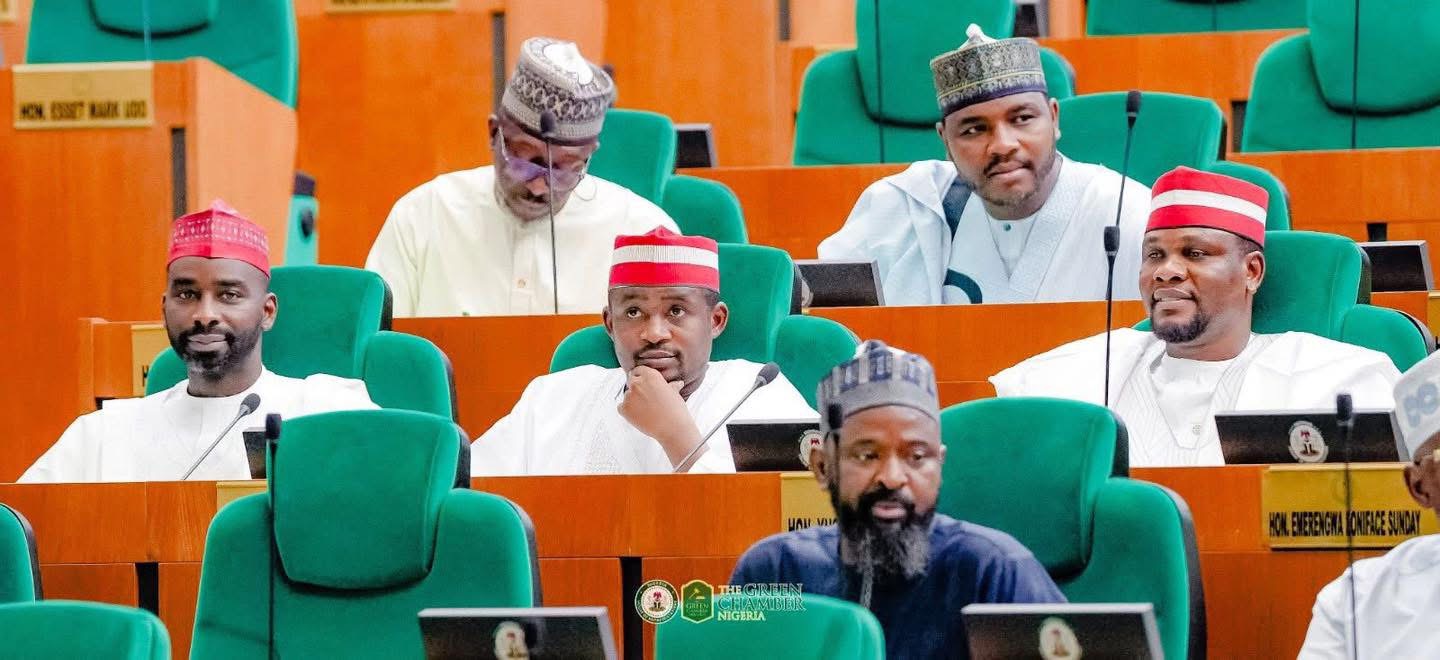
No fewer than 50 members of the 10th House of Representatives are unlikely to be part of the 11th Assembly after losing out in the All Progressive Congress (APC) primaries held on Saturday.
This marks one of the largest turnovers of sitting federal lawmakers since 2015 and signals intensifying internal competition within the ruling party eight months to the 2027 general elections.
While House Speaker Tajudeen Abbas (Kano) and Deputy Speaker Benjamin Kalu (Abia) successfully defended their tickets, several ranking and long-serving lawmakers were defeated, exposing strong anti-incumbent sentiment and the decisive role of state governors in candidate selection.
Major casualties
One of the biggest upsets was the defeat of House Majority Leader Julius Ihonvbere in Edo State’s Owan Federal Constituency. He polled 1,005 votes out of 7,587 cast, finishing third behind Andrew Ijegbia, who scored 3,695 votes. Abdul Oroh placed second with 1,740 votes.
In Delta State, veteran lawmaker Nicholas Mutu, who has represented Bomadi/Patani Federal Constituency since 1999, lost his re-election bid. Ngozi Okolie also lost the Aniocha/Oshimili ticket to former House Minority Leader Ndudi Elumelu.
Cross River State recorded one of the highest casualty rates, with five of eight incumbents failing to secure re-nomination.
They include three-term member Mike Etaba (Obubra/Etung), Godwin Offiono (Ogoja/Yala), Emil Inyang (Akamkpa/Biase), and Bassey Akiba (Odukpani/Calabar Municipality).
Only Peter Akpanke, Joseph Bassey, and Victor Abang won return tickets.
In Plateau State, conflicting results in Pankshin/Kanke/Kanam Federal Constituency triggered early confusion. One returning officer declared challenger John Tongshinen winner with 29,968 votes against incumbent Yusuf Gagdi’s 5,849.
The APC Plateau State primaries committee, chaired by Stella Okotete, later dismissed that declaration as unauthorised and affirmed Mr Gagdi as the authentic winner with 29,207 votes.
At a press briefing, Mrs Okotete stated that Nandom Kura was the recognised returning officer. “The returning officer approved by my committee that has gone to do fake declaration is null and void,” she said.
Other significant losses occurred in Ogun State (at least five incumbents, including Deputy Chief Whip Ibrahim Isiaka and Tunji Akinosi) and Ekiti State (three sitting members).
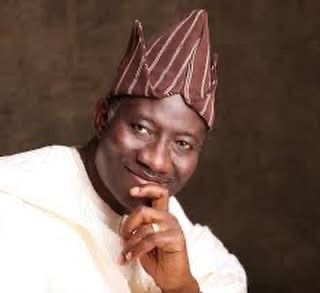
The Peoples Democratic Party (PDP), led by Tanimu Turaki, SAN, has scheduled to screen former president Goodluck Jonathan tomorrow, Tuesday, aMay 19, as the lone presidential candidate of party.
According to a statement from the PDP faction backed by the Oyo State Governor, Seyi Makinde, Former Vice-President Namadi Sambo, former governor of Plateau State, Jona Jang and a former Minister of Foreign Affairs, Tom Ikimi have been listed among a committee of 14 members to screen Jonathan described as a lone candidate by the party.
Other members of the committee were Chief Olabode George, Babangida Aliyu, Maryam ciroma, Zainab Maina, Josephine Anenin, Dr. Abdul Bulama, Dr. Esther Uduehi, Edo State PDP chairman, Tony Aziegbemi, Dr. Sunday Solarium and Chief Anicho Okoro, who would serve as administrative secretary of the committee.
Last week, the national Publicity Secretary of the faction, Ini Ememobong, disclosed that former president Jonathan has successfully registered as a member of the party in the fresh digital registration exercise directed by INEC.
The PDP faction also announced that it was set to screen 748 house of representatives aspirants, 198 senatorial aspirants, and 112 governorship aspirants.
The screening committee would screen 2122 states houses of assembly aspirants. The exercise will commence tomorrow, Tuesday in different states.
According to the statement, the screening exercise would take place nationwide on Tuesday, May 19, 2026, at 10:00 a.m.
The statement said the Interim National Working Committee (iNWC) has also released the names of members to serve on the Screening Committees and Screening Appeal Panels.
It added that the publication of the screening details “is in accordance with the party’s guidelines and timetable for the conduct of the 2027 general elections.”
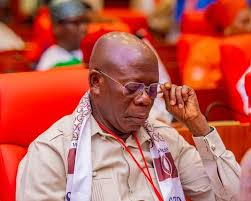
A former governor and incumbent Senator, Adams Oshiomhole, along with his counterpart Senator Joe Ikpea, sailed through the All Progressives Congress senatorial primary in Edo unopposed, and securing their tickets without a single vote cast against them.
Also Omoregie Ogbeide-Ihama emerged the winner in the APC primary for the Edo South senatorial district.
Ogbeide-Ihama won in the seven local government areas of Edo South in the results announced by the Chairman of APC National Assembly Primary Election, Muhammed Ajana at the Urokpota Hall, Benin.
He polled 27,154 votes while his opponents, Senator Neda Imasuen, got 13,580, and Pastor Osagie Ize-Iyamu got 6785.
The elections were hitch-free in Edo North and Edo Central, where there was no contest against the incumbents, Senators Oshiomhole of Edo North and Ikpea of Edo Central, respectively.
Ajana at the Urokpota Hall said the collation arose from votes cast in the seven local government areas made up of 77 wards where elections were conducted by members of the committee.
He said, “There are seven local governments that make up the Edo South Senatorial District. We have heard from the Returning officers from the seven local government areas. From the collation, the cumulative result we have for Edo South Senatorial District is this; Ogbeide-Ihama with 27,154 votes, Imasuen with 13,580 votes and Ize-Iyamu with 6, 785.
“This is the total reflection of what has transpired from the ward level to the local government and the Edo South senatorial district collation centre. With this we await further directives from the National Secretariat, we have done our best by collating the results which is our mandate, to collate the results and send them to the National Secretariat.”
However, it was gathered that Ize-Iyamu emerged as the APC candidate for Edo South Senatorial race. He claimed to have clinched the party’s ticket after defeating Ogbeide-Ihama and Imasuen.
It was claimed that the Chief Returning Officer, Abubakar Muhammad Kabiru, officially declared Ize-Iyamu the winner after securing the highest number of votes cast.
On his part, the senator representing the district condemned the exercise describing it as a sham allegedly designed to favour a preferred aspirant.
Imasuen spoke while reacting to events at his polling unit in Umagbae North Ward 5, Urhokuosa where he said he was denied the opportunity to vote following what he described as a chaotic and manipulated process.
The lawmaker accused leaders of the party of openly adopting a preferred candidate ahead of the exercise and intimidating members into supporting that aspirant.
He said, “There is nothing satisfactory about this sham of election they did today and it is very unfortunate because as a loyal party member, I expected something better than this.”
He said the warning signs emerged days before the primary when some ward chairmen allegedly informed him that they had been directed not to receive him during consultations.
Imasuen claimed that some ward leaders openly told him the party had already adopted a preferred aspirant, identified as Hon. Omoregie Ogbeide-Ihama, making further consultations unnecessary.

2027: More Than 50 Lawmakers Lose APC Reps Tickets in Major Primary Election

Bandits behind Ogbomoso school abduction will face full wrath of the law- President Tinubu

PDP to screen Goodluck Jonathan on Tuesday as its sole Presidential aspirant For 2027 race

-
Business2 years ago
US court acquits Air Peace boss, slams Mayfield $4000 fine
-

 Trending2 years ago
NYA demands release of ‘abducted’ Imo chairman, preaches good governance
-

 Politics2 years ago
Mexico’s new president causes concern just weeks before the US elections
-

 Politics2 years ago
Putin invites 20 world leaders
-

 Politics2 years ago
Russia bans imports of agro-products from Kazakhstan after refusal to join BRICS
-
Entertainment2 years ago
Bobrisky falls ill in police custody, rushed to hospital
-
Entertainment2 years ago
Bobrisky transferred from Immigration to FCID, spends night behind bars
-
Education2 years ago
GOVERNOR FUBARA APPOINTS COUNCIL MEMBERS FOR KEN SARO-WIWA POLYTECHNIC BORI