
Politics
Macron hosts European leaders in Paris as Trump pushes for peace talks on Ukraine

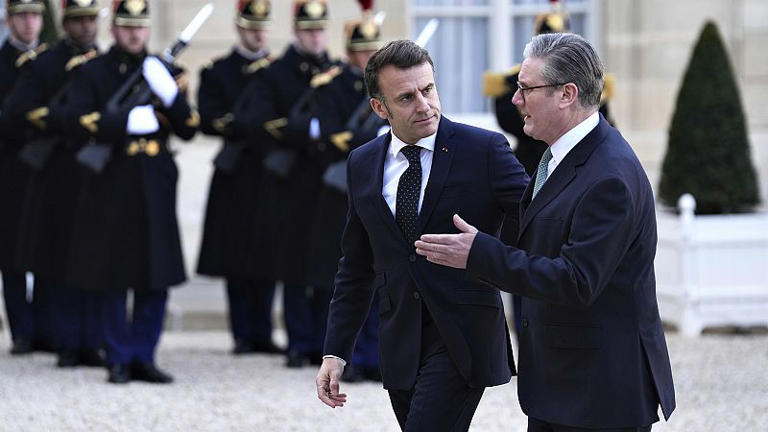
Agroup of eleven European leaders is gathering in Paris to discuss Russia’s invasion of Ukraine and strengthen their common position amid the accelerated peace process being promoted by US President Donald Trump, who last week shocked Western allies when he called Vladimir Putin to “immediately” start negotiations.
Trump later said he could meet with Putin “very soon.”
The phone conversation broke a three-year-long effort to isolate the Kremlin diplomatically and stoked fears that Kyiv would be pressured to sign off a detrimental deal. Ukrainian President Volodymyr Zelenskyy replied by saying his country would “never accept deals made behind our backs” and “without our involvement.”
Meanwhile, the US has already made it clear to Europeans that they will not have a seat at the table but be consulted throughout the nascent process.
The exclusion from the negotiating table has put the continent on edge and triggered a last-minute push to close ranks and showcase a unified front.
French President Emmanuel Macron has taken the lead by inviting a select group of leaders to Paris on Monday. Germany’s Olaf Scholz, Britain’s Keir Starmer, Italy’s Giorgia Meloni, Poland’s Donald Tusk, Spain’s Pedro Sánchez, the Netherlands’ Dick Schoof and Denmark’s Mette Frederiksen will be in attendance.
Ursula von der Leyen, the president of the European Commission; António Costa, the president of the European Council; and Mark Rutte, the secretary general of NATO, will also take part in the informal summit.
“Europe’s security is at a turning point. Yes, it is about Ukraine – but it is also about us. We need an urgency mindset. We need a surge in defense. And we need both of them now,” von der Leyen said upon arrival in Paris.
The meeting is scheduled to start around 16.00 CET.
It is unclear if Monday’s discussions will yield a concrete outcome or announcement. Europe is under intense pressure to ramp up defence spending and take greater responsibility in assistance for Kyiv, which the Trump administration is keen to reduce.
The White House has distributed a questionnaireto European capitals enquiring about their willingness to provide security guarantees to Ukraine and participate in a peacekeeping mission. The questionnaire, seen by Reuters, also asks Europeans what American support they would “consider necessary” to provide security guarantees.
British Prime Minister Keir Starmer said on Sunday he would be ready to deploy British troops to Ukraine to ensure a potential peace deal is respected. The US, though, has warned any mission of this kind would be deprived of NATO’s Article 5 of collective assistance, something that could leave soldiers vulnerable to Russian attacks.
“This is a once-in-a-generation moment for our national security where we engage with the reality of the world today and the threat we face from Russia,” Starmer wrote in an op-ed for the Telegraph newspaper.
“Securing a lasting peace in Ukraine that safeguards its sovereignty for the long term is essential if we are to deter Putin from further aggression in the future.”
Donald Tusk did not echo the commitment. “We have no plans to deploy Polish soldiers to Ukraine,” Tusk said before his departure to Paris.
According to the Élysée, the gathering on Monday is designed to be the start of a series of talks among European leaders, including those not invited to Paris. “Their discussions may then continue in other formats, with the aim of bringing together all partners interested in peace and security in Europe,” the Élysée said in a statement.
Macron spoke with Trump ahead of the Paris summit, the Élysée said.
A race against ‘Trump time’
The prospect of being sidelined from the peace talks has enraged Europeans, who see their long-term security as intrinsically tied to Ukraine’s future. For the past three years, Brussels has worked with Washington to ensure a consistent policy to cripple Russia’s war machine and sustain Kyiv’s battered economy.
However, with a 90-minute phone call, Trump threw Western unity out of the window, positioning himself as the sole interlocutor between the aggressor and the aggressed.
According to Keith Kellogg, the US Special Envoy for Ukraine and Russia, the White House is operating on “Trump time” and the president expects a deal to be ready in the foreseeable future. “I’m not talking six months, I’m talking days and weeks,” Kellogg said last week during his visit to the Munich Security Conference.
Kellogg explained the peace process would follow a “dual-track” approach: on the one hand, the US will speak with Russia and, on the other hand, the US will speak with Ukraine and democratic allies that back the war-torn nation. The retired general is scheduled to meet von der Leyen and Costa on Tuesday.
But, Kellogg noted, when the time comes to sit at the table, Europe will not have a chair. “What we don’t want to do is get into a large group discussion,” he said.
US Secretary of State Marco Rubio later said that, when “real negotiations” begin, Europeans would “have to be involved because they have sanctions on Putin and Russia” and have “contributed” to supporting Ukraine, a comment that appeared to suggest sanctions relief would be an element offered to the Kremlin.
Rubio has landed in Saudi Arabia, where he is set to engage in face-to-face talks with Russian officials on Tuesday. The US mission will also feature Mike Walktz, the national security adviser, and Steve Witkoff, the Middle East envoy.
The Kremlin has confirmed Sergei Lavrov, Russia’s foreign minister, who is under EU sanctions, will be present at the meeting in Riyadh, which would focus on “restoring the entire complex of US-Russian relations, as well as preparing possible tasks on the Ukrainian settlement and organising a meeting of the two presidents.”
President Zelenskyy, for his part, has flown to the United Arab Emirates (UAE) to discuss humanitarian assistance. Throughout the war, the UAE has played a mediating role between Ukraine and Russia. He will travel to Saudi Arabia on Wednesday.
In a combative speech in Munich over the weekend, Zelenskyy warned that Putin might try to invite Trump to the 9 May celebrations at the Red Square, not as a “respected leader” but as “a prop in his own performance.”
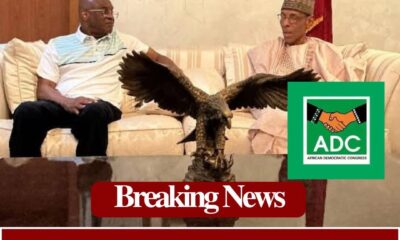


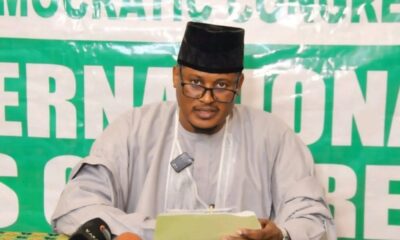

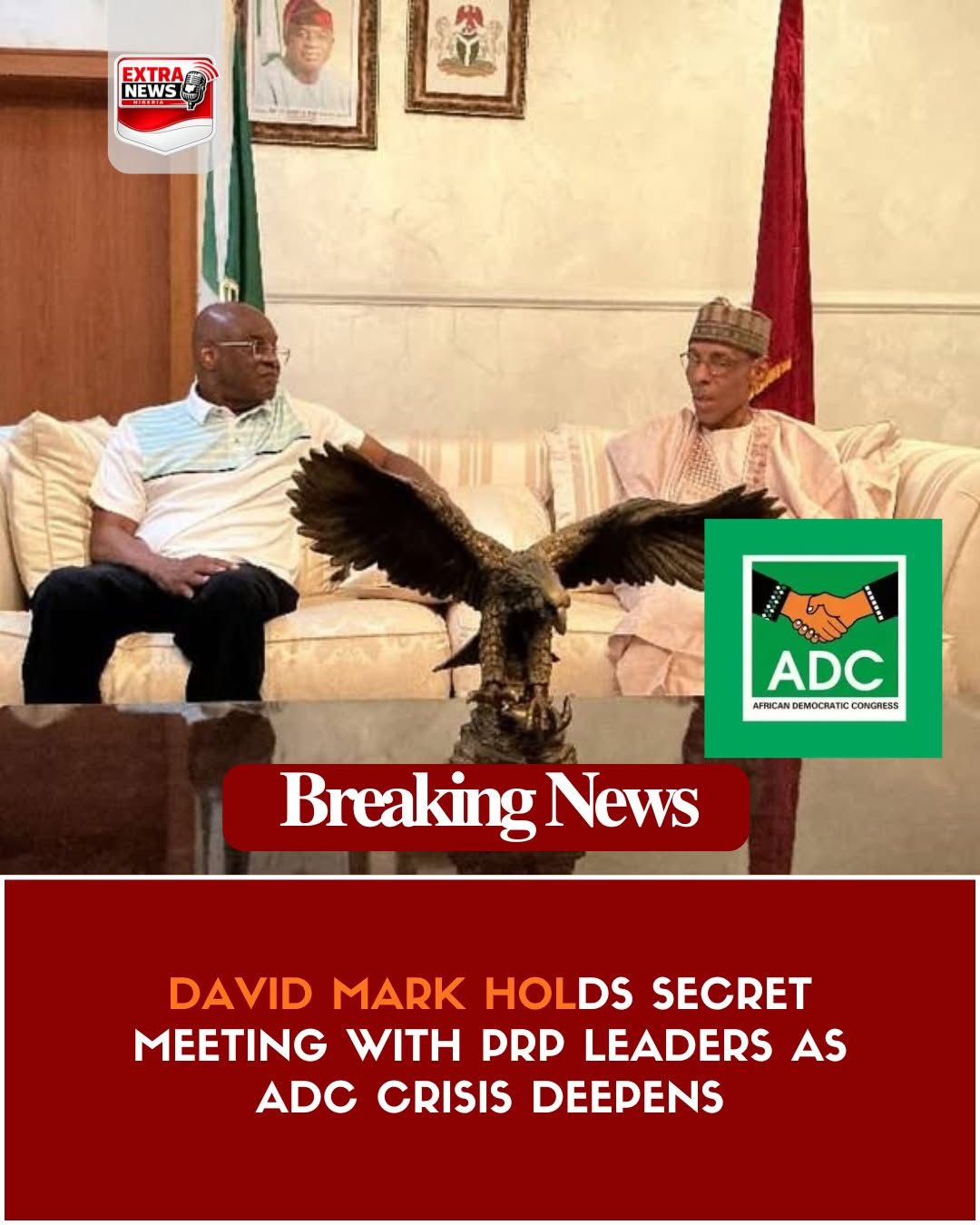
The embattled National Chairman of the African Democratic Congress, David Mark, on Friday held a closed-door meeting with leaders of the Peoples Redemption Party in Abuja. The private consultation is seen as a fresh round of political moves as the ADC continues to battle a lingering leadership crisis and growing internal divisions.
Top figures from both parties were said to be present at the meeting, including PRP National Chairman Hakeem Baba-Ahmed and senior ADC officials. The development is already drawing attention as opposition parties continue realignments ahead of the 2027 political season, with many watching closely for possible alliances and next steps in the party crisis.
Politics
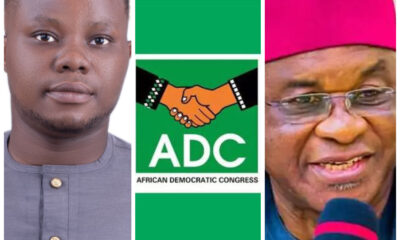
“ADC is a Holy Party, Cannot be used to Scam Nigerians Again” – Hon Success Opara tells David Mark
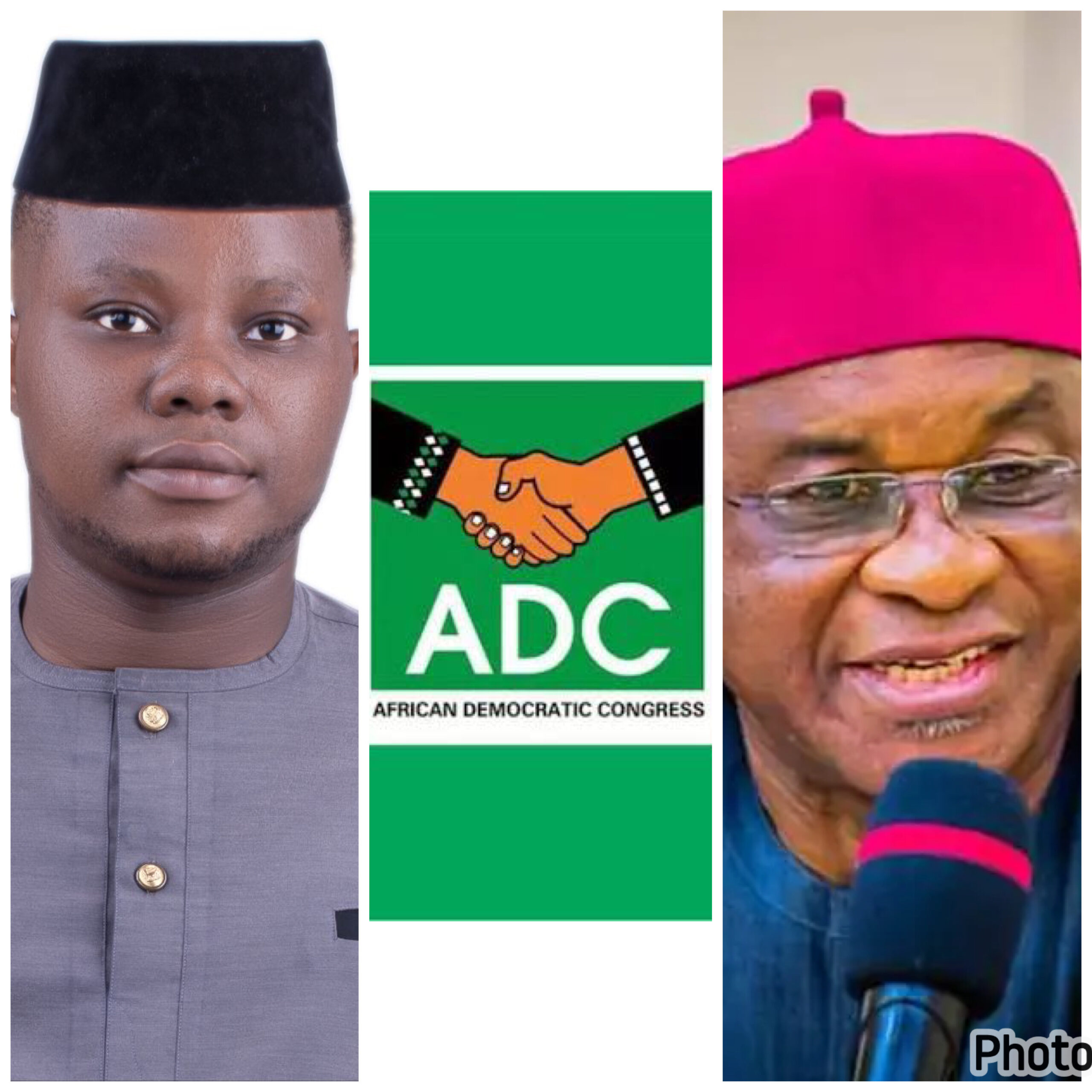
ADC Party in Turmoil: Hon Success Opara Slams Leadership, Warns Against Scamming Nigerians
Abuja, Nigeria – The African Democratic Congress (ADC) is facing internal strife as Hon Success Opara, a prominent party official, has warned against attempts to use the party to deceive Nigerians. Opara specifically criticized the leadership of David Mark, stating that the party cannot be used to scam citizens again.
“ADC holy Party cannot be used to scam Nigerians again,” Opara said, emphasizing that those forming coalitions are hindering the party’s growth and denying youths opportunities to thrive.
“Those who are forming coalition don’t want to give the youths the chance to strive in the party,” she added.
Opara’s statement highlights the deepening divisions within the ADC, with concerns over leadership and the party’s direction.
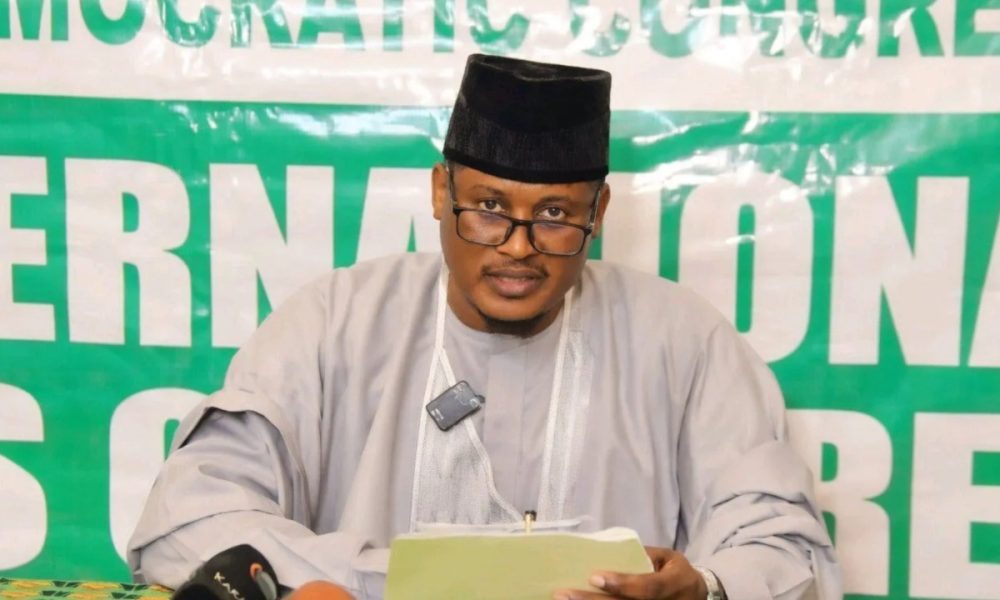
The factional National Chairman of the African Democratic Congress (ADC), Nafiu Bala Gombe, has announced that the party under his leadership will bar individuals above the age of 55 from contesting for political positions.
Gombe made the disclosure during an interview with BBC Hausa, where he outlined a vision centred on generational change and greater youth participation in politics.
“The African Democratic Congress (ADC) is a party that belongs to all Nigerians. What we are doing now is to ensure the party moves forward properly.
“We have decided that we will give the youths a real chance. The time has come for young people to take the lead in politics.
“If you are over 55 years old, you are not going to contest for positions in the ADC under our leadership.
“We want to bring in fresh blood, new ideas, and energy from the youth. Nigeria’s future depends on the young generation.
“The old ways have not worked well for the country. We need to open the door wide for youths to participate fully as candidates, leaders, and decision-makers,” he said.

David Mark Holds Secret Meeting With PRP Leaders as ADC Crisis Deepens

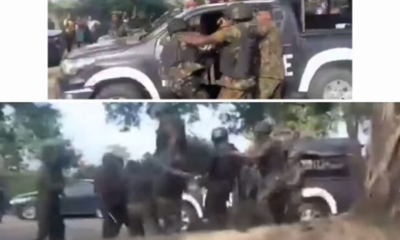
Chaos As Military Officers Exchange Blows During Tinubu’s Visit To Bayelsa (Videos)

HRH Ekwueme of Ochia Kingdom Iynched & kiIIed in Imo.

-
Business1 year ago
US court acquits Air Peace boss, slams Mayfield $4000 fine
-

 Trending1 year ago
NYA demands release of ‘abducted’ Imo chairman, preaches good governance
-

 Politics1 year ago
Mexico’s new president causes concern just weeks before the US elections
-

 Politics1 year ago
Putin invites 20 world leaders
-

 Politics1 year ago
Russia bans imports of agro-products from Kazakhstan after refusal to join BRICS
-
Entertainment1 year ago
Bobrisky falls ill in police custody, rushed to hospital
-
Entertainment1 year ago
Bobrisky transferred from Immigration to FCID, spends night behind bars
-
Education2 years ago
GOVERNOR FUBARA APPOINTS COUNCIL MEMBERS FOR KEN SARO-WIWA POLYTECHNIC BORI