
Business
Electricity, telecom, Multichoice tariff hike: Nigerians knock NLC

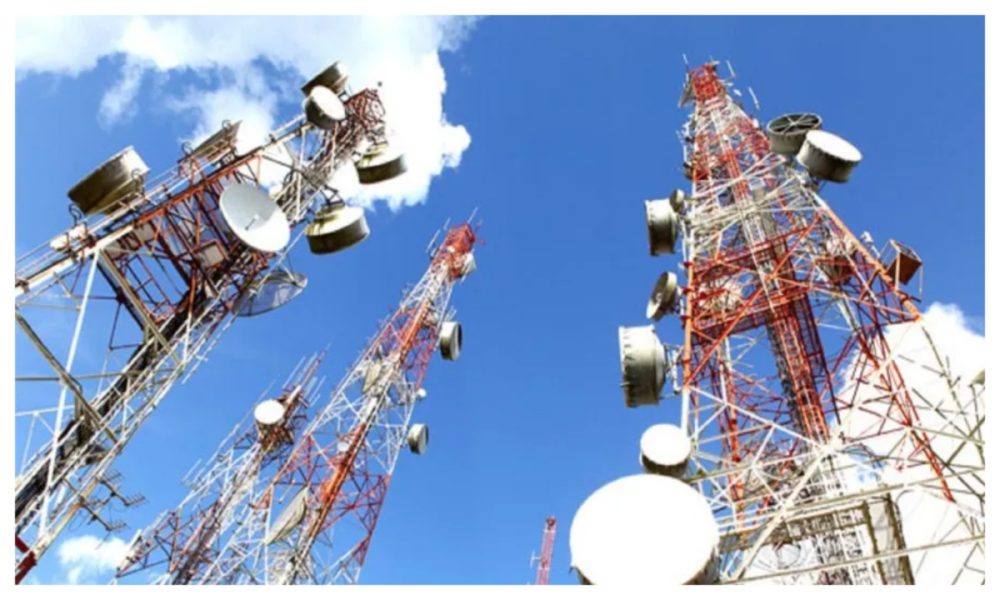
As Nigerians continue to grapple with several policies considered to be unfavourable, the Nigeria Labour Congress, NLC, has come under scrutiny.
Ekwutosblog reports that NLC which was hitherto known for its formidable force, holding the government and private sector accountable, recently lost its influence due to a series of ’empty’ threats that have over time yielded little or no results.
To some Nigerians, the NLC that commanded a huge respect in the days of Pa Michael Imoudu, Alhaji Hassan Sunmonu, Alhaji Ali Ciroma and Adams Oshiomhole is dead.
Prior to the reign of Joe Ajaero as NLC National President, the congress was known for its powerful advocate for the middle class, ensuring that policymakers did not trample on the rights and welfare of citizens, particularly the Nigerian workers.
However, the name NLC no longer commands respect.
It has been observed that NLC, especially in the last few years, lost its assertiveness and relevance in shaping national policies, giving room for government at all levels to make unilateral decisions on important national issues including workers’ welfare without a formidable response from the Congress.
Recently, especially since the current administration kicked off in May 2023, the once-powerful NLC has been accused of entangling in political compromises, making workers unnecessarily vulnerable.
Fuel subsidy removal
According to many Nigerians, NLC weakness became obvious shortly after President Bola Tinubu scrapped the fuel subsidy on May 29, 2023.
Recall that the Nigerian main labour union had declared a nationwide strike aimed at forcing the government to reverse the decision on fuel subsidy removal.
A few days after Tinubu announced the abolition of the subsidy, which skyrocketed the price of fuel, leading to unbearable cost of living, NLC’s national executive council met in Abuja where they declared an indefinite nationwide strike.
With Less than 24 hours to the proposed nationwide strike, the Labour movement suspended its plans to down tools.
According to the labour leaders, the decision was taken after an expanded meeting with the Federal Government, where the parties agreed to continue to dialogue on the implementation of demands made by NLC and the Trade Union Congress, TUC.
The demands were for the government to come up with policies including reviving the CNG conversion program to cushion the effects of the subsidy removal.
Ekwutosblog reports that the hardship birthed by the subsidy removal nearly two years ago has, however, increased tremendously without any profitable move by the NLC.
The Compressed Natural Gas, CNG buses promised by the government to aid movement within the cities are yet to get to the majority of Nigerian workers.
Electricity tariff hike
In July 2024, the electricity Distribution companies, DisCos, announced an upward review in electricity tariff, a move that stirred anger across the country.
Following the announcement, the NLC President, Joe Ajaero in a statement titled, ‘Stop killing the people and the economy’ said the hike for “the so-called band A” customers represents the height of impunity and arrogance.
Ajaero noted that the 250 per cent hike drew the ire of the citizenry and the rage of organised labour.
After a one-day protest, the NLC backed down with Ajaero claiming that the action was paused due to a firm assurance from relevant quarters, including the National Assembly, that the matter would be dealt with quietly.
DAILY POST reports that the tariff was, however, implemented amid grave silence from the labour union.
Telecom tariff hike
NLC’s diminishing influence was further noted in January this year when the Nigerian Communications Commission, NCC, approved a 50% increase in telecom tariffs for operators in Nigeria.
NLC in its usual statements, outrightly rejected the hike and without hesitation, threatened a showdown with the telecommunication sector.
The labour union vowed to shut down the country’s economy via protest if the federal government fails to rescind the decision.
However, after a meeting with government representatives at the Office of the Secretary to the Government of the Federation on February 4, 2025, the union called off the planned rally.
Multichoice: DStv, Gotv subscription hike
When Multichoice Nigeria increased prices of its subscription fees on DStv and GOtv recently, NLC vowed that the hike would not stand, creating an illusion of a brewing showdown.
But despite all the song and dance, the popular cable television service provider in Nigeria proceeded with its unchallenged decision, exposing the NLC’s inability to back its words with decisive action.
A few days ago, the company announced another hike in subscription fees but the NLC has kept mum on the matter.
Some Nigerians, who spoke with DAILY POST, expressed disappointment at the Congress.
An On-Air Personality, Joseph Ojobo, told our correspondent in Abuja that the era of strong labour unions had ended in Nigeria.
According to him, “There is nothing like a labour union in Nigeria right now. They are all about their selfish interests.
“When NLC was NLC, all this nonsense won’t happen. I remember in 2012 when former president Goodluck Jonathan removed the fuel subsidy, labour shut down the whole country and I was stuck in the village after Christmas.
“These days, the only thing NLC does is issuing statements here and there. No action, no strike, no protest. See the level of hardship Nigerians are going through yet everywhere is quiet as if nothing is happening.
“Anybody can come up anytime and increase the price of whatever service they provide and Nigerian workers have no one to speak on their behalf.”
Similarly, a socio-political activist, Adebanjo Idowu Mathew called for the sack of NLC leadership to pave the way for another set of labour leaders.
He said, “The truth is that even the government doesn’t take them seriously again since they became involved in politics. Imagine a labour union claiming ownership of a political party. They publicly declared support for a presidential candidate in the 2023 general elections.
“So the ruling party sees them as opposition. To redeem the name, the current leadership needs to go let’s have fresh people, who understand the struggle better and not those interested in themselves alone.
“The first mistake they made was endorsing a presidential candidate. Even if the candidate had won, there would still be problems because, how do you hold a government you brought into power accountable? It won’t work”.
Also, a civil servant, Mrs Anthonia Adikwu accused the leadership of the union of living large at the “expense of those they are meant to protect”.
“They travel abroad for checkups, driving exotic cars and living large at the expense of those they are meant to protect.
“They are not different from those at the helm of power. NLC leadership and government officials are all fighting for themselves. Nobody cares about the masses,” she stated.
Meanwhile, NLC’s Head of Information, Benson Upah, could not be reached for comment as of the time of filing the report.






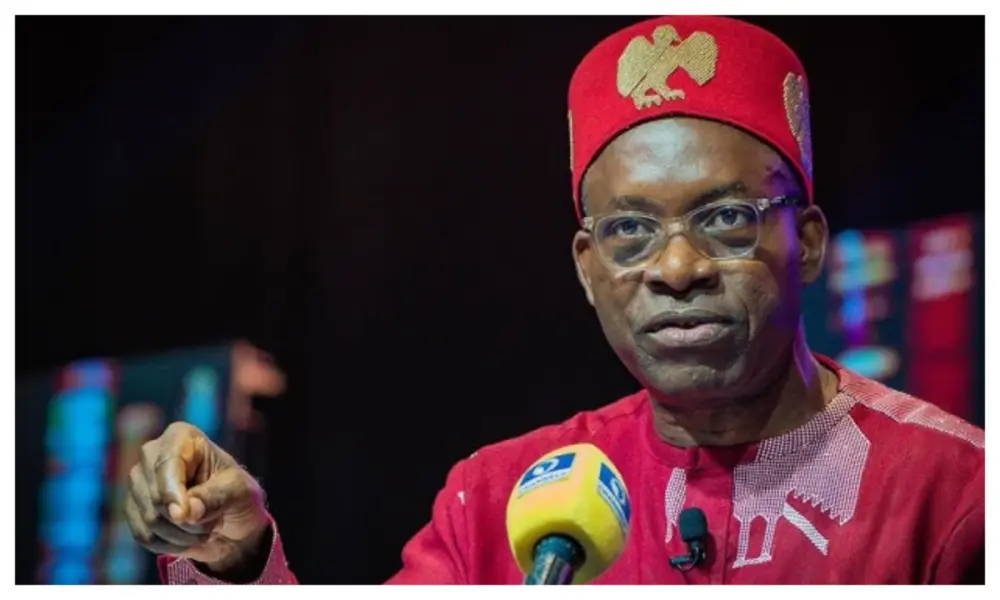
The Governor of Anambra State, Prof Chukwuma Soludo has announced that his government will take over the running of Onitsha Main Market.
The governor had last Monday visited the market and also announced a one week closure over the continued adherence to sit at home protest by traders in the market.
The closure had generated a lot of tension, leading to protests by the traders, while the governor stuck to his gone, insisting that the market will remain closed for one week. He also held a meeting with the leaders of the market yesterday, where he presented them with two options.
Though it was a closed door meeting, which held at the Light House, Awka, a source in the meeting told THISDAY that the traders chose to open their shops on Monday, against an earlier option of demolishing and remodelling the market.
The source said: “The governor gave them two options. The first included; they will resume full trading activities on Mondays, mark attendance as required, while he regenerate and reorganise the market, demolish all illegal structures and plazas and create proper spaces and car parks. The second includes; To continue with Sit-at-Home on Mondays and risk the demolition of the market and use two-years for its reconstruction to restore it to its original master plan.
“The governor told them that restoring parking facilities in Main Market is an emergency, and any illegal structure erected at the park would be demolished soonest.”
It was gathered that the traders choose the first option, which will involve them opening on Monday, and giving the governor the go ahead to remove illegal structures to make way for wider roads in the market and restoring its packing space.
During the meeting, the governor told the traders that a committee will be set up to rectify all occupants of shops in the market, and that this will commence work soon, insisting that the government needs to know those who are trading in its market.
The governor was also said to have rejected a plea for the market to be opened on Saturday, insisting it can only be opened on Monday, when their compliance will again be re-accessed.
“The traders agreed to the terms, and will on Monday reopen the market to recommence business,” the source said.
Meanwhile, secessionist group, Indigenous People of Biafra (IPOB) has declared what it called Biafra-wide solidarity lockdown which is to hold on Monday in solidarity with Onitsha traders and to demand for Mazi Nnamdi Kanu’s immediate release.
A press release by the group’s publicity secretary, Mr Emma Powerful said the total shutdown across Biafraland is a direct, peaceful, and unified response to the shutting down of Onitsha Main Market for one week by Soludo.
The release said: “We remind Governor Soludo and his Abuja sponsors that the Monday sit-at-home originated as a peaceful protest demanding the unconditional release of Mazi Nnamdi Kanu, the very cause that has galvanized global attention to Biafra’s quest for self-determination.
“Attempts to twist this into “economic sabotage” or “criminality” will fail. The markets thrived during Christmas Mondays without incident, proving that voluntary compliance stems from genuine solidarity, not fear. Soludo’s escalation only exposes his desperation to provoke confrontation at a time when Biafra’s international profile is rising and diplomatic efforts are gaining traction.
“On Monday, February 2, 2026, we call on all Biafrans traders, transporters, banks, schools, civil servants, and every sector across Anambra, Abia, Imo, Enugu, Ebonyi, and beyond to observe this solidarity strike peacefully.
“Remain indoors, refrain from all commercial and public activities, and demonstrate to the world our disciplined resolve. This is not about disruption for its own sake; it is about standing with Onitsha traders who are being punished for demanding justice, and reaffirming that no governor can coerce free citizens into abandoning their rights or their solidarity.”
Business
BUA Chairman Is My Ex-Husband – Tinubu’s Minister Opens Up On Past Secret With Abdul Samad Rabiu

Nigeria’s Minister of Art, Culture and the Creative Economy, Hannatu Musawa has opened up about her former marriage to BUA Group chairman Abdul Samad Rabiu, describing it as a meaningful and life-shaping experience.
In a conversation on the MIC On Podcast with Channels Television journalist Seun Okinbaloye, Musawa reflected on her bond with Rabiu, saying their connection has remained strong despite their separation.
She explained that their relationship has evolved into one grounded in family ties, mutual respect, and continued support.
Musawa shared that although they are no longer married, they remain close and involved in each other’s lives.
She also pointed out the lasting connection between their families, noting that her daughter, Khadija, was named after Rabiu’s grandmother, showing the enduring link between them.
The minister described her time with Rabiu as one of the most memorable periods of her life.
She stated that there is no bitterness between them and that she will continue to support him in his endeavors, maintaining respect and care for their shared history.
She said: “We love each other because you love your family, obviously. But Samad is my brother. He’s my family. That’s what he is. And I’m his sister and his family, too. The marriage of the greatest experiences I’ve ever had.
“He is my ex-husband, but we are still family. We juggle coming from a background where, once you’re joined together, you continue to participate in each other’s lives. And so, we were married, and now we are just family.
“My daughter Khadija was named after Samad’s grandmother.
“We continue to share a deep respect and a love, and more than anything, support for each other. I’ll continue to be his greatest cheerleader.”
Abdul Samad Rabiu leads BUA Group, a Nigerian conglomerate with investments in cement, sugar, and other industries, and is regarded as one of the country’s leading business figures.
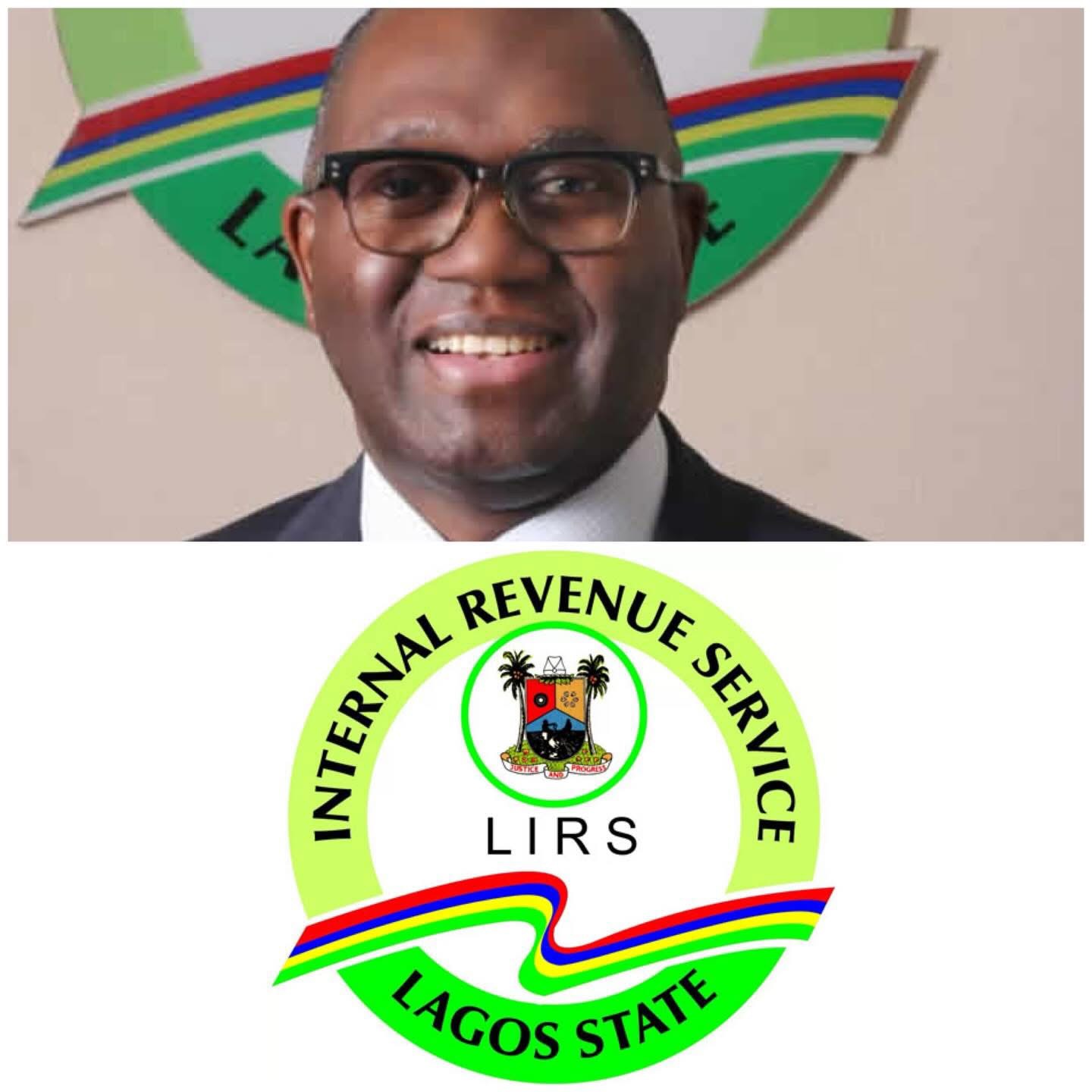
The Lagos State Internal Revenue Service (LIRS) has reiterated the statutory deadline of 31st January 2026 for all employers of labour in Lagos State to fulfil their statutory obligation to file their annual tax returns for the 2025 financial year.
In a statement issued on Thursday, January 19, the Executive Chairman of LIRS, Dr Ayodele Subair, reminded employers that the obligation to file annual returns is in accordance with the provisions of the Nigeria Tax Administration Act 2025 (NTAA).
Dr Subair explained that employers are required to file detailed returns on emoluments and compensation paid to their employees, as well as payments made to their service providers, vendors and consultants, and to ensure that all applicable taxes due for the year 2025 are fully remitted. He emphasised that filing of annual returns is a mandatory legal obligation, and warned that failure to comply will result in statutory sanctions, including administrative penalties, as prescribed under the new tax law.
According to Section 14 of the Nigeria Tax Administration Act 2025 (NTAA), employers are required to file detailed annual returns of all emoluments paid to employees, including taxes deducted and remitted to relevant tax authorities. Such returns must be filed and submitted not later than January 31 each year.
Dr Subair stated
“Employers must prioritise the timely filing of their annual income tax returns. Compliance should be part of our everyday business practice. Early and accurate filing not only ensures adherence to the law as required by the Nigerian Constitution, but also supports effective revenue tracking, which is important to Lagos State’s fiscal planning and sustainability.”
He further noted that in Lagos State, electronic filing via the LIRS eTax platform remains the only approved and acceptable mode of filing, as manual submissions have been completely phased out. This measure, he said, is aimed at simplifying and standardising tax administration processes in the State.
Read more in comments section

Police bust syndicate behind nude photo blackmail in Lagos

Man in shock after lady he lodged with in a hotel in Abuja flees with his car and other valuables

US Reacts As De@th Toll In Kwara Terror Attacks Hits 200

-
Business1 year ago
US court acquits Air Peace boss, slams Mayfield $4000 fine
-

 Trending1 year ago
NYA demands release of ‘abducted’ Imo chairman, preaches good governance
-

 Politics1 year ago
Mexico’s new president causes concern just weeks before the US elections
-

 Politics1 year ago
Putin invites 20 world leaders
-

 Politics1 year ago
Russia bans imports of agro-products from Kazakhstan after refusal to join BRICS
-
Entertainment1 year ago
Bobrisky falls ill in police custody, rushed to hospital
-
Entertainment1 year ago
Bobrisky transferred from Immigration to FCID, spends night behind bars
-
Education1 year ago
GOVERNOR FUBARA APPOINTS COUNCIL MEMBERS FOR KEN SARO-WIWA POLYTECHNIC BORI