
Politics
China vows to fight US tariffs – but it also wants to talk

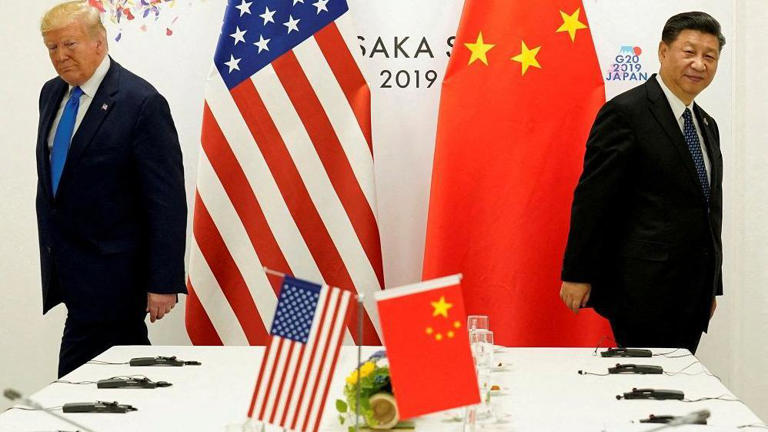
“China will fight to the bitter end of any trade war,” the foreign ministry spokesperson in Beijing declared, after China announced tit-for-tat tariffs on agricultural imports from the US.
This came within minutes of a new 10% US levy on Chinese imports that came into effect on Tuesday – which adds to existing tariffs both from Trump’s first term and those announced last month.
But China’s latest retaliatory measures are an opening swing, not a direct punch.
It shows some strength, and it has the potential to sting parts of the United States, but also leaves room to negotiate or escalate if necessary.
“We advise the US to put away it’s bullying face and return to the right track of dialogue and co-operation before it is too late,” foreign ministry spokesperson Lin Jian added.
This is the second round of tariffs the two countries have imposed on each other since February. But this time China is hitting Donald Trump where it has the potential to hurt – by targeting farmers, who are some of his core supporters.
Almost 78% of farming-dependent counties in the US endorsed Mr Trump in 2024.
China is one of their biggest customers for produce such as chicken, beef, pork and soybeans and now all those products will face a 10-15% tax which will come into effect on 10 March.
“The tariffs are broadly negative for US agricultural markets. It is going to have a bearish influence on prices. There are enough corn and soybean supplies in the world for China to make a switch, it is more of an issue for the US, because 30% of US soybeans still go to China,” Ole Houe, of Ikon commodities, told Reuters news agency.
Beijing may hope that this will apply some pressure on the Trump administration ahead of any potential negotiations.
The latest announcements raise the prospect of an all-out trade war between the world’s top two economies and in various ministry statements, China is making two things very clear.
Firstly, it is prepared to continue to fight.
“Pressure, coercion and threats are not the right way to deal with the Chinese side,” said Mr Lin.
But secondly, it is also willing to talk.
Beijing is not ramping up the rhetoric or the tariffs in the same way it did in 2018, during the last Trump administration. Back then it imposed a tariff of 25% on US soybeans.
“China’s tariffs impact a limited number of US products, and remain below the 20% level. This is by design. China’s government is signalling that they do not want to escalate, they want to de-escalate,” according to Even Pay, an analyst with Trivium China.
The prospect of talks was raised last month.
The White House said there would be a call between President Xi and Donald Trump. That never happened.
So will these talks take place and who will make the first move?
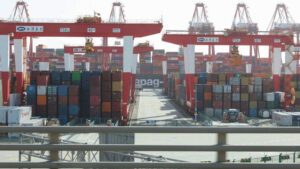
A new 10% US levy on Chinese imports that came into effect on Tuesday is likely to hurt Beijing
© Reuters
China is unlikely to want to go first. It will not want to be seen kowtowing to Washington.
And in contrast to Canada and Mexico, Beijing has not announced new measures to target the flow of fentanyl. It simply repeated past statements that fentanyl is a “US problem” and that China has the strictest drug policies in the world.
On Tuesday, the State Council released a White Paper entitled “Controlling Fentanyl-related substances – China’s contribution.”
It outlines the measures Beijing says it has already made to crack down on Fentanyl-related crimes and the precursor chemicals used to make the drug. It adds that it is “diligently fulfilling international drug control obligations”.
So, while China hasn’t picked up the phone to Washington, this document forms part of the country’s message which appears to be saying – we are already doing what we can on fentanyl.
Money worries
Despite stating that China “will not yield”, these latest tariffs are bound to sting.
The cumulative 20% tax on all Chinese goods comes on top of a slew of tariffs Trump imposed in his first term on tens of billions of dollars of Chinese imports. And China’s population is already concerned about a sluggish economy.
Thousands of delegates are gathering in the capital this week to take part in an annual parliamentary session, most of which will focus on the economy.
House prices are still falling, and youth unemployment remains stubbornly high. A potential trade war with the US could prompt more money worries for businesses and consumers across the country at a time when the Communist Party wants people to spend to help the economy to grow.
But Beijing will also see an opportunity as Donald Trump sows uncertainty among his international allies.
It can partly place the blame for any further economic woes at Washington’s door and state that it’s the fault of the US for starting a trade war.
The state media outlet Xinhua has in recent days released a series of parodies poking fun at a United States that is prepared to tax its allies and neighbours. The skits portray Washington as a bully echoing the words coming from the leaders of Canada and Mexico.
At the same time, China’s Commerce Ministry has reiterated that it is prepared to work with other countries around the world to combat Mr Trump’s tariffs.
Beijing appears to be looking for potential allies in this trade war while also trying to cast Washington as a troublemaker who is prepared to target friends and foes alike.
All at a time when Donald Trump’s ‘America First’ doctrine has many in Europe and the UK wondering if the US-led world order is already in doubt.








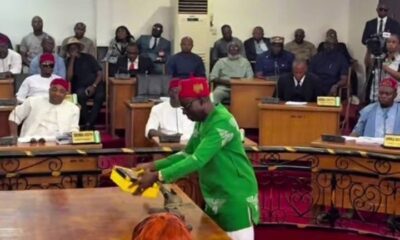

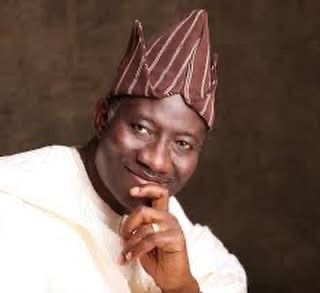
The Peoples Democratic Party (PDP), led by Tanimu Turaki, SAN, has scheduled to screen former president Goodluck Jonathan tomorrow, Tuesday, aMay 19, as the lone presidential candidate of party.
According to a statement from the PDP faction backed by the Oyo State Governor, Seyi Makinde, Former Vice-President Namadi Sambo, former governor of Plateau State, Jona Jang and a former Minister of Foreign Affairs, Tom Ikimi have been listed among a committee of 14 members to screen Jonathan described as a lone candidate by the party.
Other members of the committee were Chief Olabode George, Babangida Aliyu, Maryam ciroma, Zainab Maina, Josephine Anenin, Dr. Abdul Bulama, Dr. Esther Uduehi, Edo State PDP chairman, Tony Aziegbemi, Dr. Sunday Solarium and Chief Anicho Okoro, who would serve as administrative secretary of the committee.
Last week, the national Publicity Secretary of the faction, Ini Ememobong, disclosed that former president Jonathan has successfully registered as a member of the party in the fresh digital registration exercise directed by INEC.
The PDP faction also announced that it was set to screen 748 house of representatives aspirants, 198 senatorial aspirants, and 112 governorship aspirants.
The screening committee would screen 2122 states houses of assembly aspirants. The exercise will commence tomorrow, Tuesday in different states.
According to the statement, the screening exercise would take place nationwide on Tuesday, May 19, 2026, at 10:00 a.m.
The statement said the Interim National Working Committee (iNWC) has also released the names of members to serve on the Screening Committees and Screening Appeal Panels.
It added that the publication of the screening details “is in accordance with the party’s guidelines and timetable for the conduct of the 2027 general elections.”
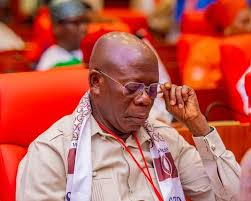
A former governor and incumbent Senator, Adams Oshiomhole, along with his counterpart Senator Joe Ikpea, sailed through the All Progressives Congress senatorial primary in Edo unopposed, and securing their tickets without a single vote cast against them.
Also Omoregie Ogbeide-Ihama emerged the winner in the APC primary for the Edo South senatorial district.
Ogbeide-Ihama won in the seven local government areas of Edo South in the results announced by the Chairman of APC National Assembly Primary Election, Muhammed Ajana at the Urokpota Hall, Benin.
He polled 27,154 votes while his opponents, Senator Neda Imasuen, got 13,580, and Pastor Osagie Ize-Iyamu got 6785.
The elections were hitch-free in Edo North and Edo Central, where there was no contest against the incumbents, Senators Oshiomhole of Edo North and Ikpea of Edo Central, respectively.
Ajana at the Urokpota Hall said the collation arose from votes cast in the seven local government areas made up of 77 wards where elections were conducted by members of the committee.
He said, “There are seven local governments that make up the Edo South Senatorial District. We have heard from the Returning officers from the seven local government areas. From the collation, the cumulative result we have for Edo South Senatorial District is this; Ogbeide-Ihama with 27,154 votes, Imasuen with 13,580 votes and Ize-Iyamu with 6, 785.
“This is the total reflection of what has transpired from the ward level to the local government and the Edo South senatorial district collation centre. With this we await further directives from the National Secretariat, we have done our best by collating the results which is our mandate, to collate the results and send them to the National Secretariat.”
However, it was gathered that Ize-Iyamu emerged as the APC candidate for Edo South Senatorial race. He claimed to have clinched the party’s ticket after defeating Ogbeide-Ihama and Imasuen.
It was claimed that the Chief Returning Officer, Abubakar Muhammad Kabiru, officially declared Ize-Iyamu the winner after securing the highest number of votes cast.
On his part, the senator representing the district condemned the exercise describing it as a sham allegedly designed to favour a preferred aspirant.
Imasuen spoke while reacting to events at his polling unit in Umagbae North Ward 5, Urhokuosa where he said he was denied the opportunity to vote following what he described as a chaotic and manipulated process.
The lawmaker accused leaders of the party of openly adopting a preferred candidate ahead of the exercise and intimidating members into supporting that aspirant.
He said, “There is nothing satisfactory about this sham of election they did today and it is very unfortunate because as a loyal party member, I expected something better than this.”
He said the warning signs emerged days before the primary when some ward chairmen allegedly informed him that they had been directed not to receive him during consultations.
Imasuen claimed that some ward leaders openly told him the party had already adopted a preferred aspirant, identified as Hon. Omoregie Ogbeide-Ihama, making further consultations unnecessary.
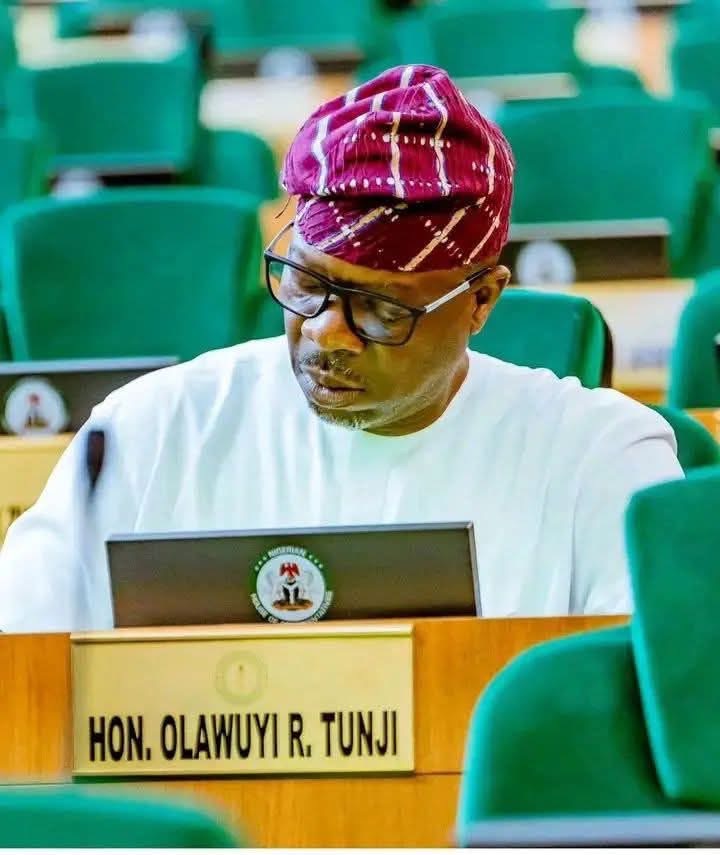
The re-election bid of the member representing Ekiti/Isin/Irepodun/Oke-Ero Federal Constituency, Hon. Raheem Tunji Olawuyi, popularly known as Ajuloopin, suffered a major setback on Friday after party members in his home ward, Omu-Aran Ward 1, boycotted the All Progressives Congress APC House of Representatives primary.
According to party stakeholders and observers present at the exercise, no valid election took place in the ward after members refused to participate in protest against what they described as the lawmaker’s poor performance after three consecutive terms in the House of Representatives.
Sources in the ward said efforts by some political figures and loyalists to persuade members to back Ajuloopin’s ambition failed, with party faithful insisting they would not endorse what they termed an attempt to impose his candidacy again.
The boycott led to a breakdown of the electoral process in Omu-Aran Ward 1, with many members staying away from the polls entirely. Stakeholders have called on the APC Electoral Committee to disregard any result purportedly presented from the ward, arguing that no credible primary was conducted there.
Political observers in the constituency described the development as a significant blow to Ajuloopin, noting that the rejection came from his own ward and among constituents most familiar with his record.
Preliminary reports from other parts of Irepodun, Isin and Oke-Ero local government areas, where voting proceeded, also indicated weak support for the incumbent. Many party members were said to have voted for alternative aspirants.
APC stakeholders have urged the party leadership to review reports from affected wards and accept only authentic and verifiable results to preserve the credibility of the primaries. They stressed that internal democracy was critical to the party’s prospects in the constituency and warned against imposing unpopular candidates ahead of the 2027 elections.
With tension rising across the federal constituency, party faithful said the leadership must listen to grassroots members and allow delegates and supporters to determine the outcome of the primaries.

Bandits behind Ogbomoso school abduction will face full wrath of the law- President Tinubu

PDP to screen Goodluck Jonathan on Tuesday as its sole Presidential aspirant For 2027 race

Oshiomhole wins Edo APC senatorial primaries unopposed

-
Business2 years ago
US court acquits Air Peace boss, slams Mayfield $4000 fine
-

 Trending2 years ago
NYA demands release of ‘abducted’ Imo chairman, preaches good governance
-

 Politics2 years ago
Mexico’s new president causes concern just weeks before the US elections
-

 Politics2 years ago
Putin invites 20 world leaders
-

 Politics2 years ago
Russia bans imports of agro-products from Kazakhstan after refusal to join BRICS
-
Entertainment2 years ago
Bobrisky falls ill in police custody, rushed to hospital
-
Entertainment2 years ago
Bobrisky transferred from Immigration to FCID, spends night behind bars
-
Education2 years ago
GOVERNOR FUBARA APPOINTS COUNCIL MEMBERS FOR KEN SARO-WIWA POLYTECHNIC BORI