
Politics
Elon Musk brands Zelensky ‘evil’ for pushing ‘forever war’ with Russia

- PODCAST: Trump’s favorites and frenemies, Zelensky, the Epstein files and an invitation from the King! Listen here
Elon Musk has branded Volodymyr Zelensky ‘evil’ for pushing a ‘forever war’ with Russia.
‘Zelensky wants a forever war, a never-ending graft meat grinder. This is evil,’ Musk said in reaction to a Truth Social post by Donald Trump lashing out at Zelensky for saying the end of the war with Russia was ‘still very, very far away’.
‘This is the worst statement that could have been made by Zelensky, and America will not put up with it for much longer,’ an infuriated Trump posted on his Truth Social website after upping the pressure on Kyiv to end the war.
Trump added that Zelensky ‘doesn’t want there to be peace as long as he has America’s backing’.
Musk also alleged in another post that Zelensky ‘wants a forever war’ because he would otherwise ‘lose his spotlight on the international stage’.
US President Trump hinted during a press conference on Monday that Zelensky might not survive long as Ukrainian president if he continued to make demands ahead of a peace deal.
‘It should not be that hard a deal to make,’ Trump told reporters at the White House.
‘It could be made very fast. Now, maybe somebody doesn’t want to make a deal, and if somebody doesn’t want to make a deal, I think that person won’t be around very long. That person will not be listened to very long.’
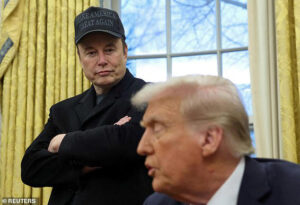
Elon Musk listens to U.S. President Donald Trump speak in the Oval Office of the White House in Washington, D.C., U.S., February 11, 2025
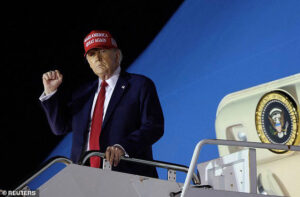
Donald Trump (pictured) slammed Ukrainian President Volodymyr Zelensky on Monday, saying he wasn’t interested in finding peace
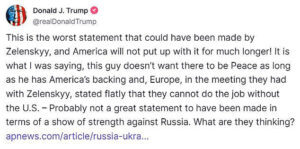
Trump renewed his attack on Zelensky with a Truth Social post
On Friday, Zelensky’s visit to the White House ended in disaster after the two leaders clashed in the Oval Office over whether or not Russian President Vladimir Putin could be trusted.
Zelensky then traveled to the UK where European leaders – among them France, Germany and the UK – and Canada scrambled to thrash out a joint position on Ukraine at an emergency summit before reiterating their support for the war-torn country.
Trump said: ‘It is what I was saying, this guy doesn’t want there to be Peace as long as he has America’s backing and, Europe, in the meeting they had with Zelensky, stated flatly that they cannot do the job without the U.S.’
He added in what appeared to be an attack on European leaders: ‘Probably not a great statement to have been made in terms of a show of strength against Russia. What are they thinking?’
This comes after NATO chief Mark Rutte last night pointed to promises from more European countries to ‘ramp up defence spending’, while insisting that Washington remained committed to the transatlantic alliance.
French President Emmanuel Macron suggested that European countries should raise their defence spending to between 3.0 and 3.5 percent of GDP to respond to Washington’s shifting priorities and Russia’s militarisation.
Last week, British Prime Minister Sir Keir Starmerannounced that the UK would increase its defence spending to 2.5 per cent of its GDP, slashing the aid budget, with plans to increase military spending to three per cent soon after.
While the US is the largest single donor of aid to Ukraine, more than 50 allies and partner countries have provided security assurances to Ukraine since the start of the Russian invasion in 2022.

Ukraine’s President Volodymyr Zelensky, Britain’s Prime Minister Keir Starmer and France’s President Emmanuel Macron embrace after holding a meeting during a summit at Lancaster House in central London on March 2, 2025
As of December 31, 2024, Europe had contributed 132.3bn euros in allocated aid, versus 114.2bn given by the US.
Europe’s contributions are also expected to keep flowing; 115.1bn remained to be allocated from Europe, with just 4.84bn from the US.
The key difference is in what the U.S. is able to supply. Britain has been able to match the U.S. with long-range missiles, able to hit deep into Russian territory. And the Challenger 2 tank has been one of the most reliable fixtures on the battlefield.
But American air defences – and their sheer volume – are critical to fending off Russian attacks on Ukrainian cities and disrupting utilities.
Long range ATACMS missiles can also ‘make a significant difference in the war’, according to Olga Tokariuk, Academy Associate, Ukraine Forum, Russia and Eurasia Programme.
The summit between the European leaders, where countries promised to increase their defence spending to react to Washington’s shifting priorities and Russia’s militarisation, has been commended by US national security advisor Mike Waltz.
‘We welcome the Europeans taking a lead in European security,’ he told reporters at the White House and even praised Sir Keir and Macron.
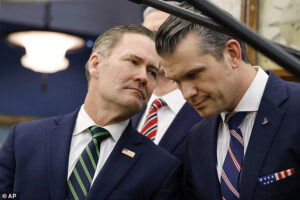
National Security Adviser Mike Waltz (left) and Defense Secretary Pete Hegseth
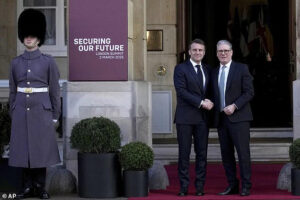
Britain’s Prime Minister Keir Starmer, right, greets French President Emmanuel Macron as he arrives for a summit on Ukraine at Lancaster House in London, Sunday, March 2, 2025
‘I mean that’s been an underpinning. They have to invest in the capability to do that. They’re certainly showing a will. Both Starmer and Macron showed that will last week before Friday.’
Waltz added: ‘We also had the NATO Secretary-General on the phone with the president before President Zelensky came. We welcome Europe stepping up for Europe, but they have to also invest in the capabilities to do so.
‘All of that was evident was before Friday, and he [Zelensky] could have been left with economic guarantees that benefited Ukraine […] it’s really confounding to us why we had such hostility coming in.’


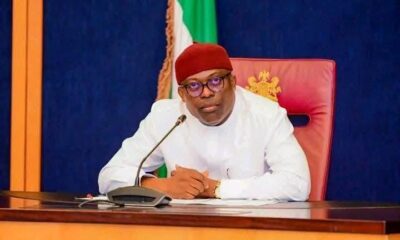


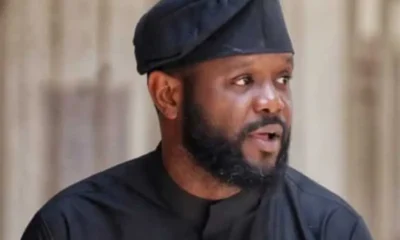



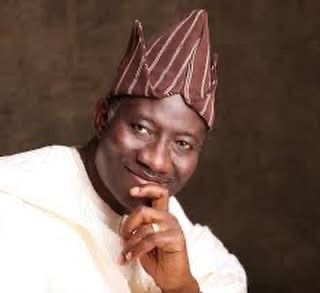
The Peoples Democratic Party (PDP), led by Tanimu Turaki, SAN, has scheduled to screen former president Goodluck Jonathan tomorrow, Tuesday, aMay 19, as the lone presidential candidate of party.
According to a statement from the PDP faction backed by the Oyo State Governor, Seyi Makinde, Former Vice-President Namadi Sambo, former governor of Plateau State, Jona Jang and a former Minister of Foreign Affairs, Tom Ikimi have been listed among a committee of 14 members to screen Jonathan described as a lone candidate by the party.
Other members of the committee were Chief Olabode George, Babangida Aliyu, Maryam ciroma, Zainab Maina, Josephine Anenin, Dr. Abdul Bulama, Dr. Esther Uduehi, Edo State PDP chairman, Tony Aziegbemi, Dr. Sunday Solarium and Chief Anicho Okoro, who would serve as administrative secretary of the committee.
Last week, the national Publicity Secretary of the faction, Ini Ememobong, disclosed that former president Jonathan has successfully registered as a member of the party in the fresh digital registration exercise directed by INEC.
The PDP faction also announced that it was set to screen 748 house of representatives aspirants, 198 senatorial aspirants, and 112 governorship aspirants.
The screening committee would screen 2122 states houses of assembly aspirants. The exercise will commence tomorrow, Tuesday in different states.
According to the statement, the screening exercise would take place nationwide on Tuesday, May 19, 2026, at 10:00 a.m.
The statement said the Interim National Working Committee (iNWC) has also released the names of members to serve on the Screening Committees and Screening Appeal Panels.
It added that the publication of the screening details “is in accordance with the party’s guidelines and timetable for the conduct of the 2027 general elections.”
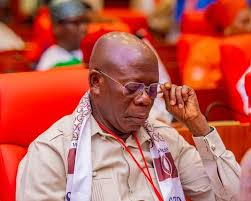
A former governor and incumbent Senator, Adams Oshiomhole, along with his counterpart Senator Joe Ikpea, sailed through the All Progressives Congress senatorial primary in Edo unopposed, and securing their tickets without a single vote cast against them.
Also Omoregie Ogbeide-Ihama emerged the winner in the APC primary for the Edo South senatorial district.
Ogbeide-Ihama won in the seven local government areas of Edo South in the results announced by the Chairman of APC National Assembly Primary Election, Muhammed Ajana at the Urokpota Hall, Benin.
He polled 27,154 votes while his opponents, Senator Neda Imasuen, got 13,580, and Pastor Osagie Ize-Iyamu got 6785.
The elections were hitch-free in Edo North and Edo Central, where there was no contest against the incumbents, Senators Oshiomhole of Edo North and Ikpea of Edo Central, respectively.
Ajana at the Urokpota Hall said the collation arose from votes cast in the seven local government areas made up of 77 wards where elections were conducted by members of the committee.
He said, “There are seven local governments that make up the Edo South Senatorial District. We have heard from the Returning officers from the seven local government areas. From the collation, the cumulative result we have for Edo South Senatorial District is this; Ogbeide-Ihama with 27,154 votes, Imasuen with 13,580 votes and Ize-Iyamu with 6, 785.
“This is the total reflection of what has transpired from the ward level to the local government and the Edo South senatorial district collation centre. With this we await further directives from the National Secretariat, we have done our best by collating the results which is our mandate, to collate the results and send them to the National Secretariat.”
However, it was gathered that Ize-Iyamu emerged as the APC candidate for Edo South Senatorial race. He claimed to have clinched the party’s ticket after defeating Ogbeide-Ihama and Imasuen.
It was claimed that the Chief Returning Officer, Abubakar Muhammad Kabiru, officially declared Ize-Iyamu the winner after securing the highest number of votes cast.
On his part, the senator representing the district condemned the exercise describing it as a sham allegedly designed to favour a preferred aspirant.
Imasuen spoke while reacting to events at his polling unit in Umagbae North Ward 5, Urhokuosa where he said he was denied the opportunity to vote following what he described as a chaotic and manipulated process.
The lawmaker accused leaders of the party of openly adopting a preferred candidate ahead of the exercise and intimidating members into supporting that aspirant.
He said, “There is nothing satisfactory about this sham of election they did today and it is very unfortunate because as a loyal party member, I expected something better than this.”
He said the warning signs emerged days before the primary when some ward chairmen allegedly informed him that they had been directed not to receive him during consultations.
Imasuen claimed that some ward leaders openly told him the party had already adopted a preferred aspirant, identified as Hon. Omoregie Ogbeide-Ihama, making further consultations unnecessary.
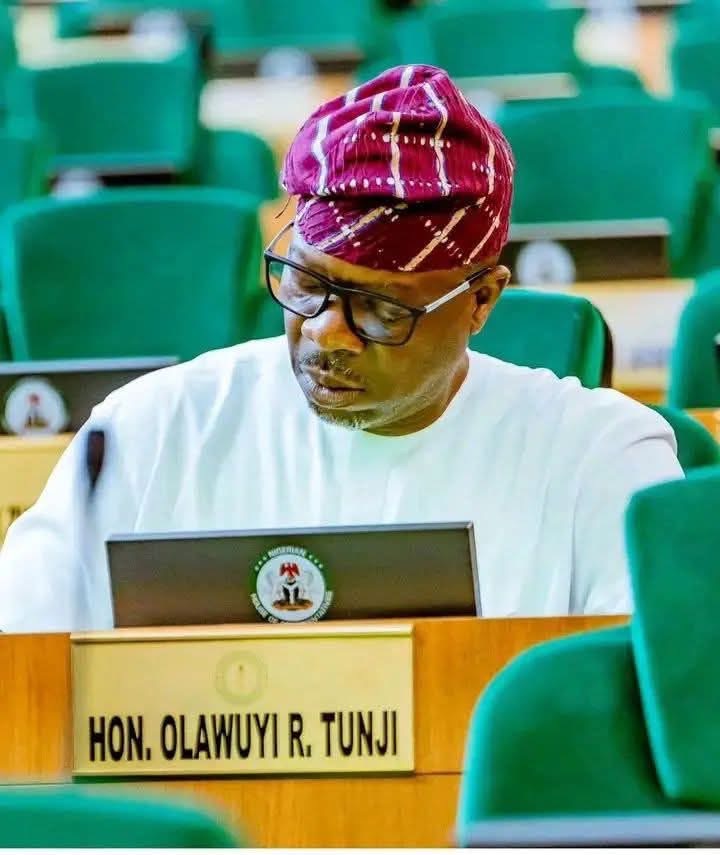
The re-election bid of the member representing Ekiti/Isin/Irepodun/Oke-Ero Federal Constituency, Hon. Raheem Tunji Olawuyi, popularly known as Ajuloopin, suffered a major setback on Friday after party members in his home ward, Omu-Aran Ward 1, boycotted the All Progressives Congress APC House of Representatives primary.
According to party stakeholders and observers present at the exercise, no valid election took place in the ward after members refused to participate in protest against what they described as the lawmaker’s poor performance after three consecutive terms in the House of Representatives.
Sources in the ward said efforts by some political figures and loyalists to persuade members to back Ajuloopin’s ambition failed, with party faithful insisting they would not endorse what they termed an attempt to impose his candidacy again.
The boycott led to a breakdown of the electoral process in Omu-Aran Ward 1, with many members staying away from the polls entirely. Stakeholders have called on the APC Electoral Committee to disregard any result purportedly presented from the ward, arguing that no credible primary was conducted there.
Political observers in the constituency described the development as a significant blow to Ajuloopin, noting that the rejection came from his own ward and among constituents most familiar with his record.
Preliminary reports from other parts of Irepodun, Isin and Oke-Ero local government areas, where voting proceeded, also indicated weak support for the incumbent. Many party members were said to have voted for alternative aspirants.
APC stakeholders have urged the party leadership to review reports from affected wards and accept only authentic and verifiable results to preserve the credibility of the primaries. They stressed that internal democracy was critical to the party’s prospects in the constituency and warned against imposing unpopular candidates ahead of the 2027 elections.
With tension rising across the federal constituency, party faithful said the leadership must listen to grassroots members and allow delegates and supporters to determine the outcome of the primaries.

Bandits behind Ogbomoso school abduction will face full wrath of the law- President Tinubu

PDP to screen Goodluck Jonathan on Tuesday as its sole Presidential aspirant For 2027 race

Oshiomhole wins Edo APC senatorial primaries unopposed

-
Business2 years ago
US court acquits Air Peace boss, slams Mayfield $4000 fine
-

 Trending2 years ago
NYA demands release of ‘abducted’ Imo chairman, preaches good governance
-

 Politics2 years ago
Mexico’s new president causes concern just weeks before the US elections
-

 Politics2 years ago
Putin invites 20 world leaders
-

 Politics2 years ago
Russia bans imports of agro-products from Kazakhstan after refusal to join BRICS
-
Entertainment2 years ago
Bobrisky falls ill in police custody, rushed to hospital
-
Entertainment2 years ago
Bobrisky transferred from Immigration to FCID, spends night behind bars
-
Education2 years ago
GOVERNOR FUBARA APPOINTS COUNCIL MEMBERS FOR KEN SARO-WIWA POLYTECHNIC BORI