
Politics
Republicans unveil Trump-backed bill to avoid shutdown, daring Democrats to oppose it

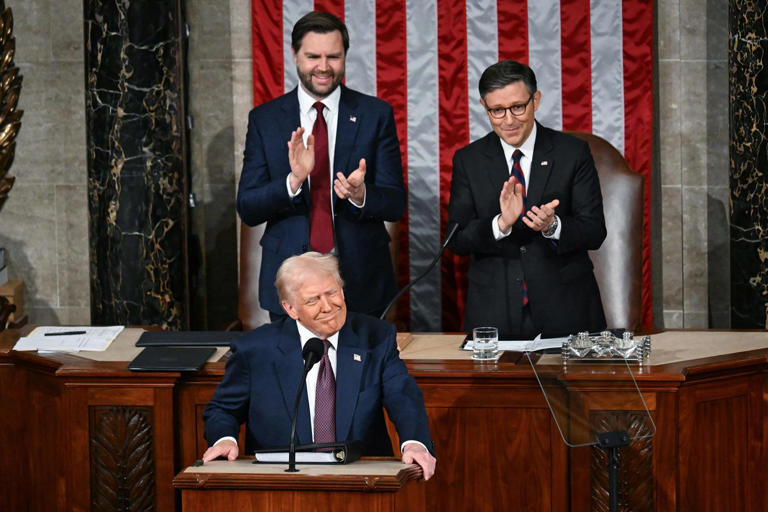
The US president’s party, despite struggling in the past to pass funding bills on its own, is pushing ahead with a go-it-alone strategy
US House Republicans unveiled a spending bill on Saturday that would keep federal agencies funded through September 30, pushing ahead with a go-it-alone strategy that seems certain to spark a major confrontation with Democrats over the contours of government spending.
The 99-page bill would provide a slight boost to defence programmes while trimming non-defence programmes below 2024 budget year levels. That approach is likely to be a non-starter for most Democrats who have long insisted that defence and non-defence spending move in the same direction.
Congress must act by midnight on Friday to avoid a partial government shutdown.
Do you have questions about the biggest topics and trends from around the world? Get the answers with SCMP Knowledge, our new platform of curated content with explainers, FAQs, analyses and infographics brought to you by our award-winning team.
Republican Speaker Mike Johnson is teeing up the bill for a vote on Tuesday despite the lack of buy-in from Democrats, essentially daring them to vote against it and risk a shutdown. He also is betting that Republicans can muscle the legislation through the House largely by themselves.
Normally, when it comes to keeping the government fully open for business, Republicans have had to work with Democrats to craft a bipartisan measure that both sides can support. That’s because Republicans almost always lack the votes to pass spending bills on their own.
Crucially, the strategy has the backing of US President Donald Trump, who has shown an ability so far in his term to hold Republicans in line.
Trump praised the bill, writing on social media that Republicans have to “remain UNITED – NO DISSENT – Fight for another day when the timing is right.”
“Great things are coming for America, and I am asking you all to give us a few months to get us through to September so we can continue to put the Country’s ‘financial house’ in order,” he said.
House Republicans’ leadership staff outlined the contours of the measure, saying it would allow for about US$892.5 billion in defence spending and about US$708 billion in non-defence spending. The defence spending is slightly above the prior year’s level, but the non-defence spending, the aides said, was about US$13 billion below last year.
The measure also will not include funding requested by individual lawmakers for thousands of community projects around the country, often referred to as earmarks.
The bill does not cover most government spending, including programmes such as Social Security and Medicare. Funding for those two programmes is on autopilot and is not regularly reviewed by Congress.
The top Democrats on the House and Senate Appropriations Committees, Connecticut congresswoman Rosa DeLauro and Washington Senator Patty Murray, both issued statements blasting the legislation.
“I strongly oppose this full-year continuing resolution,” DeLauro said.
Murray said the legislation would “give Donald Trump and Elon Musk more power over federal spending – and more power to pick winners and losers, which threatens families in blue and red states alike”.
Maine Senator Susan Collins, who heads the Senate Appropriations Committee, said the focus must be on preventing a shutdown because closures have negative consequences all across government.
“They require certain essential government employees, such as Border Patrol agents, members of our military and coastguard, TSA screeners, and air traffic controllers, to report to work with no certainty on when they will receive their next pay cheque,” Collins said. “We cannot allow that to occur.”
Trump’s request for unity appears to be having an effect. Some conservatives who almost never vote for continuing resolutions expressed much openness to one last week.
Republican congressman Ralph Norman said he has never voted for a continuing resolution, what lawmakers often call a CR, but he is on board with Johnson’s effort. He said he has confidence in Trump and the Department of Government Efficiency, led by Elon Musk, to make a difference on the nation’s debt.
“I don’t like CRs,” Norman said. “But what’s the alternative? Negotiate with Democrats? No.”
“I freeze spending for six month to go identify more cuts? Somebody tell me how that’s not a win in Washington,” added congressman Chip Roy, another Republican lawmaker who has often frequently voted against spending bills but supports the six-month continuing resolution.
Republicans are also hoping that resolving this year’s spending will allow them to devote their full attention to extending the individual tax cuts passed during Trump’s first term and raising the nation’s debt limit to avoid a catastrophic federal default.
Democratic leaders are warning that the decision to move ahead without consulting them increases the prospects for a shutdown. One of their biggest concerns is the flexibility the legislation would give the Trump administration on spending.
The Democratic leadership in both chambers has stressed that Republicans have the majority and are responsible for funding the government. But leaders also have been wary of saying how Democrats would vote on a continuing resolution.
“We have to wait to see what their plan is,” said Senate Democratic leader Chuck Schumer of New York. “We’ve always believed the only solution is a bipartisan solution, no matter what.”
House Democratic leader Hakeem Jeffries of New York said earlier this week that the Democratic caucus would meet and discuss the legislation at the “appropriate moment”. But he struck a more forceful tone Friday.
Jeffries said Democrats are ready to negotiate a “meaningful, bipartisan spending agreement that puts working people first”. But he said the “partisan continuing resolution” threatens to cut funding for key programmes, such as veterans benefits and nutritional aid for low-income families.
“That is not acceptable,” Jeffries said.
Trump has been meeting with House Republicans in an effort to win their votes on the legislation. Republicans have a 218-214 majority in the House, so if all lawmakers vote, they can afford only one defection if Democrats unite in opposition. The maths gets even harder in the Senate, where at least seven Democrats would have to vote for the legislation to overcome a filibuster. And that is assuming all 53 Republicans vote for it.
More Articles from SCMP
LIV Golf Hong Kong: Garcia and Uihlein join Casey at top, Legion XIII threaten Torque
Hong Kong seizes 6 million illicit cigarettes, heated tobacco products
For Hong Kong’s top court, challenges of the security law have only just begun
Crack down on corruption, deploy technology – Xi Jinping’s twin missions for China’s military
This article originally appeared on the South China Morning Post (www.scmp.com), the leading news media reporting on China and Asia.
Copyright (c) 2025. South China Morning Post Publishers Ltd. All rights reserved.






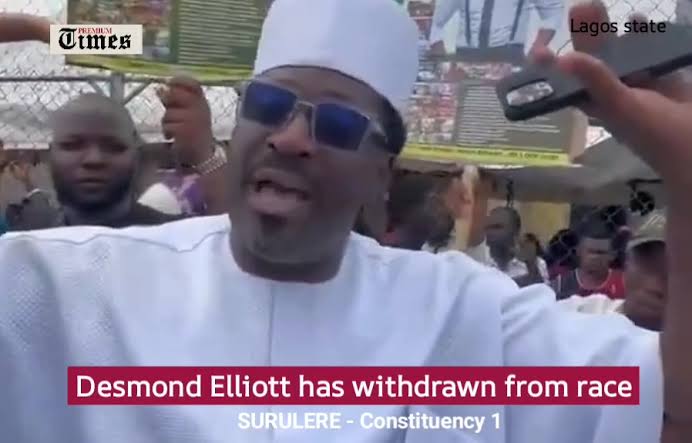
Surulere I lawmaker Desmond Elliot has withdrawn from the All Progressives Congress Lagos House of Assembly primaries, citing intimidation across multiple zones.
In a viral video posted online, the lawmaker said he was stepping out of the race despite seeking re-election under the APC. He alleged that his supporters faced intimidation during the process in several parts of the constituency.
Elliot’s decision came as the primaries held across Lagos on Tuesday. Chief of Staff to the President Femi Gbajabiamila, who represents Surulere Federal Constituency, praised the conduct of the exercise in Surulere, describing it as peaceful.
The withdrawal narrows the contest for the APC ticket in Surulere I ahead of the 2027 general election. Party officials in Lagos have not yet responded to Elliot’s claims, and the APC state chapter has not announced whether the primary in the constituency will proceed with other aspirants.
Elliot has represented Surulere I in the Lagos State House of Assembly since 2015.
https://www.instagram.com/reel/DYkCaAiMxxt/?igsh=ZWw5czl6MHJhNnRy
Politics
Political Shockwave in Rivers as Fubara Pulls Out of APC Governorship Race, Backs Party’s Candidate
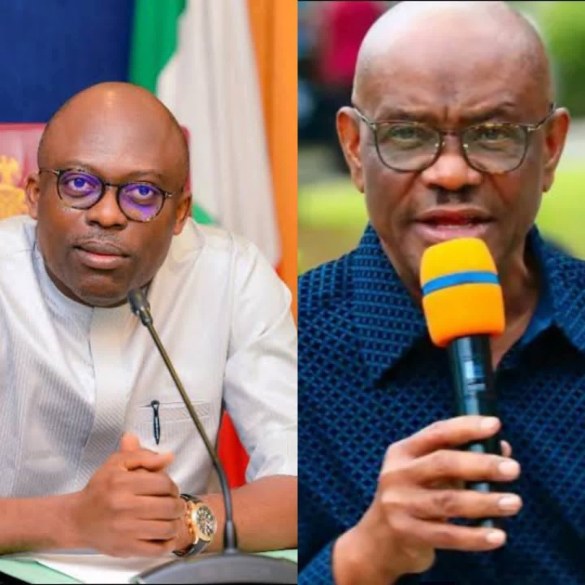
Rivers State Governor, Siminalayi Fubara, has officially withdrawn from the All Progressives Congress (APC) governorship primaries scheduled to take place on Thursday, a development that has stirred fresh political conversations across the state.
The governor announced his decision in a personally signed statement titled “My Decision to Withdraw from the Rivers State Gubernatorial Primaries,” which was released on Wednesday night.
In the statement, Fubara explained that his withdrawal followed wide consultations with political associates, stakeholders, and supporters. He stated that the decision was taken in the overall interest of peace, unity, and stability within the APC and Rivers State at large.
According to the governor, politics should not be allowed to divide the people or create unnecessary tension within the party. He stressed that preserving unity among party members and maintaining stability in the state remain more important than personal political ambition.
Fubara further pledged his total loyalty and support to whoever eventually emerges as the APC governorship candidate, assuring party faithful that he remains committed to the success and progress of the party ahead of the next general elections.
The Rivers governor also appreciated his supporters across the state for standing by him throughout the political process. He thanked party leaders, youth groups, women supporters, and political associates who had continued to show him solidarity and encouragement.
He urged his supporters not to see his withdrawal as the end of his political journey, but rather as a decision made in the collective interest of the party and the state. He also appealed to them to remain peaceful, united, and committed to the ideals of the APC.
Political observers have described the development as one of the biggest political surprises in Rivers State in recent times, especially considering the growing speculations and intense political alignments ahead of the governorship primaries.
Analysts believe the governor’s withdrawal may reshape the political calculations within the APC and influence the direction of the party’s governorship race moving forward.
The announcement has continued to generate mixed reactions from political stakeholders and residents across Rivers State. While some supporters described the move as strategic and mature, others expressed surprise over the governor’s sudden exit from the contest.
Several party faithful, however, commended Fubara for placing party unity and stability above personal ambition, noting that his decision may help reduce internal tensions and strengthen the APC ahead of the elections.
The development has also intensified attention on the remaining aspirants contesting for the APC governorship ticket, as consultations and political meetings continue ahead of the primary election.
Many observers believe the governor’s endorsement of the eventual APC candidate could play a major role in shaping the outcome of the party’s governorship battle and future political structure in the state.
As political activities continue to gather momentum in Rivers State, all eyes are now on the APC primaries and the next phase of political developments expected to unfold in the coming days.
Politics
Ugochukwu Obodo wins Owerri Municipal APC ticket again as APC Elects 27 Imo Assembly Candidates After Successful Primaries
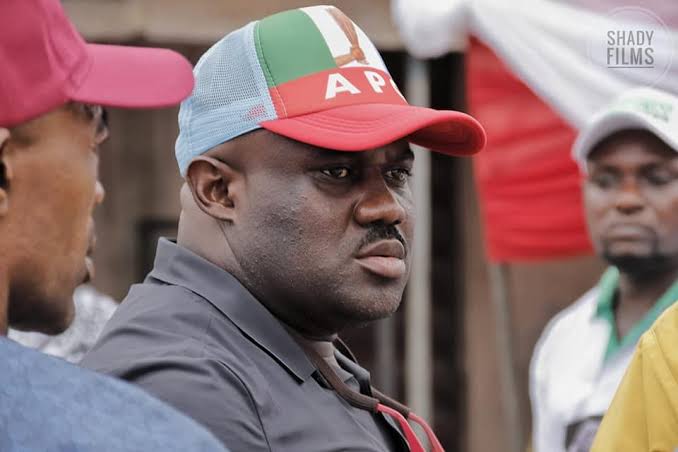
The leadership and members of the All Progressives Congress (APC) in Imo State have successfully elected 27 candidates who emerged victorious during the recently concluded Imo State House of Assembly primary elections conducted across the 305 wards of the State.
In a statement obtained by ThePressman Newspaper, the leadership of Imo APC described the primary election exercise as peaceful, transparent, credible, and reflective of the democratic ideals and internal cohesion of the party.
The information from the party commended party faithful, delegates, stakeholders, and supporters for their maturity, discipline, unity, and sportsmanship throughout the electoral process, noting that the successful conduct of the primaries further demonstrated the organizational strength and readiness of the APC ahead of the 2027 general elections.
According to the statement, the outcome of the primaries reaffirmed the confidence reposed in the party by members across the State, while also positioning the APC for a formidable outing in the forthcoming elections.
The Imo APC leadership warmly congratulated the party’s standard bearers who emerged across the 27 State Constituencies, namely:
Uchenna Osigwe – Orsu LGA
Chantel Adanna Onwumere – Ikeduru
Obodo Ugochukwu – Owerri Municipal
Hon. Ernest Udeze – Ideato North
Godspower Onyeibe – Ideato South
Mrs Julie Egbo – Owerri North
Rt. Hon. Kanayo Onyemaechi – Owerri West
Prince Marcel Amadioha – Ohaji Egbema
Hon. Gilbert Nwosu – Oguta
Hon. Uche Obiozor – Oru East
Hon. Emeka Agbor – Oru West
Rt. Hon. Obinna Egu – Ngor-Okpala
Hon. Magnus Okolie – Orlu
Hon. Innocent Ikpamezie – Mbaitoli
Hon. Modestus Osakwe – Isu
Hon.Ebonine Ozioma Worship – Njaba
Rt Hon Amarachi Chyna Iwuanyanwu – Nwangele
Hon. Chisom Ojukwu – Nkwerre
Hon. Doris Anyanwu – Ahiazu Mbaise
Hon. Princewill Amuchie – Aboh Mbaise
Hon. Henry Agbasonu – Ezinihitte Mbaise
Hon. Sam Osuji – Isiala Mbano
Ben Ozoemenam – Ehime Mbano
Hon. Emeka Okoronkwo – Okigwe
Prince Humphrey Okeke – Obowo
Lady Blessing Nwoba – Ihitte-Uboma
Hon. Chibuzor Umunnakwe – Onuimo
The party further expressed confidence that the emergence of the candidates would strengthen the APC’s chances of securing victory across the State during the 2027 general elections.

Desmond Elliot Withdraws from APC Lagos Assembly Primaries, Cites Intimidation

Political Shockwave in Rivers as Fubara Pulls Out of APC Governorship Race, Backs Party’s Candidate

Ugochukwu Obodo wins Owerri Municipal APC ticket again as APC Elects 27 Imo Assembly Candidates After Successful Primaries

-
Business2 years ago
US court acquits Air Peace boss, slams Mayfield $4000 fine
-

 Trending2 years ago
NYA demands release of ‘abducted’ Imo chairman, preaches good governance
-

 Politics2 years ago
Mexico’s new president causes concern just weeks before the US elections
-

 Politics2 years ago
Putin invites 20 world leaders
-

 Politics2 years ago
Russia bans imports of agro-products from Kazakhstan after refusal to join BRICS
-
Entertainment2 years ago
Bobrisky falls ill in police custody, rushed to hospital
-
Entertainment2 years ago
Bobrisky transferred from Immigration to FCID, spends night behind bars
-
Education2 years ago
GOVERNOR FUBARA APPOINTS COUNCIL MEMBERS FOR KEN SARO-WIWA POLYTECHNIC BORI