
News
Middle-Belt Forum kicks against proposal to keep Sultan, Ooni permanent co-chairman of NCTRN

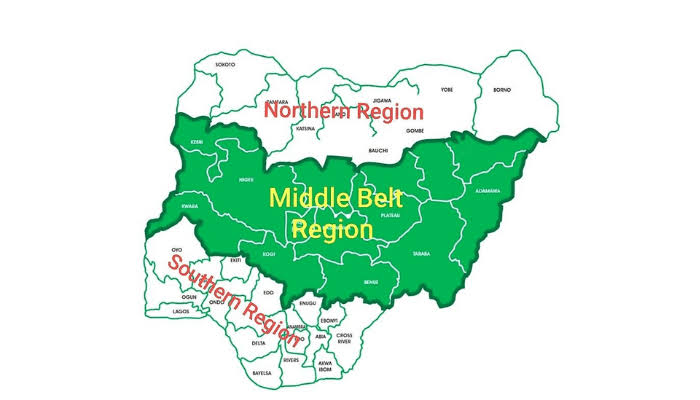
The Middle Belt Forum (MBF) has expressed its firm opposition to a contentious clause in the National Council for Traditional Rulers of Nigeria (Establishment) Bill, 2024, currently before the National Assembly.
The Bill, sponsored by Senator Simon Bako Lalong (Plateau South), who is from the Middle Belt and the Gwad-Goemai of the Goemai ethnic nation, has passed its second reading as of March 2025 and is now under consideration by the Senate Committee on Establishment and Public Service.
At the heart of the controversy lies a deeply troubling clause in the Bill which proposes that the Sultan of Sokoto and the Ooni of Ife be made permanent co-chairmen of the proposed National Council for Traditional Rulers.
The position of the MBF was contained in a recent statement issued by the body, and signed by Luka Binniya, the national spokesperson of the group, a copy which is in position of BusinssDay, stated that while group leave their partners from the Southern region, to determine their position on the inclusion of the Ooni of Ife, the Middle Belt Forum unequivocally rejects, abhors, and condemns the institutionalisation of the Sultan of Sokoto as a permanent co-chairman of this proposed council.
The rejection the group said is anchored on strong historical, cultural, constitutional, and moral grounds, which we now outline in clear terms: that the Sokoto Sultanate is Historically Junior to Middle Belt Monarchies, noting that historically, the Sokoto Caliphate is a relatively young institution compared to ancient kingdoms and confederacies in the Middle Belt. For instance, the Kwararafa Confederacy, which flourished for centuries, predates the Caliphate.
“It is a historically documented fact that the confederate state of Kwarafa existed right back to circa 800s-1700s A.D. The Aku Uka of Wukari, its current spiritual heir, represents a legacy that predates Sokoto Caliphate’s very existence. The Sultan of Sokoto can therefore not supersede the Aku Uka of Wukari in status and prestige to seat over him as Chairman of the Traditional Council created by law.
“Also, the Attah of Igala, whose kingdom flourished well before and after the 14th century, occupies a higher pedestal in terms of history, cultural roots, and legitimacy. The Igala Kingdom never came under the caliphate’s domain and continues to represent deep-rooted indigenous authority far older and more authentically Nigerian than the Sokoto Sultanate.
“The Tiv Nation, one of the largest ethnolinguistic groups in Nigeria, was never conquered by the Sokoto Caliphate. The Tor Tiv stands as the supreme symbol of a proud, resilient people who were acephalous and thrived independently before colonial rule. To ask that the Tor Tiv permanently defer to the Sultan in council matters is a gross distortion of historical facts and a violation of indigenous dignity.
“It is also on record that the Nupe Kingdom preceded the Sokoto Caliphate, and the Kingdom, which has a proud lineage dating back to the 15th century, has its own deep-rooted traditional structures. Even though Fulani jihadists eventually imposed Islamic rule in Nupe land post-1835, the Etsu Nupe today still represents an enduring cultural institution that predates the Caliphate. In no logical or historical context can the Caliphate claim seniority or supremacy over Nupe tradition.
“Sultan is Primarily a Religious Leader, not a Secular Traditional Monarch, In Nigeria today, the Sultan of Sokoto is widely acknowledged as the spiritual head of all Nigerian Muslims, particularly across the 19 Northern States and the FCT.
“His spiritual leadership role is fundamentally religious. It is not secular. Therefore, his institutionalised leadership over a national council of traditional rulers would alienate Christians, traditional worshippers, and other faiths, violating the secular spirit of Nigeria’s Constitution. It would also skew the balance of representation in favour of Islam, thereby promoting religious supremacy under the guise of traditional unity.
“Kanem Borno Historical/Islamic Legacy Outranks Sokoto Caliphate, although the Kanuri people are not part of the Middle Belt, the truth must however be told: the Shehu of Borno ranks higher than the Sultan of Sokoto in historical standing. Kanem-Borno embraced Islam as early as the 11th century (circa 1085 AD), long before the 1804 Sokoto Jihad, which never conquered Borno. It is therefore left for the Kanuri people to state their position on this matter.
“The Sultan’s Patronage of MACBAN and the Fulani Crisis. It is on public record that the Sultan of Sokoto is the permanent patron of Miyetti Allah Cattle Breeders Association (MACBAN), an organisation whose name has become closely linked with violent Fulani herdsmen, who are responsible for thousands of deaths and the displacement of millions, especially in the Middle Belt. “The Sultan has not done enough to condemn or dissociate himself from these atrocities. Making him a permanent co-chairman under such circumstances is a grievous insult to the thousands of victims who continue to suffer under Fulani militia attacks”, the statement noted.
Based on the mentioned reasons, the group stated that the Middle Belt Cannot Continue to Defer to the Sokoto Sultanate, noting that Sixty-five years after Nigeria’s independence, the Middle Belt can no longer accept a subordinate position to the Sultanate of Sokoto or any traditional institution that does not reflect our history, culture, or aspirations.
“Historically, the diverse ethnic nationalities of the Middle Belt resisted the incursions of Usman Dan Fodio’s jihadists. While Hausaland fell under the control of Dan Fodio’s forces in the early 1800s, the Middle Belt remained largely unconquered, preserving its distinct identity and sovereignty.
“The imposition of the indirect rule system by the British colonial administration altered this dynamic. By forcefully placing our autonomous communities under the control of Emirate systems—most notably the Sokoto Caliphate—the colonial authorities created an artificial hierarchy that granted undue privilege and influence to Fulani-dominated Emirates over the indigenous peoples of the Middle Belt and beyond.
“More than six decades after the end of colonial rule, it is unacceptable for any traditional authority to be elevated above others, particularly in a democratic Nigeria that champions equality, justice, and federal character”, the statement further stated
In light of the above, the statement said that the Middle Belt Forum hereby states emphatically that: If the Senate passes this bill with the contentious clause and it is assented to by the President, we will mobilise all ethnic nationalities across the Middle Belt to boycott participation in the Council.
“Traditional rulers of the Middle Belt will neither recognise nor attend meetings of a Council whose leadership is permanently skewed in favour of a non-indigenous, religiously aligned and a lesser monarch status to our traditional rulers.
“We shall, in accordance with constitutional liberties, form our own autonomous Council of Middle Belt Traditional Rulers, which shall reflect the historical, cultural, and moral values of our people”, the group added.
Accordingly, as a path forward for preserving national unity, equity, and fairness, the group is proposing that the Chairmanship of the Council should be rotational, and it should cut across all geo-political zones or ethnic blocs, and it should also be tenure-based in a manner that gives all traditional rulers and their peoples a sense of belonging and dignity.
Another alternative, the group suggested is that traditional rulers themselves to democratically choose their chairperson(s) through a transparent, inclusive process that reflects Nigeria’s pluralism, and such a Council must reflect the values of equality, justice, and historical truth.
In conclusion, the Middle Belt Forum said that it stands firm in its belief that true national cohesion can only be achieved through fairness, mutual respect, and recognition of our rich historical diversities, noting that any attempt to impose a permanent religious figurehead on a national institution of traditional rulers is a violation of Nigeria’s secular character, cultural heritage, and federal structure. We shall resist it using every lawful and democratic means available to us.
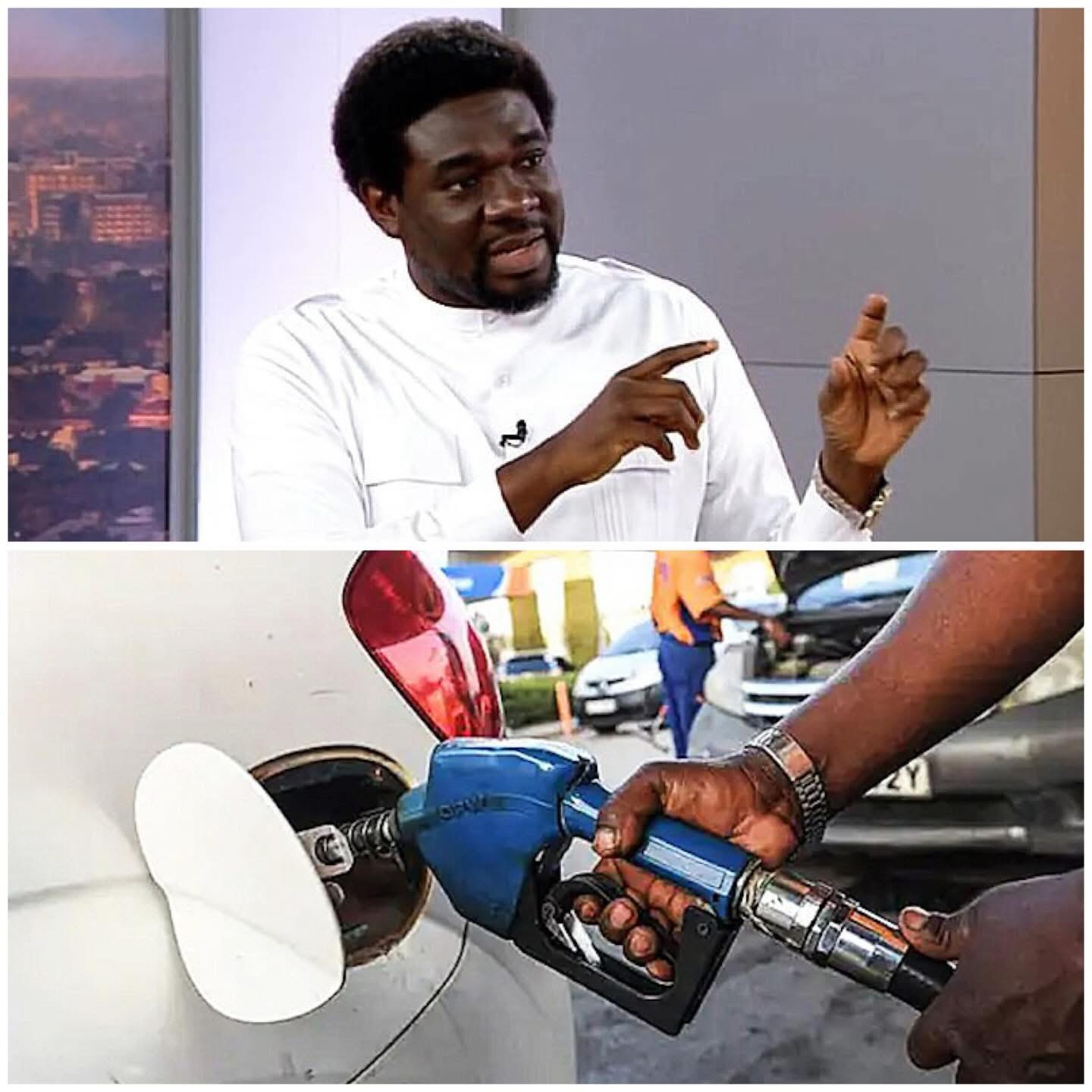
The Trade Union of Nigeria, TUC, has raised the alarm that the price of Premium Motor Spirit aka Petrol may climb to about N2,000 per litre if urgent measures are not taken to cushion the impact of rising global crude prices and the depreciating naira.
Speaking to newsmen on Thursday, April 9, the president of the TUC, Festus Osifo, called on the Federal Government to immediately deploy 60 percent of excess crude oil revenue above the 2026 budget benchmark to subsidise crude feedstock supplies to the Dangote Refinery and other modular refineries, a move it says will slash pump prices of petrol, diesel, and jet fuel within two weeks
“Today, comrades, we are seeing that the cost of petrol is edging towards N2,000 per litre depending on the part of the country that you are. Nigerian workers are already passing through excruciating pain as we speak.
The same way it is affecting transportation, it is also affecting manufacturing. The cost of diesel has also gone northward, meaning that the cost of production has increased. When production costs rise, the final price of goods on the shelves will also skyrocket.
If this continues unchecked, the inflation that we are currently celebrating as going downwards will reverse and start moving up again,” he stated.
Osifo outlined the proposal as an urgent intervention to cushion Nigerian workers from excruciating pain caused by petrol prices edging towards ₦2,000 per litre in some parts of the country
News
Cameroon’s President, Paul Biya Set To Get A Vice President For The First Time In His 43-Year Rule
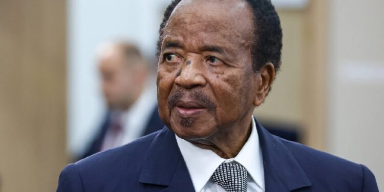
Cameroon’s president, Paul Biya, is set to get a vice president for the first time in his four-decade rule, following controversial constitutional changes backed by the parliament.
In a joint session of the ruling party-dominated National Assembly and Senate, lawmakers voted 200 to 18 in favour, with four abstentions, to pass the bill.
The bill stipulates that the vice president will automatically assume the presidency if President Paul Biya dies, resigns, or becomes incapacitated.
Biya, 93, has led the Central African country since 1982 and is the world’s oldest serving head of state. Public discussion about his health is banned.
According to the legislation, a copy of which was seen by Reuters, the vice president will be appointed and dismissed by the president, serving for the remainder of the president’s seven-year term.
However, the interim leader would be prohibited from initiating constitutional changes or running in a subsequent election.
Prior to the amendment, the constitution designated the leader of the Senate to briefly take over in case the sitting president d!es or is incapacitated. An election would then be held.
The Social Democratic Front (SDF) party, which has six representatives in parliament, boycotted the vote. It had pushed for a revision in favour of the vice-president being jointly elected with the president, rather than appointed.
The party also sought a constitutional provision that reflects the linguistic split between English and French-speaking regions. The SDF wanted the nation’s top two posts to be shared between Cameroon’s two communities, which was the position before 1972.
“This constitutional reform could have been a moment of political courage, but it is nothing less than a missed historic opportunity,” SDF chairman Joshua Osih said.
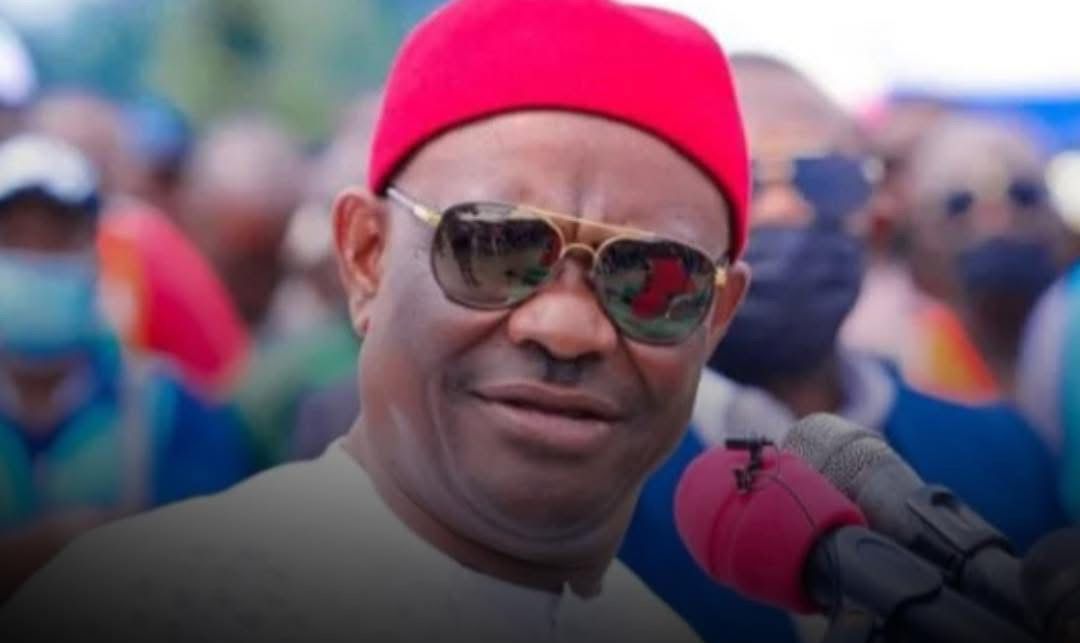
Minister of the Federal Capital Territory, Nyesom Wike, has highlighted the ongoing challenges of tax collection, pointing out the disparity between citizens’ expectations and the reality of government revenue.
Speaking with TVC NEWS live, he stressed that while Nigerians expect quality infrastructure and services, there is widespread reluctance to contribute through taxes.
On the difficulty of generating revenue, Wike said: “To collect tax, you know it’s not an easy thing. I don’t know how many of you here like to pay tax. Nigerians want everything for free. They want road, they want light. It is not easy.”
He further stated; “When I came to Abuja we were about 8, 9 billion. The money we get from the federal government is 1% of the allocation of federal government. So if federal government gets 1 trillion for example, they’ll give us one percent which is ten billion naira and that cannot carry the society. Our salary in a month is not less than 12–13 billion, so we must augment. How do we augment?”
Addressing public criticism, he added: “There’s no ab¥se that any politician has received than me. I think after the president, I’m the highest ab¥sed. There’s nothing we do that we won’t get ab¥sed. Well, what is important to me is that I want to be concentrated to do the job.”
On oversight and accountability, Wike explained how closely he monitors the finances: “The money we have gotten from tax challenge me, minister FCT, what are you doing? I’ll show you as I sit here.”

HRH Ekwueme of Ochia Kingdom Iynched & kiIIed in Imo.

“ADC is a Holy Party, Cannot be used to Scam Nigerians Again” – Hon Success Opara tells David Mark

2027: Bala declares aspirants over 55 years disqualified in ADC

-
Business1 year ago
US court acquits Air Peace boss, slams Mayfield $4000 fine
-

 Trending1 year ago
NYA demands release of ‘abducted’ Imo chairman, preaches good governance
-

 Politics1 year ago
Mexico’s new president causes concern just weeks before the US elections
-

 Politics1 year ago
Putin invites 20 world leaders
-

 Politics1 year ago
Russia bans imports of agro-products from Kazakhstan after refusal to join BRICS
-
Entertainment1 year ago
Bobrisky falls ill in police custody, rushed to hospital
-
Entertainment1 year ago
Bobrisky transferred from Immigration to FCID, spends night behind bars
-
Education2 years ago
GOVERNOR FUBARA APPOINTS COUNCIL MEMBERS FOR KEN SARO-WIWA POLYTECHNIC BORI