
Politics
PRESIDENT TINUBU WELCOMES MULTI-SECTORAL AGREEMENTS WITH QATAR; SET TO RECEIVE QATAR’S INVESTMENT TEAM IN ABUJA

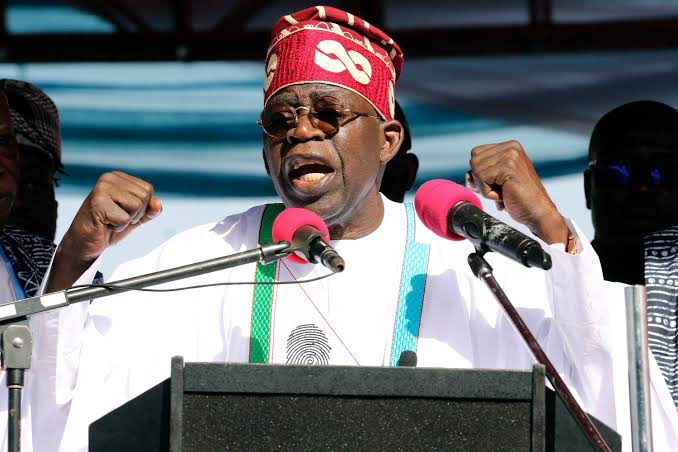
President Bola Ahmed Tinubu, and His Highness, Sheikh Tamim bin Hamad Al Thani, Emir of the State of Qatar, on Sunday in Doha, witnessed the signing of historic agreements between both nations, opening a gateway for leveraging the potential of mutual cooperation in pivotal sectors of education, enterprise development, investment promotion, youth empowerment, mining, tourism, and sports.
Before the signing ceremony at the Qatar Presidential Palace, President Tinubu assured his host of Nigeria’s preparedness to welcome investors into the country, noting the ongoing reforms that favour innovation, return on investments, and multiculturalism.
“Our greatest strength is our people. Our strength lies in the capacity of Nigerian youths. They have energy, talent, and self-belief. They are quality partners for Qatari industry. They are educated and reliable, and they are proactively seeking to add value wherever they are. A few cannot give a bad name to the many. Nigerian youths are ready to be unleashed for the mutual benefit of both nations.
“We have seen clearly the rapid pace and thorough quality of Qatar’s development process. It is impossible not to be moved by what you have accomplished. The leadership in the country has proven its mettle, and we are here to gain deeper insight.
“There is nowhere in the world where you will find return on investment at the level of what you will see in Nigeria. A massive market of over 200 million skilled Nigerians, always industrious and ready to work.
“We face some short-term turbulence at the moment, but we have a government today that reflects the dynamism and talent of the Nigerian people. We are implementing the right solutions. This team works collaboratively with each other and our partners. Nigeria is ready for serious business,” the President stated.
The Emir of the State of Qatar, His Highness, Sheikh Tamim bin Hamad Al Thani, emphasized that Qatar is open to President Tinubu’s investment push, recalling that he traveled to Nigeria in 2019 owing to his belief that Nigeria is an important and strategic ally on its own and within the context of its role in regional affairs.
“I have no doubt about the great capacity of the Nigerian people. Everywhere in the world, they are known for their brilliance and hard work. We only need to ensure that this is happening inside of Nigeria rather than outside. The investments we have made around the world have been very fruitful. This is because we take our time and study opportunities before we invest the common wealth of our people. It is not my money. The money we invest belongs to the future generations of Qatar.
“Mr. President, I am very encouraged by your actions and your passion to create new opportunities. We are very open to this, and follow-up is everything at this point. The will is there for both of us, but we must follow up. I will send a team of officials to Nigeria after Ramadan, and we will advance discussions on what some of the actionable investment opportunities are,” the Qatari leader said.
President Tinubu immediately named the Coordinating Minister of the Economy and Minister of Finance, Mr. Wale Edun as the team leader of the government team that will interface with Qatari authorities in investment identification and implementation moving forward.
Furthermore, during the bilateral deliberations, President Tinubu enabled a brief presentation to the Emir by the Minister of Solid Minerals Development, Dr. Dele Alake, who spoke in detail about the high-grade of several minerals, including lithium, immediately derivable across the country with an emphasis on imminent opportunities for local mineral processing and value-additive industry in the sector.
The bilateral engagement was followed by a closed-door meeting between the two Heads of State before they proceeded to the signing ceremony for seven bilateral agreeements across multiple sectors.
The seven agreements signed are: cooperation agreement in the field of education; regulation of employment of workers with the Government of Qatar; establishment of a joint business council (JBC) between the Qatar Chamber of Commerce and Industry and the Nigerian Association of Chambers of Commerce, Industry, Mines, and Agriculture (NACCIMA); in addition to a cooperation agreement in the field of youths and sports.
The other agreements are: cooperation in the field of tourism and business events, and a memorandum of understanding combating illicit trade in narcotic drugs and psychotropic substances.
The documents were signed by the Minister of Foreign Affairs, Ambassador Yusuf Tuggar, and relevant officials in the Government of the State of Qatar, Buthaina bint Ali Al Jabr Al Nuaimi, Minister of Education and Higher Education; Dr. Ahmad Hassen Al-Hammadi, Secretary General at the Ministry of Foreign Affairs; Sheikh Khalifa Bin Jassim Al Thani, Chairman of Qatar Chamber of Commerce & Industry (QCCI), and Abdullah bin Khalaf bin Hattab Al Kaabi, Undersecretary of the Ministry of Interior (MOI).
Nigerian ministers who were present at the ceremony were: Coordinating Minister of the Economy and Minister of Finance, Mr. Wale Edun; Minister of Solid Minerals Development, Dr. Dele Alake; Coordinating Minister of Health and Social Welfare, Professor Muhammad Ali Pate; Minister of Trade, Industry and Investment, Dr. Doris Uzoka-Anite; and the Minister of State for Petroleum Resources (Gas), Mr. Ekperipe Ekpo.
Also at the meeting were the National Security Adviser, Mallam Nuhu Ribadu, and Special Adviser on Energy, Mrs. Olu Verheijen.
Chief Ajuri Ngelale
Special Adviser to the President
(Media & Publicity)
March 3, 2024





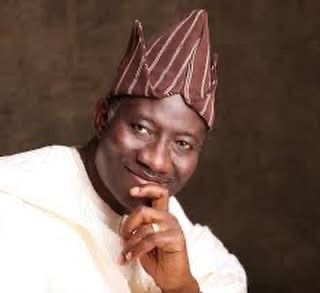
The Peoples Democratic Party (PDP), led by Tanimu Turaki, SAN, has scheduled to screen former president Goodluck Jonathan tomorrow, Tuesday, aMay 19, as the lone presidential candidate of party.
According to a statement from the PDP faction backed by the Oyo State Governor, Seyi Makinde, Former Vice-President Namadi Sambo, former governor of Plateau State, Jona Jang and a former Minister of Foreign Affairs, Tom Ikimi have been listed among a committee of 14 members to screen Jonathan described as a lone candidate by the party.
Other members of the committee were Chief Olabode George, Babangida Aliyu, Maryam ciroma, Zainab Maina, Josephine Anenin, Dr. Abdul Bulama, Dr. Esther Uduehi, Edo State PDP chairman, Tony Aziegbemi, Dr. Sunday Solarium and Chief Anicho Okoro, who would serve as administrative secretary of the committee.
Last week, the national Publicity Secretary of the faction, Ini Ememobong, disclosed that former president Jonathan has successfully registered as a member of the party in the fresh digital registration exercise directed by INEC.
The PDP faction also announced that it was set to screen 748 house of representatives aspirants, 198 senatorial aspirants, and 112 governorship aspirants.
The screening committee would screen 2122 states houses of assembly aspirants. The exercise will commence tomorrow, Tuesday in different states.
According to the statement, the screening exercise would take place nationwide on Tuesday, May 19, 2026, at 10:00 a.m.
The statement said the Interim National Working Committee (iNWC) has also released the names of members to serve on the Screening Committees and Screening Appeal Panels.
It added that the publication of the screening details “is in accordance with the party’s guidelines and timetable for the conduct of the 2027 general elections.”
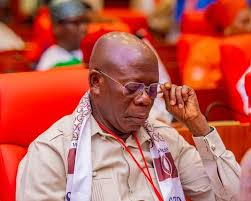
A former governor and incumbent Senator, Adams Oshiomhole, along with his counterpart Senator Joe Ikpea, sailed through the All Progressives Congress senatorial primary in Edo unopposed, and securing their tickets without a single vote cast against them.
Also Omoregie Ogbeide-Ihama emerged the winner in the APC primary for the Edo South senatorial district.
Ogbeide-Ihama won in the seven local government areas of Edo South in the results announced by the Chairman of APC National Assembly Primary Election, Muhammed Ajana at the Urokpota Hall, Benin.
He polled 27,154 votes while his opponents, Senator Neda Imasuen, got 13,580, and Pastor Osagie Ize-Iyamu got 6785.
The elections were hitch-free in Edo North and Edo Central, where there was no contest against the incumbents, Senators Oshiomhole of Edo North and Ikpea of Edo Central, respectively.
Ajana at the Urokpota Hall said the collation arose from votes cast in the seven local government areas made up of 77 wards where elections were conducted by members of the committee.
He said, “There are seven local governments that make up the Edo South Senatorial District. We have heard from the Returning officers from the seven local government areas. From the collation, the cumulative result we have for Edo South Senatorial District is this; Ogbeide-Ihama with 27,154 votes, Imasuen with 13,580 votes and Ize-Iyamu with 6, 785.
“This is the total reflection of what has transpired from the ward level to the local government and the Edo South senatorial district collation centre. With this we await further directives from the National Secretariat, we have done our best by collating the results which is our mandate, to collate the results and send them to the National Secretariat.”
However, it was gathered that Ize-Iyamu emerged as the APC candidate for Edo South Senatorial race. He claimed to have clinched the party’s ticket after defeating Ogbeide-Ihama and Imasuen.
It was claimed that the Chief Returning Officer, Abubakar Muhammad Kabiru, officially declared Ize-Iyamu the winner after securing the highest number of votes cast.
On his part, the senator representing the district condemned the exercise describing it as a sham allegedly designed to favour a preferred aspirant.
Imasuen spoke while reacting to events at his polling unit in Umagbae North Ward 5, Urhokuosa where he said he was denied the opportunity to vote following what he described as a chaotic and manipulated process.
The lawmaker accused leaders of the party of openly adopting a preferred candidate ahead of the exercise and intimidating members into supporting that aspirant.
He said, “There is nothing satisfactory about this sham of election they did today and it is very unfortunate because as a loyal party member, I expected something better than this.”
He said the warning signs emerged days before the primary when some ward chairmen allegedly informed him that they had been directed not to receive him during consultations.
Imasuen claimed that some ward leaders openly told him the party had already adopted a preferred aspirant, identified as Hon. Omoregie Ogbeide-Ihama, making further consultations unnecessary.
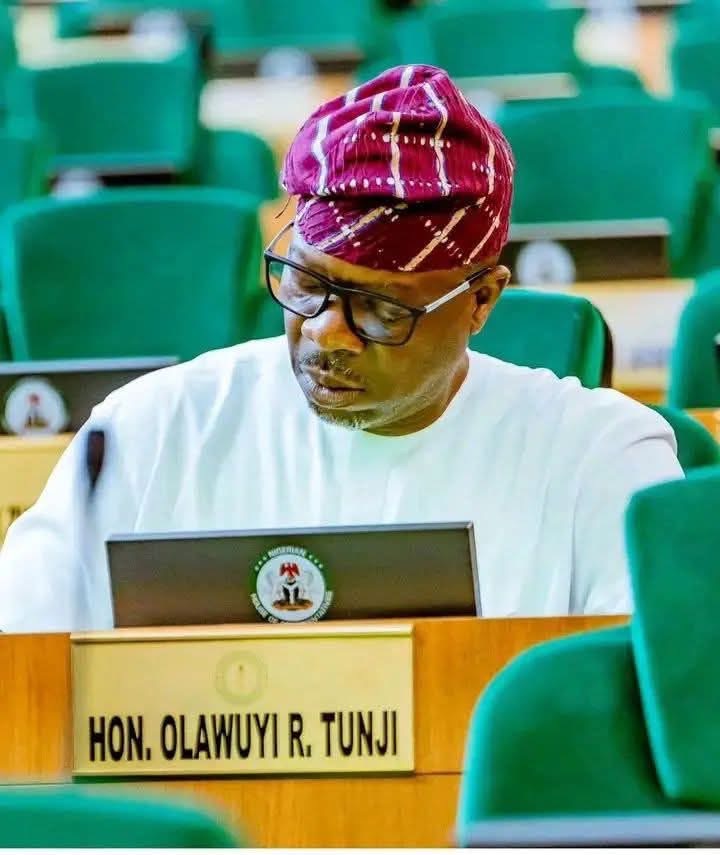
The re-election bid of the member representing Ekiti/Isin/Irepodun/Oke-Ero Federal Constituency, Hon. Raheem Tunji Olawuyi, popularly known as Ajuloopin, suffered a major setback on Friday after party members in his home ward, Omu-Aran Ward 1, boycotted the All Progressives Congress APC House of Representatives primary.
According to party stakeholders and observers present at the exercise, no valid election took place in the ward after members refused to participate in protest against what they described as the lawmaker’s poor performance after three consecutive terms in the House of Representatives.
Sources in the ward said efforts by some political figures and loyalists to persuade members to back Ajuloopin’s ambition failed, with party faithful insisting they would not endorse what they termed an attempt to impose his candidacy again.
The boycott led to a breakdown of the electoral process in Omu-Aran Ward 1, with many members staying away from the polls entirely. Stakeholders have called on the APC Electoral Committee to disregard any result purportedly presented from the ward, arguing that no credible primary was conducted there.
Political observers in the constituency described the development as a significant blow to Ajuloopin, noting that the rejection came from his own ward and among constituents most familiar with his record.
Preliminary reports from other parts of Irepodun, Isin and Oke-Ero local government areas, where voting proceeded, also indicated weak support for the incumbent. Many party members were said to have voted for alternative aspirants.
APC stakeholders have urged the party leadership to review reports from affected wards and accept only authentic and verifiable results to preserve the credibility of the primaries. They stressed that internal democracy was critical to the party’s prospects in the constituency and warned against imposing unpopular candidates ahead of the 2027 elections.
With tension rising across the federal constituency, party faithful said the leadership must listen to grassroots members and allow delegates and supporters to determine the outcome of the primaries.

Bandits behind Ogbomoso school abduction will face full wrath of the law- President Tinubu

PDP to screen Goodluck Jonathan on Tuesday as its sole Presidential aspirant For 2027 race

Oshiomhole wins Edo APC senatorial primaries unopposed

-
Business2 years ago
US court acquits Air Peace boss, slams Mayfield $4000 fine
-

 Trending2 years ago
NYA demands release of ‘abducted’ Imo chairman, preaches good governance
-

 Politics2 years ago
Mexico’s new president causes concern just weeks before the US elections
-

 Politics2 years ago
Putin invites 20 world leaders
-

 Politics2 years ago
Russia bans imports of agro-products from Kazakhstan after refusal to join BRICS
-
Entertainment2 years ago
Bobrisky falls ill in police custody, rushed to hospital
-
Entertainment2 years ago
Bobrisky transferred from Immigration to FCID, spends night behind bars
-
Education2 years ago
GOVERNOR FUBARA APPOINTS COUNCIL MEMBERS FOR KEN SARO-WIWA POLYTECHNIC BORI