
Politics
Nigerian presidents since 1999 have disobeyed constitution — INEC REC

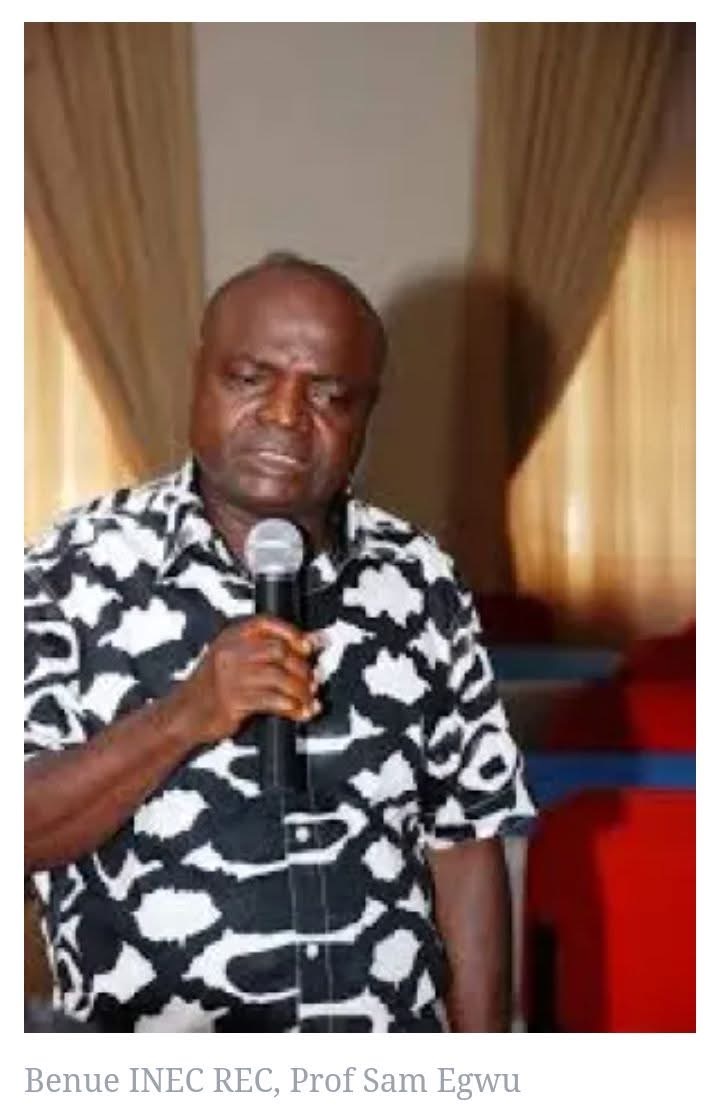
Resident Electoral Commissioner (REC) of the Independent National Electoral Commission (INEC) in Benue State, Prof. Sam Egwu, has accused successive Nigerian presidents since 1999 of violating the constitution and abandoning its core principles of social justice and citizen welfare.
Egwu made the remark on Wednesday at the National Conference on the Future of Democracy in Nigeria, themed “Sustaining Democratic Growth Beyond the Polls for Effective Governance,” organised by the Peering Advocacy and Advancement Centre in Africa (PAACA) in Abuja.
According to him, every administration since the return to democracy has governed in breach of the constitution while pursuing liberal economic policies dictated by global financial institutions such as the World Bank and the International Monetary Fund (IMF), often to the detriment of Nigerians.
“I argue that we need to continue to pursue a real democratisation agenda and go back to obeying the constitution,” Egwu said. “If you read the 1999 Constitution, which was lifted from the 1979 Constitution, Chapter Two commits to the doctrine of democracy.
“It talks about the responsibilities of government in terms of the welfare of citizens, health, and education. All the presidents that have come since 1999 never obey the constitution.”
He added that while the 1999 Constitution commits Nigeria to a social democracy, successive leaders have instead advanced liberal economic policies that contradict its provisions on social welfare, health, and education.
Egwu also faulted the excessive centralisation of power in the executive, which he said has weakened Nigeria’s federal system and rendered local governments powerless and disconnected from citizens.
Decrying the influence of international financial institutions on Nigeria’s economic policy, he said the country’s domestic policy space has been hijacked by the World Bank and IMF.
He urged a fundamental rethink of Nigeria’s democracy, describing civil society as the true hero of the country’s democratic journey but lamented that it has become weakened by poor membership structures and dwindling funding.
Egwu advocated for reforms in local government administration to directly connect authorities with citizens in determining development priorities.
Also speaking, former presidential candidate Dr. Gbenga Olawepo-Hashim said many Nigerians are losing faith in democracy because it has failed to improve their lives.
He noted that during recent protests, some young Nigerians carried the flags of Russia and China, symbolising their disillusionment with democracy.
According to him, political parties in Nigeria have become vehicles for personal ambition rather than platforms for ideas or social reform. He called for a truly independent electoral body and a political system that guarantees credible elections and accountable governance.
A development and humanitarian specialist, Dr. Hussaini Abdu, also lamented that Nigeria’s democracy has been captured by political elites who manipulate institutions for personal gain.
He questioned why the Electoral Act is amended before every election cycle, only for politicians to find new ways to subvert it, and urged a renewed national commitment to integrity, accountability, and citizen participation.
“Democracy must translate into real freedoms, equality, and shared prosperity,” Abdu said.
Earlier, Executive Director of PAACA, Ezenwa Nwagwu, said the conference was convened to push for democratic reforms that extend beyond elections and strengthen governance institutions.
He explained that PAACA has been working across 19 states to bridge the gap between policy and citizens through advocacy and civic engagement.
“Democratic reforms must not be episodic or elite-driven. They must be citizen-centered, inclusive, and enduring,” Nwagwu stated.
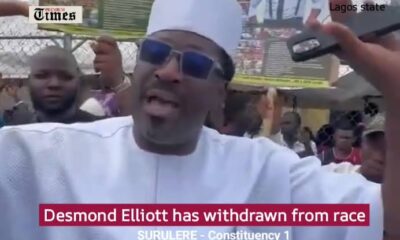




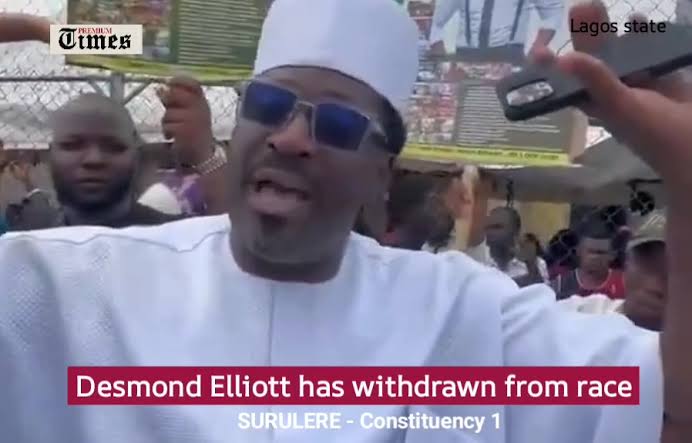
Surulere I lawmaker Desmond Elliot has withdrawn from the All Progressives Congress Lagos House of Assembly primaries, citing intimidation across multiple zones.
In a viral video posted online, the lawmaker said he was stepping out of the race despite seeking re-election under the APC. He alleged that his supporters faced intimidation during the process in several parts of the constituency.
Elliot’s decision came as the primaries held across Lagos on Tuesday. Chief of Staff to the President Femi Gbajabiamila, who represents Surulere Federal Constituency, praised the conduct of the exercise in Surulere, describing it as peaceful.
The withdrawal narrows the contest for the APC ticket in Surulere I ahead of the 2027 general election. Party officials in Lagos have not yet responded to Elliot’s claims, and the APC state chapter has not announced whether the primary in the constituency will proceed with other aspirants.
Elliot has represented Surulere I in the Lagos State House of Assembly since 2015.
https://www.instagram.com/reel/DYkCaAiMxxt/?igsh=ZWw5czl6MHJhNnRy
Politics
Political Shockwave in Rivers as Fubara Pulls Out of APC Governorship Race, Backs Party’s Candidate
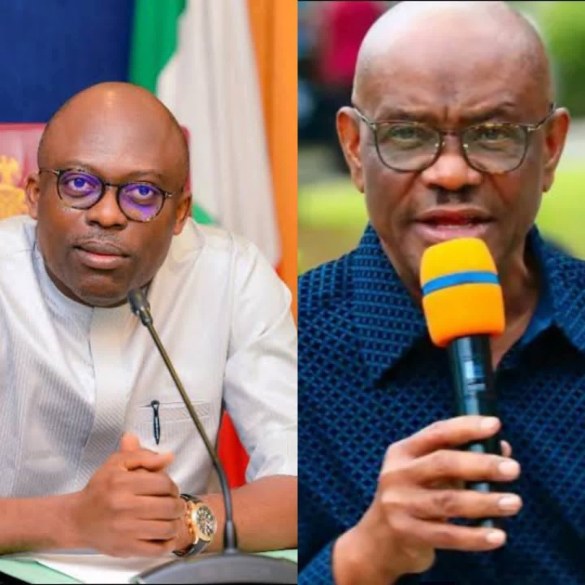
Rivers State Governor, Siminalayi Fubara, has officially withdrawn from the All Progressives Congress (APC) governorship primaries scheduled to take place on Thursday, a development that has stirred fresh political conversations across the state.
The governor announced his decision in a personally signed statement titled “My Decision to Withdraw from the Rivers State Gubernatorial Primaries,” which was released on Wednesday night.
In the statement, Fubara explained that his withdrawal followed wide consultations with political associates, stakeholders, and supporters. He stated that the decision was taken in the overall interest of peace, unity, and stability within the APC and Rivers State at large.
According to the governor, politics should not be allowed to divide the people or create unnecessary tension within the party. He stressed that preserving unity among party members and maintaining stability in the state remain more important than personal political ambition.
Fubara further pledged his total loyalty and support to whoever eventually emerges as the APC governorship candidate, assuring party faithful that he remains committed to the success and progress of the party ahead of the next general elections.
The Rivers governor also appreciated his supporters across the state for standing by him throughout the political process. He thanked party leaders, youth groups, women supporters, and political associates who had continued to show him solidarity and encouragement.
He urged his supporters not to see his withdrawal as the end of his political journey, but rather as a decision made in the collective interest of the party and the state. He also appealed to them to remain peaceful, united, and committed to the ideals of the APC.
Political observers have described the development as one of the biggest political surprises in Rivers State in recent times, especially considering the growing speculations and intense political alignments ahead of the governorship primaries.
Analysts believe the governor’s withdrawal may reshape the political calculations within the APC and influence the direction of the party’s governorship race moving forward.
The announcement has continued to generate mixed reactions from political stakeholders and residents across Rivers State. While some supporters described the move as strategic and mature, others expressed surprise over the governor’s sudden exit from the contest.
Several party faithful, however, commended Fubara for placing party unity and stability above personal ambition, noting that his decision may help reduce internal tensions and strengthen the APC ahead of the elections.
The development has also intensified attention on the remaining aspirants contesting for the APC governorship ticket, as consultations and political meetings continue ahead of the primary election.
Many observers believe the governor’s endorsement of the eventual APC candidate could play a major role in shaping the outcome of the party’s governorship battle and future political structure in the state.
As political activities continue to gather momentum in Rivers State, all eyes are now on the APC primaries and the next phase of political developments expected to unfold in the coming days.
Politics
Ugochukwu Obodo wins Owerri Municipal APC ticket again as APC Elects 27 Imo Assembly Candidates After Successful Primaries
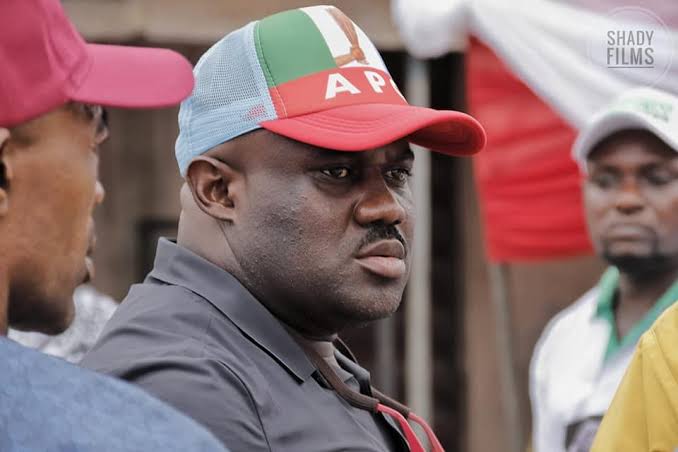
The leadership and members of the All Progressives Congress (APC) in Imo State have successfully elected 27 candidates who emerged victorious during the recently concluded Imo State House of Assembly primary elections conducted across the 305 wards of the State.
In a statement obtained by ThePressman Newspaper, the leadership of Imo APC described the primary election exercise as peaceful, transparent, credible, and reflective of the democratic ideals and internal cohesion of the party.
The information from the party commended party faithful, delegates, stakeholders, and supporters for their maturity, discipline, unity, and sportsmanship throughout the electoral process, noting that the successful conduct of the primaries further demonstrated the organizational strength and readiness of the APC ahead of the 2027 general elections.
According to the statement, the outcome of the primaries reaffirmed the confidence reposed in the party by members across the State, while also positioning the APC for a formidable outing in the forthcoming elections.
The Imo APC leadership warmly congratulated the party’s standard bearers who emerged across the 27 State Constituencies, namely:
Uchenna Osigwe – Orsu LGA
Chantel Adanna Onwumere – Ikeduru
Obodo Ugochukwu – Owerri Municipal
Hon. Ernest Udeze – Ideato North
Godspower Onyeibe – Ideato South
Mrs Julie Egbo – Owerri North
Rt. Hon. Kanayo Onyemaechi – Owerri West
Prince Marcel Amadioha – Ohaji Egbema
Hon. Gilbert Nwosu – Oguta
Hon. Uche Obiozor – Oru East
Hon. Emeka Agbor – Oru West
Rt. Hon. Obinna Egu – Ngor-Okpala
Hon. Magnus Okolie – Orlu
Hon. Innocent Ikpamezie – Mbaitoli
Hon. Modestus Osakwe – Isu
Hon.Ebonine Ozioma Worship – Njaba
Rt Hon Amarachi Chyna Iwuanyanwu – Nwangele
Hon. Chisom Ojukwu – Nkwerre
Hon. Doris Anyanwu – Ahiazu Mbaise
Hon. Princewill Amuchie – Aboh Mbaise
Hon. Henry Agbasonu – Ezinihitte Mbaise
Hon. Sam Osuji – Isiala Mbano
Ben Ozoemenam – Ehime Mbano
Hon. Emeka Okoronkwo – Okigwe
Prince Humphrey Okeke – Obowo
Lady Blessing Nwoba – Ihitte-Uboma
Hon. Chibuzor Umunnakwe – Onuimo
The party further expressed confidence that the emergence of the candidates would strengthen the APC’s chances of securing victory across the State during the 2027 general elections.

Breaking: Tinubu Appoints 39 Year Old Professor As New Jamb Registrar

Desmond Elliot Withdraws from APC Lagos Assembly Primaries, Cites Intimidation

Political Shockwave in Rivers as Fubara Pulls Out of APC Governorship Race, Backs Party’s Candidate

-
Business2 years ago
US court acquits Air Peace boss, slams Mayfield $4000 fine
-

 Trending2 years ago
NYA demands release of ‘abducted’ Imo chairman, preaches good governance
-

 Politics2 years ago
Mexico’s new president causes concern just weeks before the US elections
-

 Politics2 years ago
Putin invites 20 world leaders
-

 Politics2 years ago
Russia bans imports of agro-products from Kazakhstan after refusal to join BRICS
-
Entertainment2 years ago
Bobrisky falls ill in police custody, rushed to hospital
-
Entertainment2 years ago
Bobrisky transferred from Immigration to FCID, spends night behind bars
-
Education2 years ago
GOVERNOR FUBARA APPOINTS COUNCIL MEMBERS FOR KEN SARO-WIWA POLYTECHNIC BORI