
Politics
Obidient Movement Director of Mobilization, Morris Monye Resigns, Urges Peter Obi to Take Charge

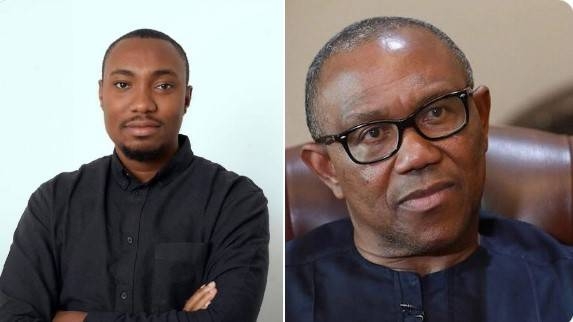
The Director of Mobilization of the Obidient Movement, Morris Monye has formally resigned from his position, citing unmet expectations, inadequate support, and a lack of communication from the leadership of the movement — including its figurehead, Mr. Peter Obi , the presidential candidate of the Labor Party in the 2023 general elections.
In a detailed public statement released on Monday, Monye described his decision as a difficult but necessary one. He expressed deep frustration over the internal workings of the movement, particularly the absence of financial structure, poor coordination, and limited progress in implementing the movement’s strategic goals nearly a year after its restructuring.
Monye stated that his resignation became unavoidable following the disappointing performance of the Obidient Movement during the Anambra State election . According to him, despite his personal sacrifices and deep commitment to the movement’s ideals, the group has failed to achieve tangible results.
“Almost a year down the line, most of our short, medium, and long-term plans have not been met,” Monye lamented.
“I won’t be part of optics and no work. The expectations we set for ourselves were high, but the absence of structure and resources has made progress almost impossible.”
The former mobilization director stressed that his decision was not driven by personal gain or political bitterness, but by a sincere desire for accountability and performance within the movement. He explained that continuing in his role without proper support would amount to “mere window-dressing” rather than genuine activism for change.
Monye revealed that during his tenure, he spent a significant portion of his personal funds to sustain mobilization and grassroots activities across Nigeria.
He listed several projects and travels he personally funded, including nationwide mobilization tours, the creation of local government offices, activation of dormant support groups, and voter education campaigns.
According to him, not a single naira was released to the Directorate of Mobilization from the leadership of the movement or from Peter Obi himself.
“No money was given to the Directorate of Mobilization. There’s no bank account even for the directorate. In fact, Mr. Peter Obi has never asked what we are doing in mobilization — no communication, nothing,” he declared.
Monye described the financial and emotional toll of sustaining the directorate as overwhelming. He said the stress was compounded by threats and harassment from political opponents and sympathizers of the ruling government, who saw the Obidient Movement as a disruptive force in Nigerian politics.
Despite the difficult working conditions, Monye highlighted several key milestones achieved during his time as Director of Mobilization. Among these were:
Creation of an online registration system for members of the Obidient Movement, enabling better data management and engagement.
Revival of inactive support groups across states and local governments, ensuring that grassroots structures were active and coordinated.
Establishment of regional structures and local government offices to give the movement a formal presence nationwide.
Launch of the Obidient NextGen Network , an initiative targeted at university campuses to inspire and engage young Nigerians in civic participation.
Development of a plan to equip polling unit agents with body cameras for election monitoring and transparency.
Monye revealed that the body camera initiative, which he personally championed, remains ongoing and will require follow-up by his successor.
“The next director must follow up on this. We have not closed it out yet,” he said, emphasizing the need for continuity and practical reforms within the movement.
Resignation Letter Submitted to Key Stakeholders
In his statement, Monye confirmed that his resignation letter had already been submitted to Mr. Peter Obi, the movement’s National Coordinator , Dr. Yunusa Tanko, and his state coordinator .
He expressed gratitude to those who worked closely with him during his tenure and encouraged them to remain committed to the ideals of good governance and accountability.
“I’ve written formally to Mr. Peter Obi, Dr. Yunusa Tanko, and my state coordinator, notifying them of my decision. This is not a rash choice — it’s the product of months of reflection on what works and what doesn’t,” Monye said.
Plans for the Future
Looking ahead, Monye said he intends to step away from political organizing for a while to focus on his personal growth, family, and business interests .
He disclosed plans to pursue a business course at Oxford or Cambridge University , emphasizing that personal development remains a crucial part of his long-term vision.
“I’ll be focusing on my businesses and furthering my education, particularly a business course at either Oxford or Cambridge University,” he said.
“However, I’ll continue to advocate for good governance, electoral reform, and citizen participation. Those values will always be part of me.”
A Call for Peter Obi’s Direct Involvement
Perhaps the most striking aspect of Monye’s statement was his direct message to Peter Obi , urging him to take greater responsibility for the movement that bears his political brand.
According to Monye, the Labor Party presidential candidate has remained largely disconnected from the activities of the movement, leaving volunteers and directors without guidance or resources.
“The Obidient Movement has immense potential,” Monye said, “but it cannot thrive on goodwill alone. It needs funding, strategy, and leadership. You can’t run a campaign simply from general goodwill. This is not 2023. The element of surprise is gone.”
He advised Obi to engage professional consultants , fund the directors appropriately, and implement a results-based accountability system to ensure that every arm of the movement contributes to measurable progress.
Monye emphasized that the 2023 election success, which propelled Peter Obi and the Labor Party into national relevance, was driven by youthful passion and social media energy — a wave that cannot be replicated without proper planning and investment.
Inside the Obidient Movement’s Current Struggles
The Obidient Movement, born out of the 2023 presidential election campaign of Peter Obi, was initially celebrated as a revolutionary citizens’ platform for political change.
However, nearly two years later, internal cracks and leadership deficiencies have reportedly slowed down its momentum.
Many members have complained about poor coordination , limited funding , and unclear direction , especially after the elections ended.
The resignation of a key national officer like Monye appears to confirm these underlying tensions.
Sources within the movement told Vanguard that many grassroots organizers feel abandoned, as there has been “no clear structure or communication from top leaders” since the last national elections.
“People feel forgotten,” said one state coordinator who asked not to be named. “Everyone is doing their own thing. The energy we had in 2023 is gone.”
Monye’s departure, according to observers, might trigger further resignations unless the leadership addresses long-standing grievances about inclusion and transparency.
Reactions Within the Movement
Following Monye’s announcement, reactions have been mixed among members of the Obidient community.
Some praised him for his honesty and courage to speak out, while others felt his resignation could weaken the already fragile coordination of the movement.
A senior member of the movement’s communication team, who spoke on condition of anonymity, admitted that Monye’s complaints were valid .
He said: “Morris was one of the most hardworking directors we had. He moved across states, personally funded mobilization drives, and revived many inactive structures. It’s sad that he’s leaving, but his concerns about funding and coordination are genuine.”
Another official, however, argued that Monye should have stayed to help fix the problems from within rather than walking away.
“This is politics — challenges are expected. Instead of resigning, we should all rally together to find solutions. But I respect his decision,” the source said.
The Bigger Picture: What Monye’s Exit Means for Peter Obi and the Labor Party
Political analysts believe that Monye’s resignation signals a serious internal test for the Obidient Movement and for Peter Obi’s political relevance ahead of the 2027 general elections .
According to Dr. Stephen Oladipo, a political communication scholar at the University of Lagos, the Obidient Movement must transition from “a social media-driven movement” to “a structured political organization” if it hopes to remain effective.
“Peter Obi’s greatest challenge now is to institutionalize the energy of the Obidient Movement,” Oladipo explained.
“People like Morris Monye helped bridge the gap between online activism and real-world mobilization. Losing such figures without replacing them with equally capable individuals could weaken the foundation of the movement.”
He added that Obi’s ability to manage dissent and respond to internal feedback will determine whether the movement survives as a credible force or fades away as a temporary phenomenon.
Monye’s Legacy and the Road Ahead
Before his resignation, Monye was widely regarded as one of the most active national directors in the Obidient Movement.
He was instrumental in building relationships with regional coordinators, setting up community engagement channels, and supporting local campaign efforts even in difficult political climates.
His “NextGen” university network, which sought to build leadership capacity among students, was particularly praised for giving young Nigerians a structured way to connect civic activism with practical governance ideas.
Colleagues describe him as visionary, hardworking, and strategic — qualities that earned him respect across the political spectrum.
His exit, therefore, represents not just a personnel loss, but a strategic vacuum that could affect the movement’s future mobilization efforts.
A Message of Hope Amid Resignation
Despite his decision to step down, Monye ended his statement on a note of hope and optimism.
He reaffirmed his belief in the principles that inspired the Obidient Movement — transparency, youth empowerment, and a redefinition of Nigerian politics through integrity and citizen engagement.
“My time in the Obidient Movement has been a privilege,” he said.
“I still believe in the dream. But leadership requires responsibility, structure, and action. It’s time for someone else to carry the mantle and continue the work.”
He also encouraged youth Nigerians not to lose faith in civic participation, emphasizing that real change takes time, discipline, and sustained pressure on leaders to deliver.
A Wake-Up Call for Reform
Observers view Monye’s resignation as a wake-up call for the movement’s top leadership to overhaul its internal systems.
Many have called on Peter Obi and Dr. Yunusa Tanko to initiate a nationwide meeting of coordinators, set up formal directorate accounts, and implement transparent reporting frameworks for all projects.
Political commentators also argue that as Nigeria approaches another election cycle, the Labor Party must reconnect with its base , rebuild public trust, and provide visible leadership — otherwise, the “Obidient” brand could lose its political potency.
“Movements like this don’t die naturally,” said Abuja-based analyst Aisha Yahuza. “They fade when the leaders forget why people joined them in the first place. Peter Obi needs to get more involved — not just as a candidate, but as a mentor and organizer.”
Conclusion
Morris Monye’s resignation as Director of Mobilization for the Obidient Movement exposes the internal challenges facing one of Nigeria’s most talked-about political reform movements.
His exit highlights the urgent need for restructuring, accountability, and direct leadership involvement if the movement is to remain a credible force for change.
While Monye moves on to personal and professional pursuits, his call for greater engagement from Peter Obi resonates as a strong message: goodwill alone cannot sustain a revolution — structure and strategy must follow passion.
Whether the Obidient Movement he helped build will rise to the challenge remains to be seen. But for now, his departure has sparked a national conversation on the future of youth-led political participation in Nigeria and the evolving dynamics of leadership within the Labor Party.




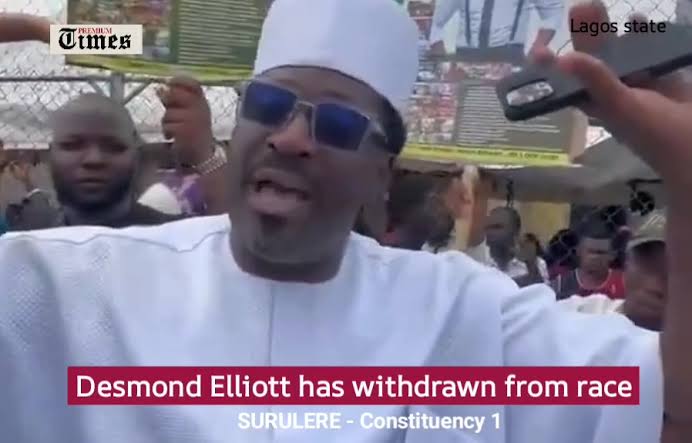
Surulere I lawmaker Desmond Elliot has withdrawn from the All Progressives Congress Lagos House of Assembly primaries, citing intimidation across multiple zones.
In a viral video posted online, the lawmaker said he was stepping out of the race despite seeking re-election under the APC. He alleged that his supporters faced intimidation during the process in several parts of the constituency.
Elliot’s decision came as the primaries held across Lagos on Tuesday. Chief of Staff to the President Femi Gbajabiamila, who represents Surulere Federal Constituency, praised the conduct of the exercise in Surulere, describing it as peaceful.
The withdrawal narrows the contest for the APC ticket in Surulere I ahead of the 2027 general election. Party officials in Lagos have not yet responded to Elliot’s claims, and the APC state chapter has not announced whether the primary in the constituency will proceed with other aspirants.
Elliot has represented Surulere I in the Lagos State House of Assembly since 2015.
https://www.instagram.com/reel/DYkCaAiMxxt/?igsh=ZWw5czl6MHJhNnRy
Politics
Political Shockwave in Rivers as Fubara Pulls Out of APC Governorship Race, Backs Party’s Candidate
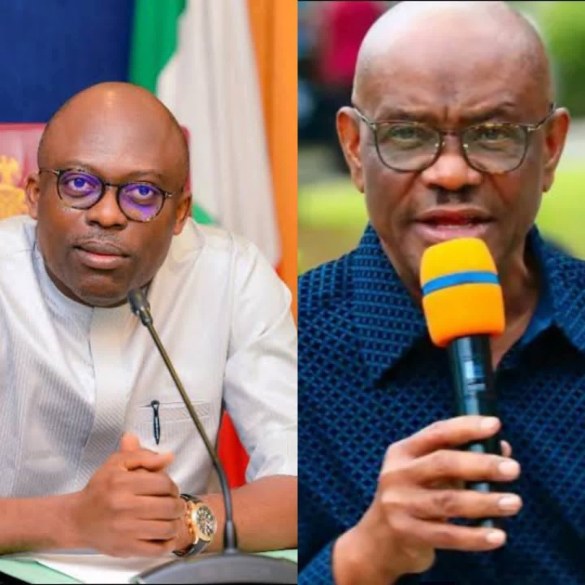
Rivers State Governor, Siminalayi Fubara, has officially withdrawn from the All Progressives Congress (APC) governorship primaries scheduled to take place on Thursday, a development that has stirred fresh political conversations across the state.
The governor announced his decision in a personally signed statement titled “My Decision to Withdraw from the Rivers State Gubernatorial Primaries,” which was released on Wednesday night.
In the statement, Fubara explained that his withdrawal followed wide consultations with political associates, stakeholders, and supporters. He stated that the decision was taken in the overall interest of peace, unity, and stability within the APC and Rivers State at large.
According to the governor, politics should not be allowed to divide the people or create unnecessary tension within the party. He stressed that preserving unity among party members and maintaining stability in the state remain more important than personal political ambition.
Fubara further pledged his total loyalty and support to whoever eventually emerges as the APC governorship candidate, assuring party faithful that he remains committed to the success and progress of the party ahead of the next general elections.
The Rivers governor also appreciated his supporters across the state for standing by him throughout the political process. He thanked party leaders, youth groups, women supporters, and political associates who had continued to show him solidarity and encouragement.
He urged his supporters not to see his withdrawal as the end of his political journey, but rather as a decision made in the collective interest of the party and the state. He also appealed to them to remain peaceful, united, and committed to the ideals of the APC.
Political observers have described the development as one of the biggest political surprises in Rivers State in recent times, especially considering the growing speculations and intense political alignments ahead of the governorship primaries.
Analysts believe the governor’s withdrawal may reshape the political calculations within the APC and influence the direction of the party’s governorship race moving forward.
The announcement has continued to generate mixed reactions from political stakeholders and residents across Rivers State. While some supporters described the move as strategic and mature, others expressed surprise over the governor’s sudden exit from the contest.
Several party faithful, however, commended Fubara for placing party unity and stability above personal ambition, noting that his decision may help reduce internal tensions and strengthen the APC ahead of the elections.
The development has also intensified attention on the remaining aspirants contesting for the APC governorship ticket, as consultations and political meetings continue ahead of the primary election.
Many observers believe the governor’s endorsement of the eventual APC candidate could play a major role in shaping the outcome of the party’s governorship battle and future political structure in the state.
As political activities continue to gather momentum in Rivers State, all eyes are now on the APC primaries and the next phase of political developments expected to unfold in the coming days.
Politics
Ugochukwu Obodo wins Owerri Municipal APC ticket again as APC Elects 27 Imo Assembly Candidates After Successful Primaries
The leadership and members of the All Progressives Congress (APC) in Imo State have successfully elected 27 candidates who emerged victorious during the recently concluded Imo State House of Assembly primary elections conducted across the 305 wards of the State.
In a statement obtained by ThePressman Newspaper, the leadership of Imo APC described the primary election exercise as peaceful, transparent, credible, and reflective of the democratic ideals and internal cohesion of the party.
The information from the party commended party faithful, delegates, stakeholders, and supporters for their maturity, discipline, unity, and sportsmanship throughout the electoral process, noting that the successful conduct of the primaries further demonstrated the organizational strength and readiness of the APC ahead of the 2027 general elections.
According to the statement, the outcome of the primaries reaffirmed the confidence reposed in the party by members across the State, while also positioning the APC for a formidable outing in the forthcoming elections.
The Imo APC leadership warmly congratulated the party’s standard bearers who emerged across the 27 State Constituencies, namely:
Uchenna Osigwe – Orsu LGA
Chantel Adanna Onwumere – Ikeduru
Obodo Ugochukwu – Owerri Municipal
Hon. Ernest Udeze – Ideato North
Godspower Onyeibe – Ideato South
Mrs Julie Egbo – Owerri North
Rt. Hon. Kanayo Onyemaechi – Owerri West
Prince Marcel Amadioha – Ohaji Egbema
Hon. Gilbert Nwosu – Oguta
Hon. Uche Obiozor – Oru East
Hon. Emeka Agbor – Oru West
Rt. Hon. Obinna Egu – Ngor-Okpala
Hon. Magnus Okolie – Orlu
Hon. Innocent Ikpamezie – Mbaitoli
Hon. Modestus Osakwe – Isu
Hon.Ebonine Ozioma Worship – Njaba
Rt Hon Amarachi Chyna Iwuanyanwu – Nwangele
Hon. Chisom Ojukwu – Nkwerre
Hon. Doris Anyanwu – Ahiazu Mbaise
Hon. Princewill Amuchie – Aboh Mbaise
Hon. Henry Agbasonu – Ezinihitte Mbaise
Hon. Sam Osuji – Isiala Mbano
Ben Ozoemenam – Ehime Mbano
Hon. Emeka Okoronkwo – Okigwe
Prince Humphrey Okeke – Obowo
Lady Blessing Nwoba – Ihitte-Uboma
Hon. Chibuzor Umunnakwe – Onuimo
The party further expressed confidence that the emergence of the candidates would strengthen the APC’s chances of securing victory across the State during the 2027 general elections.

Desmond Elliot Withdraws from APC Lagos Assembly Primaries, Cites Intimidation

Political Shockwave in Rivers as Fubara Pulls Out of APC Governorship Race, Backs Party’s Candidate

Ugochukwu Obodo wins Owerri Municipal APC ticket again as APC Elects 27 Imo Assembly Candidates After Successful Primaries

-
Business2 years ago
US court acquits Air Peace boss, slams Mayfield $4000 fine
-

 Trending2 years ago
NYA demands release of ‘abducted’ Imo chairman, preaches good governance
-

 Politics2 years ago
Mexico’s new president causes concern just weeks before the US elections
-

 Politics2 years ago
Putin invites 20 world leaders
-

 Politics2 years ago
Russia bans imports of agro-products from Kazakhstan after refusal to join BRICS
-
Entertainment2 years ago
Bobrisky falls ill in police custody, rushed to hospital
-
Entertainment2 years ago
Bobrisky transferred from Immigration to FCID, spends night behind bars
-
Education2 years ago
GOVERNOR FUBARA APPOINTS COUNCIL MEMBERS FOR KEN SARO-WIWA POLYTECHNIC BORI