
News
Price war deepens as marketers slash petrol by N100

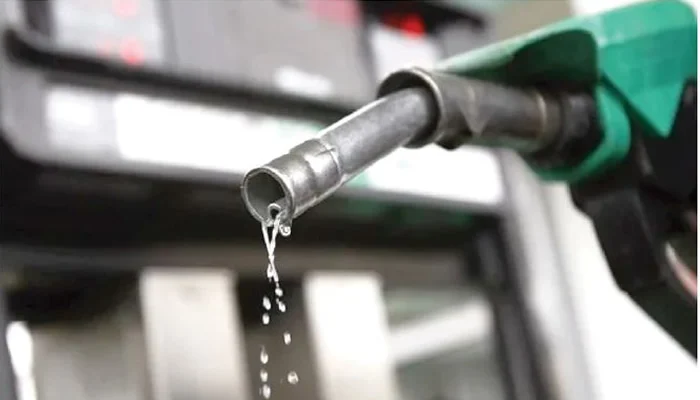
As more MRS filling stations in Lagos and Ogun states join in dispensing the Premium Motor Spirit (petrol) produced by the Dangote Petroleum Refinery at N739 per litre, motorists have started boycotting retail outlets that sell the product at higher prices.
This has compelled other stations to lower their petrol prices by about N100 per litre, an amount that is far below their cost of purchase, indicating the severity of the price war in the downstream oil sector.
Last week, the Dangote refinery shocked depot owners and marketers when it slashed the gantry price of petrol by N129, from N828 to N699 per litre. During a recent press briefing, the President of the Dangote Group, Aliko Dangote, said he had information that some marketers planned to keep pump prices high despite the reduction in the gantry price.
Consequently, Dangote vowed to enforce the new price regime, with MRS selling petrol at N739 from last Tuesday. “I was told that the marketers have met with (some officials) and were told to make sure that the price is maintained high. But this price we are going to introduce, we are going to start with MRS stations, most likely on Tuesday (last week) in Lagos; that N970 per litre, you won’t see it again. We have also asked members of IPMAN to come now. We have asked anybody who can buy 10 trucks to come and buy 10 trucks at N699.
“We are going to use whatever resources we have to make sure that we crash the price down. For this December and January, we don’t want people to sell petrol for more than N740 nationwide. Those who want to keep the price high to sabotage the government, we will fight as much as we can to make sure that these prices are down. If you have money to come and buy, you can pick up petrol at N699,” he said.
Our correspondent reports that when some MRS filling stations in Lagos dropped the price of petrol on Tuesday, it triggered long queues of vehicles seeking to buy the commodity at the outlets. It was observed that the MRS filling station in Alapere, Lagos, recorded a large turnout of buyers, many of whom boycotted other outlets selling petrol above N800 per litre.
As a result, checks by our correspondent on Sunday showed that other filling stations had started reducing prices in order to remain competitive in the market. From over N900 last week, many retail outlets now sell petrol below N800 per litre as motorists patronize those with lower prices.
While buyers thronged MRS and other stations with cheaper fuel, outlets selling at higher prices struggled to attract customers.
“The good thing is that there is always an MRS in almost every neighbourhood you turn to, and this has given buyers the opportunity to shun other stations to buy the cheaper Dangote petrol from MRS. This is a major concern for all traders nationwide,” a major oil marketer familiar with the development, who spoke to our correspondent in confidence in order not to be victimised, stated on Sunday.
The Ekwutosblog reports that as of Sunday, many filling stations had effected changes in their pump prices.
For instance, SGR filling station in Ogun sold petrol at N750 per litre, while Petrocam in Mowe sold the fuel at N785 per litre. The stations struggled to compete with the N739 price offered by MRS opposite the RCCG Camp Ground. Before now, their prices were close to N900.
Heyden, known to be a partner of Dangote, had yet to lower its price, selling petrol at N875 per liter, while AP sold the product at N800 per litre. It was observed that Mobil filling stations along the Lagos-Ibadan Expressway sold petrol at N780; Akiavic, N799; Habeeb, N850; Eternal, N880; and Asharami, N890 per litre.
The fuel prices represent a significant reduction of about N100 or more compared to their previous price levels before Dangote dropped the price. However, The Ekwutosblog reports that the reduction comes at heavy losses to both Dangote and the marketers competing with him.
Dealers suffer losses
Amid the intense competition, the Nigerian National Petroleum Company Limited also reduced petrol prices from N875 to between N825 and N840, depending on the location. The state-owned company is one of the biggest importers of petrol in November, according to a report by the Nigerian Midstream and Downstream Petroleum Regulatory Authority.
In the NMDPRA fact sheet, the NNPC, said to be the supplier of last resort, imported petrol in November to build inventory and further guarantee supply during the peak demand period.
However, at a landing cost of about N828 per litre, according to the Major Energies Marketers Association of Nigeria, importers like the NNPC would find it difficult to compete with Dangote’s N699 per litre ex-depot price and N739 per litre pump price, thereby selling the product below the landing cost.
Recall that the NNPC used to be the sole importer of petrol due to subsidies. As the Dangote refinery began petrol production a year ago, the sector was fully deregulated, and the queues that used to build up at NNPC stations because of price differentials vanished.
It was gathered that many NNPC stations in Lagos now struggle for customers who opt for lower petrol prices.
Meanwhile, as marketers said they were losing billions of naira, Dangote replied that he was also losing money. Findings by Ekwutosblog show that petrol importers are on the verge of losing as much as N102.48bn monthly following the Dangote refinery’s reduction in gantry price.
At the same time, the refinery is projected to lose about N91bn in a month as a direct consequence of the price cut, underscoring the intensity of the competition currently reshaping Nigeria’s downstream oil market.
The spokesperson of the Independent Petroleum Marketers Association of Nigeria, Chinedu Ukadike, earlier said, “Marketers will lose over N80bn on this reduction. We will lose more than N80bn. And now that this reduction is there, you will see that the pump price will start dropping gradually from N900 towards N750 per litre,” he said, adding that consumers would naturally flock to stations selling cheaper fuel.
Ukadike urged the Dangote refinery to consider compensating marketers who bought petrol at the old rate, suggesting discounts on future purchases as a way of cushioning the losses.
Dangote, however, insisted that the refinery was also losing heavily each time it reduced prices. During the last media briefing, he disclosed that the refinery lost about N60bn in November alone after reducing gantry prices by N49.
“For the marketers, I pray, and I wish they would even lose more because I’m not printing money. I’m also losing money; it’s not that I’m making money,” Dangote said recently.
He added, “They want imports to continue. I don’t think it is right. They want to continue to dump imported petrol, so I must have a strategy of how to survive because $20bn of investment is too big to fail. We are in a situation where we will continue to play cat and mouse, and at the end of the day, somebody will give up. It is either we give up, or they will give up, and I don’t think I will give up.”
Price determines patronage
Speaking with our correspondent on Sunday, IPMAN spokesperson Ukadike stated that any marketers who refuse to reduce prices would lose their customers, saying price determines patronage.
“We are in a situation where competition can be determined by price. Patronage will be determined by pricing. Nobody is againstyou; nobody is regulating you. You will regulate yourself. The market will regulate itself. The time has gone when people were queuing at NNPC filling stations. Wherever the fuel is cheap, that is where the marketers go. So, we are in a price war. Demand and supply determine the price.
“Once Dangote has reduced the gantry price to N699, marketers will dive towards competitive pricing whereby they can retain their numerous customers; if not, interest from banks would be ‘eating’ your capital,” Ukadike said.
He announced that the association has entered into a partnership with the Dangote refinery.
“We have formed a partnership already because Dangote has invited IPMAN for the first time. The major marketers have failed Dangote. He has now realised that only the independent marketers are the strategic partners that can evacuate his petroleum products as quickly as possible. He said IPMAN should come and pick up the products. He said it clearly. And since that time, we have provided tremendous patronage,” he said.
Ukadike expressed optimism that Dangote would compensate IPMAN members for the losses incurred as a result of the sudden price drop.
“Definitely, he will do that, seeing our continuous patronage. You know, Dangote’s marketing strategy is a reward for patronage. He makes it easier for independent marketers by cutting the minimum quantity we can purchase to 250,000 litres, and you know the independent marketers constitute over 85 per cent of petrol filling stations in this country. Our members are going straight to the refinery to load petrol individually,” he disclosed.
1,000 petrol trucks
The Dangote refinery confirmed over the weekend that over 1,000 fuel trucks now flock to the facility daily to load petrol. A statement by the company said the refinery has emerged as the hub of fuel distribution in Nigeria, following “bold strategic adjustments aimed at making energy more affordable and accessible.”
This, it said, followed the significant reduction in gantry price alongside a cut in the minimum purchase requirement from two million litres to 250,000 litres. “These measures underscore Dangote refinery’s commitment to stabilising supply, fostering inclusivity, and supporting national economic growth,” the statement said.
To further reassure marketers, the refinery said it had introduced a 10-day bank guarantee system, ensuring uninterrupted supply and strengthening confidence in its operations.
“Since the announcement, the response from fuel marketers has been overwhelming. The refinery now records over 1,000 trucks loading PMS daily from its gantry, a clear testament to market trust in the Dangote refinery’s efficiency and leadership in the downstream sector.”
Aliko Dangote was quoted as saying, “Our goal has always been to make energy affordable and accessible for every Nigerian. By reducing prices and lowering the minimum purchase volume, we are empowering both large and small marketers to participate in the market, ensuring fuel reaches every corner of the country.”
It was added that the approach opens the market to smaller operators, strengthening distribution networks and improving fuel availability across the country.
“By lowering barriers to entry, Dangote refinery is driving competition and ensuring Nigerians benefit from a more stable and affordable fuel supply chain,” it was stated.
Meanwhile, in a short video on its social media handles, the Dangote Group warned Nigerians against being overcharged by other filling stations, saying petrol is now N739 per litre.
“Petrol is now selling at N739.00 per litre at MRS filling stations nationwide. Avoid being overcharged by other stations! Say no to rip-offs. Get quality petrol at MRS stations nationwide. Many other stations are joining soon,” the Dangote Group said.
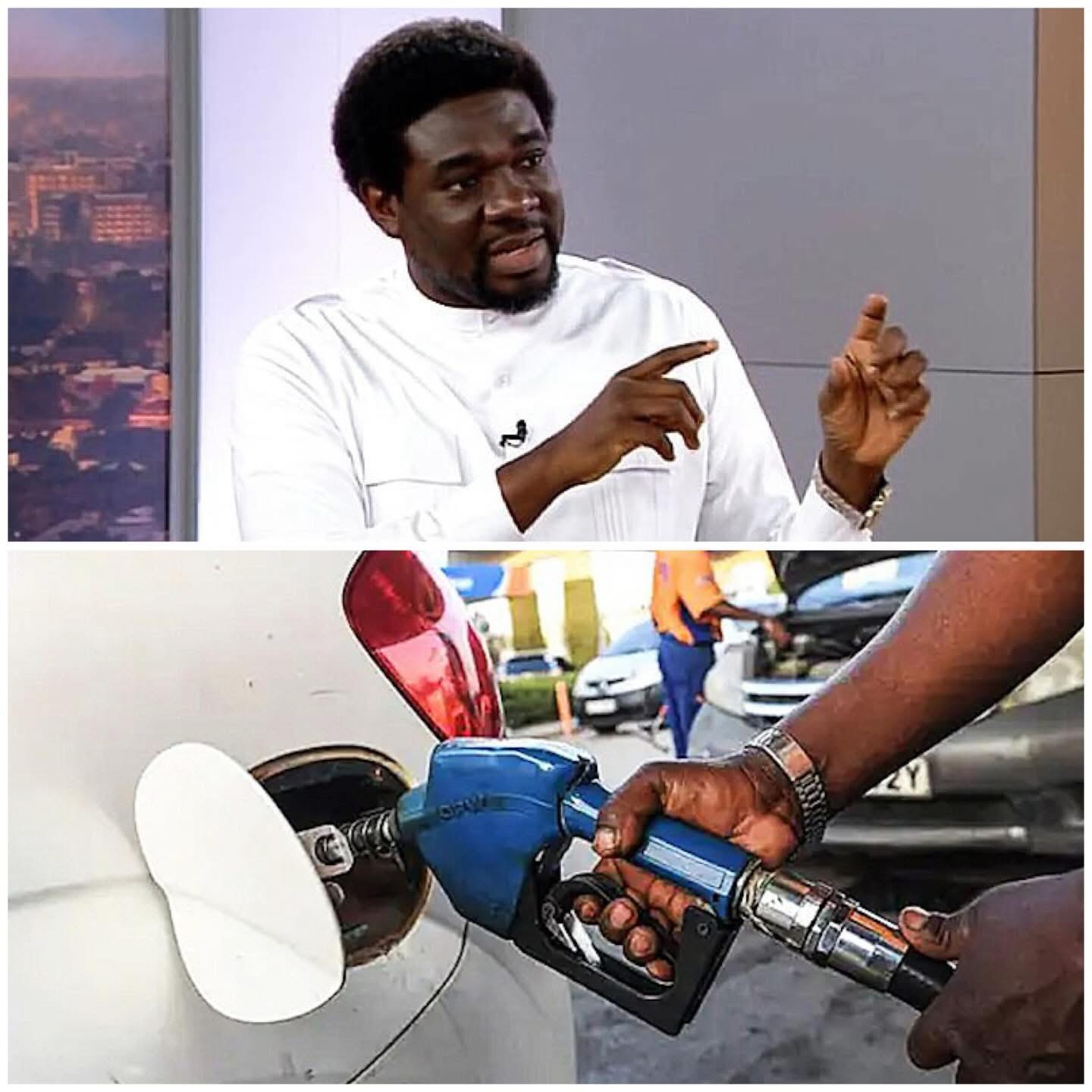
The Trade Union of Nigeria, TUC, has raised the alarm that the price of Premium Motor Spirit aka Petrol may climb to about N2,000 per litre if urgent measures are not taken to cushion the impact of rising global crude prices and the depreciating naira.
Speaking to newsmen on Thursday, April 9, the president of the TUC, Festus Osifo, called on the Federal Government to immediately deploy 60 percent of excess crude oil revenue above the 2026 budget benchmark to subsidise crude feedstock supplies to the Dangote Refinery and other modular refineries, a move it says will slash pump prices of petrol, diesel, and jet fuel within two weeks
“Today, comrades, we are seeing that the cost of petrol is edging towards N2,000 per litre depending on the part of the country that you are. Nigerian workers are already passing through excruciating pain as we speak.
The same way it is affecting transportation, it is also affecting manufacturing. The cost of diesel has also gone northward, meaning that the cost of production has increased. When production costs rise, the final price of goods on the shelves will also skyrocket.
If this continues unchecked, the inflation that we are currently celebrating as going downwards will reverse and start moving up again,” he stated.
Osifo outlined the proposal as an urgent intervention to cushion Nigerian workers from excruciating pain caused by petrol prices edging towards ₦2,000 per litre in some parts of the country
News
Cameroon’s President, Paul Biya Set To Get A Vice President For The First Time In His 43-Year Rule
Cameroon’s president, Paul Biya, is set to get a vice president for the first time in his four-decade rule, following controversial constitutional changes backed by the parliament.
In a joint session of the ruling party-dominated National Assembly and Senate, lawmakers voted 200 to 18 in favour, with four abstentions, to pass the bill.
The bill stipulates that the vice president will automatically assume the presidency if President Paul Biya dies, resigns, or becomes incapacitated.
Biya, 93, has led the Central African country since 1982 and is the world’s oldest serving head of state. Public discussion about his health is banned.
According to the legislation, a copy of which was seen by Reuters, the vice president will be appointed and dismissed by the president, serving for the remainder of the president’s seven-year term.
However, the interim leader would be prohibited from initiating constitutional changes or running in a subsequent election.
Prior to the amendment, the constitution designated the leader of the Senate to briefly take over in case the sitting president d!es or is incapacitated. An election would then be held.
The Social Democratic Front (SDF) party, which has six representatives in parliament, boycotted the vote. It had pushed for a revision in favour of the vice-president being jointly elected with the president, rather than appointed.
The party also sought a constitutional provision that reflects the linguistic split between English and French-speaking regions. The SDF wanted the nation’s top two posts to be shared between Cameroon’s two communities, which was the position before 1972.
“This constitutional reform could have been a moment of political courage, but it is nothing less than a missed historic opportunity,” SDF chairman Joshua Osih said.
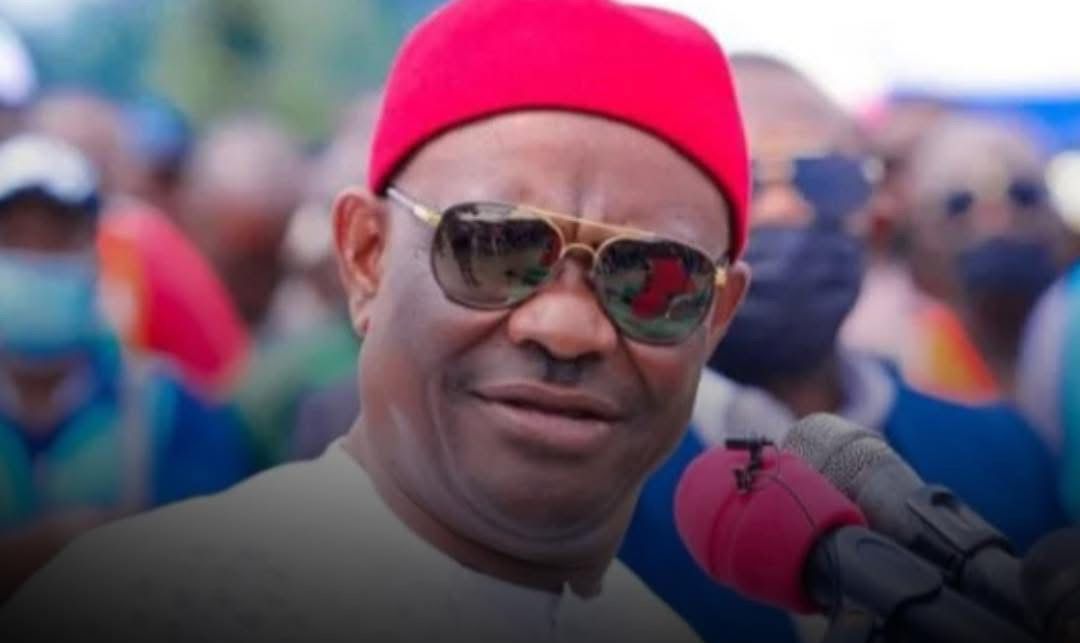
Minister of the Federal Capital Territory, Nyesom Wike, has highlighted the ongoing challenges of tax collection, pointing out the disparity between citizens’ expectations and the reality of government revenue.
Speaking with TVC NEWS live, he stressed that while Nigerians expect quality infrastructure and services, there is widespread reluctance to contribute through taxes.
On the difficulty of generating revenue, Wike said: “To collect tax, you know it’s not an easy thing. I don’t know how many of you here like to pay tax. Nigerians want everything for free. They want road, they want light. It is not easy.”
He further stated; “When I came to Abuja we were about 8, 9 billion. The money we get from the federal government is 1% of the allocation of federal government. So if federal government gets 1 trillion for example, they’ll give us one percent which is ten billion naira and that cannot carry the society. Our salary in a month is not less than 12–13 billion, so we must augment. How do we augment?”
Addressing public criticism, he added: “There’s no ab¥se that any politician has received than me. I think after the president, I’m the highest ab¥sed. There’s nothing we do that we won’t get ab¥sed. Well, what is important to me is that I want to be concentrated to do the job.”
On oversight and accountability, Wike explained how closely he monitors the finances: “The money we have gotten from tax challenge me, minister FCT, what are you doing? I’ll show you as I sit here.”

2027: More Than 50 Lawmakers Lose APC Reps Tickets in Major Primary Election

Bandits behind Ogbomoso school abduction will face full wrath of the law- President Tinubu

PDP to screen Goodluck Jonathan on Tuesday as its sole Presidential aspirant For 2027 race

-
Business2 years ago
US court acquits Air Peace boss, slams Mayfield $4000 fine
-

 Trending2 years ago
NYA demands release of ‘abducted’ Imo chairman, preaches good governance
-

 Politics2 years ago
Mexico’s new president causes concern just weeks before the US elections
-

 Politics2 years ago
Putin invites 20 world leaders
-

 Politics2 years ago
Russia bans imports of agro-products from Kazakhstan after refusal to join BRICS
-
Entertainment2 years ago
Bobrisky falls ill in police custody, rushed to hospital
-
Entertainment2 years ago
Bobrisky transferred from Immigration to FCID, spends night behind bars
-
Education2 years ago
GOVERNOR FUBARA APPOINTS COUNCIL MEMBERS FOR KEN SARO-WIWA POLYTECHNIC BORI