
News
FG flags 15.2 million homes as structurally unsafe

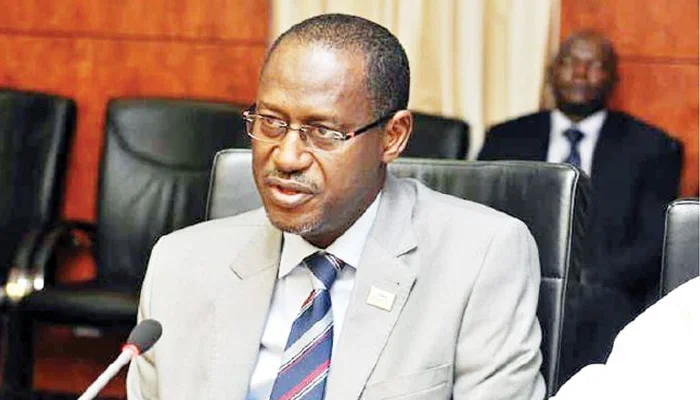
The Federal Government has revealed that 15.2 million Nigerian homes are structurally unsafe, highlighting a severe housing crisis across the country.
In a post on the ministry’s X handle recently, the Minister of Housing and Urban Development, Ahmed Dangiwa, disclosed the findings during the presentation of the National Housing Data Initiative by the National Housing Data Technical Committee in Abuja.
According to the Ministry, Kano State recorded the highest number of inadequate housing units, while Bayelsa State had the lowest, underscoring regional disparities in housing quality across the country.
He noted that the findings confirm that Nigeria’s housing challenge is both quantitative and qualitative, with national housing deficit estimates varying depending on data sources and methodological approaches.
He said, “Beyond headline deficit figures, the application of harmonised and internationally recognised methodologies now allows us to state with clarity and confidence that Nigeria currently faces a housing inadequacy problem affecting approximately 15.2 million housing units nationwide.
“The 15.2 million inadequate housing units are homes that exist physically but fall below acceptable standards of safety, habitability, access to basic services, infrastructure, and durability.
The findings were derived from the application of the Household Crowding Index, the Adequate Housing Index, and a Composite Index Methodology, supported by datasets from the National Population Commission, the National Bureau of Statistics, the Central Bank of Nigeria, and other housing sector institutions.”
The Committee was established in August 2024 to develop a harmonised national framework for housing data to support evidence-based housing policy, planning, and investment.
“These findings clearly demonstrate that Nigeria’s housing challenge is not only about building new houses but equally about upgrading existing housing stock, regenerating deteriorated neighbourhoods, improving basic services and infrastructure, and ensuring dignity, safety, and adequacy in housing outcomes,” he added.
While highlighting the importance of the findings, the minister emphasised that housing inadequacy represents only one dimension of Nigeria’s broader housing deficit.
He stressed the need to sustain the same level of analytical clarity across other critical areas, including absolute housing shortages, affordability gaps, access to land and secure tenure, availability and cost of housing finance, infrastructure and service deficits, and regional and urban–rural disparities, as well as population growth rates, urbanisation trends, household formation patterns, and demographic projections.
According to him, a holistic examination of these dimensions is necessary to accurately assess current needs, anticipate future demand, and design sustainable and responsive housing policies.
The Minister formally accepted the presentation and report of the National Housing Data Initiative on behalf of the Ministry, describing it as “a major intellectual, technical, and institutional milestone” in Nigeria’s housing and urban development reform journey.
He further disclosed that the Federal Government has commenced steps to institutionalize housing data through the establishment of a National Housing Data Centre, which will be domiciled within the Ministry in the short term and institutionalized through a Special Purpose Vehicle or statutory framework in the longer term.
According to the minister, the proposed centre will create a permanent national institution capable of supporting housing policy formulation, investment decisions, access to housing finance, and housing delivery at scale.
He commended the National Housing Data Technical Committee, led by Taofeeq Olatinwo, and acknowledged the contributions of participating institutions, including FMHUD, NMRC, NBS, NPC, CBN, FMBN, FHA, Family Homes Funds Limited, REDAN, AHCN, MBAN, HDAN, and other industry experts.
He announced that all committee members and participating institutions will be issued formal Letters of Participation and Recognition by the Ministry in acknowledgement of their contributions to the report and its outcomes.
The minister noted that the National Housing Data Initiative aligns fully with the Renewed Hope Agenda of President Bola Tinubu and strengthens the government’s capacity to support affordable and social housing delivery, deepen access to housing finance, improve investor confidence, stabilise housing markets, and monitor outcomes with credibility and accountability.
Describing the presentation as a turning point in Nigeria’s housing reform journey, the minister stressed that data is no longer peripheral to housing delivery but central to it.
“With the National Housing Data Initiative, Nigeria is better positioned to plan more accurately, invest more confidently, and deliver housing more effectively and equitably for Nigerians,” he said.
In his remarks, the Permanent Secretary, Shuab Belgore, said the report of the National Housing Data Committee would be published and circulated to all relevant agencies to formally legitimize the work carried out by the committee.
He also directed the Department of Planning, Research and Statistics to follow up on the establishment of the Data Centre in the Ministry, as earlier recommended in the report, with a mandate to ensure it is ready by mid-January 2026.
Meanwhile, the Chairman of the National Housing Data Technical Committee, Taofeeq Olatinwo, noted that the housing deficit research involved the participation of various organisations, financial institutions, and industry experts, adding that the committee collaborated with the World Bank to ensure consistency and standardisation of the data.
He explained the multidimensional index used in assessing key aspects of housing quality, including access to water, electricity, sanitation, and other basic services.




The Trade Union of Nigeria, TUC, has raised the alarm that the price of Premium Motor Spirit aka Petrol may climb to about N2,000 per litre if urgent measures are not taken to cushion the impact of rising global crude prices and the depreciating naira.
Speaking to newsmen on Thursday, April 9, the president of the TUC, Festus Osifo, called on the Federal Government to immediately deploy 60 percent of excess crude oil revenue above the 2026 budget benchmark to subsidise crude feedstock supplies to the Dangote Refinery and other modular refineries, a move it says will slash pump prices of petrol, diesel, and jet fuel within two weeks
“Today, comrades, we are seeing that the cost of petrol is edging towards N2,000 per litre depending on the part of the country that you are. Nigerian workers are already passing through excruciating pain as we speak.
The same way it is affecting transportation, it is also affecting manufacturing. The cost of diesel has also gone northward, meaning that the cost of production has increased. When production costs rise, the final price of goods on the shelves will also skyrocket.
If this continues unchecked, the inflation that we are currently celebrating as going downwards will reverse and start moving up again,” he stated.
Osifo outlined the proposal as an urgent intervention to cushion Nigerian workers from excruciating pain caused by petrol prices edging towards ₦2,000 per litre in some parts of the country
News
Cameroon’s President, Paul Biya Set To Get A Vice President For The First Time In His 43-Year Rule
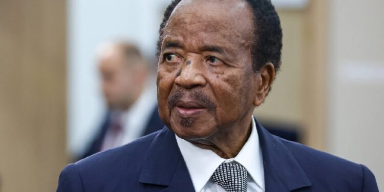
Cameroon’s president, Paul Biya, is set to get a vice president for the first time in his four-decade rule, following controversial constitutional changes backed by the parliament.
In a joint session of the ruling party-dominated National Assembly and Senate, lawmakers voted 200 to 18 in favour, with four abstentions, to pass the bill.
The bill stipulates that the vice president will automatically assume the presidency if President Paul Biya dies, resigns, or becomes incapacitated.
Biya, 93, has led the Central African country since 1982 and is the world’s oldest serving head of state. Public discussion about his health is banned.
According to the legislation, a copy of which was seen by Reuters, the vice president will be appointed and dismissed by the president, serving for the remainder of the president’s seven-year term.
However, the interim leader would be prohibited from initiating constitutional changes or running in a subsequent election.
Prior to the amendment, the constitution designated the leader of the Senate to briefly take over in case the sitting president d!es or is incapacitated. An election would then be held.
The Social Democratic Front (SDF) party, which has six representatives in parliament, boycotted the vote. It had pushed for a revision in favour of the vice-president being jointly elected with the president, rather than appointed.
The party also sought a constitutional provision that reflects the linguistic split between English and French-speaking regions. The SDF wanted the nation’s top two posts to be shared between Cameroon’s two communities, which was the position before 1972.
“This constitutional reform could have been a moment of political courage, but it is nothing less than a missed historic opportunity,” SDF chairman Joshua Osih said.
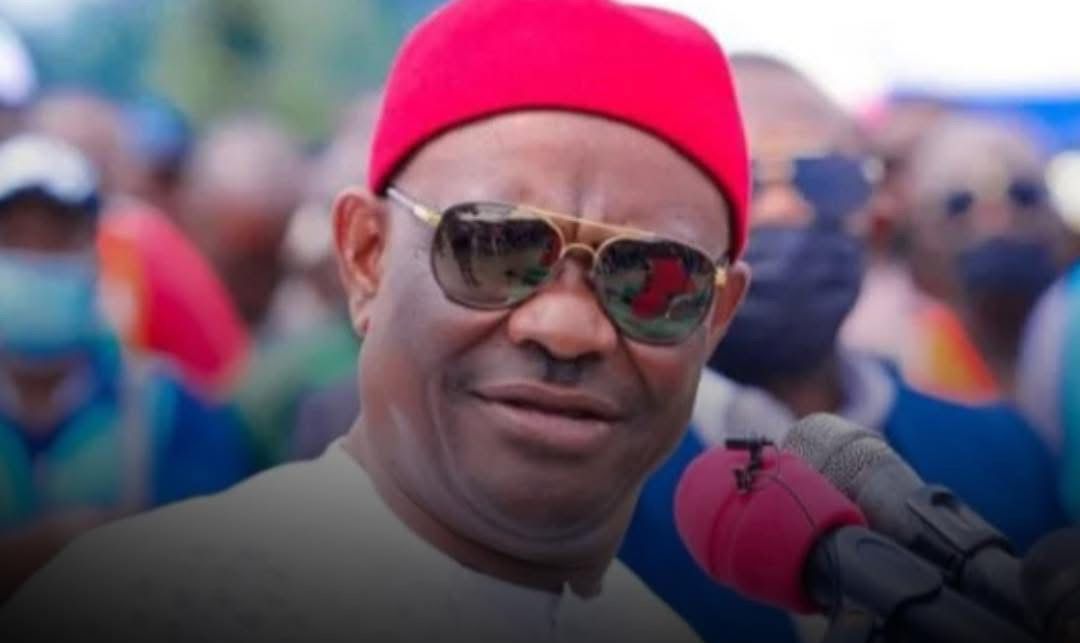
Minister of the Federal Capital Territory, Nyesom Wike, has highlighted the ongoing challenges of tax collection, pointing out the disparity between citizens’ expectations and the reality of government revenue.
Speaking with TVC NEWS live, he stressed that while Nigerians expect quality infrastructure and services, there is widespread reluctance to contribute through taxes.
On the difficulty of generating revenue, Wike said: “To collect tax, you know it’s not an easy thing. I don’t know how many of you here like to pay tax. Nigerians want everything for free. They want road, they want light. It is not easy.”
He further stated; “When I came to Abuja we were about 8, 9 billion. The money we get from the federal government is 1% of the allocation of federal government. So if federal government gets 1 trillion for example, they’ll give us one percent which is ten billion naira and that cannot carry the society. Our salary in a month is not less than 12–13 billion, so we must augment. How do we augment?”
Addressing public criticism, he added: “There’s no ab¥se that any politician has received than me. I think after the president, I’m the highest ab¥sed. There’s nothing we do that we won’t get ab¥sed. Well, what is important to me is that I want to be concentrated to do the job.”
On oversight and accountability, Wike explained how closely he monitors the finances: “The money we have gotten from tax challenge me, minister FCT, what are you doing? I’ll show you as I sit here.”

2027: More Than 50 Lawmakers Lose APC Reps Tickets in Major Primary Election

Bandits behind Ogbomoso school abduction will face full wrath of the law- President Tinubu

PDP to screen Goodluck Jonathan on Tuesday as its sole Presidential aspirant For 2027 race

-
Business2 years ago
US court acquits Air Peace boss, slams Mayfield $4000 fine
-

 Trending2 years ago
NYA demands release of ‘abducted’ Imo chairman, preaches good governance
-

 Politics2 years ago
Mexico’s new president causes concern just weeks before the US elections
-

 Politics2 years ago
Putin invites 20 world leaders
-

 Politics2 years ago
Russia bans imports of agro-products from Kazakhstan after refusal to join BRICS
-
Entertainment2 years ago
Bobrisky falls ill in police custody, rushed to hospital
-
Entertainment2 years ago
Bobrisky transferred from Immigration to FCID, spends night behind bars
-
Education2 years ago
GOVERNOR FUBARA APPOINTS COUNCIL MEMBERS FOR KEN SARO-WIWA POLYTECHNIC BORI