
News
On The Repeal And Re-enactment of The 2024 And 2025 Appropriation Acts and Budget Transparency

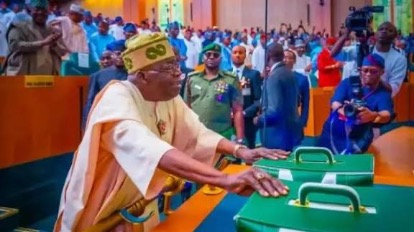
The Budget Office of the Federation (BOF) has noted recent public commentary on the repeal and re-enactment of the 2024 and 2025 Appropriation Acts, including claims of a constitutional breach, fiscal illegality, and an alleged failure to provide access to budget documents. While public interest in fiscal governance is legitimate and welcome, Nigeria’s budget discourse must remain anchored in the Constitution, applicable fiscal legislation, and established legislative practice.
Accordingly, BOF provides the following clarification to correct key misconceptions, set out the governing legal framework, and reaffirm our commitment to transparency and responsible public finance management.
1. Constitutional and Legislative Basis for Appropriation, Amendment, Repeal and Re-enactment
1. Sections 80–84 of the Constitution establish a sequenced framework for public expenditure: (i) the President prepares and lays estimates before the National Assembly; (ii) the National Assembly considers and authorises expenditure through an Appropriation Act; and (iii) the Executive implements expenditure strictly within the legal authority so granted.
2. The Constitution does not prohibit the National Assembly from repealing and re-enacting an Appropriation Act where fiscal circumstances, implementation realities, or reconciliation of fiscal instruments make such legislative action necessary in the public interest.
3. Where the National Assembly passes a repeal and re-enactment bill and the President assents, the resulting Act becomes valid law. It is therefore incorrect to describe a duly enacted repeal and re-enactment as a ‘constitutional impossibility’.
2. On Budget Lifespan and Legislative Extensions
4. While Appropriation Acts are commonly framed to operate within a fiscal year, the Constitution does not impose an immutable expiry rule that forbids legislative extension for orderly completion of obligations, settlement of certified claims, and alignment of overlapping fiscal instruments.
5. Where the National Assembly, in exercise of its legislative powers, extends the operational window of an Appropriation Act, such extension is an expression of legislative authority, not an illegality.
3. On the Allegation of ‘Expenditure Without Appropriation’
6. The assertion that expenditure occurred ‘without appropriation’ conflates distinct concepts in public finance administration, including contractual obligations, cash releases, statutory transfers, debt service, and project commitments that may straddle fiscal periods.
7. The legal test is whether expenditure is supported by lawful appropriation or other constitutional/statutory charge, and whether any required legislative oversight is sought through recognised instruments (supplementary appropriation, virement where permitted, or repeal and re-enactment).
8. The repeal and re-enactment process serves, among other things, to consolidate and regularise fiscal authority through an Act of the National Assembly, thereby reinforcing—not undermining—constitutional control of public funds.
4. Fiscal Responsibility Act and Transparency Obligations
9. Section 48(1) of the Fiscal Responsibility Act requires transparency, timely disclosure, and wide publication of fiscal transactions and decisions. BOF affirms these obligations.
10. However, transparency requirements must be implemented with due regard to document integrity, legislative authentication processes, and the need to avoid circulation of conflicting drafts while harmonisation and enrolment are ongoing.
5. On Popular Participation and Legislative Procedure
11. Nigeria operates a representative constitutional democracy. Legislative consideration of appropriation, including committee work and plenary proceedings, is a constitutionally recognised method for translating public interest into law through elected representation.
12. BOF supports structured public engagement through budget literacy initiatives and appropriate stakeholder consultations, consistent with law and practical governance.
6. Commitments and Immediate Administrative Actions
Without prejudice to the constitutional validity of the repeal and re-enactment process, BOF recognises the importance of public access to fiscal documents and will continue to strengthen publication, communication, and citizen-facing budget transparency.
• BOF will maintain strict adherence to expenditure controls consistent with constitutional requirements and applicable fiscal regulations.
• BOF will work with relevant institutions to ensure that authenticated budget documents and enrolled Acts are made accessible through official channels as soon as they are finalised for publication.
• BOF will continue to support citizen-friendly budget communication products to improve public understanding of fiscal policy choices.
Conclusion
Nigeria’s public finance system rests on the rule of law, institutional responsibility, and the constitutional balance between the Executive and the Legislature. Where macroeconomic conditions and implementation realities require legislative adjustment, the proper response is lawful legislative action—not informal fiscal practice. The repeal and re-enactment process, having proceeded through the National Assembly and presidential assent, remains a constitutional and legislative instrument for budgetary oversight and alignment.
BOF remains committed to fiscal discipline, transparency, and constructive engagement with all stakeholders in the national interest.
*— Tanimu Yakubu, Director-General, Budget Office of the Federation, Federal Republic of Nigeria*


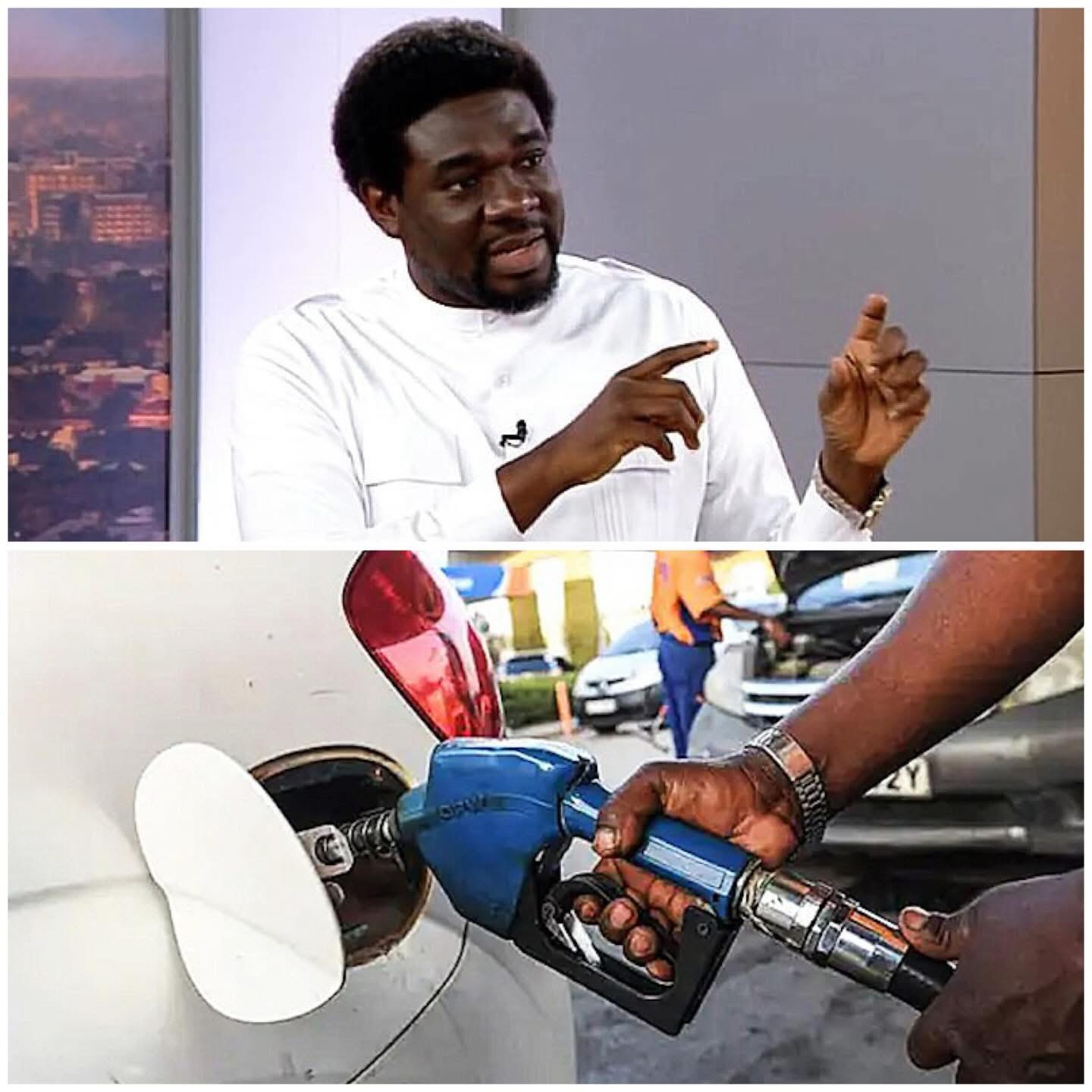
The Trade Union of Nigeria, TUC, has raised the alarm that the price of Premium Motor Spirit aka Petrol may climb to about N2,000 per litre if urgent measures are not taken to cushion the impact of rising global crude prices and the depreciating naira.
Speaking to newsmen on Thursday, April 9, the president of the TUC, Festus Osifo, called on the Federal Government to immediately deploy 60 percent of excess crude oil revenue above the 2026 budget benchmark to subsidise crude feedstock supplies to the Dangote Refinery and other modular refineries, a move it says will slash pump prices of petrol, diesel, and jet fuel within two weeks
“Today, comrades, we are seeing that the cost of petrol is edging towards N2,000 per litre depending on the part of the country that you are. Nigerian workers are already passing through excruciating pain as we speak.
The same way it is affecting transportation, it is also affecting manufacturing. The cost of diesel has also gone northward, meaning that the cost of production has increased. When production costs rise, the final price of goods on the shelves will also skyrocket.
If this continues unchecked, the inflation that we are currently celebrating as going downwards will reverse and start moving up again,” he stated.
Osifo outlined the proposal as an urgent intervention to cushion Nigerian workers from excruciating pain caused by petrol prices edging towards ₦2,000 per litre in some parts of the country
News
Cameroon’s President, Paul Biya Set To Get A Vice President For The First Time In His 43-Year Rule
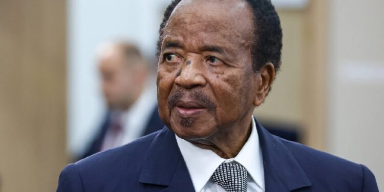
Cameroon’s president, Paul Biya, is set to get a vice president for the first time in his four-decade rule, following controversial constitutional changes backed by the parliament.
In a joint session of the ruling party-dominated National Assembly and Senate, lawmakers voted 200 to 18 in favour, with four abstentions, to pass the bill.
The bill stipulates that the vice president will automatically assume the presidency if President Paul Biya dies, resigns, or becomes incapacitated.
Biya, 93, has led the Central African country since 1982 and is the world’s oldest serving head of state. Public discussion about his health is banned.
According to the legislation, a copy of which was seen by Reuters, the vice president will be appointed and dismissed by the president, serving for the remainder of the president’s seven-year term.
However, the interim leader would be prohibited from initiating constitutional changes or running in a subsequent election.
Prior to the amendment, the constitution designated the leader of the Senate to briefly take over in case the sitting president d!es or is incapacitated. An election would then be held.
The Social Democratic Front (SDF) party, which has six representatives in parliament, boycotted the vote. It had pushed for a revision in favour of the vice-president being jointly elected with the president, rather than appointed.
The party also sought a constitutional provision that reflects the linguistic split between English and French-speaking regions. The SDF wanted the nation’s top two posts to be shared between Cameroon’s two communities, which was the position before 1972.
“This constitutional reform could have been a moment of political courage, but it is nothing less than a missed historic opportunity,” SDF chairman Joshua Osih said.
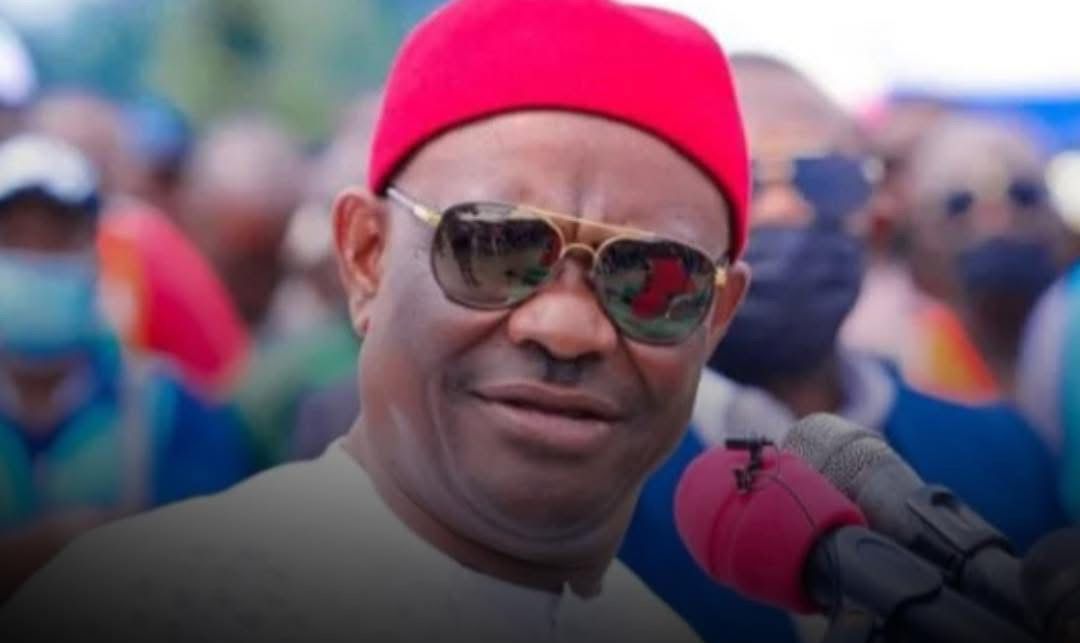
Minister of the Federal Capital Territory, Nyesom Wike, has highlighted the ongoing challenges of tax collection, pointing out the disparity between citizens’ expectations and the reality of government revenue.
Speaking with TVC NEWS live, he stressed that while Nigerians expect quality infrastructure and services, there is widespread reluctance to contribute through taxes.
On the difficulty of generating revenue, Wike said: “To collect tax, you know it’s not an easy thing. I don’t know how many of you here like to pay tax. Nigerians want everything for free. They want road, they want light. It is not easy.”
He further stated; “When I came to Abuja we were about 8, 9 billion. The money we get from the federal government is 1% of the allocation of federal government. So if federal government gets 1 trillion for example, they’ll give us one percent which is ten billion naira and that cannot carry the society. Our salary in a month is not less than 12–13 billion, so we must augment. How do we augment?”
Addressing public criticism, he added: “There’s no ab¥se that any politician has received than me. I think after the president, I’m the highest ab¥sed. There’s nothing we do that we won’t get ab¥sed. Well, what is important to me is that I want to be concentrated to do the job.”
On oversight and accountability, Wike explained how closely he monitors the finances: “The money we have gotten from tax challenge me, minister FCT, what are you doing? I’ll show you as I sit here.”

David Mark Holds Secret Meeting With PRP Leaders as ADC Crisis Deepens

Chaos As Military Officers Exchange Blows During Tinubu’s Visit To Bayelsa (Videos)

HRH Ekwueme of Ochia Kingdom Iynched & kiIIed in Imo.

-
Business1 year ago
US court acquits Air Peace boss, slams Mayfield $4000 fine
-

 Trending1 year ago
NYA demands release of ‘abducted’ Imo chairman, preaches good governance
-

 Politics1 year ago
Mexico’s new president causes concern just weeks before the US elections
-

 Politics1 year ago
Putin invites 20 world leaders
-

 Politics1 year ago
Russia bans imports of agro-products from Kazakhstan after refusal to join BRICS
-
Entertainment1 year ago
Bobrisky falls ill in police custody, rushed to hospital
-
Entertainment1 year ago
Bobrisky transferred from Immigration to FCID, spends night behind bars
-
Education2 years ago
GOVERNOR FUBARA APPOINTS COUNCIL MEMBERS FOR KEN SARO-WIWA POLYTECHNIC BORI