
Columns
Lateef Kayode Jakande: Architect of Modern Lagos

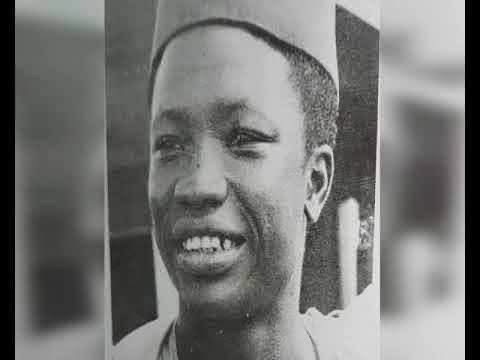
Alhaji Lateef Kayode Jakande, popularly known as “Baba Kekere”, served as the first civilian governor of Lagos State during Nigeria’s **Second Nigerian Republic. His administration is widely remembered for its rapid infrastructural development, social welfare policies, and large-scale public works programs executed within just four years in office.
Jakande, a respected journalist and former editor of the Nigerian Tribune, entered politics under the Unity Party of Nigeria led by Obafemi Awolowo. His government pursued the party’s philosophy of free education, social welfare, and mass-oriented development.
Major Infrastructure Projects
Government and Administrative Buildings
Jakande’s administration built several landmark government facilities that still serve Lagos today, including:
The Lagos State Secretariat, which houses most state ministries.
The Round House (later known as the Governor’s Office complex) used by subsequent governors.
The Lagos State House of Assembly Complex.
These projects centralized government operations and modernized administrative governance in Lagos.
Education Revolution
Education was one of Jakande’s most transformative policies. His government implemented genuine free education across the state and massively expanded school infrastructure.
Achievements included:
Increasing primary schools to 812 with 533,001 pupils (from 605 schools in 1979).
Expanding secondary schools to 223 with 167,629 students.
Constructing over 22,000 classrooms between 1980 and 1983.
Introducing a single school system to standardize education.
His government also established key institutions including:
Lagos State University (LASU) in 1983.
Teacher Training Colleges and Colleges of Education.
Housing Development
Jakande launched one of the largest public housing programs in Nigeria’s history. His government built low-cost housing estates across Lagos to address urban housing shortages.
Notable estates include:
Dolphin Estate
Abesan Housing Estate
Amuwo Odofin Housing Estate
Oke Afa Housing Estate
Ijaiye Housing Estate
These estates were designed to provide affordable housing for civil servants and low-income residents.
Water Supply and Public Utilities
Jakande expanded Lagos’ water infrastructure through projects such as:
Construction of the Adiyan Water Works.
Expansion of the historic Iju Waterworks, originally commissioned in 1915.
His administration also established:
Lagos State Waste Disposal Board
Lagos State Water Corporation
These agencies helped improve sanitation and water distribution in the rapidly growing city.
Transportation and Roads
The Jakande government undertook major road construction and rehabilitation projects, including:
Epe-Ijebu Ode Road
Oba Akran Avenue
Toyin Street
Idimu-Iba-LASU Road
In 1983, his administration also launched Lagos’ first organized ferry service with two passenger boats — Baba Kekere and Itafaji — running between Mile 2 and Marina Lagos.
Health and Social Welfare
Jakande established general hospitals across Lagos zones and promoted free healthcare services for residents. His government also created regulatory institutions such as the Lagos State Traditional Medicine Board to integrate traditional healing practices within public health oversight.
Industry, Markets, and Economic Development
To stimulate economic growth and support small businesses, his administration:
Created small-scale industry credit schemes, which later influenced the establishment of Eko Bank.
Established LASACO Assurance.
Expanded markets and constructed new commercial centers across the state.
Legacy
Despite governing for just four years before the 1983 Nigerian military coup, Jakande’s administration left an enduring imprint on Lagos’ development.
His combination of mass education, affordable housing, infrastructure expansion, and social welfare has made his tenure widely regarded as a benchmark for effective governance in Lagos State.
Alhaji Lateef Kayode Jakande passed away in 2021, but his legacy continues to shape the city he helped modernize.
Sources
Lagos State: A History of the People and Governance by Toyin Falola
Lagos State Government – Official historical records of former governors
The Guardian Nigeria archives on the legacy of Lateef Kayode Jakande.





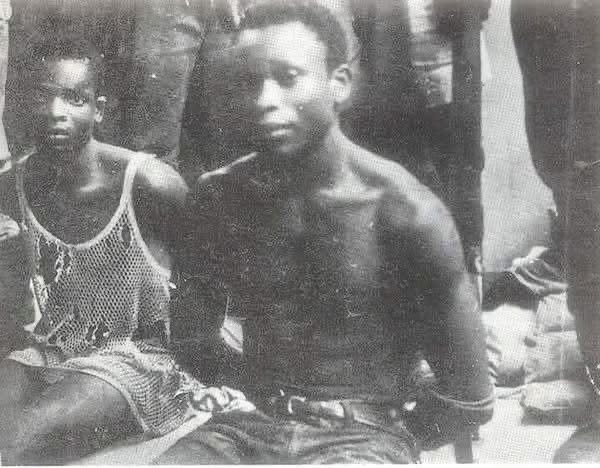
Major Isaac Jasper Adaka Boro (September 10, 1938 – May 9, 1968) remains one of Nigeria’s most iconic figures in the struggle for Niger Delta rights. Long before the Nigerian Civil War and the declaration of Biafra, Boro emerged as a young, determined activist who sought to protect the people of his homeland from economic and political marginalization.
Early Life and Education
Boro was born on September 10, 1938, into a family of educationists in the Niger Delta region. He showed early intellectual promise, eventually enrolling at the University of Nigeria, Nsukka, where he studied Chemistry and served as President of the Student Union. Despite his academic achievements, he became increasingly aware of the exploitation of oil and gas resources in the Niger Delta, which largely benefited the Nigerian Federal Government and the Eastern Region, while leaving local communities impoverished.
The Niger Delta Republic
Frustrated by the lack of development and equitable resource distribution, Boro abandoned his studies to lead a direct action movement. On February 23, 1966, he declared the Niger Delta Republic, forming the Niger Delta Volunteer Force (NDVF), a militia composed mainly of Ijaw youths. For 12 days, Boro’s forces confronted the federal military in a bold, armed protest to demand a fairer share of oil revenue and local autonomy.
Boro articulated his vision to his people:
“Remember your 70-year-old grandmother who still farms before she eats; remember your poverty-stricken people; remember, too, your petroleum which is being pumped out daily from your veins; and then fight for your freedom. Before today, we were branded robbers, bandits, terrorists, or gangsters, but after today, we shall be heroes of our land.”
Despite the bravery displayed by Boro and his followers, the revolt was quickly suppressed by the federal military. He and his comrades were arrested for treason by the government of Major General Johnson Aguiyi-Ironsi.
Commitment to Nigeria and Death
Although Boro had led a secessionist revolt, he later aligned with the federal government during the Nigerian Civil War, joining the fight against Biafra. His dedication to his homeland and Nigeria at large demonstrated his nuanced understanding of national unity and regional rights. Tragically, Boro was killed in action on May 9, 1968, at Ogu, near Okrika in Rivers State, at the age of 29. The circumstances of his death remain a subject of historical discussion.
Legacy
Major Boro is remembered as a pioneer of Niger Delta activism. His courage and early efforts to assert local control over natural resources laid the foundation for later movements advocating for resource control, environmental justice, and political inclusion in the region. He remains a symbol of resistance against oppression and a hero to the Ijaw people.
Sources
Nzefili, K. (2016). Major Isaac Jasper Adaka Boro and the Niger Delta Revolt of 1966. Journal of African History, 57(2), 215–234.
Akinyemi, A. (2010). The Niger Delta and the Roots of Conflict in Nigeria. Lagos: University of Lagos Press.
Akinsanya, A. (1988). Boro and the Niger Delta Struggle: A Historical Perspective. Ibadan: Heinemann Educational Books.
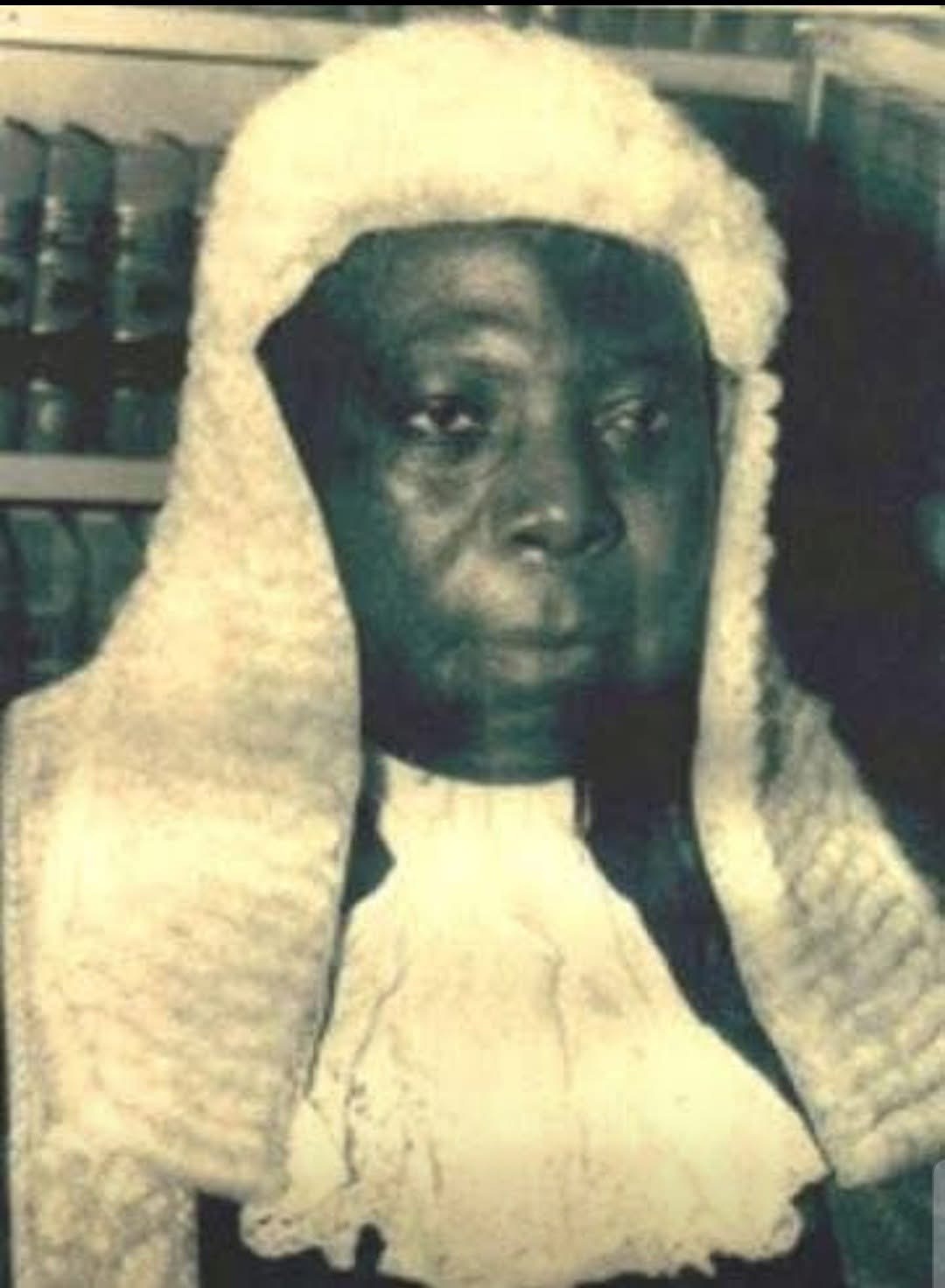
Justice George Sodeinde Sowemimo (1920–1997) was a prominent Nigerian jurist who served as Chief Justice of Nigeria from 1983 to 1985. Over a judicial career spanning more than three decades, he became widely known for presiding over one of the most controversial political trials in Nigeria’s early post-independence history.
Early Judicial Career
Sowemimo joined the Nigerian judiciary during the colonial era and gradually rose through the ranks of the legal system. His reputation as a strict and methodical judge earned him significant influence within the courts. Over the course of 32 years on the bench, he served in various judicial capacities before eventually becoming Chief Justice of Nigeria in 1983.
The Awolowo Treasonable Felony Trial
Justice Sowemimo is most remembered for his role in the 1963 treasonable felony trial involving Obafemi Awolowo and several members of the Action Group.
The case accused Awolowo and others of plotting to overthrow the federal government led by Abubakar Tafawa Balewa. After a lengthy trial, Sowemimo delivered a 90-page judgment.
During the ruling, he made the famous statement:
“My hands are tied.”
The phrase became one of the most quoted lines in Nigerian legal and political history. Awolowo and 17 co-defendants were subsequently convicted and sentenced to prison terms.
The trial was highly controversial and remains a subject of debate among historians and legal scholars, with some arguing that the case had strong political undertones during Nigeria’s First Republic.
Chief Justice of Nigeria
Two decades after the Awolowo case, Sowemimo rose to the highest judicial office in the country when he became Chief Justice of Nigeria in 1983. His tenure occurred during a turbulent political period that saw the end of Nigeria’s Second Republic and the return of military rule later that year.
He served as Chief Justice until 1985, after which he retired from the judiciary.
Legacy
Justice Sowemimo’s legacy is closely tied to the intersection of law and politics in Nigeria’s early democratic years. His long judicial service and involvement in landmark cases made him a significant figure in Nigeria’s legal history.
Today, his name remains associated with one of the most important legal trials in the country’s post-independence era.
Source
The Nigerian Judiciary: A Historical Perspective
Nigerian Supreme Court historical records
Bimbola Babarinde, The Nigerian Nostalgia 1960–1980 Project
Biographical archives of George Sodeinde Sowemimo.
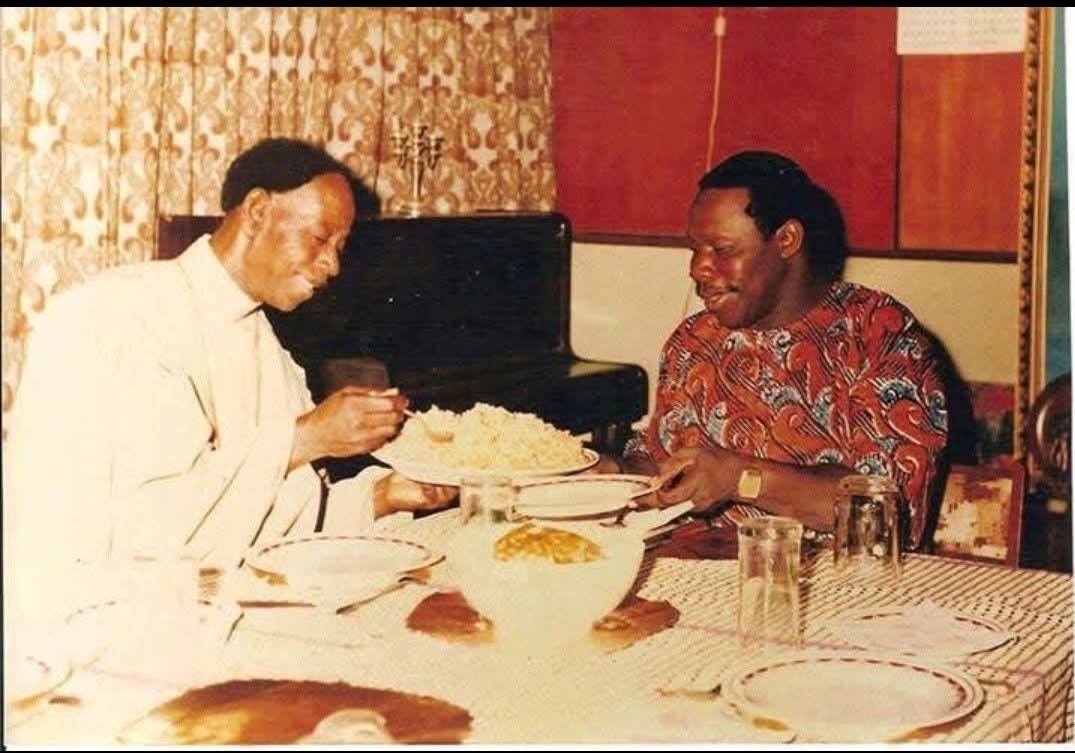
This historic photograph captures a unique moment in Nigerian history, featuring Olusegun Obasanjo, then a prominent political figure, sharing a meal with Samuel Bilewu Joseph Oshoffa, the revered founder of the Celestial Church of Christ (CCC).
Historical Context
Olusegun Obasanjo had served as Nigeria’s military Head of State from 1976 to 1979 and later became civilian President from 1999 to 2007. His leadership during the late 1970s was marked by the transition from military to civilian rule.
Samuel Bilewu Joseph Oshoffa founded the CCC in 1947 in Benin City. By the 1970s, the church had grown into one of Nigeria’s most influential spiritual movements, with followers across West Africa and the diaspora.
Significance of the Meeting
The photograph symbolizes the intersection of political power and spiritual authority in Nigeria. Such meetings were common during this period as political leaders often sought the counsel, endorsement, or blessing of influential religious figures, reflecting the deep intertwining of faith and governance in Nigerian society.
The image reportedly dates to 1978, during Obasanjo’s tenure as military Head of State, a time when the CCC was expanding its presence both nationally and internationally.
It shows a rare, informal interaction, highlighting the personal rapport and mutual respect between a political leader and a spiritual icon.
Legacy
This moment stands as a visual reminder of Nigeria’s political and religious history, demonstrating how leadership and faith communities interacted during critical periods of nation-building. Both men left enduring legacies: Obasanjo in politics and governance, and Oshoffa in shaping spiritual life across Nigeria and beyond.
Sources
Falola, Toyin, and Matthew M. Heaton. A History of Nigeria. Cambridge: Cambridge University Press, 2008.
BBC News archives, Nigerian political and religious history features.

Buy Foodstuffs From Landlady Or Get Evicted – Landlord Bans Tenants From Buying Food Outside

Niger Delta youths demand termination of pipeline surveillance contract

Ex-army general loses appeal, heads to Supreme Court

-
Business1 year ago
US court acquits Air Peace boss, slams Mayfield $4000 fine
-

 Trending1 year ago
NYA demands release of ‘abducted’ Imo chairman, preaches good governance
-

 Politics1 year ago
Mexico’s new president causes concern just weeks before the US elections
-

 Politics1 year ago
Putin invites 20 world leaders
-

 Politics1 year ago
Russia bans imports of agro-products from Kazakhstan after refusal to join BRICS
-
Entertainment1 year ago
Bobrisky falls ill in police custody, rushed to hospital
-
Entertainment1 year ago
Bobrisky transferred from Immigration to FCID, spends night behind bars
-
Education2 years ago
GOVERNOR FUBARA APPOINTS COUNCIL MEMBERS FOR KEN SARO-WIWA POLYTECHNIC BORI