
Politics
INEC Chairman, Prof. Mahmood Yakubu and members of the Commission, meet with Media Organizations at the ongoing quarterly consultative meeting in Abuja, ahead of the 2024 Edo and Ondo States Governorship Elections on Wednesday, May 15th, 2024.


The President of the Nigeria Union of Journalists
President and Council Members of the NIPR
Senior Officials of the Nigerian Guild of Editors
Executive Director of the International Press Centre (IPC)
Media Executives and Heads of Various Media Organisations
Editors and Senior Journalists
National Commissioners of INEC
The Secretary and Other Senior Officials of the Commission
Members of the INEC Press Corps
Ladies and Gentlemen
1. It is my pleasure to welcome you all to our second regular quarterly consultative meeting for this year. You may recall that our first meeting for the year was held about two months ago on Thursday 21st March 2024 at which we briefed you about the 9 bye-elections and 38 re-run elections in 26 States of the Federation held on 3rd February 2024. We would like to further inform you that with the exception of two State Assembly constituencies in Enugu and Kano States disrupted by violence and thuggery, winners have emerged in 45 out of 47 constituencies. Following extensive consultation with stakeholders in the two States, the Commission is remobilising to conclude the outstanding re-run elections in Enugu South 1 State Constituency of Enugu State and Ghari (formerly known as Kunchi Local Government Area) for the Ghari/Tsanyawa State Constituency of Kano State. We similarly briefed you on the forthcoming off-cycle Governorship elections in Edo and Ondo States.
2. Early this week, the Commission announced the plan to resume the Continuous Voter Registration (CVR) as part of our preparations for the Edo and Ondo State Governorship elections. As you are aware, the Edo State Governorship election is holding in the next four months on Saturday 21st September 2024 while the Ondo Governorship election holds in the next six months on Saturday 16th November 2024.
3. The Continuous Voter Registration (CVR) in the two States will enable eligible citizens who are not registered voters to do so. Similarly, registered voters also have the opportunity to transfer their registration from other States of the Federation to Edo and Ondo States or from one location to another within the States. Lost or damaged voters’ cards will be replaced during the exercise. The CVR will take place simultaneously in the two States from Monday 27th May 2024 to Wednesday 5th June 2024 from 9.00am to 3.00pm daily including the weekend. Let me reiterate that the CVR is only open to new registrants and those who seek to transfer their registration. Persons who are registered as voters should not attempt to register again as double or multiple registration is illegal.
4. Taking into consideration the limited time to the Governorship elections, the Commission has decided to conduct the registration at Ward level and our State headquarters instead of our Local Government offices and a few designated centers as was the case in the past. This means that there will be 192 Ward registration centres in Edo State and 203 centres in Ondo State in addition to our State offices in Benin City and Akure, making a total of 397 walk-in registration centres in the two States. There will be no online pre-registration option in the two States because of time constraint. Each centre will be managed by two officials drawn from our regular staff and the National Youth Service Corps (NYSC). In the next few days, the Commission will commence the training of at least 794 officials for the exercise. The locations of the registration centres as well as other relevant information have been compiled in a detailed 28-page document included in your folders for this meeting. The same information has already been uploaded to our website and social media platforms for public information.
5. The Commission therefore appeals to the media to join us in mobilising prospective registrants for the exercise, particularly on the need to register early and not wait until the deadline approaches when the registration centres will be inundated by eleventh hour registrants.
6. In addition to the registration of voters, the Commission will also make available the uncollected Permanent Voters’ Cards (PVCs) for collection during the CVR. In the coming days, the list of uncollected PVCs will be published in our offices in the two States and simultaneously uploaded to our website. We believe that doing so will make it easier for voters to know the availability of the cards and identify the locations to collect them. However, no PVCs will be collected by proxy. Registered voters should come in person to collect their cards. Again, we seek for the support of the media in encouraging voters to locate and pick up thier PVCs as was done in the past.
7. Still on our preparations for the two Governorship elections, the Commission has published the final list of candidates for Edo following the conclusion of party primaries and the end of the period for withdrawal and substitution of candidates as provided in the Timetable and Schedule of Activities for the election. Campaign in public by political parties commenced on Wednesday 24th April 2024 and will end at midnight on Thursday 19th September 2024 i.e. 24 hours before the date fixed for the election as provided by law. We look forward reading your monitoring reports of the campaigns as some of you have done in the past.
8. As we move closer to Election Day in Edo State, it is also imperative to request media organisations to submit applications for accreditation to report on the election in earnest along with the required documentation for individual journalists and support staff. Doing so will enable the Commission to produce and deliver the identity cards for journalists covering the election in good time. The Commission will not entertain requests outside the deadline for the receipt of applications from interested media organisations or process requests that do not meet the criteria for accreditation.
9. Turning to outstanding bye-elections, the Commission would like to inform you about the existence of vacancies in four States of the Federation involving three State Assembly constituencies and one Federal Constituency as a result of death or resignation of Honourable Members. As soon as preparations are concluded, the Commission will announce the dates for bye-elections in Khana 2 State Constituency of Rivers State, the Bagwai/Shanono State constituency of Kano State, the Zaria Kewaye State Constituency of Kaduna State and the Garki/Babura Federal Constituency of Jigawa State.
10. On this note, I once again welcome you all to this meeting. I thank you and God bless.




Politics
‘If Wike Fails To Apologize To Okinbaloye, We Will Boycott All Press Briefings’ – Broadcasters Warn
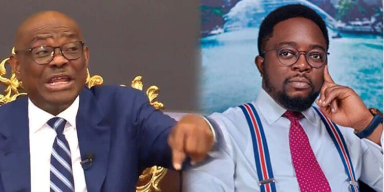
The Independent Broadcast Association of Nigeria (IBAN) has asked the Minister of the Federal Capital Territory, Nyesom Wike, to retract a controversial remark he made about a journalist with Channels Television, Seun Okinbaloye.
IBAN, the umbrella body for independent broadcast stations in Nigeria, also warned that it may boycott all media engagements organized by the minister if he fails to issue a public apology.
In a statement signed by Ahmed Ramalan, IBAN Chairman, and Fidelis Duker, Acting General Secretary, the association expressed concern about the implications of the comment aired during a live television interview.
The controversy stemmed from a remark made by Wike during a routine media chat on Friday, when he reacted to Okinbaloye’s commentary on the trajectory of Nigeria’s democracy while watching the program Politics Today.
“If there was any way to break the screen, I would have shot him,” Wike had said.
The minister later clarified to journalists present that the statement was not a literal threat.
On Saturday, Lere Olayinka, Senior Special Assistant on Public Communications to the minister, described the comment as “hyperbolic”, arguing that it had been taken out of context by critics.
However, IBAN maintained that the remark was inappropriate for a public official, even if it was not intended as a literal threat.
The association said statements suggesting violence could easily be interpreted as intimidation of journalists.
IBAN warned that comments implying violence could contribute to a hostile environment for media practitioners.
The group noted that Nigeria currently ranks 122 out of 180 countries on the global press freedom index, adding that journalists already face numerous challenges.
According to the association, these include surveillance, attacks, and arbitrary arrests.
The association called on the minister to withdraw the remark and apologise publicly to the journalist and the wider media community.
IBAN also urged Wike to reaffirm his commitment to press freedom in accordance with Sections 22 and 39 of the 1999 Constitution.
“Should the minister fail to meet these requests within a reasonable period, IBAN will have no choice but to advise all independent broadcast stations to suspend coverage of all press briefings, media chats, and official news conferences hosted by the FCT minister,” the statement read.
Despite its warning, the association said it remains open to constructive engagement with public officials.
“We hope the minister will take the necessary corrective action so that normal coverage can continue without interruption,” IBAN added.
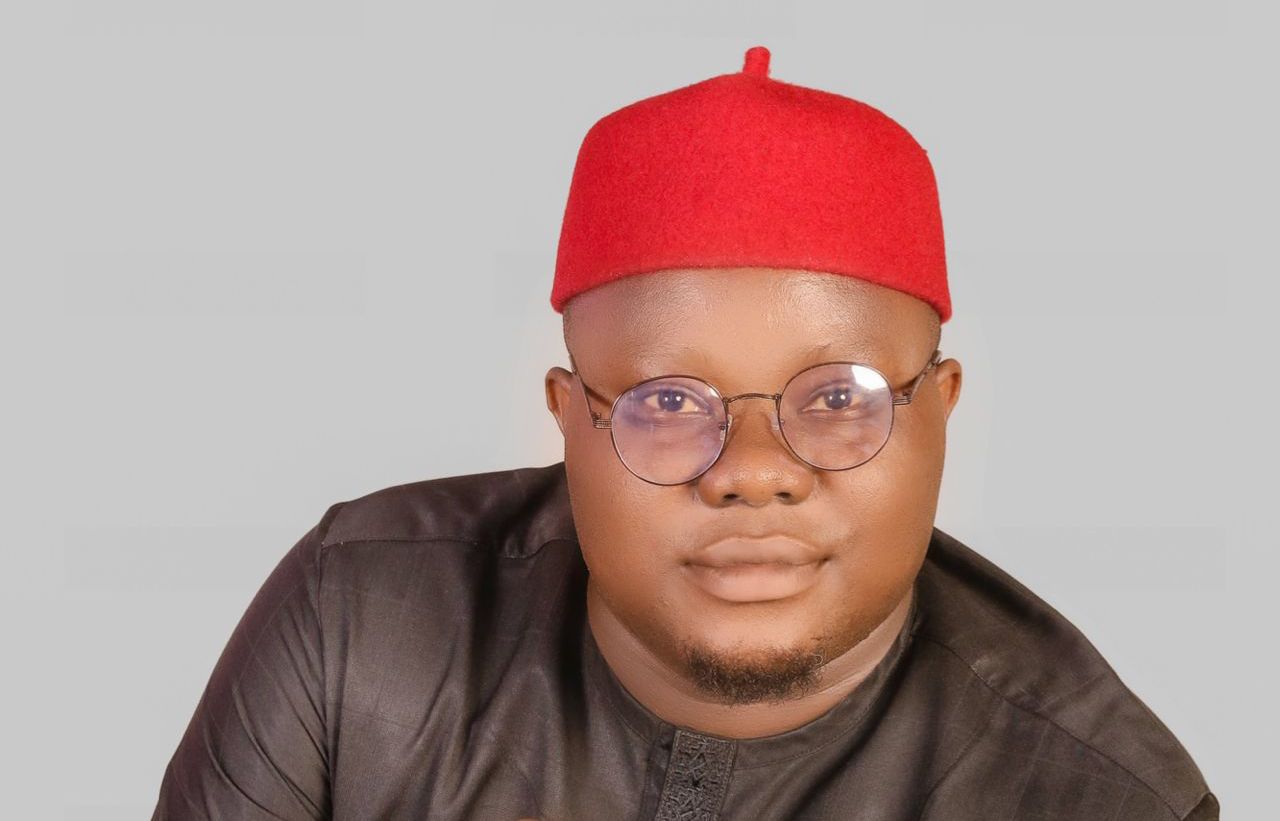
In a heartfelt message, Hon Success Opara has extended warm Easter greetings to Nigerians, celebrating the resurrection of Jesus Christ. Speaking at St. Peter Anglican Church Ikengbu, Opara emphasized the significance of Easter, saying, “He is risen! May the miracle of Easter bring you renewed hope, faith, and joy. Rejoice in the promise of new life and the joy that conquered everything.”
The lawmaker prayed for Nigerians to experience the transformative power of the resurrection, urging them to find solace in the promise of eternal life. “As we commemorate this sacred occasion, let us reflect on the values of love, compassion, and forgiveness that Jesus Christ embodied,” he said.
Hon Opara’s message was filled with Easter cheer, as he wished Nigerians a joyous celebration with family and loved ones. “May the spirit of Easter fill your heart with peace, hope, and renewed faith. Happy Easter!”
The Easter celebration at St. Peter Anglican Church Ikengbu was marked with prayers, hymns, and reflections on the significance of Christ’s resurrection.
Politics
I’m Not a Part of Any Plan to Turn Nigeria Into a One-Party State, But INEC Will Follow Court Orders, Not Political Pressure — INEC Chairman, Joash Amupitan
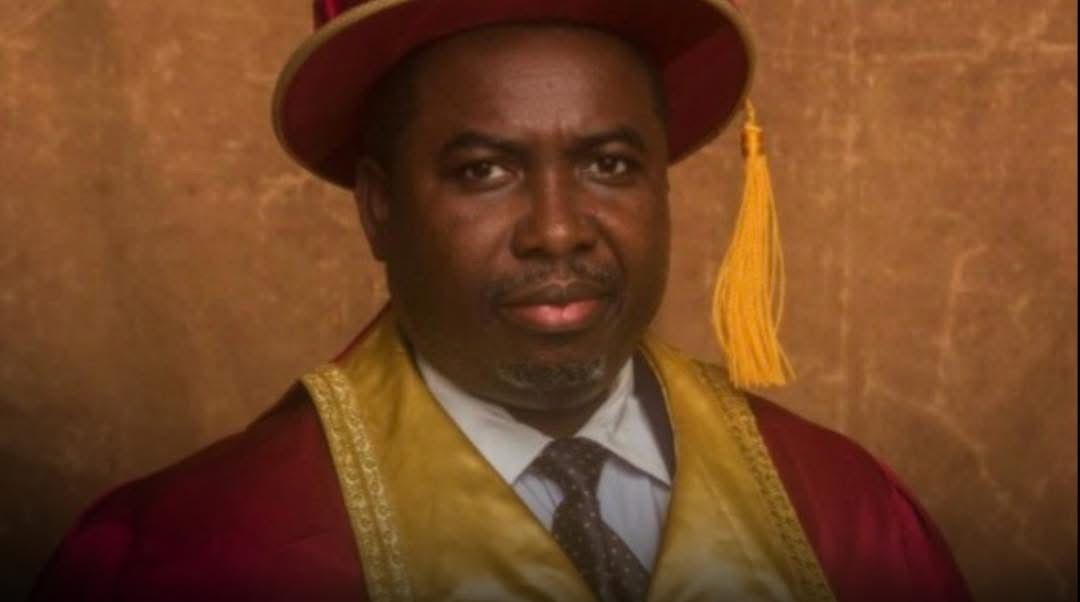
The Chairman of the Independent National Electoral Commission (INEC) Prof. Amupitan has rejected claims that the commission is being used to create a one-party state in favor of President Bola Tinubu ahead of the 2027 elections. “I am not guilty as charged,. Let me say it very clearly. I am not a party to the plan of anyone to turn Nigeria into a one-party state. By the constitution of the Federal Republic of Nigeria, Nigeria is a multi-party state and this is recognized by the constitution and the Electoral Act,” he stated.
He cited the recent FCT area council elections, noting about ten political parties participated, including ADC, PDP, Labor Party, and Zenith Labour Party. “The democratic space remains vibrant. Parties are participating, and the elections demonstrate that competition is alive,” he said.
On disputes within the ADC and the PDP, he explained, “One of the challenges we’ve had is the issue of party leadership. And it’s something that is impacting on democracy because if those issues are not addressed on time, it can cause a lot of problem. Nobody is looking at that part that ordered the trial court to give it expeditious trial. This is an originating summons. An originating summons that could, if they had gone to court, have been decided by now because the Court of Appeal has given a specific order that it should be decided expeditiously.”
Explaining INEC’s role, he said, “So therefore, it calls to question the fact that this order has been made. They’re supposed to go back to the Federal High Court and let the Federal High Court, with that order, compel the judge to hear that case expeditiously. The Court of Appeal made a preservatory order, status quo antebellum. The commission just recorded positions before 2nd September 2025. If the court gives judgment, parties can proceed. Life goes on.”
He concluded, “The whole idea that INEC is being used to turn Nigeria into a one party state is false. INEC follows court orders, not political pressure.”

Abuja hotel collapse: Wike orders arrest of owner, to convert land to public use

How Yakubu Gowon found himself in the Army

‘If Wike Fails To Apologize To Okinbaloye, We Will Boycott All Press Briefings’ – Broadcasters Warn

-
Business1 year ago
US court acquits Air Peace boss, slams Mayfield $4000 fine
-

 Trending1 year ago
NYA demands release of ‘abducted’ Imo chairman, preaches good governance
-

 Politics1 year ago
Mexico’s new president causes concern just weeks before the US elections
-

 Politics1 year ago
Putin invites 20 world leaders
-

 Politics1 year ago
Russia bans imports of agro-products from Kazakhstan after refusal to join BRICS
-
Entertainment1 year ago
Bobrisky falls ill in police custody, rushed to hospital
-
Entertainment1 year ago
Bobrisky transferred from Immigration to FCID, spends night behind bars
-
Education2 years ago
GOVERNOR FUBARA APPOINTS COUNCIL MEMBERS FOR KEN SARO-WIWA POLYTECHNIC BORI