
Politics
Yoruba, Igbo, Other Ethnic Nationalities Should Be Able To Exit ‘Freely’ From Nigeria – Proposal Before National Assembly Says

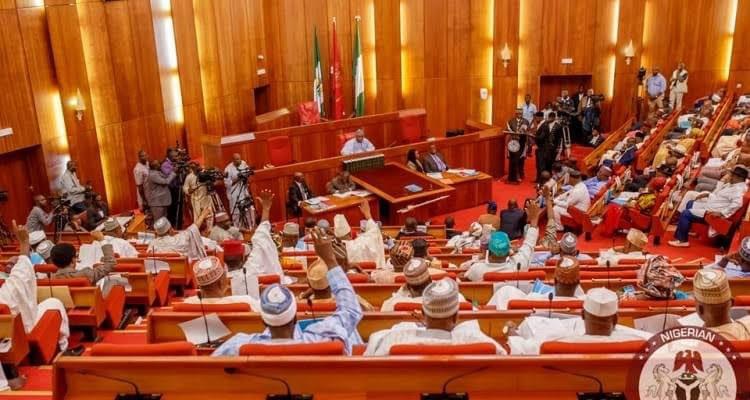
Yoruba, Igbo, Other Ethnic Nationalities Should Be Able To Exit ‘Freely’ From Nigeria – Proposal Before National Assembly Says
June 1, 2024
NEWS
The private bill was titled, “A Bill for an Act to substitute the annexure to Decree 24 of 1999 with a new governance model for the Federal Republic of Nigeria.”
Every ethnic nationality and people in Nigeria will have an unconditional right to self-determination, the promoter of a trending draft “bill” seeking a return to the regional system of government, Dr Akin Fapohunda, has proposed.
The private bill was titled, “A Bill for an Act to substitute the annexure to Decree 24 of 1999 with a new governance model for the Federal Republic of Nigeria.
In the full proposal obtained by SaharaReporters on Saturday, Fapohunda also suggested the scrapping of the presidential system of government, reintroduction of the parliamentary system, return to unicameral legislature, as well as provision for self-determination by any section of the country which desires so.
It read, “Every Ethnic Nationality and People in Nigeria has an unconditional right to self-determination within here delineated territories.
“The sovereignty, powers and authority to formulate the articles of association towards any reform of the Central Federal Government of Nigeria, at any other time shall lie jointly and severally with all the ethnic nationalities occupying their respective territories.
“Every Ethnic Nationality and People in Nigeria has the right to a full measure of self-government which includes the right to establish institutions of government in the territory that it inhabits and to equitable representation in the Federal and Regional Governments.
“A “Ethnic Nationality or People” for the purpose of this Constitution, is a group of people who have or share large measure of a common culture or similar customs, mutual intelligibility of language, belief in a common or related identities, a common psychological make-up, and who inhabit an identifiable, predominantly contiguous territory.”
The bill promoter added that the 36 states of the federation should be scrapped and Nigeria should be returned to regional system.
Part of the draft Bill seen by SaharaReporters on Friday had partly read, “PART I – Preliminaries: WHEREAS Nigeria, its Peoples and Government have been governed under Decree 24 of 1999 that was handed down by the then Military Government without the express consent of the people despite the preamble of “We the people.”
“WHEREAS the said Constitution of the Federal Republic of Nigeria 1999 (as Amended) is not autochthonous as it does not evolve from the deliberations and consensus of the Nigerian People.
“WHEREAS the Peoples of Nigeria now desire and effectively demand for a change to a Constitution based on Federal/Regional System of Government.
“WHEREAS the Federal and Regional governments are to operate within the provisions of this Constitution, it is within the discretion of the ethnic blocs within the States that constitutes a given region to aggregate or disaggregate as Provinces, Divisions and Districts, while being in control of their affairs without let or hindrance at whatever level of governance.
“Whereas the 1999 Constitution as amended is a schedule of a military decree now deemed to be an Act of the National Assembly for which the National Assembly have the powers to amend and/or abrogate as expedient.
“Whereas the National Assembly where so necessary and expedient can invoke the doctrine of necessity to resolve any point of law for the good governance of the country Nigeria.”
On PART 11 – Substitution Clause, the drafters proposed that the National Assembly shall invoke its inherent powers to expunge the schedule attached to decree 24 of 1999 often referred to as 1999 Constitution as amended from the decree, which “is now deemed to be an Act of the National Assembly to which the National Assembly have the powers to so do and replace same with a new governance model for Nigeria effective not later than October 1, 2024.”
“This amendment is subject to a yes or no vote in a Referendum by the people of the Federal Republic of Nigeria,” it proposed.






The Independent National Electoral Commission, INEC, has announced the postponement of the proposed nationwide voter revalidation exercise until after the 2027 General Election.
This follows a meeting with the Resident Electoral Commissioners, RECs, on Friday, April 10.
A statement signed by INEC’s National Commissioner, Chairman, Informationa and Voter Education Committee, Mohammed Kudu Haruna, said
“the voter revalidation exercise is a critical component of the Commission’s mandate to maintain a credible and up-to-date National Register of Voters.
It is designed to verify and review existing voter records, ensure the accuracy of personal data, eliminate duplicate and ineligible entries, and strengthen the overall integrity of the voter register.
The exercise also aims to provide an opportunity for registered voters to confirm their details and make necessary corrections where required.
INEC remains committed to the conduct of free, fair, credible, and inclusive elections.”
Following the just conducted ADC Congress, the African Democratic Congress (ADC) in Ideato South Local Government Area, Imo State, has announced its new leadership team. The team, led by Chairman Hon. Eze Chijioke, includes:
– Chairman: Hon. Eze Chijioke
– Secretary: Chief Duru Maurice
– Youth Leader: Mr. Obinwanne Okwara
– Woman Leader: Mrs. Anueyiagu Ogechi
– Organizing Secretary: Hon. Godian Egemba
The team is expected to lead the party to victory in future elections.
Politics
ADC Owerri Municipal Gets New Chairman: Hon. Success Opara Emerges Amidst State Leadership Tussle

The African Democratic Congress (ADC) in Owerri Municipal, Imo State, has concluded its Local Government Area Congress, with Hon. Success Opara emerging as the new Chairman. The congress, conducted in all wards across Owerri Municipal, saw party faithfuls voting for Opara, who is expected to lead the party to victory in future elections.
However, there’s an ongoing leadership tussle within the Imo State ADC, with Chief Emmanuel Amushie claiming to be the authentic state chairman, recognized by the Independent National Electoral Commission (INEC). On the other hand, Prof. James Okoroma has also been declared the authentic state chairman by the national leadership of the ADC.
Furthermore the Independent National Electoral Commission (INEC) has removed the faction led by Prof. James Okoroma as the recognized leadership of the African Democratic Congress (ADC) in Imo State, as of April 9, 2026. INEC recognizes only the Amuchie-led Executive as the lawful and legitimate leadership of the ADC in Imo State.
The removal follows a Court of Appeal ruling directing parties to maintain the status quo pending the determination of a substantive suit before the Federal High Court. INEC has also suspended recognition of all leadership factions of the ADC until the court reaches a final decision.

INEC postpones nationwide voter revalidation until after 2027 elections

ADC Congress Ideato South: New Leadership Team Emerges

Fuel may hit N2000/litre. Subsidize crude feedstock now – TUC tells FG

-
Business1 year ago
US court acquits Air Peace boss, slams Mayfield $4000 fine
-

 Trending1 year ago
NYA demands release of ‘abducted’ Imo chairman, preaches good governance
-

 Politics1 year ago
Mexico’s new president causes concern just weeks before the US elections
-

 Politics1 year ago
Putin invites 20 world leaders
-

 Politics1 year ago
Russia bans imports of agro-products from Kazakhstan after refusal to join BRICS
-
Entertainment1 year ago
Bobrisky falls ill in police custody, rushed to hospital
-
Entertainment1 year ago
Bobrisky transferred from Immigration to FCID, spends night behind bars
-
Education2 years ago
GOVERNOR FUBARA APPOINTS COUNCIL MEMBERS FOR KEN SARO-WIWA POLYTECHNIC BORI