
Business
Afenifere youths write Tinubu over alleged plot to stop crude supply to local refineries

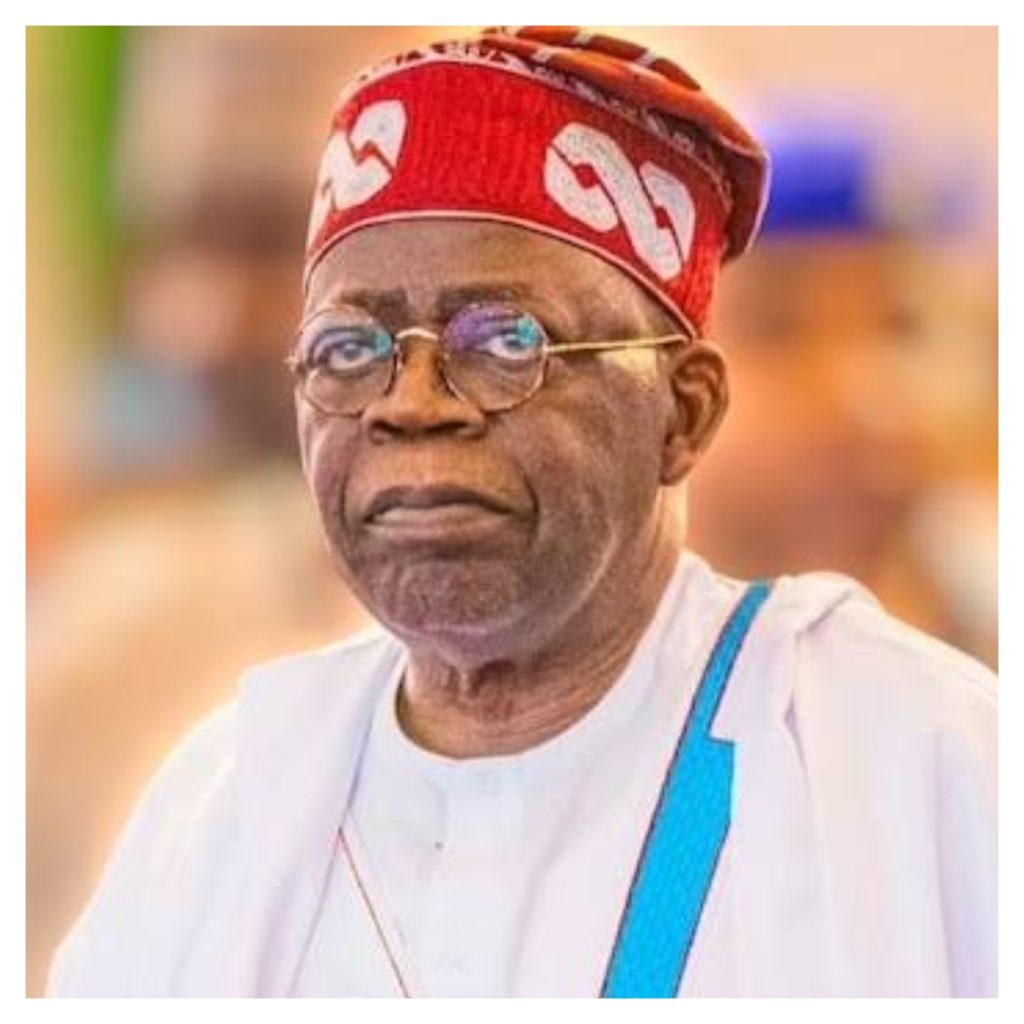
The Afenifere Youth Renewal Group (AYRG) has written President Bola Tibubu, expressing concern over an alleged plot to frustrate domestic refineries, including the Dangote Refinery, from meeting Nigeria’s PMS consumption demand.
The alleged plot, said to be masterminded by a cabal comprising petroleum importers and officials of the Nigerian National Petroleum Company Limited (NNPCL), involves a plan to obstructing the supply of crude oil to local refineries.
In a letter co-signed by Chief Semiu Oriade and Otunba Opeoluwa Ayeola, the President and Secretary General, respectively, AYRG warned that the planned obstruction could have severe economic implications for Nigeria.
According to the Afenifere youths, possible consequences of the plot include artificial scarcity of petroleum products, further astronomical hike in pump prices, and economic hardship for millions of Nigerians.
The group further warned that it would erode economic gains recorded under President Bola Tinubu’s leadership.
Praising the President for his reforms, including removal of subsidy, which it said has liberated the economy from the stranglehold of corrupt oil cartels, AYRG warned that economic saboteurs can derail the progress made by the administration.
Parts of the letter read, “We write not only as concerned citizens, but more as stakeholders who are deeply invested in the development, stability, and prosperity of our dear country. It is now abundantly evident that certain vested interests within the NNPC are actively and deliberately trying to thwart the excellent advancements of your administration by obstructing the supply of crude oil to local refineries,” the letter said.
“This insidious plot, if not urgently curtailed, has the potential to erode the significant economic gains recorded under your leadership and plunge Nigeria back into the dark era of crippling fuel importation.
“Since its inception, it is believed that your administration has demonstrated a strong commitment to breaking the chains of economic enslavement that have long held our dear country hostage.
“The audacious removal of the fuel subsidy; a long-standing albatross on the neck of our nation’s economy as for decades lined the pockets of a privileged few at the expense of national progress, is undoubtedly a landmark decision that signaled the dawn of economic liberation for Nigeria.
“Your efforts in dismantling this fraudulent subsidy regime has liberated our economy from the stranglehold of corrupt oil cartels who, under the guise of serving the nation, have siphoned trillions of naira into private coffers while keeping Nigeria dependent on imported petroleum products.
“However, it has come to our attention, through credible sources and observable patterns, that certain elements within the Nigerian National Petroleum Corporation (NNPC), whose nefarious schemes were disrupted by your administration’s bold policies, are actively working to undermine the progress of your administration.
“These individuals, driven by selfish interests and a desire to maintain their stranglehold on the nation’s resources, are orchestrating a dangerous plot to halt the supply of crude oil to local refineries.
“Their ultimate goal is to force Nigeria back into the era of fuel importation, thereby paving the way for a return to exorbitant petrol prices, hyperinflation, and economic hardship for millions of Nigerians.
“We believe that the deliberate strangulation of crude supply to our local refineries is not just an economic crime; it is a direct assault on the sovereignty of Nigeria as a self-sustaining oil-producing nation.
“This country is abundantly blessed with crude oil reserves that should place us among the leading self-reliant petroleum producers in the world. Yet, due to years of systemic sabotage, corruption, and vested interests, Nigeria was forced to endure the humiliation of exporting crude oil only to buy it back at exorbitant prices as refined fuel.
“Your Excellency, we are heartened that your administration’s economic vision has come a long way in putting an end to this absurdity by reviving our refineries, ensuring local refining capacity is maximized, and cutting off the parasitic network of fuel importers who have, for decades, profited at the detriment of national prosperity.
“But rather than embrace the future of a self-sufficient Nigeria you are creating, these saboteurs, threatened by their loss of illicit profits, are hell-bent on reversing your policies by crippling local refining operations.
“Moreover, these individuals, who have long profited from the opaque and corrupt fuel subsidy regime, feel threatened by the removal of the subsidy. For decades, they have enriched themselves at the expense of the Nigerian people, siphoning billions of dollars meant for the development of our nation.”
The Afenifere Youth Renewal Group urged the President Tinubu to conduct a comprehensive investigation into the activities of the NNPC, and mandate uninterrupted supply of crude to local refineries.
It will be recalled that recently, there were reports that the NNPCL intends to adjust its crude allocation to Dangote Refinery following the coming onstream of the Warri and Port Harcourt refineries. The Port Harcourt and Warri refineries currently operate at a combined capacity of about 135,000 barrels per day.
Under the Federal Government’s naira-for-crude initiative, the NNPCL currently allocates 300,000 barrels of crude per day to Dangote Refinery.










The Trade Union of Nigeria, TUC, has raised the alarm that the price of Premium Motor Spirit aka Petrol may climb to about N2,000 per litre if urgent measures are not taken to cushion the impact of rising global crude prices and the depreciating naira.
Speaking to newsmen on Thursday, April 9, the president of the TUC, Festus Osifo, called on the Federal Government to immediately deploy 60 percent of excess crude oil revenue above the 2026 budget benchmark to subsidise crude feedstock supplies to the Dangote Refinery and other modular refineries, a move it says will slash pump prices of petrol, diesel, and jet fuel within two weeks
“Today, comrades, we are seeing that the cost of petrol is edging towards N2,000 per litre depending on the part of the country that you are. Nigerian workers are already passing through excruciating pain as we speak.
The same way it is affecting transportation, it is also affecting manufacturing. The cost of diesel has also gone northward, meaning that the cost of production has increased. When production costs rise, the final price of goods on the shelves will also skyrocket.
If this continues unchecked, the inflation that we are currently celebrating as going downwards will reverse and start moving up again,” he stated.
Osifo outlined the proposal as an urgent intervention to cushion Nigerian workers from excruciating pain caused by petrol prices edging towards ₦2,000 per litre in some parts of the country
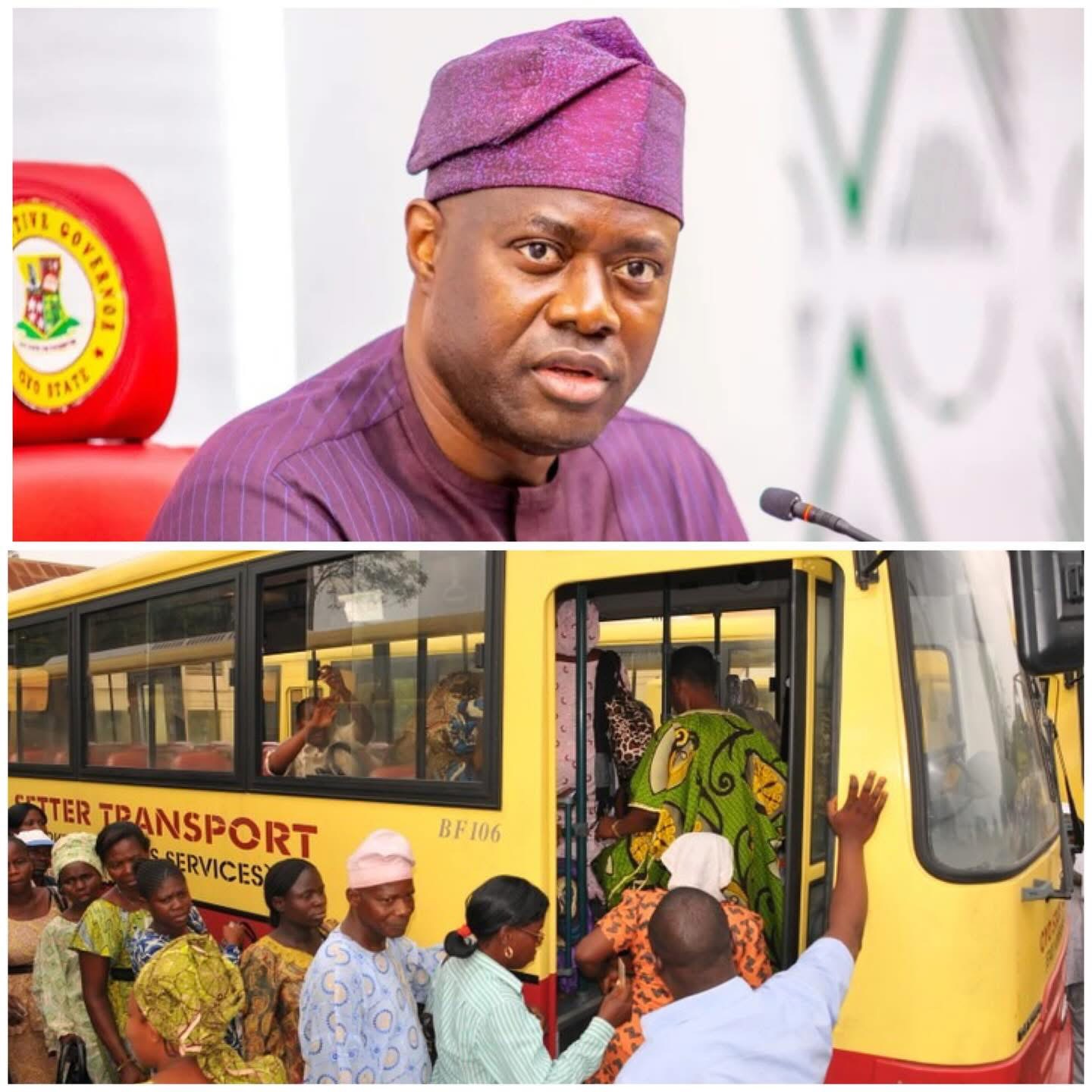
The governor of Oyo state, Seyi Makinde, has approved a N10,000 transportation allowance as a palliative for the state workforce to cushion the effects of the increase in the pump price of Premium Motor Spirit, otherwise known as petrol.
The Chairman of the Nigeria Labour Congress (NLC), Oyo State chapter, Kayode Martins, in a statement released on Monday, March 23, disclosed that the governor has granted the request of the union on the issue of transportation allowance.
The statement read
“Following the intervention and formal request made by the State Council of the Nigeria Labour Congress (NLC) earlier this morning, the state government has approved a N10,000 transportation allowance for all workers in the state.
The newly approved allowance is set to take effect from April 2026, providing much-needed relief to workers grappling with rising transportation costs amid current economic challenges.
This development comes as a direct response to sustained advocacy by the state NLC, aimed at cushioning the impact of increased living expenses on the workforce.
Further details on implementation are expected to be communicated by the relevant government authorities in due course.”
The Central Bank of Nigeria (CBN), has declared that banks and financial institutions must establish and maintain a temporary watch-list for Bank Verification Numbers (BVN) implicated in suspected fraudulent transactions.
According to the CBN in a circular dated March 12, 2026 and signed by its Director of Payments System Policy Department, Musa I. Jimoh, the apex bank said such a suspected BVN may remain on the temporary watchlist for a maximum period of twenty-four (24) hours during which the owner would be contacted to make clarifications.
The circular explained that the move is part of several new measures under a revised regulatory framework aimed at enhancing financial system stability.
“A BVN may remain on this temporary Watchlist for a maximum period of twenty-four (24) hours, during this period, the BVN owner shall be contacted to provide clarification regarding the identified transaction(s),” the circular stated.
The circular also sets an age requirement for BVN enrolment, restricting registration to individuals who have attained eighteen (18) years and above.
The CBN also added that amendments to phone numbers linked to a BVN shall be allowed only once.
“Amendments to phone numbers linked to a BVN shall be allowed only once,” the circular noted.
The apex bank stated that access to BVN databases will remain tightly controlled.
“Access to the BVN databases shall be exclusively granted to Central Bank of Nigeria (CBN) licensed financial institutions.
“Notwithstanding this provision, the Central Bank of Nigeria (the Bank) reserves the right to approve access to the BVN databases in extenuating circumstances and in accordance with the provisions of extant laws,” the circular said.
Financial institutions are expected to comply with the new requirements, and customers may be contacted by their banks if their BVNs are temporarily flagged during the new fraud monitoring process.
The new policy, as stated by the CBN, takes effect from May 1, 2026.

2027: More Than 50 Lawmakers Lose APC Reps Tickets in Major Primary Election

Bandits behind Ogbomoso school abduction will face full wrath of the law- President Tinubu

PDP to screen Goodluck Jonathan on Tuesday as its sole Presidential aspirant For 2027 race

-
Business2 years ago
US court acquits Air Peace boss, slams Mayfield $4000 fine
-

 Trending2 years ago
NYA demands release of ‘abducted’ Imo chairman, preaches good governance
-

 Politics2 years ago
Mexico’s new president causes concern just weeks before the US elections
-

 Politics2 years ago
Putin invites 20 world leaders
-

 Politics2 years ago
Russia bans imports of agro-products from Kazakhstan after refusal to join BRICS
-
Entertainment2 years ago
Bobrisky falls ill in police custody, rushed to hospital
-
Entertainment2 years ago
Bobrisky transferred from Immigration to FCID, spends night behind bars
-
Education2 years ago
GOVERNOR FUBARA APPOINTS COUNCIL MEMBERS FOR KEN SARO-WIWA POLYTECHNIC BORI