
Politics
Amaechi holding night meetings, working with Atiku to unseat Tinubu – Okocha-led APC alleges

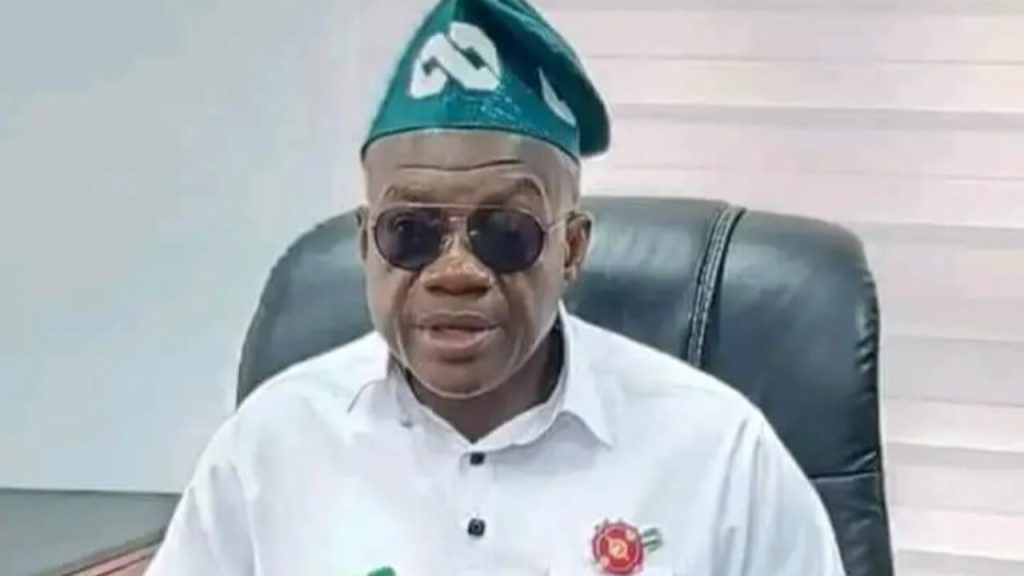
The All Progressives Congress, APC, in Rivers State has been embroiled in crisis, which is traceable to 2018 when the Supreme Court banned it from being part of the 2019 general election in the state. Since then, the party has not fully recovered as it has moved from one problem to another.
In this exclusive interview with DAILY POST, Mr Chibuike Ikenga, the spokesperson of the faction of the party led by Tony Okocha, opens up on how it all began, especially, the role played by former Governor Chibuike Amaechi, chances of Governor Sim Fubara returning to the Bricks House in 2027 and the melting relationship between FCT Minister, Nyesom Wike and Peter Odili. Excerpts!
Can you share a little background on how the crisis in the APC started in Rivers State?
APC has had these challenges for a long time now. I’m a foundation member of the APC. We started this around 2012. I’ve been here till date. I’m the Publicity Secretary of the party. So it didn’t come without hard work. APC started very well, but the leadership at that time mismanaged the fortunes of the party as a result of irreconcilable differences between the leaders, the governor then, Rotimi Amaechi and a few others who disagreed. That’s what weakened the party and made it impossible for it to win elections. The APC became a serial loser of elections until 2023 when the President emerged and won in Rivers State. So that was how the crisis began.
Why is there no peace in sight in Rivers APC and can the two factions ever come together to form a formidable force?
There’s no factional APC. The party is supreme. If some people have lost their positions on grounds of anti-party and gross ineptitude which also diminished the fortunes of the party, and the national leadership of the party thought it wise to dissolve them, because the constitution of the party provides that the National Executive Committee, NEC, of the party take the decision on how the party is run, and can sometimes seed their power to the National Working Committee, NWC.
And in this case, the National Executive Committee did seed their power to the National Working Committee as required by the law, to dissolve the State Working Committee. Minutes of the national executive committee meeting are there. INEC was there. So they seeded their power to dissolve the EXCO that had become controversial, and instituted the caretaker committee with clear mandates, so I know that the court has decided… There’s a subsisting Supreme Court judgment that says that courts are barred from participating in internal affairs of political parties. So every decision that is not linked with that Supreme Court decision is null and void.
Just like I said earlier, there is no faction in Rivers APC. But there are some people who are angry. Because they are angry, you construe it as factionalization. That’s not correct. I have told you that some persons who were in control of the structures of the party from inception, some of them did contest elections, even from the National up to the local government level, and have lost the opportunities of clinching power. And then, you know, politics, they say, is dynamic.
You know, a lot of things have happened. There are some new entrants. There are some people who exited the party and there’s alignment and realignment. And then, gradually, some people have found out that some persons they hold in high esteem are feather or paper weights. So people are beginning to realign, and then things are moving in such a way that some people who are strong enough are beginning to grab the structure of the party. So that’s why if they have lost in that power struggle, they now tend to align with the Governor [Fubara] to see to what extent they can use the judiciary to torpedo what APC is doing, but it’s only a temporary setback. APC is one in rivers.
Do you by any means suspect that former Minister of Transport, Rotimi Amaechi has a role to play in Rivers APC crisis despite his silence?
Yes of course, we know where everybody belongs. He’s a member of…he’s working hand in glove with Atiku to unseat the President. We’re Rivers people. We know all that’s happening. We know ourselves. Rotimi, he comes to River State clandestinely, holds meetings at night, we get snippets of those meetings; check all his supporters, those working with him are always with Sim Fubara. Emeka Beke, who is claimed to be a functional Chairman of the party, which does not exist, is an ally of Rotimi Amaechi.
Can you elaborate on your issues with Rotimi Amaechi and why can’t Ganduje bring the APC leader onboard?
I was the leader of the party, in his [Amaechi] local government. I don’t like to discuss Amaechi but sometimes I will not shy away from it. Amaechi himself knows that someone like me, I put in everything and laid down my life for the success of the APC. He has the larger chunk of the blame for the fortunes of the APC in Rivers. It is my belief and I’m convinced that he mismanaged the support he had. It is my belief, in capital letters, that he mismanaged the support that was freely given to him and I know he knows that’s the fact.
There are too many problems, you know. If you’re in politics, you don’t assume you know everything. Once you continue to assume that power and ideas only come from up down without also knowing that ideas can come from down up, of course, you have a challenge. Now, when you also believe that you know everything, nobody can say anything, nobody can advise, you have a challenge knowing you believe that whatever you say is final, nobody can challenge you, that’s a major problem for a political party.
Look, what you do is you win some, you lose some. You know, compromises here and there. People don’t join political parties because …I didn’t join APC because I loved Amaechi’s face. I joined the party at that time with him, believing that when we support him to win, at least I’ll be able to support my community to develop, attract projects and all services to my people, and develop myself too. So not because I love him that much. Yes, in the cause of our relationship we may have developed love, but the major thing is interest. So when that interest can no longer be carried together, then we can go separate ways.
I can remember, you can ask anybody, I told him I said oga, ‘let me tell you, for your information, the reason why I’m in this party is because of you. I said, any day my interest is no longer protected I’ll leave’. I told him that severally and when it became obvious that my interest was no longer protected, I resigned from the leadership six months before the presidential election and the state shook. When I resigned, he never called me.
So back to what we are saying, it’s because a lot of them have lost the grip of the party, they are in a serious quagmire. They don’t know what to do, other than to align with Governor Fubara to see how they can use Rivers High Court to stop what we are doing. But take note, Rivers High Court is just the inferior court to, of course, to the Court of Appeal and the Supreme Court.
Is there evidence linking the Emeka Beke-led APC faction to anti-party activities during the 2023 election to warrant the NWC sacking them?
I’m one of the leaders of the party and have been there from the onset, yes, from the day one. I was there when the decision was taken that they should support Atiku. They should support Atiku and shouldn’t vote for Tinubu. Was that not anti-party? It was for this reason they were removed, and they were factionalized.
Did the Tony Okocha’s faction working with the FCT minister, Nyesom Wike not commit anti-party too?
That’s the fact. We are working with the FCT minister. Is President Tinubu not working with Wike? Did he not appoint him as Minister? And he is also driving the Renewed Hope Agenda of the APC administration. Wike doesn’t need to support the growth or otherwise of the APC in Rivers. He is not a member of the APC but whether we like it or not, he’s a minister under APC, and he’s driving the policies and programmes of the APC.
Why can’t the Okocha’s faction of the APC you belong to, obey the Rivers High Court ruling nullifying the appointment of the Caretaker Committee by Ganduje, as well as your state congress?
That’s a procured judgement and does not have any locus when the superior courts speak. Those are procured from River State High Court. So can that override the position of the Court of Appeal? Can it override the position of the Supreme Court? We have a judgment that said we should go ahead and do our congress, from the Court of Appeal. The question we’re asking is ‘how come a state high court has the power to override the superior courts? It doesn’t have the powers. It’s a political jamboree from the Rivers State High Court, particularly from some of those judges. There is a subsisting court judgment, a Court of Appeal judgment, which gave us a clean bill to go ahead with our congresses. I also told you that there is a subsisting judgment of the Supreme Court which says that courts are barred from interfering in the internal affairs of political parties. That’s the Supreme Court decision.
What are the chances of the Rivers APC come 2027?
As the spokesperson of APC in River state, I can assure you that APC will win the election come 2027. Let me just call your attention to a few things.
First, you know that PDP is grossly divided from the national down to the state. But in APC, there’s no division. The only thing that is happening in Rivers State is that some persons who have lost power, people like Rotimi Amaechi and others who try to run for election at the national, state and local levels and couldn’t win, they now feel that they have lost the structures of the party, and therefore they have decided to cause trouble.
What are the chances of Governor Fubara returning to power in 2027?
Well, firstly, you are saying that he may be moving to another party. I know that he is a member of the PDP. He hasn’t moved to another party. And in the PDP that I know in Nigeria and in Rivers State, the FCT minister and former governor, Wike is in absolute control of the structures of the party, with his team. He’s the leader, and you know they produced a Governor who is a civil servant. That’s without diminishing his [Fubara] status as governor of Rivers State. He’s my personal friend. And you know, he hasn’t been here before. There are people who have confidence in him, and then try to push him, and then try to develop him, try to lead him on, and then make him governor. He has broken the relationship. That relationship has completely gone southwards. But if he can do anything to rescue that relationship, then he has a chance. He has a chance to rescue the relationship with his benefactors, particularly as led by the FCT Minister and other leaders of his party.
But if that is not done between now and in the next three months, it will be too hot for him to see a leeway to retain the governorship. But alignments are still going on, very seriously. No, it’s not only about Fubara and Wike. This is a team thing. The disagreement is within the team. You know, the governor is accused of abandoning those who brought him to power and taking along those who fought him not to come to power. And you know, it’s really very painful when people who fought for him to be governor are seeing the food they have cooked, the pot of soup, he now took it and instead is dilly-dallying and dining with those who were opposed to it. It’s very painful, and it’s very difficult for reconciliation to come. But be that as it may, I believe that everything is possible. But like I said, if he’s able to have reconciliation with his team, the team that brought him into power, I think that will be it. But we as APC, we are praying that the relationship continues to deteriorate, which will grant us an advantage, so we can take over the reins of government in Rivers, and then the governor will now lead opposition in Rivers.
What happens if Wike decides to sponsor another candidate for the governorship in 2027, will the Okocha’s faction back the minister’s candidate, or will you field your own candidate?
Definitely, I believe that the FCT minister will bring his candidate. We’ll bring our own candidate in APC and then we go to the battlefield. How can we back a candidate in PDP? Whoever wins will take over, we have an advantage, because the governor, if he doesn’t get the ticket, which is unlikely, it’s unlikely that he will get the ticket. Then he’ll go ahead and do anti-party. He’ll work against the party, the PDP, then it would be advantageous for us. A lot of permutations are going on.
What is the fate of the Martins Amaewhule-led 26 lawmakers after they decamped to the APC?
Martins Amaewhule and the 26 others did not decamp to our party. They’re PDP members. They signaled interest in joining our party. They have not. They have not registered as members of our party. Their names are not found in our party register, and they didn’t go to their wards to go and register. So they are not members of our party. Amaewhule and the others did not participate in APC congress but were part of the PDP’s last Congress. They are not our members and more so, Right Hon. Martin Amaewhule and the 26 others are the authentic members of the State Assembly recognised by the Federal High Court and the Court of Appeal.
In recognition of that, the Court of Appeal ordered that the Rivers State 2024 appropriation bill be represented to the House recognised by law and headed by Martin Amaewhule. There was no time we received them into the APC. There was nothing of that nature. They should prove it.
How would peace return to the Rivers House of Assembly?
The best thing that will bring peace to the Rivers State House of Assembly is that all the factions, let all the groups disagreeing or belligerent, obey the rule of law. Let everybody be equal before the law…when there’s disagreement between arms of government, it is the responsibility of the judiciary to intervene and interpret the Constitution to ensure equilibrium.
And in this case, anybody can get up and say anything. But once disagreement is there, as it is in Rivers State House of Assembly, a disagreement between the executive and the executive, and then the only habitat is the judiciary. And the judiciary had made consequential pronouncements that the executive should obey but the executive has continued to disobey with impunity. So if everyone, every group, obeys the rule of law, then this matter will be as good as over and then the governance of the state will be seamless. Disobedience to rule of law is an issue.
Who would you blame for the deteriorating relationship between ex-Governors Nyesom Wike and Peter Odili?
Okay, let me tell you, Dr. Peter Odili was reckless. And we are very disappointed. He was very highly rated as a very intelligent man, very brilliant, and a man who understands when to take step forward and when to take step backwards.
Unfortunately, I don’t know whether for pecuniary seasons, because the governor is supporting his university, which Wike did support immeasurably. So I don’t know what led to that. Former Governor Peter Odili has always been respected in Rivers States, as particularly from, I’m an Ikwerre man. People see him as the one who helped to support Amaechi to gain the ticket. For the first time, an Ikwerre man became governor. Even when Amaechi had the K-leg thing that was imposed by Obasanjo, Odili still brought Amaechi’s cousin, Celestine Omeha. So we had always seen him from that standpoint. But to to say, for Dr. Peter Odili, I listened to him say that Governor Fubara stopped Wike from pocketing River State… It was the same Wike he was praising days ago, because Wike built a house for him, supported his private university with government funds of N500 or N1 billion every year, then he was singing and clapping for Wike, the former governor.
So today, because Wike has a challenge with his successor, Odili had gone in to try to see how he can impugn on integrity of Wike. So Odili is at fault. An elder should behave like an elder, at least Odili, a man, ought to have respected himself. Even if he had anything he needed to tell Wike that he didn’t like, he should have called him privately, or written him a personal letter and sent to him privately. So for him to go full blast against Wike in the media, Wike was equally prepared to return fire for fire and he did that.
So Dr. Odili should be blamed for his reckless and careless utterances. For every action, there must be an equal and opposite reaction. So, if you come to the public today and say that ‘Chibuike Ikenda is a nonentity. He’s an idiot.’ I’ll come, and when I respond, I’ll say, You’re a mad person. You’re not even worth being alive. So that’s what it is. Age doesn’t matter. It doesn’t matter what his age is. There’s no age in politics. We don’t run a gerontocracy. It’s only in the family that we talk about gerontocracy, but it doesn’t happen in the larger political realm. We don’t run politics, leadership based on age.
What is the way forward for the APC and how can the party overcome its challenges ahead of the 2027 election?
APC is chatting the way forward. If you recall, our National Chairman and National Working Committee came to the inauguration of the newly elected executive members of the party, and wherein he said that we just won Edo state and the next in the South-South is Rivers. I’m sure that’s what irked the governor before they went into trying to procure that court judgment to nullify what we have done. The national chairman said we will ‘capture’ Rivers and it was enough to make the governor angry, but the governor and his team’s response was to use the court to see to what extent they can nullify, but that’s not to say that that’s a serious matter. We have already gone to the Court of Appeal for it to be set aside, and then we go to the Supreme Court and validate it, so that’s it. So the way out is to let everyone obey the rule of law. Respect boundaries.


Politics
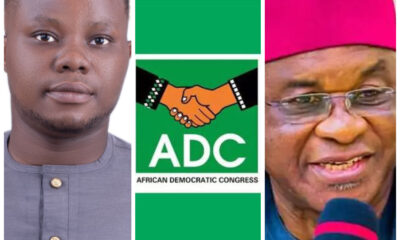
“ADC is a Holy Party, Cannot be used to Scam Nigerians Again” – Hon Success Opara tells David Mark
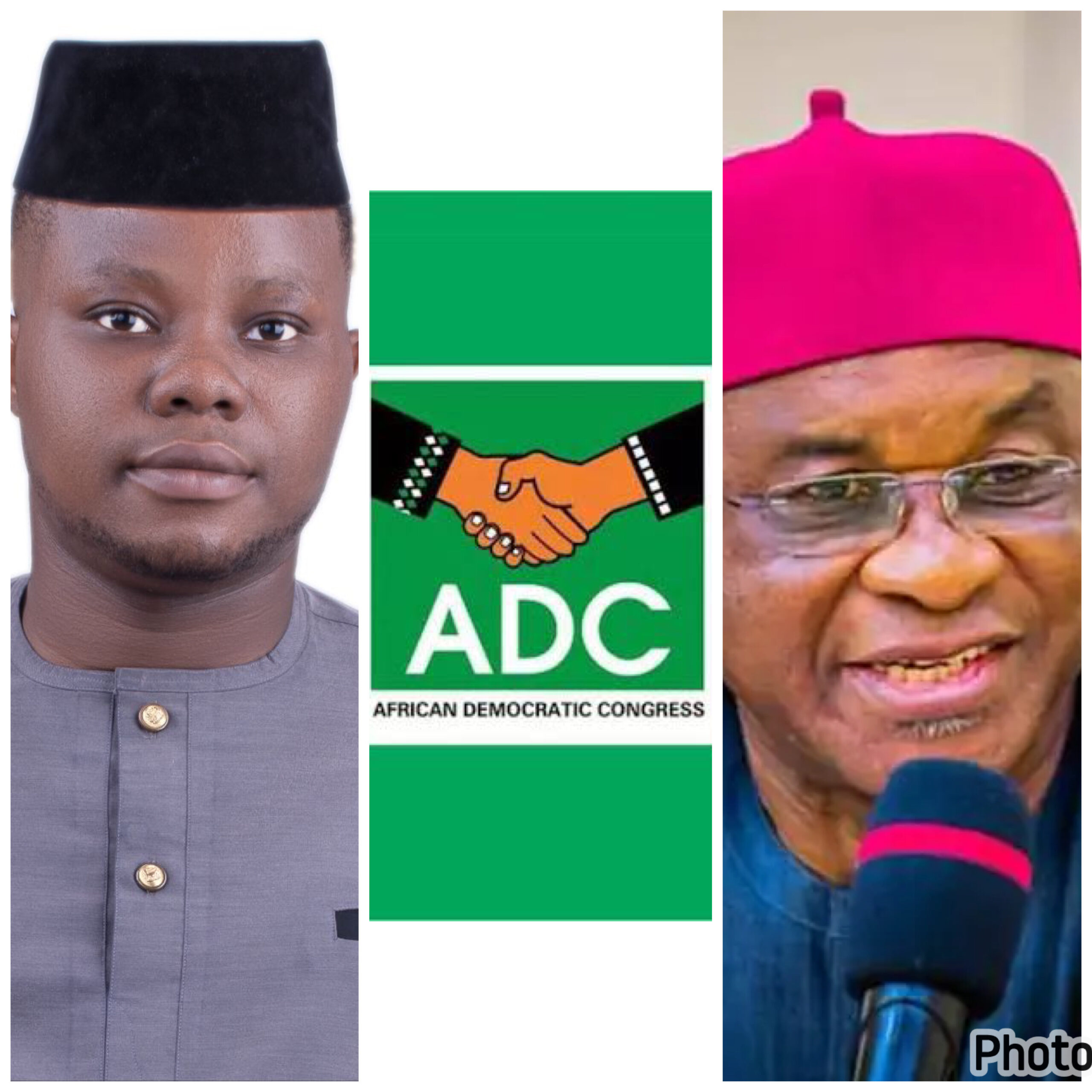
ADC Party in Turmoil: Hon Success Opara Slams Leadership, Warns Against Scamming Nigerians
Abuja, Nigeria – The African Democratic Congress (ADC) is facing internal strife as Hon Success Opara, a prominent party official, has warned against attempts to use the party to deceive Nigerians. Opara specifically criticized the leadership of David Mark, stating that the party cannot be used to scam citizens again.
“ADC holy Party cannot be used to scam Nigerians again,” Opara said, emphasizing that those forming coalitions are hindering the party’s growth and denying youths opportunities to thrive.
“Those who are forming coalition don’t want to give the youths the chance to strive in the party,” she added.
Opara’s statement highlights the deepening divisions within the ADC, with concerns over leadership and the party’s direction.
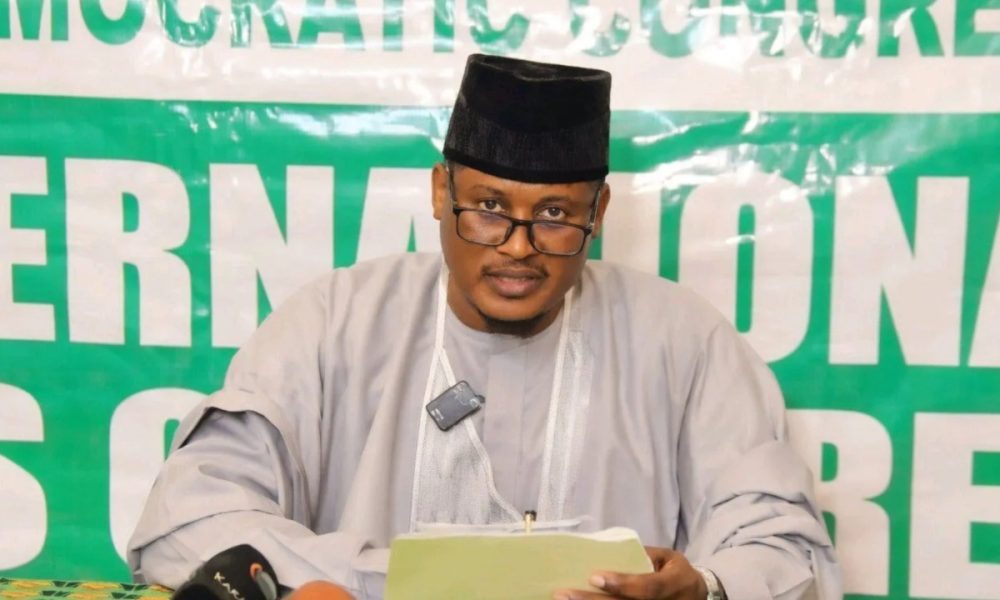
The factional National Chairman of the African Democratic Congress (ADC), Nafiu Bala Gombe, has announced that the party under his leadership will bar individuals above the age of 55 from contesting for political positions.
Gombe made the disclosure during an interview with BBC Hausa, where he outlined a vision centred on generational change and greater youth participation in politics.
“The African Democratic Congress (ADC) is a party that belongs to all Nigerians. What we are doing now is to ensure the party moves forward properly.
“We have decided that we will give the youths a real chance. The time has come for young people to take the lead in politics.
“If you are over 55 years old, you are not going to contest for positions in the ADC under our leadership.
“We want to bring in fresh blood, new ideas, and energy from the youth. Nigeria’s future depends on the young generation.
“The old ways have not worked well for the country. We need to open the door wide for youths to participate fully as candidates, leaders, and decision-makers,” he said.
Politics
“Jail David Mark” as ADC’s Internal Crisis Deepens: Hon Success Opara Threatens Action Against David Mark
Abuja, Nigeria – Tensions within the African Democratic Congress (ADC) reached a boiling point as Hon Success Opara, a high-ranking party official, warned that she would not hesitate to send former Senate President David Mark to jail if she were the judge handling the party’s internal litigation cases.
Opara’s statement comes in response to allegations that Mark and the party’s National Executive Committee (NEC) failed to adhere to the ADC’s constitution.
“I’ll jail David Mark if I’m the Judge handling the ADC party internal litigation cases, citing how David Mark and the NEC were not able to adhere to what is written in the constitution of the ADC,” Opara said.
The internal strife has led to a flurry of court cases, with various factions vying for control of the party. Opara’s remarks underscore the deepening divisions within the ADC and raise questions about the party’s future.

HRH Ekwueme of Ochia Kingdom Iynched & kiIIed in Imo.

“ADC is a Holy Party, Cannot be used to Scam Nigerians Again” – Hon Success Opara tells David Mark

2027: Bala declares aspirants over 55 years disqualified in ADC

-
Business1 year ago
US court acquits Air Peace boss, slams Mayfield $4000 fine
-

 Trending1 year ago
NYA demands release of ‘abducted’ Imo chairman, preaches good governance
-

 Politics1 year ago
Mexico’s new president causes concern just weeks before the US elections
-

 Politics1 year ago
Putin invites 20 world leaders
-

 Politics1 year ago
Russia bans imports of agro-products from Kazakhstan after refusal to join BRICS
-
Entertainment1 year ago
Bobrisky falls ill in police custody, rushed to hospital
-
Entertainment1 year ago
Bobrisky transferred from Immigration to FCID, spends night behind bars
-
Education2 years ago
GOVERNOR FUBARA APPOINTS COUNCIL MEMBERS FOR KEN SARO-WIWA POLYTECHNIC BORI