
Politics
Amaewhule-led Assembly snubs Fubara, passes another bill .

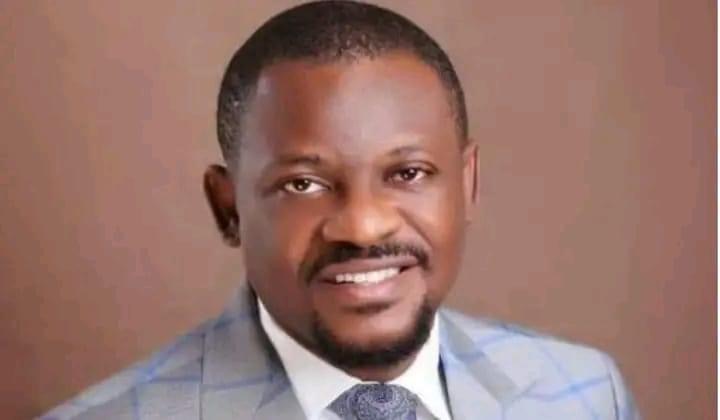
In a bold move showcasing its legislative autonomy, the Martins Amaewhule-led Rivers State House of Assembly defied Governor Siminalayi Fubara’s veto and signed into law the Rivers State Public Procurement (Amendment) Bill, 2024, on Monday.
Originally passed by the Amaewhule-led Assembly on March 26, 2024, the bill was ignored by Governor Fubara, who refused to sign it into law.
However, emphasising the importance of securing taxpayers’ money and preventing its misuse, the Amaewhule-led Assembly rallied behind the bill’s objectives during debates led by Majority Leader, Major Jack and Amaewhule.
Amaewhule criticised the governor’s reluctance to adhere to due process and warned of potential repercussions if such behaviour persists.
In a statement made available to journalists and signed by the senior adviser to the Speaker, Martins Wachukwu, the Assembly’s decision to enact the bill into law, backed by a two-thirds majority vote as mandated by the constitution, signals a resolute stance against executive overreach and a commitment to legislative oversight.
According to the statement: “Thereafter, the House, in accordance with the provisions of Section 100 (5) of the 1999 Constitution of the Federal Republic of Nigeria as altered, voted, and with a two-thirds majority vote, passed the bill into law.”
In addition to the passage of the Public Procurement (Amendment) Bill, the Amaewhule-led Assembly addressed pressing issues within the state’s local government system, with Hon. Ignatius Onwuka highlighting the plight of Emohua Local Government Council staff, who have endured months without pay due to administrative irregularities sanctioned by the governor.
The lawmakers also introduced key bills aimed at enhancing the state’s energy sector and streamlining local governance.
The statement said: “Also on Monday, the House gave First Reading to the Rivers State Electricity Market Bill, 2024, sponsored by the Speaker, Rt. Hon. Martin Amaewhule.
“It is a bill for a law to repeal the Rivers State Electricity and Gas Board Law CAP 50, Laws of Rivers State, 1999 and to enact the Rivers State Electricity Market Law to provide for electricity supply, its power generation, transmission and distribution within Rivers State, to establish the Rivers State Electricity Commission for the enforcement of consumers’ rights and obligations, and for connected purposes.
“Similarly, the Rivers State Local Government (Consolidation) Bill, 2024, was presented by the Deputy Speaker, Rt. Hon. Dumle Maol, and read for the first time. The bill seeks to consolidate all the local government laws in the state for ease of reference.”
Amaewhule-led Assembly snubs Fubara, passes another bill

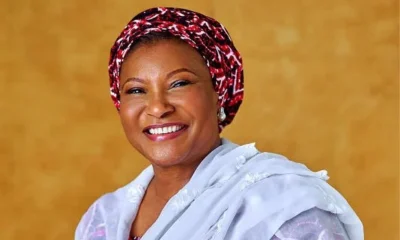





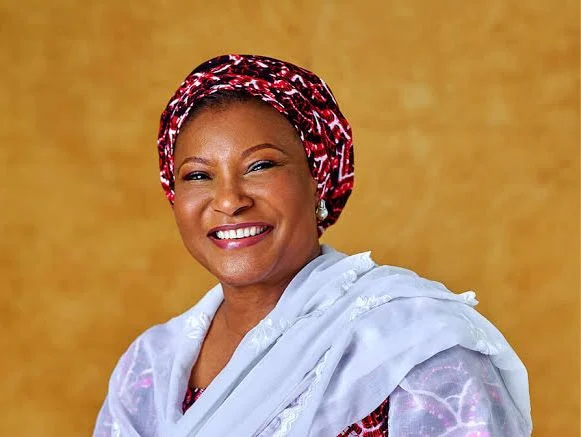
The African Democratic Congress has formally announced Senator Ireti Heebah Kingibe as the party’s flag bearer for the Federal Capital Territory senatorial race on Saturday.
The exercise, which produced clear outcomes across senatorial and House of Representatives contests, saw Kingibe secure a commanding total of 17,535 votes, far ahead of her sole opponent, Mubarak Tijjani, who polled 806 votes.
Declaring the results at the FCT ADC party secretariat, the chairman and returning officer for the senatorial and House of Representatives primary elections, Abubakar Adamu, affirmed the outcome of the exercise.
He said, “Having scored the highest number of votes of 17, 535, and the powers conferred on me as the returning officer for the Senate and House of Representative Primary Elections, Senator Ireti Heebah Kingibe is declared winner of the election.”
The primary election also produced candidates for the two Federal House of Representatives seats in the FCT, with results indicating competitive but decisive victories across constituencies.
In the AMAC/Bwari Federal Constituency, Bala Iyah emerged victorious with 4,937 votes.
He was followed by Yahaya Fatima Goya, who polled 2,015 votes, while Ma’aji Johnson Bello came third with 1,546 votes. Ismaila Ishak Ozigi trailed with 105 votes.
For the Abaji/Gwagwalada/Kwali/Kuje Federal Constituency, Alhassan Salihu who secured the party ticket with a total of 9,016 votes, defeating his only challenger, Khalid A. Haruna, who garnered 2,955 votes.
Officials of the Independent National Electoral Commission were present to observe and monitor the conduct and outcome of the primaries.
Speaking after his emergence as the candidate for AMAC/Bwari Federal Constituency, Iyah expressed confidence in the party’s prospects ahead of the 2027 general elections.
He said, “I want to assure you that with this victory I am ready, by the special grace of God, come 2027 election. Because my people are ready for this election.
“As a grassroots politician, I am ready and I have the capacity because I am not just a novice in politics, that is number one.
“And I am a great mobilizer in politics, because it’s been a long time since I’ve been in politics. Since the June 12th election, I started my politics. And I want to tell you, I know the terrain of AMAC/BWARI Federal Constituency.”
He further stated that it’s very simple, because my people love me and they like me to be there. That’s why you can see the victory, the mandate they have given to me. For sure, that day is just a walkover, by the special grace of God.
“And we are ready, not because of the money but because of the acceptance. And because of the good things I have been doing for my people,” he noted.
Politics
After Winning Presidential Primaries, APC Fixes Date To Present Tinubu With Certificate Of Return
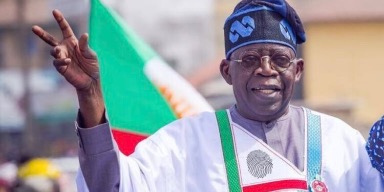
President Bola Ahmed Tinubu will on Sunday receive the certificate of return and flag of the All Progressives Congress (APC) as the party’s presidential candidate for the 2027 general election.
The presentation is scheduled to take place at the Bola Ahmed Tinubu International Conference Centre in Abuja following the nationwide collation of results from the APC presidential primary election.
According to a statement issued on Saturday by the President’s Special Adviser on Information and Strategy, Bayo Onanuga, the ceremony will be attended by APC governors, members of the National Executive Committee, the National Working Committee, lawmakers and other party leaders.
The APC had earlier conducted its presidential primary election as part of preparations for the 2027 general elections.
The presentation of the certificate and party flag formally confirms Tinubu as the APC’s presidential candidate for the next election cycle.
President Tinubu had emerged winner of the APC direct primary held across the nation. Tinubu defeated his lone challenger, Osifo Osayamen Stanley.
Speaking earlier, Tinubu described the 2026 APC primaries across the country as proof that the ruling party is allowing its members to fully participate in the democratic process.
The President spoke on Saturday after casting his vote during the APC presidential primaries at Ikoyi-Obalende Ward L2 in Lagos State.
President praised party members for the peaceful manner in which they conducted themselves during the exercise. He also commended their participation and commitment throughout the process.
According to him, the primaries have been organised properly from the ward level to the local government stage. He said governors and party officials in different states handled delegate accreditation, membership registration and other electoral activities in an orderly manner.
Tinubu said the process reflected a healthy democratic system within the APC and showed that every member had the opportunity to be part of decision-making at the grassroots level.
By Ihezie Dede Walax
The Imo State Chapter of the African Democratic Congress (ADC) has successfully concluded its National Assembly and House of Assembly primary elections, producing credible, capable, and widely accepted candidates for various elective positions across the state ahead of the 2027 general elections.
The primaries, which were conducted on Thursday, May 21, 2026, across the 305 wards in Imo State, were widely praised as peaceful, transparent, orderly, and credible. Party officials, delegates, stakeholders, and observers commended the exercise for its excellent organization and strict adherence to the party’s constitution and established electoral guidelines.
Following the successful completion of the electoral process, the party officially unveiled its candidates for the Senate and House of Representatives seats in Imo State.
FULL LIST OF IMO ADC NATIONAL ASSEMBLY CANDIDATES
SENATE
* Hon. Vincent O. N. Iwuchukwu — Imo West Senatorial Zone
* Engr. Ofoegbu Uchenna Daniel — Imo East Senatorial Zone
* Barr. Mrs. Ibekwe Nkiruka Imma — Imo North Senatorial Zone
FEDERAL HOUSE OF REPRESENTATIVES
* Amadi Samuel Okechukwu — Owerri Municipal/Owerri North/Owerri West Federal Constituency
* Ogbonna Chukwudi Joseph — Ihitte Uboma/Ehime Mbano/Obowo Federal Constituency
* Iheanyichukwu Emmanuel Egejurum — Onuimo/Isiala Mbano/Okigwe Federal Constituency
* Mbaoma Ikechukwu Callistus — Mbaitoli/Ikeduru Federal Constituency
* Okoro Rex Chikwesiri — Ahiazu Mbaise/Ezinihitte Mbaise Federal Constituency
* Anselm Nwoko Ikwu — Aboh Mbaise/Ngor Okpala Federal Constituency
* Peters Uchenna Richard — Ohaji Egbema/Oguta/Oru West Federal Constituency
* Bismarck Chike Iheomazuroke Akanno — Nkwerre/Isu/Njaba/Nwangele Federal Constituency
* Kingsley Nnamdi Okwarabizie — Ideato North/Ideato South Federal Constituency
The successful conduct of the primaries has been largely attributed to the effective and purposeful leadership of the Imo State Working Committee, ably led by the State Chairman, Prof. James Okoroma. His commitment to internal democracy, transparency, unity, discipline, and effective coordination ensured a smooth and credible electoral process across the state.
Party delegates, aspirants, and members of the electoral committee commended the leadership of the party for providing a conducive atmosphere that promoted fairness, discipline, peaceful participation, and a rancour free exercise throughout the primaries.
Party leaders further described the exercise as a clear demonstration of the ADC’s growing political structure, organizational capacity, and preparedness for the 2027 general elections.
The party also expressed strong confidence in the competence, experience, popularity, and grassroots acceptance of its candidates, stating that they possess the leadership qualities and political strength required to secure victory in the forthcoming general elections.
Consequently, the ADC called on party members, supporters, youths, women groups, stakeholders, and the general public across the state to remain united and mobilize massive support for all the party’s candidates as preparations intensify for the 2027 elections.
ADC — Arise and Shine
Ihezie Dede Walax
DG, Imo New Media

Guardiola Bids Emotional Farewell to Manchester City After Historic Era

Ireti Kingibe wins ADC FCT Senate ticket

After Winning Presidential Primaries, APC Fixes Date To Present Tinubu With Certificate Of Return

-
Business2 years ago
US court acquits Air Peace boss, slams Mayfield $4000 fine
-

 Trending2 years ago
NYA demands release of ‘abducted’ Imo chairman, preaches good governance
-

 Politics2 years ago
Mexico’s new president causes concern just weeks before the US elections
-

 Politics2 years ago
Putin invites 20 world leaders
-

 Politics2 years ago
Russia bans imports of agro-products from Kazakhstan after refusal to join BRICS
-
Entertainment2 years ago
Bobrisky falls ill in police custody, rushed to hospital
-
Entertainment2 years ago
Bobrisky transferred from Immigration to FCID, spends night behind bars
-
Education2 years ago
GOVERNOR FUBARA APPOINTS COUNCIL MEMBERS FOR KEN SARO-WIWA POLYTECHNIC BORI