
Politics
American Military Veterans of Igbo Descent, AVID, has urged South East Governors to get serious with efforts to secure the release of the detained Leader of the Indigenous People of Biafra, IPOB, Mazi Nnamdi Kanu, assuring them that contrary to their fears, Kanu’s release would not jeopardize their vice presidential ambition in 2027.

Kanu’s release won’t jeopardize your 2027 vice presidential ambition, AVID tells S’East govs
…Calls for pressure on Tinubu
By Steve Oko
American Military Veterans of Igbo Descent, AVID, has urged South East Governors to get serious with efforts to secure the release of the detained Leader of the Indigenous People of Biafra, IPOB, Mazi Nnamdi Kanu, assuring them that contrary to their fears, Kanu’s release would not jeopardize their vice presidential ambition in 2027.
AVID in an open letter signed by its President, Dr Sylvester Onyia; and Secretary, Dr Godson Obiagwu, said urged South East leaders to quickly engage President Bola Ahmed Tinubu with a view to freeing Kanu before Christmas.
According to AVID, “any further delay could be construed as evidence that all South East Governors are complicit in the continued incarceration of Mazi Nnamdi Kanu.”
AVID expressed shock over the allegation that a serving South East Governor is blocking Kanu’s release because he might be an impediment to his vice presidential ambition in 2027.
The letter read:”If it is true, as we have been told that some Southeast politicians, particularly one of the Governors is blocking the release of Mazi Nnamdi Kanu because of his fear that Mazi Kanu will scuttle his ambition to become a Vice President of Nigeria either in 2027 or beyond, we say to such politician that a free Mazi Nnamdi Kanu will have neither the motivation, nor the interest to block the ambition of any Igbo that wishes to be a Vice President of Nigeria.
” AVID is committed to seeing that no such interference will occur because we know that Mazi Nnamdi Kanu is apolitical and has no interest in engaging in who becomes what in Nigeria’s political landscape.”
Calling for more pressure on the Presidency for Kanu’s release, AVID argued that Kanu’s continued detention is fueling insecurity and tension in the South East.
” We call on all Southeast Leaders in elective positions at home and in Abuja, especially the five Southeast Governors, to fulfill their several public promises and commitments to approach President Tinubu to seek the release of Mazi Nnamdi Kanu”, the letter read in part.
AVID claimed that the Chairman, South East Governors’ Forum, Gov. Hope Uzodinma was reluctant to join in the efforts to release Kanu.
“We have it on good authority that the Chairman of Southeast Governors Forum, Governor Hope Uzodimma of Imo State, is somewhat reluctant to deploy the platform of SEGF to meet with President Tinubu on this matter.”
“His unwillingness we gather, stems from the fact that he is afraid that the release of Mazi Nnamdi Kanu will abruptly end the insecurity in the region and Imo State in particular and thus end the “special security intervention fund” he is receiving from the Federal Government of Nigeria purportedly to fund his controversial Ebube Agu.
” On this, we strongly urge Governor Hope Uzodimma to walk-back and put the lives of Ndi Imo and Ndigbo above any fleeting monetary gains from this security intervention fund he is receiving from the Federal Government. It is far better to have a freed Mazi Nnamdi Kanu helping to secure our people than using EbubeAgu that is known to be adding fuel to the fire of insecurity in our land.”
AVID also told heads of security agencies “to eschew their seeming reliance on the continued detention of Mazi Nnamdi Kanu as a subterfuge for padding security votes for Southeast which they directly benefit from.”
“We make bold to say that it is unconscionable for any true security chief driven by patriotism and respect for sanctity of human life to block the release of Mazi Nnamdi Kanu, knowing fully well that a free Mazi Nnamdi Kanu is critical to ending the insecurity in Southeast, once and for all.”
The letter further read:”To the Southeast civic Leaders, such as Ohaneze, traditional rulers, the clergy and frontline civic groups, we say this: If the Southeast Governors Forum proves unwilling to meet with President Tinubu in the coming days, we urge you all to promptly convene a group that will seek an immediate appointment to meet with President Tinubu to end this madness in our land.
“Given that Ndigbo recently lost the President of Ohaneze, Chief Emmanuel Iwuanyanwu, we call on the Obi of Onitsha (the Agbogidi) to convene a small group of eminent Chiefs and the Clergy that he will lead in meeting with President Tinubu.
“To Governor Alex Otti, we are minded to suggest that if all others prove reluctant or dilatory in meeting with President Tinubu over this matter, Your Excellency should rise to the occasion and go lone-wolf in meeting with President Tinubu with only one request: release Mazi Nnamdi Kanu before 25th December 2024.
“We are suggesting this as the next best option because Mazi Nnamdi Kanu is a native of Abia and thus deserving of all the protections and comfort he can get from his Governor.
“It is time for all Ndigbo worldwide, individually and collectively, to strongly and publicly demand the immediate release of Mazi Nnamdi Kanu by President Bola Ahmed Tinubu since it has become crystal clear that the courts are incapable of dispensing justice or upholding the rule of law in this matter.”








Politics
Man Arrested For Allegedly Shouting “No Water, No Light” During Governor Bago’s Visit To Suleja
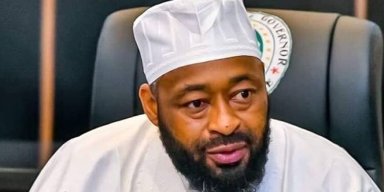
The Niger State Police Command has confirmed the arrest of a 38-year-old man, Hamisu Abdullahi, for allegedly shouting “no water, no light” during Governor Mohammed Umaru Bago’s visit to the Emir of Suleja following the Eid-el-Fitr prayers last Friday.
The police spokesperson in the state, SP Wasiu Abiodun, who confirmed the incident to Daily Trust, said the suspect was arrested for attempting to disrupt government activities during the governor’s Sallah visit.
“One Hamisu Abdullahi, 38, of Suleja, was arrested and transferred to the State Criminal Investigation Department (SCID), Minna, on March 20, 2026, for suspected thuggery and attempting to disrupt government activities during the Sallah visit,” he said.
“However, he was later granted bail while investigation continues.”
The suspect’s brother, Haruna Abdullahi, confirmed that he was released on bail on Tuesday evening after spending five days in detention.
Hamisu, an electrician and father of four who resides in Unguwan Bayi, Suleja, was reportedly arrested after shouting the phrase at the emir’s palace during the governor’s visit.
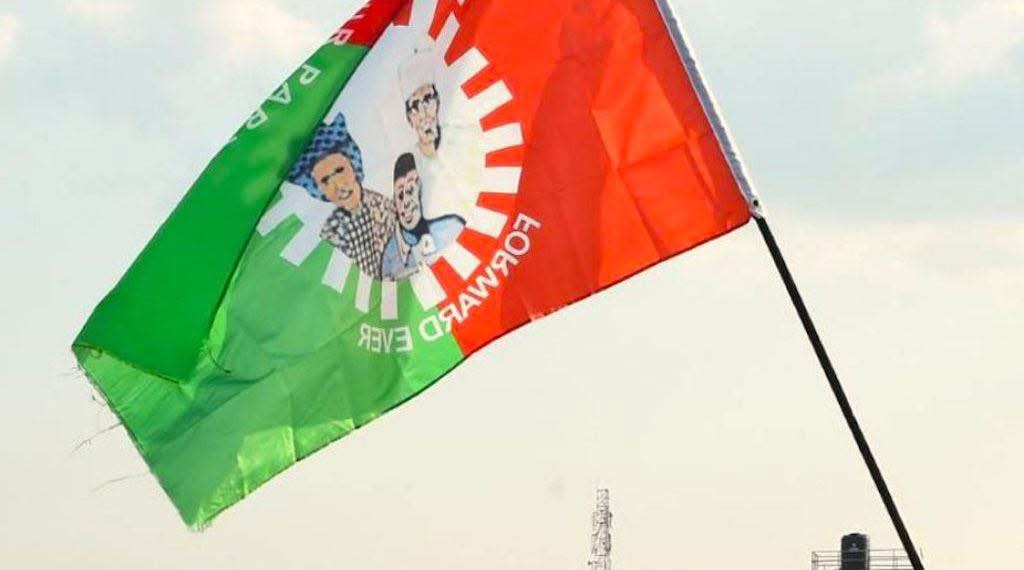
The Labour Party in Imo State is engulfed in a bitter leadership clash as the Callistus Ihejiagwa-led faction warns members not to participate in any party activities not sanctioned by his leadership.
The warning comes in response to claims that Sen. Nenadi Usman and Darlington Nwokocha’s faction plans to hold Ward, LGA, and State congresses starting March 26, 2026—moves Ihejiagwa calls illegal and unconstitutional.
Ihejiagwa insists that the Independent National Electoral Commission (INEC) has already refused to dissolve existing party structures, meaning any attempt to replace sitting executives is null and void.
He dismissed arguments that INEC officials attending Usman/Nwokocha’s National Executive Council meeting on March 17 would confer legality, stressing that presence does not equal approval.
March 20, 2026
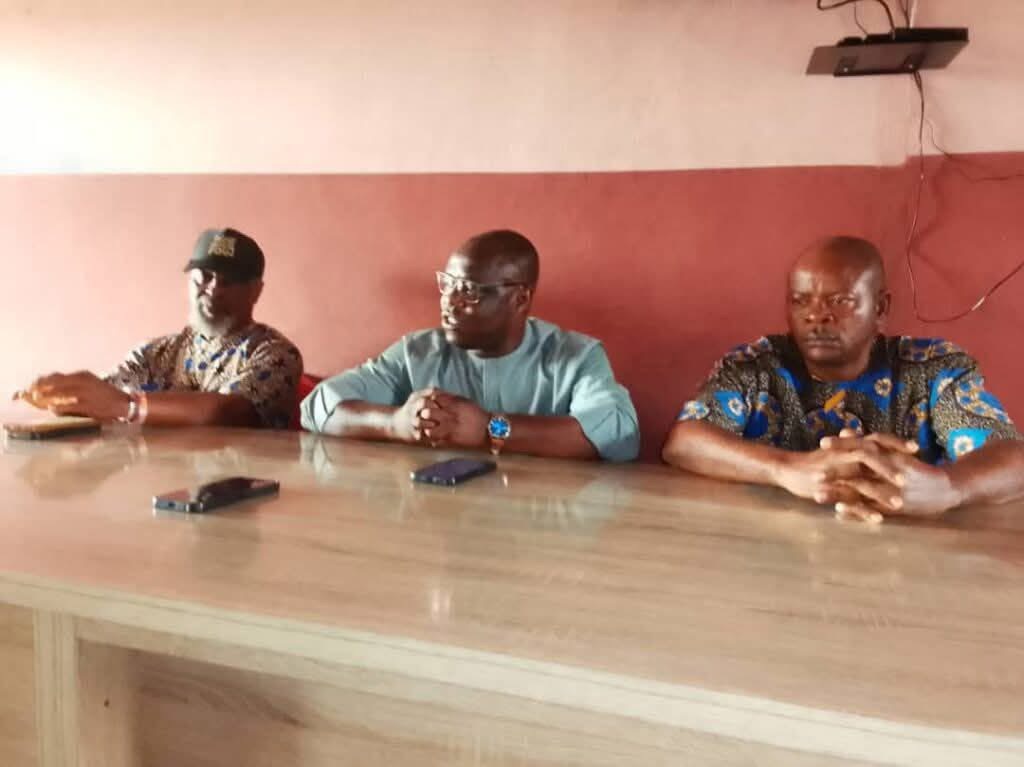
The All Progressives Grand Alliance in Abia State has called on the Senate to declare the seat of the Senator representing Abia South, Enyinnaya Abaribe, vacant following his resignation from the party.
The party made the call on Thursday during a press briefing in Umuahia, where its leadership, led by a former member of the Abia State House of Assembly, Obinna Ichita, insisted that Abaribe voluntarily resigned from APGA and was not sacked, contrary to his claim at the Senate.
Ichita argued that Abaribe’s exit from the party that sponsored his election violates constitutional provisions, stressing that there was no leadership crisis within APGA to justify his defection.
“The senator resigned in his ward. He did so voluntarily, which is his right. However, if you leave the party that gave you the platform for another party when there is no leadership crisis, that seat must be declared vacant,” he said.
He further alleged that Abaribe misrepresented the circumstances of his exit by claiming he was sacked.
“The party has documentary evidence to show that Senator Abaribe was not sacked. He resigned three months after disciplinary measures were taken against him over actions the court did not consider appropriate,” Ichita added.
According to him, the mandate belongs to the people and the party, not the individual office holder.
“They gave him the mandate on the platform of APGA, not any other party. There was nothing like ADC when he was elected. He cannot take the mandate elsewhere without consulting the people who gave it to him,” he said.
Ichita maintained that the constitution is clear on defection, noting that any lawmaker who leaves a party without a valid internal crisis must vacate the seat.
“My message to Senator Abaribe is to honourably vacate the seat instead of waiting for the National Assembly to declare it vacant. That would amount to national embarrassment,” he added.
Also speaking, the APGA State Chairman, Sunday Onukwubiri, and the party’s Public Relations Officer, Chukwuemeka Nwokoro, reiterated that Abaribe had distanced himself from the party’s activities at various levels in the state.
They insisted that he neither holds dual membership nor was he expelled, maintaining that his resignation was voluntary.
“He was invited by the party but failed to appear and was subsequently suspended in line with the party’s constitution. Three months later, he resigned,” the officials said.
Reacting, Abaribe defended his position, insisting that he acted within his constitutional rights.
“When you are no longer a member of a party by virtue of being sent away, you have the fundamental right of association to join another party,” he said.
He argued that his indefinite suspension by APGA effectively amounted to expulsion.
“If a party places you on indefinite suspension for more than six months, what does that mean? It means you have been told to go elsewhere, and that is exactly what I did,” he stated.
The senator added that the proper constitutional procedure for removing him from office would be through a recall process by his constituents.
“If the people who elected me no longer want me, the right thing to do is to initiate a recall. That is the position of the law,” he said.

Actress Biola Adebayo Tenders Apology Over Interview With Baba Ijesha (Video)

Police Arrest Pastor, Islamic Cleric And One Other Over Possession Of Human Parts In Oyo

Man Arrested For Allegedly Shouting “No Water, No Light” During Governor Bago’s Visit To Suleja

-
Business1 year ago
US court acquits Air Peace boss, slams Mayfield $4000 fine
-

 Trending1 year ago
NYA demands release of ‘abducted’ Imo chairman, preaches good governance
-

 Politics1 year ago
Mexico’s new president causes concern just weeks before the US elections
-

 Politics1 year ago
Putin invites 20 world leaders
-

 Politics1 year ago
Russia bans imports of agro-products from Kazakhstan after refusal to join BRICS
-
Entertainment1 year ago
Bobrisky falls ill in police custody, rushed to hospital
-
Entertainment1 year ago
Bobrisky transferred from Immigration to FCID, spends night behind bars
-
Education2 years ago
GOVERNOR FUBARA APPOINTS COUNCIL MEMBERS FOR KEN SARO-WIWA POLYTECHNIC BORI