




The cause of the altercation could not be immediately ascertained as of press time.
Trending
Are the Lebanese people caught in the crossfire of a war they didn’t ask for?

The prospects of an Israeli ground incursion in Lebanon have reached their peak, and even a temporary ceasefire seems a distant echo after Israel rejected the deal and Hezbollah remains reluctant to turn away its missile launchpads.
While the number of civilian casualties is surging, Lebanon’s public services are teetering on collapse, especially after years of financial and economic crises that have put the country’s finances on its knees.
Thousands of people are leaving their villages in the south and the Bekaa Valley to find shelter in the provinces of Beirut, the Lebanese mountains, and the north.
Right now, the general sentiment in Lebanon is that one can only hope for an 11th-hour miracle.
“Lebanese people want peace,” Health Minister Firass Abiad told Euronews. “The position of the Lebanese government, and the position of the Lebanese people as well, is that Lebanon does not want war.”
“And from day one, we believe that the best way out of this situation is to have a diplomatic solution, starting with a cease fire in Gaza and the immediate release of the (Israeli) hostages.”
“It is clear that violence is not going to bring us closer to a solution, yet unfortunately, it will make the situation worse,” Abiad pointed out.

A resident checks an apartment that was hit by an Israeli airstrike in Beirut’s southern suburbs, 25 September 2024 AP Photo/Hassan Ammar
Regional and international observers are increasingly persuaded that the ceasefire will not be possible without a powerful political deal. Yet, the prospects of stopping the war seem to go well beyond the borders and the will of the sectarian-based Lebanese institutions.
Unless Israel strikes a deal with Hamas, that is.
According to observers, a humanitarian-led ceasefire in Gaza could help lower the heat threatening to inflame the entire Middle East and whose domino effect could push Lebanon to a new civil war, further complicated due to militias of different types and non-state actors like Hezbollah.
“After the loss of lives of innocent civilians and tens of thousands of women and children in Gaza, now we have a similar situation unfolding in Lebanon,” Abiad said. “Hezbollah has stated clearly that if things stop in Gaza, they will stop all their action.”
“Therefore, everybody understands that a ceasefire in Gaza will be the instrument to remove the excuse of all non-state actors, whether in Lebanon, whether in Iraq, whether in Yemen or any other places (to stop fighting),” he explained.
Captives of ballistic diplomacy
The Middle Eastern non-state actors have become the de-facto pieces of the ballistic diplomacy of Tehran in its proxy war against Israel and the desire of Iran to stress-test the Iron Dome, the Israeli anti-missile defence system.
This might complicate things further, experts say.
“It’s very unlikely that Hezbollah will be pushed to reduce its launching of rockets into Israel. It’s more likely that we are going to see further escalation on this side,“ said Luigi Narbonne, on-leave EU ambassador to Saudi Arabia and other MENA countries and head of Mediterranean Studies at the LUISS University in Rome.
“It’s well known that Hezbollah has much larger capacities in terms of rockets and precision-guided missiles that may strike Israel and cause major damage and casualties amongst the (Israeli) population,” Narbone explained to Euronews.

Hezbollah members raise their group flags and chant slogans in Beirut, 25 September 2024 Hassan Ammar/Copyright 2024 The AP. All rights reserved
Meanwhile, Lebanese authorities are forced by the circumstances to find unsteady solutions to highly sensitive matters at home.
Since the end of the civil war in 1990 and the signing of the National Reconciliation Accords, aka the Taif Agreement, the Lebanese Council of Ministers has been a delicate composition of different parties involving the country’s main religious groups — Catholics and Orthodox Christians, Sunni and Shia Muslims, the Druze and other minorities — who fought against each other not so long ago.
Now, the country is preparing for the possibility of having to fight side-by-side against Israel’s boots on the ground — an issue that has raised a number of questions both at home and abroad.
“Will the Lebanese army defend its country? I think that it is the least that one can expect from a national army when that army’s country is being invaded. It is its duty, to defend its community, its citizens,” Abiad said.
Caught in the middle of it yet again
In 2006, when the Tsahal invaded Lebanon, the Lebanese regular army did not fight against the Israeli units because they did not receive any orders from Beirut. For the Lebanese government, it was all just a showdown between the IDF and Hezbollah’s militants.
“We know that there is a part of Lebanon that clearly does not like Hezbollah. However, the reaction of the Lebanese people will very much depend on the level of damages and the casualties that Israel will provoke with its military actions,” said Nardone.

Lebanese soldiers gather outside a damaged mobile shop after what is believed to be the result of a walkie-talkie exploding inside it, in the southern port city of Sidon, Leba AP Photo
After 2006’s Two Months War, the UN Resolution 1701 established that the Lebanese army had the role to defend the national borders and the obligation to disarm Hezbollah. Yet, since then, the Shia militia has only increased in size and firepower.
But as much as the current conflict is yet another Israel-Hezbollah bust-up, Lebanon is the one on the receiving end of it all.
“The 1701 resolution has also had infringements from Israel, who continues to occupy parts of Lebanon, and their warplanes continue to intrude into the airspace of Lebanon, and they continue to attack Lebanon,” the Lebanese minister of health said.
“The problem a lot of the times with Israel is that it only thinks that laws are made for the other countries.”
Wars, financial crisis and high-tech dystopia
Despite the relative lack of popularity of Hezbollah in Lebanon, in the end, the humanitarian crisis could bring the country together.
“Lebanon is already passing through multiple crises. We are in a deep financial crisis. We are hosting a large number of refugees, almost 1.5 million. One-third of our population. So, this war that has been ongoing for almost one year has really put a lot of stress on our system,” Abiad said.
The Lebanese population is strained and exhausted, which could bring unexpected outcomes.

People react during the funeral procession of their relatives, who were killed in Monday’s Israeli airstrikes, in the southern village of Saksakieh, 24 September 2024 AP Photo/Mohammed Zaatari
“We have been witnessing mass displacement of people from the south. And obviously, the number of casualties, including civilians and children, will have an impact on the Lebanese people, which may also react as a nation and overcome the traditional divisions,” said Nardone.
Those living in Lebanon are still traumatised by last week’s dystopian exploding pager and walkie-talkie attacks, Abiad explained.
“It was a very big shock to the health system. Ever since the war started, we have been preparing our health care system, our hospitals, for the possibility of mass casualties.”
“But that attack was unprecedented because the weaponisation of the communication devices caused a large number of casualties. We are talking about 3,000 casualties in a matter of minutes,” he said.
Will regional actors step in to prevent a disaster?
Finally, the Lebanese question might find its solution through the involvement of other major actors in the region. Are the political conditions there?
“We have respected and accepted the call of the US, the G7 and the rest of the leading countries like Qatar, Saudi Arabia, Egypt, UAE and others. We have complied with all of this, with the consensus among all the stakeholders of the region,” Abias said.
Saudi Arabia has a major role in Lebanon, especially after the Abraham Accords and the downfall of Syria and its leader, Bashar al-Assad.
“It’s no secret that the Saudi (government) views Hezbollah as a force that would need to be dismantled or at least reduced in power,” Nardone said.
“In the past, they tried politically to use their influence within the Lebanese political arena to get these results. And so far, unsuccessfully. And, of course, at the moment they would rather not take actions that may entail a risk of being drawn into the conflict,” he concluded.
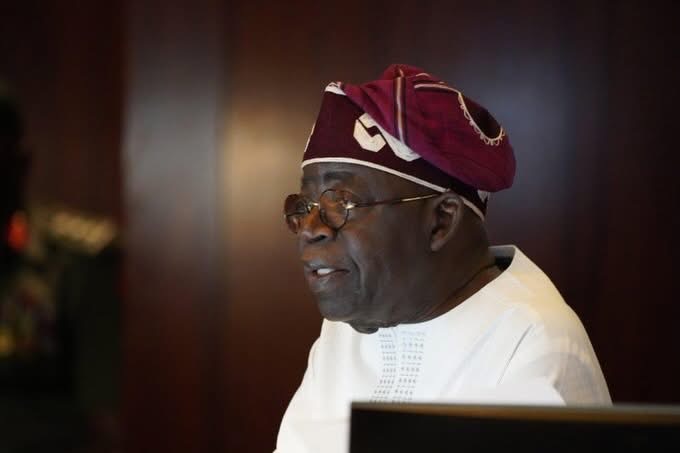
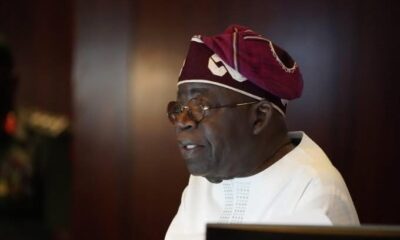
President Bola Tinubu has condemned the reported “barbaric” killing of one of the abducted teachers from the Esiele community in Ogbomoso, Oyo state.
In a statement released issued by his media aide, Bayo Onanuga, on Monday, May 18, President Tinubu said the teacher was k!lled when “rescue operation is underway.”
While conveying his sympathy the government and people of the state, President Tinubu assured that security operatives are “working around the clock” to rescue the victims and arrest the bandits as well as their collaborators within the community.
He further assured that the federal government would collaborate with the state government to rescue the victims.
‘’”I am saddened by the reported killing of one of the teachers kidnapped by the gunmen who invaded the community. I sympathise with Governor Seyi Makinde and commend the steps he has taken on the matter. I sympathise with the families of the kidnapped victims.
The Federal Government is working with the Oyo State government to rescue all the victims. I commend the Inspector-General of Police and the Commissioners of Police in Oyo and Kwara States for their quick intervention and the deployment of a tactical and the Intelligence Response Team (IRT) team to rescue the victims.
The IGP, following my instructions, is personally leading the tech-driven operation. We expect a breakthrough soon. The bandits and all their local collaborators will be fished out and made to face the full wrath of the law.
Cases of kidnapping further make imperative the establishment of state police to man some of our underserved areas. The National Assembly should accelerate the enactment of the law creating state police” the President said
May 14, 2026
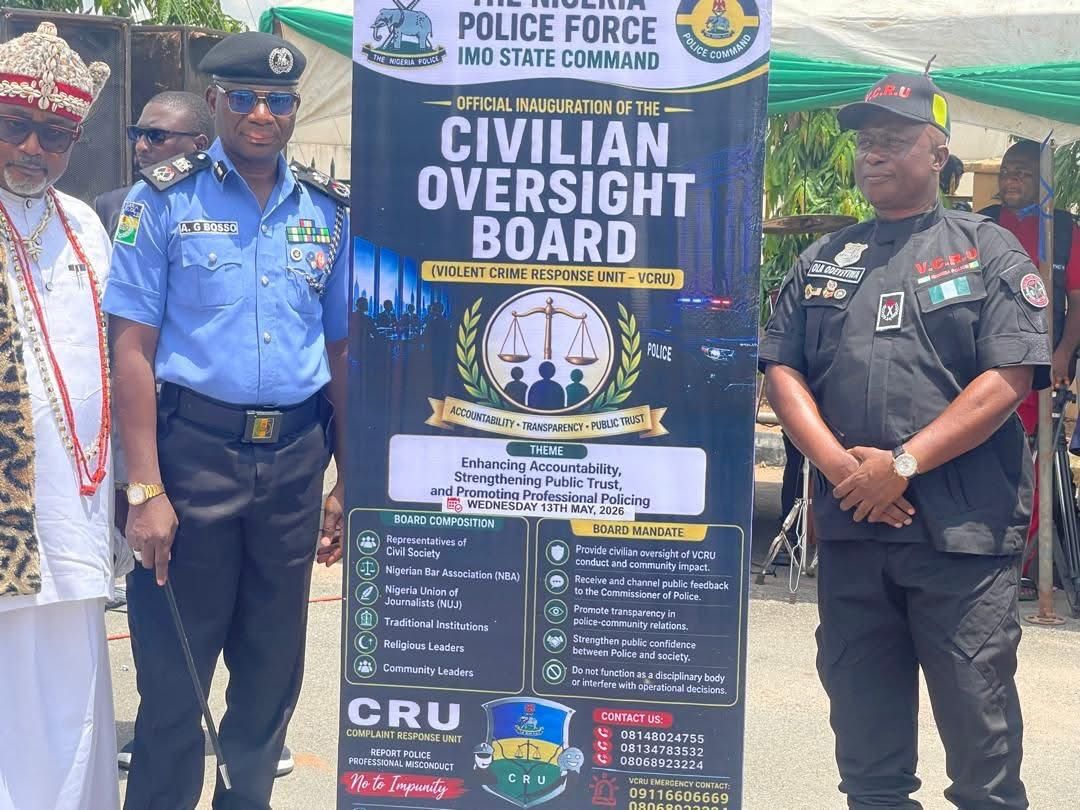
The Rule of Law and Accountability Advocacy Centre (RULAAC) expresses deep concern over the decision by the Nigeria Police Force to disband the notorious “Tiger Base” in Owerri, Imo State, only to inaugurate another tactical police unit operating from the same facility, under substantially the same command structure and reportedly with many of the same operatives.
This development raises serious questions about the sincerity of ongoing police reform efforts in Nigeria and reinforces fears that what is being presented as reform may merely be a cosmetic rebranding exercise designed to deflect public criticism without addressing the underlying culture of abuse and impunity.
Tiger Base became widely associated with allegations of torture, enforced disappearances, arbitrary detention, extortion, and extrajudicial killings. Over the years, victims, families, lawyers, journalists, and civil society organizations documented disturbing patterns of abuse linked to the operations of the unit.
Ordinarily, the disbandment of such a notorious tactical outfit should have marked an opportunity for genuine institutional reform. It should have included:
– Independent investigation into allegations of abuse;
– Accountability for officers implicated in violations;
– Justice and reparations for victims;
– Structural reforms and strengthened oversight;
– Human rights-centered retraining and professionalization.
Instead, the establishment of another tactical formation under substantially similar conditions suggests continuity rather than reform.
RULAAC is particularly concerned that retaining personnel or leadership figures associated with serious allegations of abuse sends a dangerous message that misconduct within the policing system carries no real consequences. This undermines public trust, weakens accountability, and emboldens further violations.
The situation also raises broader concerns regarding political interference in policing. Tactical police units must never become instruments for political intimidation, repression, or the advancement of partisan interests. Professional policing requires operational independence, transparency, accountability, and strict adherence to constitutional and legal standards.
The controversy inevitably recalls the aftermath of the #EndSARS protests, when the disbandment of SARS was quickly followed by the creation of SWAT, generating widespread fears that abusive policing structures were merely being renamed rather than fundamentally transformed.
RULAAC reiterates that genuine police reform cannot be achieved through changes in nomenclature alone. Meaningful reform requires accountability, transparency, civilian oversight, institutional culture change, and justice for victims.
Accordingly, RULAAC calls for the following urgent measures:
1. A transparent and independent investigation into allegations against Tiger Base operatives and leadership;
2. Prosecution and disciplinary action against officers implicated in torture, unlawful killings, and other abuses;
3. Justice, compensation, and support for victims and affected families;
4. Strengthened civilian oversight involving the National Human Rights Commission, judicial institutions, and civil society organizations;
5. Clear operational guidelines and publicly accountable rules of engagement for tactical police units;
6. Measures to insulate policing from political interference and abuse.
The people of Imo State and Nigerians generally deserve a policing system founded on professionalism, legality, accountability, and respect for human rights – not the recycling of abusive structures under new labels.
Signed:
Okechukwu Nwanguma
Executive Director
Rule of Law and Accountability Advocacy Centre (RULAAC)
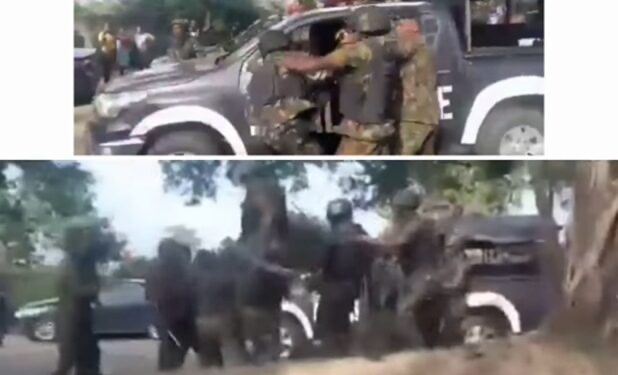
Personnel of the Nigerian military were seen engaging in a fight during the visit of President Bola Ahmed Tinubu to Bayelsa on Friday.
In a video spotted on social media, the driver of a Hilux vehicle marked “Naval Police” was seen stepping down from his vehicle and exchanging words with another driver.
After returning to his vehicle, another driver with a rifle approached him and threw a punch at the Naval Police driver, triggering a brawl.
The incident quickly escalated into a free-for-all, with personnel attached to both vehicles exchanging blows, while stunned civilians watched in disbelief.

Trending1 day ago
Bandits behind Ogbomoso school abduction will face full wrath of the law- President Tinubu

Politics1 day ago
PDP to screen Goodluck Jonathan on Tuesday as its sole Presidential aspirant For 2027 race

Politics1 day ago
Oshiomhole wins Edo APC senatorial primaries unopposed

-
Business2 years ago
US court acquits Air Peace boss, slams Mayfield $4000 fine
-

 Trending2 years ago
NYA demands release of ‘abducted’ Imo chairman, preaches good governance
-

 Politics2 years ago
Mexico’s new president causes concern just weeks before the US elections
-

 Politics2 years ago
Putin invites 20 world leaders
-

 Politics2 years ago
Russia bans imports of agro-products from Kazakhstan after refusal to join BRICS
-
Entertainment2 years ago
Bobrisky falls ill in police custody, rushed to hospital
-
Entertainment2 years ago
Bobrisky transferred from Immigration to FCID, spends night behind bars
-
Education2 years ago
GOVERNOR FUBARA APPOINTS COUNCIL MEMBERS FOR KEN SARO-WIWA POLYTECHNIC BORI