
News
Belgian Teens arrested in Kenya with 5,000 Smuggled Ants

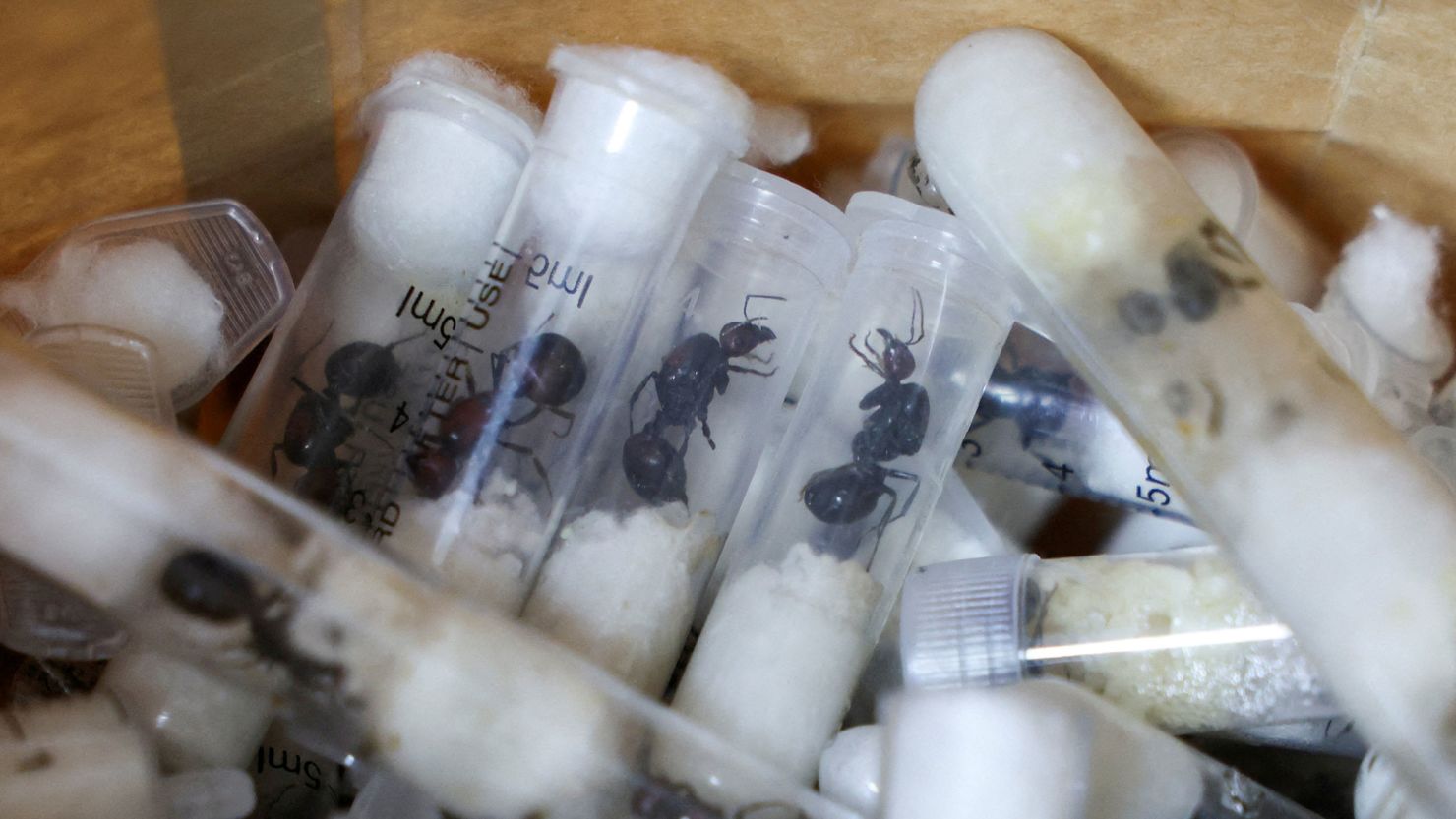
Two Belgian teenagers have been charged with wildlife piracy in Kenya after authorities found them in possession of 5,000 live ants packed in test tubes — a case that officials say highlights a growing trend in trafficking lesser-known species.
Lornoy David and Seppe Lodewijckx, both 19, were arrested on April 5 at a guest house in Nakuru County. During their court appearance at the Jomo Kenyatta International Airport Law Courts in Nairobi, the visibly distressed teens were consoled by relatives. They claimed they were collecting the ants “for fun” and were unaware that their actions were illegal.
Authorities said the ants, including the species Messor cephalotes — a large, red harvester ant native to East Africa — were being smuggled to international markets where they are sold as exotic pets. 
In a separate but related case, Kenyan national Dennis Ng’ang’a and Vietnamese national Duh Hung Nguyen were also charged with illegal possession and trafficking of 400 ants found in their Nairobi apartments.
According to the Kenya Wildlife Service (KWS), the cases mark a shift from the traditional trafficking of large, iconic species such as elephants and rhinos to smaller, ecologically important creatures. KWS warned that the illegal export of ants undermines Kenya’s biodiversity and deprives local communities and research institutions of ecological and economic benefits.
” The export of these ants not only violates Kenya’s sovereign rights over its natural resources but also threatens ecological balance,” KWS said in a statement.
The 5,000 ants were discovered in 2,244 test tubes stuffed with cotton wool, which allowed them to survive long periods during transportation. Kenyan authorities estimated the total value of the insects at 1 million Kenyan shillings (approximately $7,700), though prices vary based on species and destination.
Philip Muruthi, Vice President for Conservation at the African Wildlife Foundation, emphasized the ecological role ants play in maintaining healthy environments.
“Ants enrich soils, aid seed germination, and serve as food for various species such as birds,” he said. “When you see a thriving forest like Ngong, it’s not just the trees — it’s the relationships between organisms, from bacteria to ants to larger animals.”
Muruthi also cautioned that smuggling insects across borders risks introducing diseases that could damage ecosystems and agricultural industries in importing countries.
“Even if there is trade, it should be regulated. No one should be taking our resources without consent or control,” he added.







News
Man in shock after lady he lodged with in a hotel in Abuja flees with his car and other valuables

A Nigerian man is currently in shock after a young lady identified as Precious Chinyere , whom he took to a hotel in the Asokoro area in the FCT for a romantic getaway allegedly fled with his car and other personal belongings on Thursday, February 5,
The distraught man and Precious had visited the hotel and opted for a short time stay. Things took a different in the evening when the man noticed Precious had left the hotel room without notifying him and took along with her some of his personal belongings including phones and laptop and also his car.
The victim immediately reported the incident to the police.
When contacted, the spokesperson of the FCT police command, SP Josephine Adeh, told LIB that the matter is currently being investigated and that efforts are being made to apprehend the suspect.
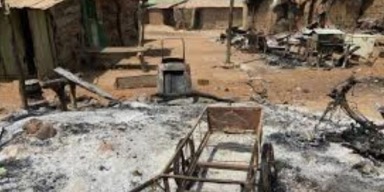
The United States Mission in Nigeria has condemned the k!lling of more than 200 civilians in recent attacks on communities in Kwara State.
Recall that terrorists launched de@dly attacks on Woro and Nuku communities in Kaiama Local Government Area of the state on Tuesday night, k!lling unsuspecting citizens.
It was gathered that the gunmen invaded the villages, opened fire on residents and burned homes.
According to reports, the de@th toll from the unfortunate incident hit 200 on Thursday night.
Reacting, the US Mission Nigeria condemned the k!lling via a post on its official X handle.
The post reads, “The United States condemns the horrific attack in Kwara state in Nigeria, which claimed the lives of more than 160 people, with the de@th toll still unconfirmed and many still unaccounted for.
“We express our deepest condolences to the families of those affected by this senseless violence.
“We welcome President Tinubu’s order to deploy security forces to protect villages in the area and his directive to federal and state officials to provide aid to the community and bring the perpetrators of this atrocity to justice.”
News
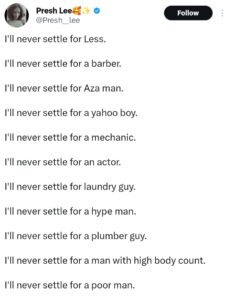
“I’ll never settle for a barber, yahoo boy or a poor man” — nail tech’s list of men she says she can’t marry sparks reactions online

A Nigerian nail technician has set social media talking after openly listing the kind of men she says she can never settle for.
In a now-viral post, she stated clearly that she refuses to “settle for less” and went on to mention professions and traits she considers a no-go area.
According to her, she can never settle for a barber, an aza man, a yahoo boy, a mechanic, an actor, a laundry man, a hype man, or a plumber. She also added that she wouldn’t marry a man with a high body count or a poor man.

Gunmen k!ll President General of Ogidi community and one other in Anambra.

Police bust syndicate behind nude photo blackmail in Lagos

Man in shock after lady he lodged with in a hotel in Abuja flees with his car and other valuables

-
Business1 year ago
US court acquits Air Peace boss, slams Mayfield $4000 fine
-

 Trending1 year ago
NYA demands release of ‘abducted’ Imo chairman, preaches good governance
-

 Politics1 year ago
Mexico’s new president causes concern just weeks before the US elections
-

 Politics1 year ago
Putin invites 20 world leaders
-

 Politics1 year ago
Russia bans imports of agro-products from Kazakhstan after refusal to join BRICS
-
Entertainment1 year ago
Bobrisky falls ill in police custody, rushed to hospital
-
Entertainment1 year ago
Bobrisky transferred from Immigration to FCID, spends night behind bars
-
Education1 year ago
GOVERNOR FUBARA APPOINTS COUNCIL MEMBERS FOR KEN SARO-WIWA POLYTECHNIC BORI