
Politics
Benue killings: Prof. Sebastine Hon , SAN writes President Tinubu

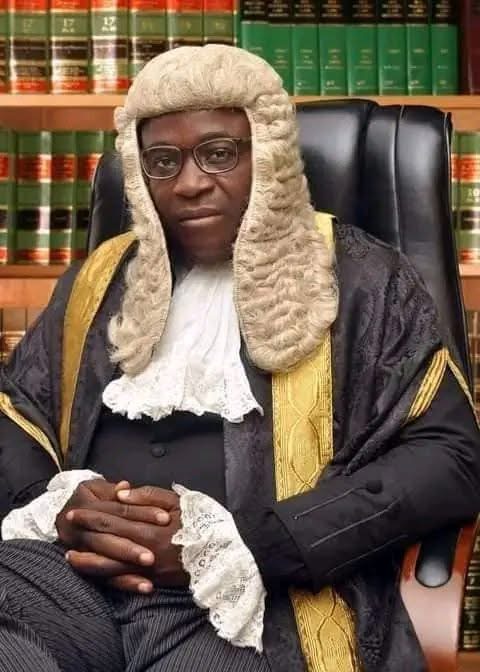
2ND JUNE, 2025
HE DIST. SEN. BOLA AHMED TINUBU, GCFR
PRESIDENT OF NIGERIA AND COMMANDER-IN-CHIEF
NIGERIAN ARMED FORCES
THE PRESIDENCY
ASO ROCK
ABUJA.
Your Excellency, Sir.
PETITION TO DECLARE A STATE OF MILITARY EMERGENCY IN BENUE STATE
I most deeply salute my dear President on the giant strides of his administration to make Nigeria great again. I particularly appreciate the improvement in the security situation in Zamfara, Sokoto, Kaduna, Kano, Niger, et cetera, which I have found out is the outcome of Mr. President’s collaborative efforts with the State Governors of those States.
The security situation in my State, however, is VERY FAST slipping out of hand. I have every reason to believe that, while Mr. President may have had the same disposition that led to improved security in the above-mentioned States, the Benue State Governor, Hyacinth Alia, and the military high command are seemingly not interested in achieving a similar feat in my home State, Benue. I state this with all the boldness in my veins, Mr. President.
I had previously publicly criticised the State Governor on this; and I hereby reaffirm what I said. Attached here is my Facebook (X) critique of his shocking endorsement of the daily murders in Benue State. Rather than address the issues raised, my Governor pushed his officials and social media sympathisers to launch attacks on my person.
Still worried, I personally wrote a joint letter to the Chief of Defence Staff, the Inspector-General of Police and the Director-General of State Security Services, detailing the failings of the military and paramilitary operations in the State. Shorn of its Annexures, a copy of the said letter is also hereto attached. Till date, nothing has been done, as is clearly evident from recent ugly happenings in the State, about the situation.
Two major reasons have made me to take this bold step of writing to Mr. President, namely:
(a) The fact that the Benue State Governor, Hyacinth Alia, keeps labelling the massive killings going on in Benue State as mere “skirmishes” and therefore justifying his unwillingness to address the matter! Few most recent examples (without overloading Mr. President who is ever busy with countless previous examples) shall suffice here:
(i) On May 29, 2025, Agan Community, right in Makurdi city, the State Capital, was attacked in broad daylight. Today marks four (4) days since then, and our dear Governor has not deemed it fit to issue a statement consoling the victims, not to talk of visiting the bereaved families/scene of attack. Indeed, he was dancing around on podiums in celebration of his two years in office on that same day – hours after the social media was agog with gory pictures and videos of the dead and the wounded!
(ii) On June 1, 2025, Naka, the Gwer West Local Government Headquarters and Edikwu-Ankpali, Community in Apa Local Area of Benue State, came under deadly attacks, resulting to several fatalities. Till this moment, the State Government has not deemed it necessary to issue any statement of concern, let alone condemnation. Rather, the Governor released a social media statement on his official handle several hours after news of the murderous attacks was already on air, pontificating about his attendance at the funeral of HRH Jam Gbinde in Konshisha Local Government Area. I attach the release from his social media handle here for your kind perusal, Sir. The most annoying was that his thugs later that same day assembled in Government House and were chanting “No Alia, No Benue” – a fact that is undeniable because it is all over the social media!
(iii) In reaction to every criticism of his lackluster performance on security issues or even suggestions on the way forward, the Governor’s social media goons roar like wounded lions, accusing the victims, sympathisers and commentators of “playing politics with human lives.” I have never seen a situation more annoying and appalling like this, Mr. President!
(iv) In the near recent time, the Senate President, Godswill Akpabio, decried, in plenary (reported by the national media), the attitude of the Governor, who kept quiet after over 50 of his subjects were killed!
(b) The fact that the military commanders in Benue State seem to have all taken sides with the murderers. Too many examples abound; but kindly take note of the following:
(i) Agan Community in the North Bank area of Makurdi Metropolis was, as stated above, attacked on May 29, 2025 in broad daylight by the terrorists. Even though there is a military barracks in the same North Bank, no soldier was deployed to arrest the situation.
(ii) On May 24, 2025, Rev. Fr. Solomon Atongo was attacked on his way from Makurdi to Naka, the Headquarters of Gwer-East LGA. The scene was just about 500 meters from a military checkpoint; but none of the soldiers at the checkpoint came to his rescue until the attackers left him for dead. He is lucky to be alive today.
(iii) There are several online allegations of the complicity of the military in the attacks. Only on May 31, 2025, Catholic Priests directly accused the military of complicity and further informed the whole world how the Church has lost priests and laity and has closed over 15 parishes in Benue State. Kindly see a report on this by The Punch Newspaper, attached hereto, Sir.
(iv) The attackers always come in the numbers on motorcycles. Meanwhile, there are several military checkpoints along the roads! Where and how, if I may ask, do those murderers pass to the points of attack and back to their newly-acquired ‘bases’?
(v) In most cases, the social media is always agog with mass movement of those armed invaders. Even if there is intelligence failure (which is hereby flatly denied), those social media alerts have so far proved to be credible and reliable – because those heinous attacks take place in the directions/area the reports had mentioned!
(vi) In other flashpoints in Nigeria where insecurity has not even reached this level and dimension, the military has deployed drones and fighter jets/helicopters. Every Nigerian has seen the results so far; but I wonder why this same gesture is not extended to Benue State.
From the above abridged narration of the unfortunate developments in Benue State, it is MOST IMPERATIVE that a state of military emergency be declared by Mr. President in the State, pursuant to the provisions, as you very well know, Sir, of section 305 of the 1999 Constitution (as amended). Both historical and empirical factors support this; and I hereby adumbrate them.
1. On October 1, 1962 the first Republican Government of Tafawa Balewa declared a state of emergency in the Western Region of Nigeria, due to the seemingly ceaseless fatal crisis that rocked that Region, arising from the outcome of the 1962 census exercise.
2. On May 18, 2004, President Olusegun Obasanjo declared a state of emergency in Plateau State, following the loss of over 2000 lives, due to sectarian crisis between Muslims and Christians.
3. On October 19, 2006, President Obasanjo, in a national broadcast, declared a state of emergency in Ekiti State, due to widespread political violence there.
4. On December 31, 2011, President Goodluck Jonathan declared a state of emergency in some Local Government Areas in Borno and Plateau State, to stop the spiraling sectarian violence therein.
5. In a nationwide broadcast on Tuesday, May 14, 2013, President Goodluck Jonathan declared a state of military emergency in Borno, Adamawa and Yobe.
6. On March 18, 2025, Mr. President declared a state of emergency in Rivers State, due to brewing and real time security challenges in that State. The magnitude of such challenges in Benue State is much higher.
Mr. President, Sir, the Nigerian Constitution is modelled after the USA Constitution. Both countries are operating federal Constitutions and the presidential system of government. Examples of declarations of state of emergency by successive US Presidents may be of assistance here. Kindly note that, as at the end of April, 2025, ninety (90) emergencies had been declared in US history, out of which 41 have expired. Nonetheless, most of those Proclamations substantially achieved their goals. Some of the military declarations of emergency (which are the ones relevant here) include the following:
1. Proclamation 2352, by President Franklin Roosevelt on September 8, 1939 – to enforce neutrality in the strengthening of the national defence within the limits of peace-time authorisations.
2. Proclamation 2487, by President Franklin Roosevelt on May 27, 1941, which was a declaration of unlimited national emergency, to stem threats from Nazi Germany.
3. Proclamation 2914, by President Harry S. Truman on December 16, 1950, which declared that the US’ military, naval, air and civilian defenses should be used to fight communism as part of the Korean war.
4. Proclamation 7463, by President George Bush on September 14, 2001, following the September 11 attacks – which covered a wide range of declarations empowering the President to take serious steps to stem and control similar attacks.
5. Proclamation 10886, by President Donald Trump on January 20, 2025, which ordered the Secretary of Defence to redirect as many military units as needed, to aid the Secretary of Homeland Security in achieving full control of the US southern border, and to take all legal measures to deny physical entry into the US of illegal immigrants. President Trump stated in the Proclamation, inter alia, as follows:
America’s sovereignty is under attack. Our southern border is overrun by cartels, criminal gangs, known terrorists, human traffickers, smugglers, unvetted military-age males from foreign adversaries, and illicit narcotics that harm Americans, including America. This invasion has caused widespread chaos and suffering in our country over the last 4 years. It has led to the horrific and inexcusable murders of many innocent American citizens, including women and children…. Foreign criminal gangs and cartels have begun seizing control of parts of cities, attacking our most vulnerable citizens and terrorizing Americans beyond the control of the local law enforcement. Cartels control vast territories just south of our southern border, effectively controlling who can and cannot travel to the United States from Mexico…. This assault on the American people and the integrity of America’s sovereign borders represents a grave threat to our Nation.
Mr. President, Sir, the above excerpted contents of President Trump’s Emergency Proclamation 10886 represent what is currently happening in Benue State and even beyond. The sovereignty of Nigeria is under very serious risk! No situation is more fitting to declare a military state of emergency in Benue State! The time for you to act is now, Sir!
I conclude by urging Mr. President to order a removal and replacement of all the military commanders in Benue State. If possible, even the ground troops should also be replaced. The way and manner they are operating in the State is clearly unsatisfactory. All other terms of any such declaration or proclamation lie with my respected President.
God bless the father of the Nigerian Nation, even as I expect with all sense of humility yet strong responsibility that Mr. President will act on this letter WITH UTMOST DESPATCH.
Yours faithfully,
PROF. SEBASTINE T. HON, SAN, FCIArb., DSSRS
(Deeply sorrowing Benue indigene)
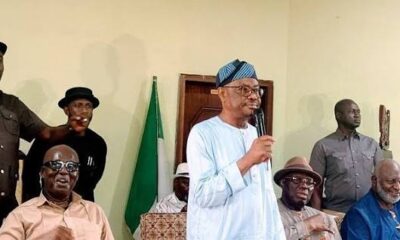





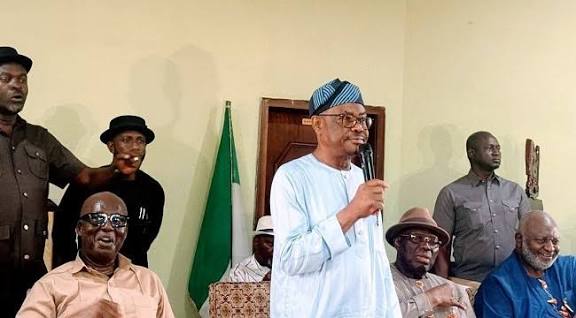
FCT Minister and former governor of Rivers state, Nyesom Wike, has said that any senator, House of Representatives Member, Minister, or governor who supports betrayers will suffer betrayal in their lives and that such person will join their creator when they experience their own betrayal.
Wike who is currently in a running battle with his godson and incumbent governor of Rivers state, Sim Fubara, said this while speaking at a public function in the state today February 6.
Speaking to the crowd at the public function, Wike said
‘’Wether you are a Senator, House of Reps member, a Minister or Governor, and you support betrayers, people will continue to betray you in life. You see people who betray and support them, betrayal is your portion! Betrayal is your portion! and that day you will not have mouth to say anything and there you will collapse and there you will go and they will announce such person has died because that is the seed you have planted because whatever you plant, you reap and so since you are sowing betrayal, betrayal will always follow you.
Watch! Every governor who is doing his second term and has ambition to put a successor and is supporting betrayals, you will never survive it. Betrayal will follow you. From the day your successor comes in. My own took so many months, your own will start immediately the person has been inaugurated. That is what the gods of the land have told me to tell all of you’’
https://www.instagram.com/reel/DUdaCp1jD01/?igsh=MWVnZXoyaGNmOGJ5dA==
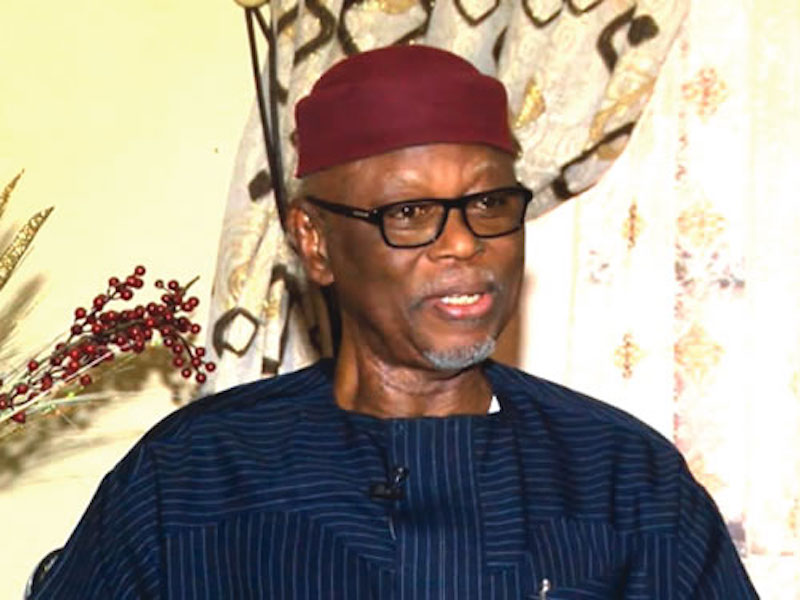
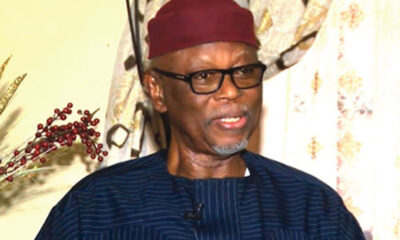
Chairman, Policy Manifesto Committee of the African Democratic Congress, ADC, John Odigie-Oyegun, says former president Muhammadu Buhari gave him the shock of his life, six months into his administration as Nigeria’s leader.
Oyegun made this disclosure on Friday when he featured in an interview on Arise Television’s ‘Prime Time’.
He revealed that as National Chairman of the All Progressives Congress, APC, he went to tell Buhari that he was not delivering his election promises to Nigerians but that the late president told him he would not rule with strictness, but rather wanted to show Nigerians that he is a true civilian president.
The former APC National Chairman lamented that it became business as usual, from there.
“I was national chairman of the APC. Six months or less into our assuming office, fairly alarmed, I went to the late President Buhari for a one-on-one talk. I said Mr President, this is not what the people were expecting. They wanted a bit of the old president Buhari.
“And he explained to me, Mr Chairman, I have learned my lesson. I was shocked. And don’t forget at that time, a lot of prominent Nigerians took their holidays abroad, just to be sure and see what this new sheriff in town will be.
“Buhari told me he wants to now show the people that he’s a true civilian president in Agbada. And by the time we finished the conversation, I said Oh God, we are finished. Because, if he’s not ready to be strict, what’s the point?
“Weeks later, months later, years later, I was proven correct. And of course, it became business as usual, only that they are a new set of tenants in Aso Rock. That was a shocker,” he said.
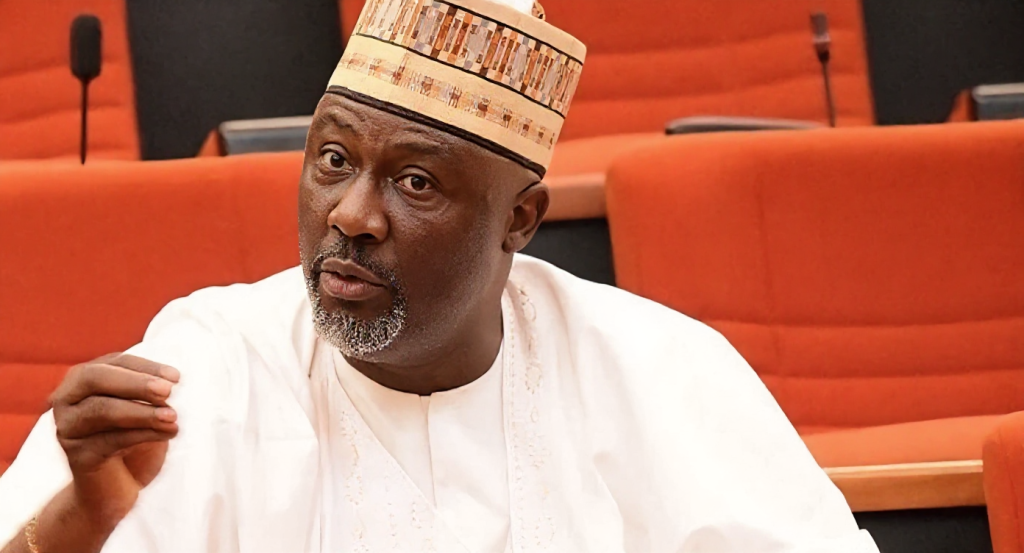
Former lawmaker, Dino Melaye Esq, has raised concerns over the Senate’s reported rejection of the electronic transmission of election results.
The move, according to Melaye, is a clear endorsement of election rigging and an indication of a sinister plan to rig the 2027 elections.
In a statement on Friday, the former lawmaker criticized the Senate’s decision, stating that it undermines the credibility of the electoral process.
The African Democratic Congress, ADC chieftain, also stated that the move opens the door for electoral manipulation and fraud.
He further warned that the rejection of electronic transmission of results is a step backwards for democracy in Nigeria.
Melaye called on lawmakers and citizens to stand up against “this blatant attempt to undermine the will of the people and ensure that future elections are free, fair, and transparent”.

Audu Innocent Ogbeh: Scholar, Legislator, and Federal Minister

Nyesom Wike wishes de@th on any politician supporting ‘’betrayers’

How Buhari shocked me 6 months into his administration – Oyegun

-
Business1 year ago
US court acquits Air Peace boss, slams Mayfield $4000 fine
-

 Trending1 year ago
NYA demands release of ‘abducted’ Imo chairman, preaches good governance
-

 Politics1 year ago
Mexico’s new president causes concern just weeks before the US elections
-

 Politics1 year ago
Putin invites 20 world leaders
-

 Politics1 year ago
Russia bans imports of agro-products from Kazakhstan after refusal to join BRICS
-
Entertainment1 year ago
Bobrisky falls ill in police custody, rushed to hospital
-
Entertainment1 year ago
Bobrisky transferred from Immigration to FCID, spends night behind bars
-
Education1 year ago
GOVERNOR FUBARA APPOINTS COUNCIL MEMBERS FOR KEN SARO-WIWA POLYTECHNIC BORI