
Politics
Biafra agitators ready to dialogue with Nigerian Govt – Ohanaeze’s Isiguzoro


Apex lgbo socio-cultural organization, Ohanaeze Ndigb has disclosed that Biafra agitators are ready to dialogue with the federal government on the way forward.
In a statement on Tuesday by Ohanaeze’s factional Deputy President General, Mazi Okechukwu Isiguzoro, the apex body noted that the dialogue has the potential to usher in monumental changes, including the release of all prisoners of conscience, notably Nnamdi Kanu, the reopening of the Eastern Economic Corridor, and an unequivocal end to violence disguised as agitation.
“It is our earnest hope that those misled into cycles of violence and armed struggle will choose to abandon their hostile actions, paving the way for a peaceful and prosperous Southeast.
“In a significant and historic turning point for the geopolitics of Nigeria, the Ohanaeze Ndigbo, the apex sociocultural organisation representing the Igbo people, formally acknowledges the courageous decision of the Nonviolent Pro-Biafra Agitators to extend a hand of peace towards the Federal Government of Nigeria.
“Following twelve years of relentless diplomatic pressure from the international community and numerous United Nations-affiliated peace groups, urging these advocates for self-determination to embrace peaceful negotiations, this moment is both profound and transformative.”
Ohanaeze proclaimed that the acceptance by the non-violent Pro-Biafra agitators to offer a dove of peace and a hand of friendship to the federal government was a pivotal moment in Nigeria’s historical timeline.
Isiguzoro said, “this forthcoming dialogue is anticipated to mirror the earlier discussions held at Aburi, Ghana, now reborn as the ‘Abuja Accord’.
“This initiative aims explicitly to address and resolve the long-standing grievances that have birthed the Biafra agitation since the cessation of hostilities in the Nigerian Civil War in 1970.
“The non-violent Pro-Biafra agitators have extended an olive branch to President Bola Ahmed Tinubu’s administration, inviting the federal government to engage in a constructive dialogue over the nagging ‘Igbo Question’.”
He said the dialogue sought to confront the unresolved issues stemming from the unimplemented policies of reconciliation, reconstruction, and rehabilitation envisioned by General Yakubu Gowon following the war.





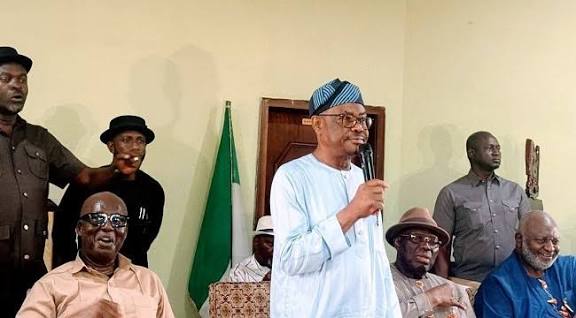
FCT Minister and former governor of Rivers state, Nyesom Wike, has said that any senator, House of Representatives Member, Minister, or governor who supports betrayers will suffer betrayal in their lives and that such person will join their creator when they experience their own betrayal.
Wike who is currently in a running battle with his godson and incumbent governor of Rivers state, Sim Fubara, said this while speaking at a public function in the state today February 6.
Speaking to the crowd at the public function, Wike said
‘’Wether you are a Senator, House of Reps member, a Minister or Governor, and you support betrayers, people will continue to betray you in life. You see people who betray and support them, betrayal is your portion! Betrayal is your portion! and that day you will not have mouth to say anything and there you will collapse and there you will go and they will announce such person has died because that is the seed you have planted because whatever you plant, you reap and so since you are sowing betrayal, betrayal will always follow you.
Watch! Every governor who is doing his second term and has ambition to put a successor and is supporting betrayals, you will never survive it. Betrayal will follow you. From the day your successor comes in. My own took so many months, your own will start immediately the person has been inaugurated. That is what the gods of the land have told me to tell all of you’’
https://www.instagram.com/reel/DUdaCp1jD01/?igsh=MWVnZXoyaGNmOGJ5dA==
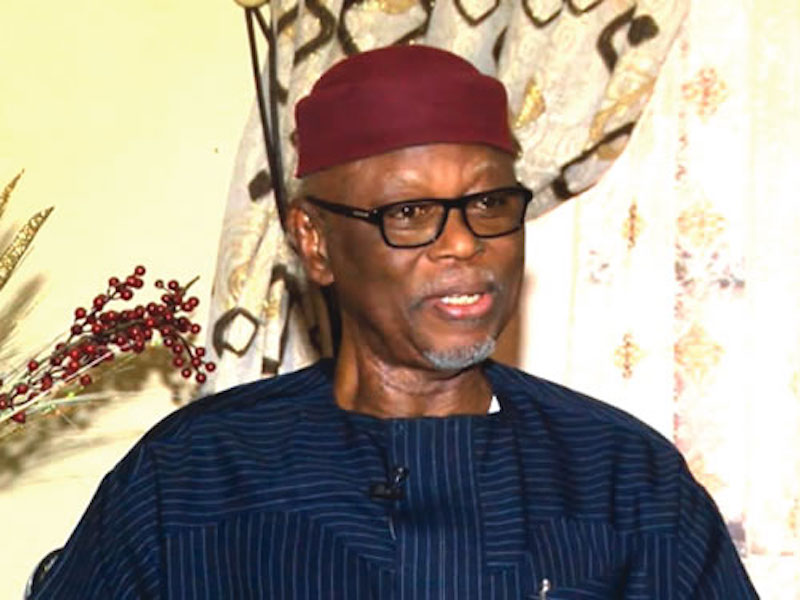
Chairman, Policy Manifesto Committee of the African Democratic Congress, ADC, John Odigie-Oyegun, says former president Muhammadu Buhari gave him the shock of his life, six months into his administration as Nigeria’s leader.
Oyegun made this disclosure on Friday when he featured in an interview on Arise Television’s ‘Prime Time’.
He revealed that as National Chairman of the All Progressives Congress, APC, he went to tell Buhari that he was not delivering his election promises to Nigerians but that the late president told him he would not rule with strictness, but rather wanted to show Nigerians that he is a true civilian president.
The former APC National Chairman lamented that it became business as usual, from there.
“I was national chairman of the APC. Six months or less into our assuming office, fairly alarmed, I went to the late President Buhari for a one-on-one talk. I said Mr President, this is not what the people were expecting. They wanted a bit of the old president Buhari.
“And he explained to me, Mr Chairman, I have learned my lesson. I was shocked. And don’t forget at that time, a lot of prominent Nigerians took their holidays abroad, just to be sure and see what this new sheriff in town will be.
“Buhari told me he wants to now show the people that he’s a true civilian president in Agbada. And by the time we finished the conversation, I said Oh God, we are finished. Because, if he’s not ready to be strict, what’s the point?
“Weeks later, months later, years later, I was proven correct. And of course, it became business as usual, only that they are a new set of tenants in Aso Rock. That was a shocker,” he said.
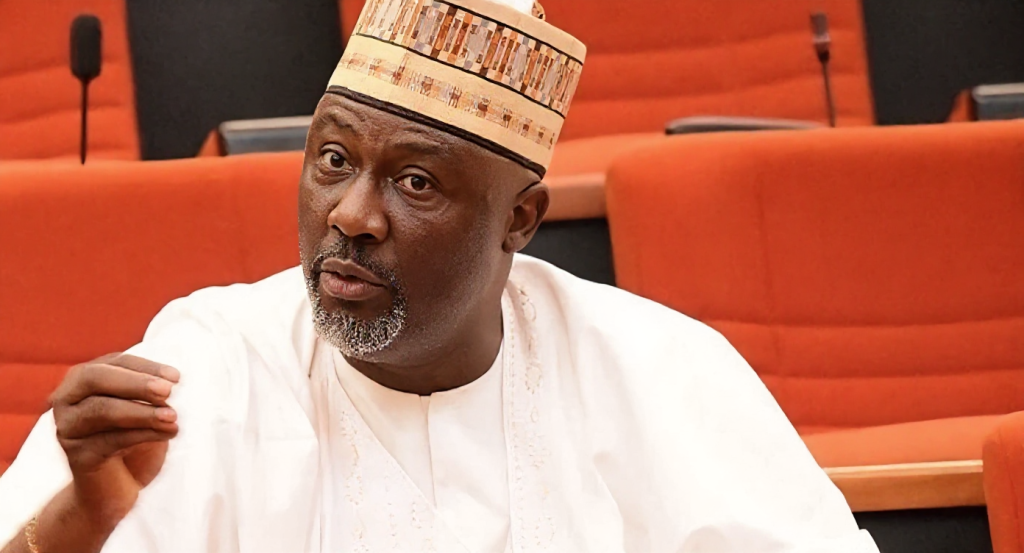
Former lawmaker, Dino Melaye Esq, has raised concerns over the Senate’s reported rejection of the electronic transmission of election results.
The move, according to Melaye, is a clear endorsement of election rigging and an indication of a sinister plan to rig the 2027 elections.
In a statement on Friday, the former lawmaker criticized the Senate’s decision, stating that it undermines the credibility of the electoral process.
The African Democratic Congress, ADC chieftain, also stated that the move opens the door for electoral manipulation and fraud.
He further warned that the rejection of electronic transmission of results is a step backwards for democracy in Nigeria.
Melaye called on lawmakers and citizens to stand up against “this blatant attempt to undermine the will of the people and ensure that future elections are free, fair, and transparent”.

Audu Innocent Ogbeh: Scholar, Legislator, and Federal Minister

Nyesom Wike wishes de@th on any politician supporting ‘’betrayers’

How Buhari shocked me 6 months into his administration – Oyegun

-
Business1 year ago
US court acquits Air Peace boss, slams Mayfield $4000 fine
-

 Trending1 year ago
NYA demands release of ‘abducted’ Imo chairman, preaches good governance
-

 Politics1 year ago
Mexico’s new president causes concern just weeks before the US elections
-

 Politics1 year ago
Putin invites 20 world leaders
-

 Politics1 year ago
Russia bans imports of agro-products from Kazakhstan after refusal to join BRICS
-
Entertainment1 year ago
Bobrisky falls ill in police custody, rushed to hospital
-
Entertainment1 year ago
Bobrisky transferred from Immigration to FCID, spends night behind bars
-
Education1 year ago
GOVERNOR FUBARA APPOINTS COUNCIL MEMBERS FOR KEN SARO-WIWA POLYTECHNIC BORI