
Business
Bread Production: Bakers Demand Price Reduction On Flour And Other Ingredients

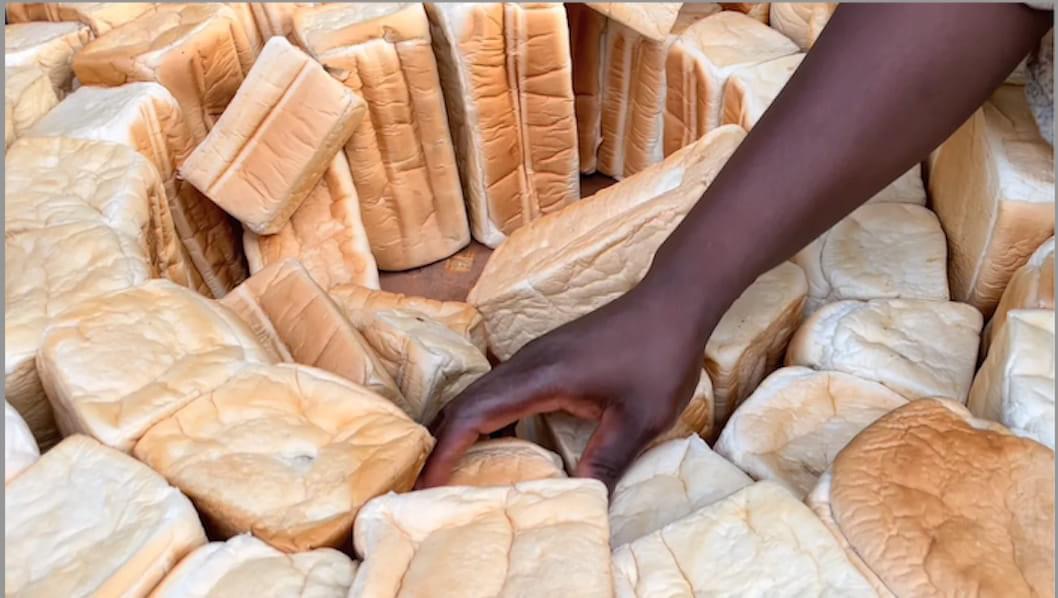
Bakers have called for a reduction in flour prices and urgent government intervention to address skyrocketing costs affecting their operations.
The Association of Master Bakers and Caterers of Nigeria has called on the Federal Government to intervene on the incessant increase in the prices of flour despite recent approval of duty-free importation waiver on wheat and maize.
The association therefore called on government to probe the activities of Flour Milling Association of Nigeria and sugar producers for causing the increases in the prices of bread.
The Chairman of the Association in Lagos State, Chief Matthew Ayoola and General Secretary, Abraham Alabi, who raised the observations during a press conference, proposed a reduction in the prices of wheat, flour and other ingredients used by bakers for smooth operation.
The event had as its theme, “Call For The Federal Government’s Urgent Intervention On The Incessant Increase Of Flour Prices Despite Recent Approval Of Duty-Free Importation Waiver On Wheat, Maize, Others.”
The text reads, “The record holds that Master Bakers and Caterers in Nigeria are the second largest employer of labour in Nigeria. This means that bakers’ shutdown of bakeries might pollute the society
“We sincerely appreciate the federal government of Nigeria upon the approval of a 150-day duty-free window to allow the importation of wheat, maize, and husked brown rice as part of measures to combat rising food inflation across the country effective August 1, 2024. However, the Nigeria Millers are yet to implement this on the price of their commodities.
“We are using this medium to call on the Federal Government to intervene in the operations of the Flour Milling Association of Nigeria (FMAN) as they are a major factor causing incessant increases in the price of wheat which falls to the high price of buying bread. It seems they intend to siphon money and milk the majority of Nigerians to live in abject poverty. Their current incessant increase of flour and sugar prices despite Government actions to ameliorate the cost of food items is a sabotage to the economy. The millers are taking advantage of government assistance to enrich themselves and make the good citizens starve.
“It’s imperative to note that in July the Federal Government of Nigeria announced the approval of a 150-day duty-free window to allow the importation of wheat, maize, and husked brown rice as part of measures to alleviate rising food inflation across the country. The government’s notable action should be to help bring down the prices of food items in the market, making some food items more accessible and affordable for the masses.
“However, our findings revealed some Millers chose to sell wheat to neighboring countries and some of them chose to ignore this waiver and instead continue to inflate the price of flour on a daily basis. This action has not only disregarded the Federal Government’s efforts to alleviate the suffering of Nigerians but also a severe blow to our industry. It’s a way of robbing innocent Nigerians. The millers did not consider our call for price reduction but rather advised us to inflate the price of bread more to inflict pain on the common man, which is an inhumane action to take.
“This constant increase in the price of flour by millers has made it impossible for Bakeries to operate and function smoothly which has also led to the shutdown of many bakeries and their staff being laid off. Lives are at stake when basic needs are scarce. Nigerians complain on a daily basis due to a lack of basic needs for survival and bread is one of them. The flour Millers are mounting pressure on human beings unnecessarily. Today, the price of flour has increased by 67,000 naira as against the last ten years’ price of 8,000.
“As flour is experiencing an increase so also are sugar, yeast, wheat, butter, nylon, and other ingredients needed, in fact, everything we use for production has increased. All the millers have declined our proposal for reduction of the cost of flour.
“We therefore call on the Federal Government to investigate the activities of the millers and sugar producers assess them and force them to do the needful because it seems they are more focused on making exorbitant and excess profits while they put the country at risk and chaos.
We appeal to the Ministry of Industry, trade, and Investment for urgent intervention in this matter.
“The smooth operations of bakers across the country are at risk due to the unjust practices of millers. Bakers need help to assist the masses cushion the effect of hunger in the land. Everything keeps increasing except workers’ income. Bread is common to Nigerians. It has an impact on both bakers and purchasers and there is a need for reduction of flour, wheat, and other materials. The inflating cost of bread saddens our hearts unfortunately the millers’ actions pose a greater challenge to us. For the public to experience adequate reduction of food items, the price of wheat must be reduced.
“Wheat is typically milled into flour which is then used to make a wide range of foods including bread, crumpets, muffins, noodles, pasta, biscuits, cakes, pastries, cereal bars, sweet and savory snack foods, crackers, crisp bread, sauces and confectionery (e.g. licorice).
“We request the Federal government to enforce the implementation of the waiver from the point of importation to the consumers for proper monitoring. The government should meet with the Millers on possible solutions to curb the incessant increase in the cost of flour and wheat. There should be a reduction in prices of wheat, flour, and other ingredients bakers use for smooth operations.
“We propose a reduced price range of between N30,000 and N40,000 per bag. To avoid a shutdown of bakers, the government’s 150-day duty-free window should reflect on the prices at which bakers purchase production commodities which would automatically reflect on the price at which Nigerians purchase breads and other consumables.
“We also demand a surplus in the distribution/accessibility of commodities to bakers. We also urged the Federal Government to take decisive actions to ensure that the waivers on wheat importations are enforced and that the millers comply with the intended purpose of reducing the cost of flour and wheat. The Federal government waiver should reflect the cost of food items bought.”
How much is better bread sold in your area?
Here’s N1,500 and above
Please leave a comment let’s talk about it.










The Trade Union of Nigeria, TUC, has raised the alarm that the price of Premium Motor Spirit aka Petrol may climb to about N2,000 per litre if urgent measures are not taken to cushion the impact of rising global crude prices and the depreciating naira.
Speaking to newsmen on Thursday, April 9, the president of the TUC, Festus Osifo, called on the Federal Government to immediately deploy 60 percent of excess crude oil revenue above the 2026 budget benchmark to subsidise crude feedstock supplies to the Dangote Refinery and other modular refineries, a move it says will slash pump prices of petrol, diesel, and jet fuel within two weeks
“Today, comrades, we are seeing that the cost of petrol is edging towards N2,000 per litre depending on the part of the country that you are. Nigerian workers are already passing through excruciating pain as we speak.
The same way it is affecting transportation, it is also affecting manufacturing. The cost of diesel has also gone northward, meaning that the cost of production has increased. When production costs rise, the final price of goods on the shelves will also skyrocket.
If this continues unchecked, the inflation that we are currently celebrating as going downwards will reverse and start moving up again,” he stated.
Osifo outlined the proposal as an urgent intervention to cushion Nigerian workers from excruciating pain caused by petrol prices edging towards ₦2,000 per litre in some parts of the country

The governor of Oyo state, Seyi Makinde, has approved a N10,000 transportation allowance as a palliative for the state workforce to cushion the effects of the increase in the pump price of Premium Motor Spirit, otherwise known as petrol.
The Chairman of the Nigeria Labour Congress (NLC), Oyo State chapter, Kayode Martins, in a statement released on Monday, March 23, disclosed that the governor has granted the request of the union on the issue of transportation allowance.
The statement read
“Following the intervention and formal request made by the State Council of the Nigeria Labour Congress (NLC) earlier this morning, the state government has approved a N10,000 transportation allowance for all workers in the state.
The newly approved allowance is set to take effect from April 2026, providing much-needed relief to workers grappling with rising transportation costs amid current economic challenges.
This development comes as a direct response to sustained advocacy by the state NLC, aimed at cushioning the impact of increased living expenses on the workforce.
Further details on implementation are expected to be communicated by the relevant government authorities in due course.”
The Central Bank of Nigeria (CBN), has declared that banks and financial institutions must establish and maintain a temporary watch-list for Bank Verification Numbers (BVN) implicated in suspected fraudulent transactions.
According to the CBN in a circular dated March 12, 2026 and signed by its Director of Payments System Policy Department, Musa I. Jimoh, the apex bank said such a suspected BVN may remain on the temporary watchlist for a maximum period of twenty-four (24) hours during which the owner would be contacted to make clarifications.
The circular explained that the move is part of several new measures under a revised regulatory framework aimed at enhancing financial system stability.
“A BVN may remain on this temporary Watchlist for a maximum period of twenty-four (24) hours, during this period, the BVN owner shall be contacted to provide clarification regarding the identified transaction(s),” the circular stated.
The circular also sets an age requirement for BVN enrolment, restricting registration to individuals who have attained eighteen (18) years and above.
The CBN also added that amendments to phone numbers linked to a BVN shall be allowed only once.
“Amendments to phone numbers linked to a BVN shall be allowed only once,” the circular noted.
The apex bank stated that access to BVN databases will remain tightly controlled.
“Access to the BVN databases shall be exclusively granted to Central Bank of Nigeria (CBN) licensed financial institutions.
“Notwithstanding this provision, the Central Bank of Nigeria (the Bank) reserves the right to approve access to the BVN databases in extenuating circumstances and in accordance with the provisions of extant laws,” the circular said.
Financial institutions are expected to comply with the new requirements, and customers may be contacted by their banks if their BVNs are temporarily flagged during the new fraud monitoring process.
The new policy, as stated by the CBN, takes effect from May 1, 2026.

𝗛𝗢𝗡. 𝗧𝗢𝗦𝗞𝗔 𝗖𝗢𝗡𝗗𝗘𝗠𝗡𝗦 𝗧𝗛𝗘 𝗞𝗜𝗟𝗟𝗜𝗡𝗚𝗦, 𝗞𝗜𝗗𝗡𝗔𝗣𝗣𝗜𝗡𝗚𝗦 𝗔𝗡𝗗 𝗥𝗔𝗣𝗘𝗦 𝗜𝗡 𝗜𝗛𝗜𝗔𝗚𝗪𝗔, 𝗢𝗕𝗜𝗕𝗜𝗘𝗭𝗘𝗡𝗔, 𝗘𝗭𝗜𝗢𝗕𝗢𝗗𝗢, 𝗘𝗠𝗘𝗔𝗕𝗜𝗔𝗠, 𝗢𝗞𝗢𝗟𝗢𝗖𝗛𝗜, 𝗨𝗠𝗨𝗚𝗨𝗠𝗔, 𝗔𝗩𝗨 𝗔𝗡𝗗 𝗢𝗧𝗛𝗘𝗥 𝗖𝗢𝗠𝗠𝗨𝗡𝗜𝗧𝗜𝗘𝗦: 𝗖𝗔𝗟𝗟𝗦 𝗙𝗢𝗥 𝗜𝗠𝗠𝗘𝗗𝗜𝗔𝗧𝗘 𝗖𝗘𝗦𝗦𝗔𝗧𝗜𝗢𝗡

TENSIONS RISE IN OGUTA LGA AS CHAIRMAN MOVED AHEAD WITH Town UNION ELECTIONS AGAINST STATE DIRECTIVE

2027: More Than 50 Lawmakers Lose APC Reps Tickets in Major Primary Election

-
Business2 years ago
US court acquits Air Peace boss, slams Mayfield $4000 fine
-

 Trending2 years ago
NYA demands release of ‘abducted’ Imo chairman, preaches good governance
-

 Politics2 years ago
Mexico’s new president causes concern just weeks before the US elections
-

 Politics2 years ago
Putin invites 20 world leaders
-

 Politics2 years ago
Russia bans imports of agro-products from Kazakhstan after refusal to join BRICS
-
Entertainment2 years ago
Bobrisky falls ill in police custody, rushed to hospital
-
Entertainment2 years ago
Bobrisky transferred from Immigration to FCID, spends night behind bars
-
Education2 years ago
GOVERNOR FUBARA APPOINTS COUNCIL MEMBERS FOR KEN SARO-WIWA POLYTECHNIC BORI