Connect with us

Business

BREAKING: Abia State Governor Alex Otti has signed into law, the Abia State Electricity Bill which empowers the State to regulate its electricity market.

Published

on

Abia State Governor Signs Electricity Bill into Law

  • Abia State Governor Alex Otti signed the Abia State Electricity Bill into law, marking the beginning of enhanced energy regulation, investment protection, and power expansion in the state.
  • The bill prioritises renewable energy, establishes ASERA, and supports expanding the power grid to more LGAs.

Governor Alex Otti of Abia State has signed the Abia State Electricity Bill into law, marking a new era in energy regulation, investment protection, and power expansion within the state.

Speaking after the signing yesterday in Nvosi, Isiala Ngwa South Local Government Area, Governor Otti explained that the bill, which originated from the Executive, was quickly but thoroughly passed by the Abia House of Assembly.

“This law will protect the investments made by Aba Power and give the government the authority to regulate,” Otti said. “It is a law that will stand the test of time, safeguarding both current and future investors in the energy sector.”

The Governor highlighted that the bill benefited from the expertise of 15 international power experts from the United States, Canada, Southeast Asia, and Europe, who contributed their knowledge pro bono. He also noted that the state engaged the Nigerian law firm Banwo & Ighodalo to refine the legal framework before the bill became law.

Abia State’s electricity framework is unique, with a ring-fenced power system covering the Local Government Areas of Aba South, Aba North, Osisioma, Obingwa, Ugwunagbo, Ukwa East, Ukwa West, Isiala Ngwa South, and Isiala Ngwa North. The state’s integrated power initiative, led by Aba Power Ltd., covers generation, transmission, and distribution. It has been under development for two decades.

The Governor stated that the initiative is now a model for power infrastructure in Nigeria. With the new law, Otti said the government had begun efforts to extend the Umuahia Ring-Fence to include the remaining eight LGAs, ensuring stable electricity across the state.

The legislation also prioritises renewable energy, positioning Abia as a leader in sustainable power initiatives. Otti revealed that discussions with Geometric Power, the parent company of Aba Power Ltd., are ongoing to expand electricity distribution beyond Aba.

Plans are also in place to establish the Abia State Electricity Regulatory Authority (ASERA), which will help maintain efficiency and create a welcoming environment for investors.

Governor Otti commended the 8th Abia State House of Assembly for its thorough review and timely passage of the bill.

Business

Fuel may hit N2000/litre. Subsidize crude feedstock now – TUC tells FG

Published

on


The Trade Union of Nigeria, TUC, has raised the alarm that the price of Premium Motor Spirit aka Petrol may climb to about N2,000 per litre if urgent measures are not taken to cushion the impact of rising global crude prices and the depreciating naira.

Speaking to newsmen on Thursday, April 9, the president of the TUC, Festus Osifo, called on the Federal Government to immediately deploy 60 percent of excess crude oil revenue above the 2026 budget benchmark to subsidise crude feedstock supplies to the Dangote Refinery and other modular refineries, a move it says will slash pump prices of petrol, diesel, and jet fuel within two weeks

“Today, comrades, we are seeing that the cost of petrol is edging towards N2,000 per litre depending on the part of the country that you are. Nigerian workers are already passing through excruciating pain as we speak.

The same way it is affecting transportation, it is also affecting manufacturing. The cost of diesel has also gone northward, meaning that the cost of production has increased. When production costs rise, the final price of goods on the shelves will also skyrocket.

If this continues unchecked, the inflation that we are currently celebrating as going downwards will reverse and start moving up again,” he stated.

Osifo outlined the proposal as an urgent intervention to cushion Nigerian workers from excruciating pain caused by petrol prices edging towards ₦2,000 per litre in some parts of the country

Continue Reading

Business

Fuel price hike: Gov Makinde announces N10,000 transport support for workers

Published

on


The governor of Oyo state, Seyi Makinde, has approved a N10,000 transportation allowance as a palliative for the state workforce to cushion the effects of the increase in the pump price of Premium Motor Spirit, otherwise known as petrol.

The Chairman of the Nigeria Labour Congress (NLC), Oyo State chapter, Kayode Martins, in a statement released on Monday, March 23, disclosed that the governor has granted the request of the union on the issue of transportation allowance.

The statement read

“Following the intervention and formal request made by the State Council of the Nigeria Labour Congress (NLC) earlier this morning, the state government has approved a N10,000 transportation allowance for all workers in the state.

The newly approved allowance is set to take effect from April 2026, providing much-needed relief to workers grappling with rising transportation costs amid current economic challenges.

This development comes as a direct response to sustained advocacy by the state NLC, aimed at cushioning the impact of increased living expenses on the workforce.

Further details on implementation are expected to be communicated by the relevant government authorities in due course.”

Continue Reading

Business

CBN Releases New Age Limit, Guidelines On BVN Operation.

Published

on


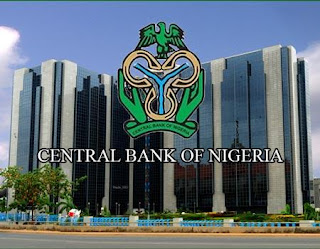
The Central Bank of Nigeria (CBN), has declared that banks and financial institutions must establish and maintain a temporary watch-list for Bank Verification Numbers (BVN) implicated in suspected fraudulent transactions.

According to the CBN in a circular dated March 12, 2026 and signed by its Director of Payments System Policy Department, Musa I. Jimoh, the apex bank said such a suspected BVN may remain on the temporary watchlist for a maximum period of twenty-four (24) hours during which the owner would be contacted to make clarifications.

The circular explained that the move is part of several new measures under a revised regulatory framework aimed at enhancing financial system stability.

“A BVN may remain on this temporary Watchlist for a maximum period of twenty-four (24) hours, during this period, the BVN owner shall be contacted to provide clarification regarding the identified transaction(s),” the circular stated.

The circular also sets an age requirement for BVN enrolment, restricting registration to individuals who have attained eighteen (18) years and above.

The CBN also added that amendments to phone numbers linked to a BVN shall be allowed only once.

“Amendments to phone numbers linked to a BVN shall be allowed only once,” the circular noted.

The apex bank stated that access to BVN databases will remain tightly controlled.

“Access to the BVN databases shall be exclusively granted to Central Bank of Nigeria (CBN) licensed financial institutions.

“Notwithstanding this provision, the Central Bank of Nigeria (the Bank) reserves the right to approve access to the BVN databases in extenuating circumstances and in accordance with the provisions of extant laws,” the circular said.

Financial institutions are expected to comply with the new requirements, and customers may be contacted by their banks if their BVNs are temporarily flagged during the new fraud monitoring process.

The new policy, as stated by the CBN, takes effect from May 1, 2026.

Continue Reading

Trending