
Politics
BREAKING: Court stops PDP NEC, BoT from sacking Damagum as Acting National Chairman

The Federal High Court in Abuja, on Friday restrained the National Executive Committee (NEC) and Board of Trustees (BoT) of the Peoples Democratic Party (PDP) from removing Amb. Ilya Damagum as the Acting National Chairman of the party.
The court ordered that no other person must be recognized as PDP national chairman other than Damagum until the national convention of the party scheduled for December next year.
Justice Peter Lifu issued the restraining order against PDP NEC, BoT and others while delivering judgment in a suit instituted against them by Senator Umar El-Gash Maina.
The judge held that in line with Articles 42, 47 and 67 of the PDP, it is only at the National Convention of the party that national officers can be elected.
In the suit marked: FHC/ABJ/ CS/579/2024, Justice Lifu said that PDP members are bound by the Constitution of the party and as such must always act in line with the provisions and obedience to the party’s law.
The plaintiff, who claimed to be Chairman of PDP in Yobe State, had instituted the suit against PDP and eight others alleging that some stakeholders of the party have been holding clandestine meetings to forcefully remove Damagum from office in gross violation of the party’s Constitution.
He said that a former Deputy Governor of Kogi State, Dr Phillip Omeiza Salawu was being pushed forward as replacement for Damagun by the stakeholders.
Maina claimed that upon becoming aware of the plan, two separate letters complaining against the clandestine meetings were delivered to the national secretary of the party, Senator Samuel Anyanwu and that despite the acknowledgment of the two letters, the National Secretary and BoT members have never deemed it fit to act on the letters and their claims.
In the suit instituted on his behalf by Joshua Musa, SAN, the plaintiff therefore prayed the court to invoke articles 45, 47 and 67 of PDP Constitution to stop the move to replace Damagum as the Acting National Chairman.
The plaintiff specifically asked the court to declare that the national chairmanship of PDP is rotated between the north and south and not through any other procedure not enshrined in the PDP’s Constitution.
In his judgment after perusing the PDP’s Constitution and exhibits, Justice Lifu agreed with the plaintiff that Damagum can only be replaced at the national convention of the party or through an order of a court.
Justice Lifu also held that any attempt to truncate the un-exhausted four years tenure of the northern region without the national convention of the party will amount to an affront to the Constitution of the PDP.
Earlier, the judge had dismissed the opposition of the defendants to the suit on the grounds that the plaintiff had no locus standi to bring out the case and that the court lacked jurisdiction.
Justice Lifu held that the plaintiff predicated his suit on the protection of PDP Constitution from been violated and the northern region, where he hailed from, from being short changed from the four year tenure.
Justice Lifu said that the plaintiff having displayed his PDP membership card before the court and having raised the fundamental issue of protection of PDP’s Constitution, had sufficient interest and justiciable cause to institute the case.
The judge therefore declared that PDP NEC and BoT are bound by the party’s Constitution and that Damagum as national chairman can only be replaced through the national convention of the party.
He also held that Damagum having been appointed from the northern region where the former national chairman, Senator Iyorcha Ayu, hailed from, is entitled to serve out the remaining tenure of the national chairman.





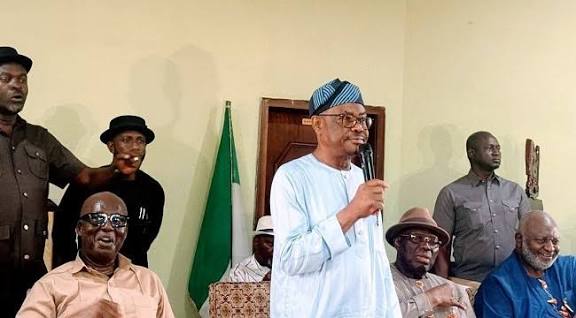
FCT Minister and former governor of Rivers state, Nyesom Wike, has said that any senator, House of Representatives Member, Minister, or governor who supports betrayers will suffer betrayal in their lives and that such person will join their creator when they experience their own betrayal.
Wike who is currently in a running battle with his godson and incumbent governor of Rivers state, Sim Fubara, said this while speaking at a public function in the state today February 6.
Speaking to the crowd at the public function, Wike said
‘’Wether you are a Senator, House of Reps member, a Minister or Governor, and you support betrayers, people will continue to betray you in life. You see people who betray and support them, betrayal is your portion! Betrayal is your portion! and that day you will not have mouth to say anything and there you will collapse and there you will go and they will announce such person has died because that is the seed you have planted because whatever you plant, you reap and so since you are sowing betrayal, betrayal will always follow you.
Watch! Every governor who is doing his second term and has ambition to put a successor and is supporting betrayals, you will never survive it. Betrayal will follow you. From the day your successor comes in. My own took so many months, your own will start immediately the person has been inaugurated. That is what the gods of the land have told me to tell all of you’’
https://www.instagram.com/reel/DUdaCp1jD01/?igsh=MWVnZXoyaGNmOGJ5dA==
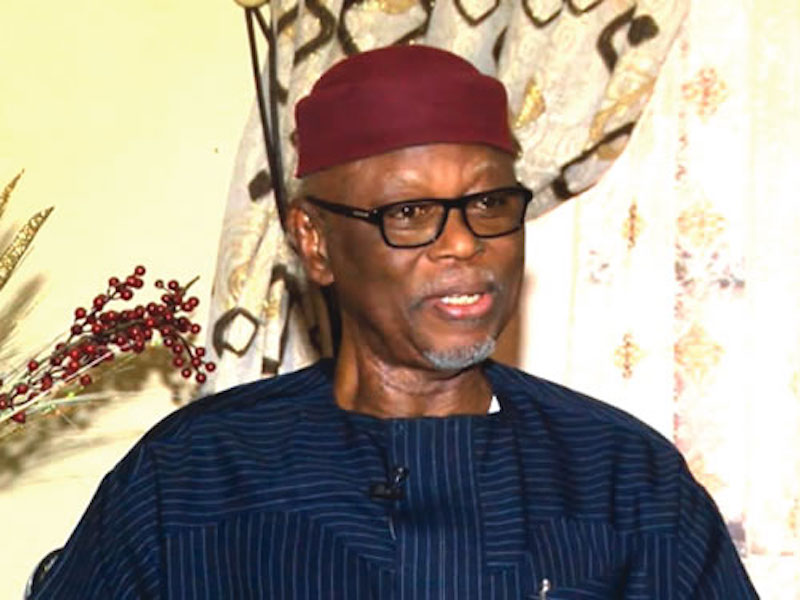
Chairman, Policy Manifesto Committee of the African Democratic Congress, ADC, John Odigie-Oyegun, says former president Muhammadu Buhari gave him the shock of his life, six months into his administration as Nigeria’s leader.
Oyegun made this disclosure on Friday when he featured in an interview on Arise Television’s ‘Prime Time’.
He revealed that as National Chairman of the All Progressives Congress, APC, he went to tell Buhari that he was not delivering his election promises to Nigerians but that the late president told him he would not rule with strictness, but rather wanted to show Nigerians that he is a true civilian president.
The former APC National Chairman lamented that it became business as usual, from there.
“I was national chairman of the APC. Six months or less into our assuming office, fairly alarmed, I went to the late President Buhari for a one-on-one talk. I said Mr President, this is not what the people were expecting. They wanted a bit of the old president Buhari.
“And he explained to me, Mr Chairman, I have learned my lesson. I was shocked. And don’t forget at that time, a lot of prominent Nigerians took their holidays abroad, just to be sure and see what this new sheriff in town will be.
“Buhari told me he wants to now show the people that he’s a true civilian president in Agbada. And by the time we finished the conversation, I said Oh God, we are finished. Because, if he’s not ready to be strict, what’s the point?
“Weeks later, months later, years later, I was proven correct. And of course, it became business as usual, only that they are a new set of tenants in Aso Rock. That was a shocker,” he said.
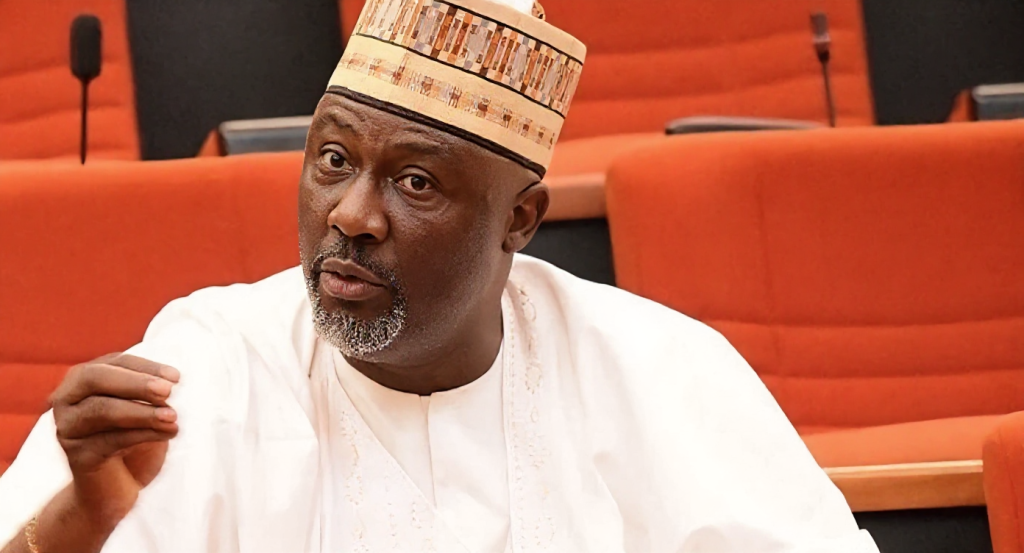
Former lawmaker, Dino Melaye Esq, has raised concerns over the Senate’s reported rejection of the electronic transmission of election results.
The move, according to Melaye, is a clear endorsement of election rigging and an indication of a sinister plan to rig the 2027 elections.
In a statement on Friday, the former lawmaker criticized the Senate’s decision, stating that it undermines the credibility of the electoral process.
The African Democratic Congress, ADC chieftain, also stated that the move opens the door for electoral manipulation and fraud.
He further warned that the rejection of electronic transmission of results is a step backwards for democracy in Nigeria.
Melaye called on lawmakers and citizens to stand up against “this blatant attempt to undermine the will of the people and ensure that future elections are free, fair, and transparent”.

Audu Innocent Ogbeh: Scholar, Legislator, and Federal Minister

Nyesom Wike wishes de@th on any politician supporting ‘’betrayers’

How Buhari shocked me 6 months into his administration – Oyegun

-
Business1 year ago
US court acquits Air Peace boss, slams Mayfield $4000 fine
-

 Trending1 year ago
NYA demands release of ‘abducted’ Imo chairman, preaches good governance
-

 Politics1 year ago
Mexico’s new president causes concern just weeks before the US elections
-

 Politics1 year ago
Putin invites 20 world leaders
-

 Politics1 year ago
Russia bans imports of agro-products from Kazakhstan after refusal to join BRICS
-
Entertainment1 year ago
Bobrisky falls ill in police custody, rushed to hospital
-
Entertainment1 year ago
Bobrisky transferred from Immigration to FCID, spends night behind bars
-
Education1 year ago
GOVERNOR FUBARA APPOINTS COUNCIL MEMBERS FOR KEN SARO-WIWA POLYTECHNIC BORI