
Politics
Breaking: Terrorism Charge: I’m ready to negotiate with FG, Kanu tells court

By Ikechukwu Nnochiri
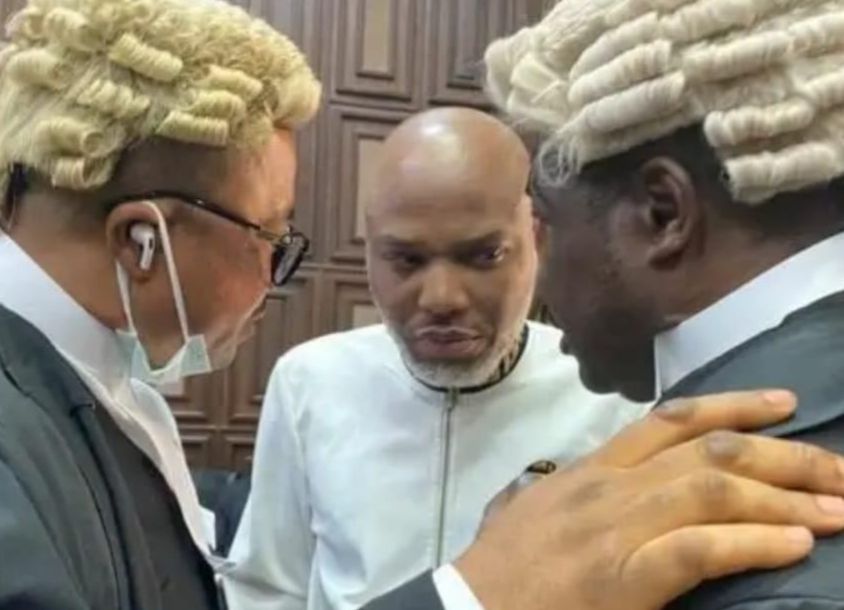
ABUJA–The detained leader of the proscribed Indigenous People of Biafra, IPOB, Nnamdi Kanu, has expressed his readiness to enter into a negotiation with the Federal Government.
Kanu took the position on Wednesday, at the resumed proceeding on the seven-count terrorism and treasonable felony charge the FG entered against him before the Federal High Court sitting in Abuja.
His team of lawyers, led by Mr. Alloy Ejimakor, noted that Section 17 of the Federal High Court Act, made provision for amicable resolution of such matters.
Ejimakor, notified the court of the decision of his team to explore the option, after he moved two applications that were filed by his client.
Whereas one of the applications, sought the committal of the Director General of the Department of State Services, DSS, Mr. Yusuf Bichi, to prison for contempt of court, the second motion challenged the jurisdiction of the court to continue with the trial.
According to Kanu’s lawyer, he would be left with no option but to activate section 17 of the FHC Act, should the court dismiss the two applications he moved on behalf of his client.
“Section 17 of Federal High Court Rules, states that in any proceedings, the court may consider reconciliation and settlement,” Ejimakor added.
On his part, FG’s lawyer, Chief Adegboyega Awomolo, SAN, said he had earlier informed the defendant that he lacked the powers to embark on such negotiation since it was not part of the Fiat that was issued to him by the Attorney-General of the Federation and Minister of Justice.
He maintained that only the AGF has the authority to negotiate or take further steps in relation to the matter, noting that the case borders on alleged terrorism.
“If he is interested in negotiating, he knows the right place, the Attorney General of the Federation office,” Adegboyega, SAN, stated.
Reacting to the development, trial Justice Binta Nyako said the duty of the court was to hear the matter that was brought before it and not to act as a solicitor for any of the parties.
He said it was left for the parties to agree on the way they want the matter to go.
“If you want to discuss with the AGF, no problem at all,” Justice Nyako added.
It will be recalled that Kanu was first arrested in Lagos on October 14, 2015, upon his return to the country from the United Kingdom, UK.
Justice Nyako had on April 25, 2017, granted him bail on health ground, after he had spent about 18 months in detention.
Upon the perfection of the bail conditions, he was on April 28, 2017, released from the Kuje prison.
However, midway into the trial, the IPOB leader escaped from the country after soldiers invaded his country home at Afara Ukwu Ibeku in Umuahia, Abia State, an operation that led to the death of some of his followers.
Kanu was later re-arrested in Kenya on June 19, 2021 and extraordinarily renditioned back to the country by security agents on June 27, 2021.
Following the development, the trial court, on June 29, 2021, remanded him in custody of DSS, where he remained till date.
On April 8, 2022, the court struck out eight out of the 15-count charge that FG preferred against him on the premise that they lacked substance.
Likewise, the Abuja Division of the Court of Appeal, on October 13, 2022, ordered Kanu’s immediate release from detention even as it quashed the charge against him.
Dissatisfied with the decision, FG took the matter before the Supreme Court, even as it persuaded the appellate court to suspend the execution of the judgement, pending the determination of its appeal.
While deciding the appeal, the Supreme Court, on December 15, 2023, vacated the judgement of the appellate court and gave FG the nod to try the IPOB leader on the subsisting seven-count charge.





Politics
ADC Owerri Municipal Gets New Chairman: Hon. Success Opara Emerges Amidst State Leadership Tussle
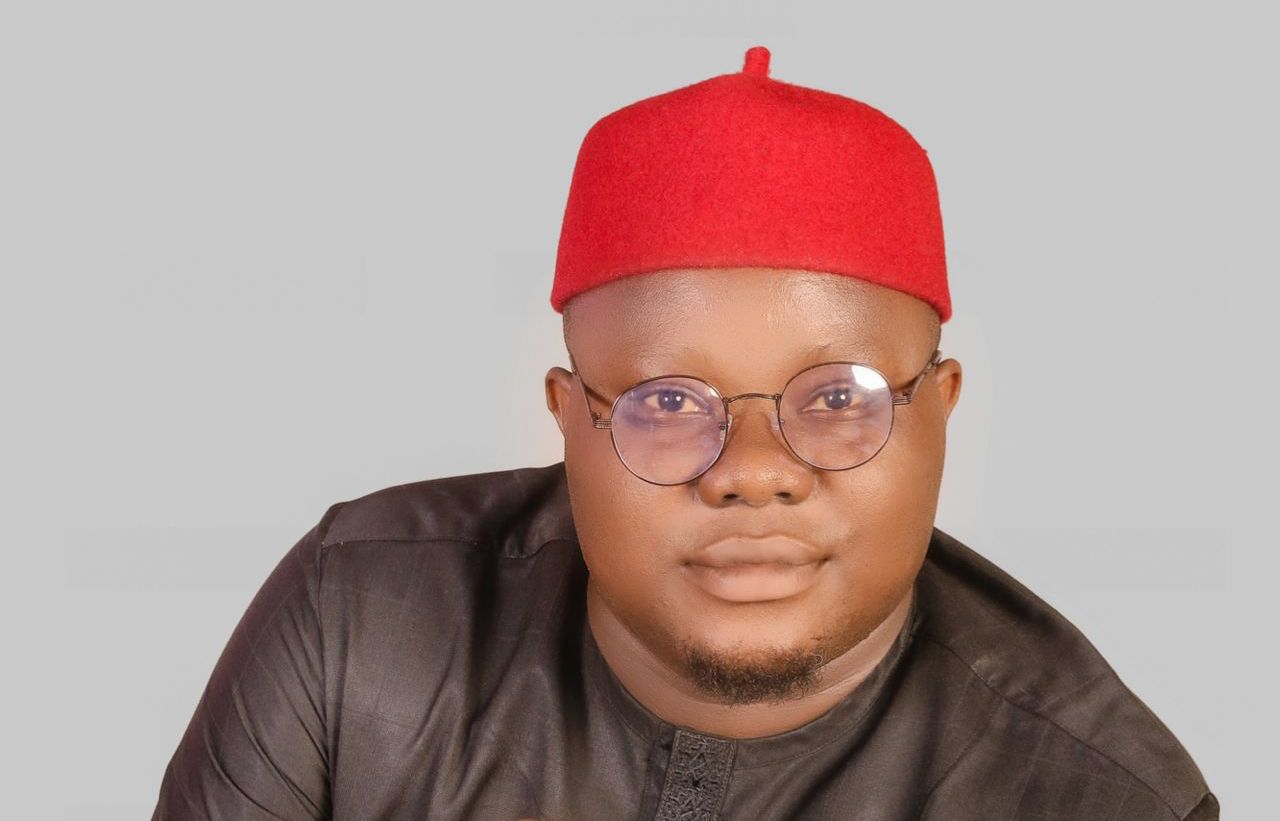
The African Democratic Congress (ADC) in Owerri Municipal, Imo State, has concluded its Local Government Area Congress, with Hon. Success Opara emerging as the new Chairman. The congress, conducted in all wards across Owerri Municipal, saw party faithfuls voting for Opara, who is expected to lead the party to victory in future elections.
However, there’s an ongoing leadership tussle within the Imo State ADC, with Chief Emmanuel Amushie claiming to be the authentic state chairman, recognized by the Independent National Electoral Commission (INEC). On the other hand, Prof. James Okoroma has also been declared the authentic state chairman by the national leadership of the ADC.
Furthermore the Independent National Electoral Commission (INEC) has removed the faction led by Prof. James Okoroma as the recognized leadership of the African Democratic Congress (ADC) in Imo State, as of April 9, 2026. INEC recognizes only the Amuchie-led Executive as the lawful and legitimate leadership of the ADC in Imo State.
The removal follows a Court of Appeal ruling directing parties to maintain the status quo pending the determination of a substantive suit before the Federal High Court. INEC has also suspended recognition of all leadership factions of the ADC until the court reaches a final decision.
Politics
‘If Wike Fails To Apologize To Okinbaloye, We Will Boycott All Press Briefings’ – Broadcasters Warn
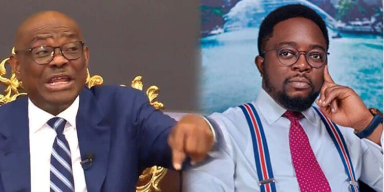
The Independent Broadcast Association of Nigeria (IBAN) has asked the Minister of the Federal Capital Territory, Nyesom Wike, to retract a controversial remark he made about a journalist with Channels Television, Seun Okinbaloye.
IBAN, the umbrella body for independent broadcast stations in Nigeria, also warned that it may boycott all media engagements organized by the minister if he fails to issue a public apology.
In a statement signed by Ahmed Ramalan, IBAN Chairman, and Fidelis Duker, Acting General Secretary, the association expressed concern about the implications of the comment aired during a live television interview.
The controversy stemmed from a remark made by Wike during a routine media chat on Friday, when he reacted to Okinbaloye’s commentary on the trajectory of Nigeria’s democracy while watching the program Politics Today.
“If there was any way to break the screen, I would have shot him,” Wike had said.
The minister later clarified to journalists present that the statement was not a literal threat.
On Saturday, Lere Olayinka, Senior Special Assistant on Public Communications to the minister, described the comment as “hyperbolic”, arguing that it had been taken out of context by critics.
However, IBAN maintained that the remark was inappropriate for a public official, even if it was not intended as a literal threat.
The association said statements suggesting violence could easily be interpreted as intimidation of journalists.
IBAN warned that comments implying violence could contribute to a hostile environment for media practitioners.
The group noted that Nigeria currently ranks 122 out of 180 countries on the global press freedom index, adding that journalists already face numerous challenges.
According to the association, these include surveillance, attacks, and arbitrary arrests.
The association called on the minister to withdraw the remark and apologise publicly to the journalist and the wider media community.
IBAN also urged Wike to reaffirm his commitment to press freedom in accordance with Sections 22 and 39 of the 1999 Constitution.
“Should the minister fail to meet these requests within a reasonable period, IBAN will have no choice but to advise all independent broadcast stations to suspend coverage of all press briefings, media chats, and official news conferences hosted by the FCT minister,” the statement read.
Despite its warning, the association said it remains open to constructive engagement with public officials.
“We hope the minister will take the necessary corrective action so that normal coverage can continue without interruption,” IBAN added.
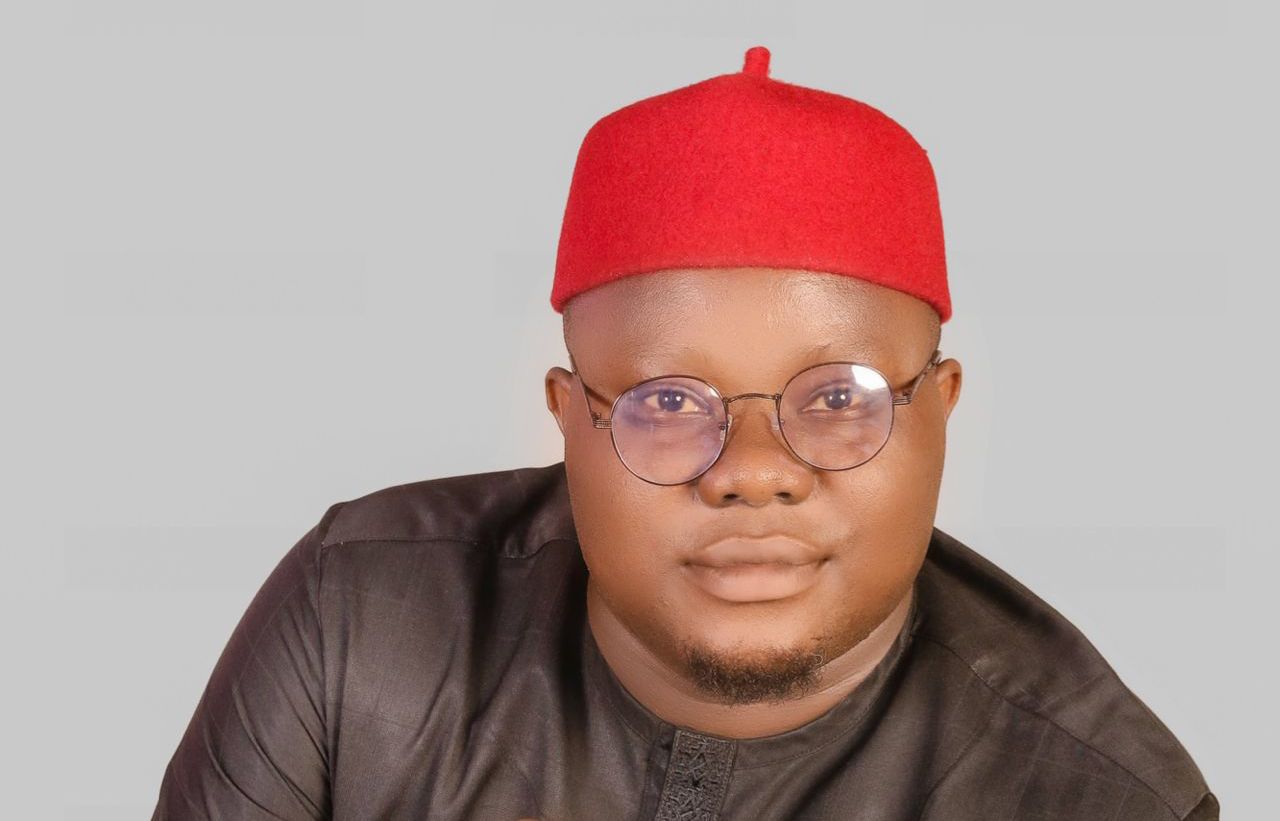
In a heartfelt message, Hon Success Opara has extended warm Easter greetings to Nigerians, celebrating the resurrection of Jesus Christ. Speaking at St. Peter Anglican Church Ikengbu, Opara emphasized the significance of Easter, saying, “He is risen! May the miracle of Easter bring you renewed hope, faith, and joy. Rejoice in the promise of new life and the joy that conquered everything.”
The lawmaker prayed for Nigerians to experience the transformative power of the resurrection, urging them to find solace in the promise of eternal life. “As we commemorate this sacred occasion, let us reflect on the values of love, compassion, and forgiveness that Jesus Christ embodied,” he said.
Hon Opara’s message was filled with Easter cheer, as he wished Nigerians a joyous celebration with family and loved ones. “May the spirit of Easter fill your heart with peace, hope, and renewed faith. Happy Easter!”
The Easter celebration at St. Peter Anglican Church Ikengbu was marked with prayers, hymns, and reflections on the significance of Christ’s resurrection.

Fuel may hit N2000/litre. Subsidize crude feedstock now – TUC tells FG

ADC Owerri Municipal Gets New Chairman: Hon. Success Opara Emerges Amidst State Leadership Tussle

Abuja hotel collapse: Wike orders arrest of owner, to convert land to public use

-
Business1 year ago
US court acquits Air Peace boss, slams Mayfield $4000 fine
-

 Trending1 year ago
NYA demands release of ‘abducted’ Imo chairman, preaches good governance
-

 Politics1 year ago
Mexico’s new president causes concern just weeks before the US elections
-

 Politics1 year ago
Putin invites 20 world leaders
-

 Politics1 year ago
Russia bans imports of agro-products from Kazakhstan after refusal to join BRICS
-
Entertainment1 year ago
Bobrisky falls ill in police custody, rushed to hospital
-
Entertainment1 year ago
Bobrisky transferred from Immigration to FCID, spends night behind bars
-
Education2 years ago
GOVERNOR FUBARA APPOINTS COUNCIL MEMBERS FOR KEN SARO-WIWA POLYTECHNIC BORI