
Politics
Concerns Over NEC, Caucus Meetings In APC As Ganduje’s Fate Splits Govs

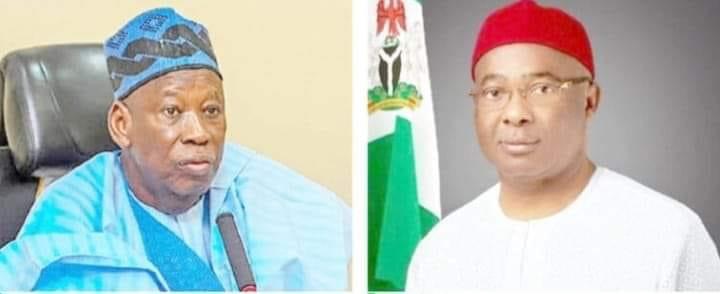
There are growing concerns in the ruling All Progressives Congress (APC) over the failure of the party’s national chairman, Dr Abdullahi Umar Ganduje, to convene National Caucus and National Executive Committee (NEC) meetings.
Reports on Sunday claimed that the two organs of the party are key in fine-tuning and ratifying decisions of the National Working Committee (NWC), especially the NEC, which is its second highest decision-making organ.
Unlike the NWC, which is saddled with the day-to-day running of the party, the NEC ratifies NWC’s decisions on key issues, and where necessary, subjects them to the national convention, which is the highest organ, for final decisions.
The APC constitution provides that NEC meetings should be held quarterly to brainstorm and review developments in the party, with a view to ensuring its progress and stability.
Sources in the APC, however, said that aside from the national caucus and NEC meetings yet to be convened, the National Advisory Council of the party was also yet to be constituted despite being an advisory body of elders expected to serve as the conscience of the party, like the Board of Trustees (BoT) in other cases.
Findings revealed that since Ganduje was appointed as the APC helmsman at a NEC meeting held on August 3, 2023, only the NWC has been meeting, while all other organs have remained comatose.
Recall that from August last year till date, several members of the party have made efforts, including threats of legal action, to ensure that a NEC meeting is held, at least to ratify some key decisions reached by the NWC, but the efforts have so far yielded no results.
Sources said Ganduje was afraid of summoning the NEC for fear of being sacked, sequel to several protests against him.
However, another source close to the national chairman said the issue of convening the NEC and National Caucus meeting was not entirely Ganduje’s affair. The source said the former Kano State governor had reached out to the president on this, but was yet to receive a commitment concerning a potential date.
Recall that an alleged corruption case in Kano and a recent “purported” sack by executives from his ward and the litigation that followed had ignited protests against Ganduje within the party, with stakeholders calling for his head.
Analysts say that judging from the coalition of forces against Ganduje, it would take a miracle for him to survive the numerous onslaughts against him and complete his tenure.
Pundits have also argued that the only suspense subsisting in the episode is the President Bola Ahmed Tinubu factor.
Governors split over Ganduje’s fate
Sources told our correspondent yesterday that governors who are members of the party were divided over calls for Ganduje’s resignation, which is believed to be a major impediment to the NEC and National Caucus meetings.
It was gathered that while some governors are behind him, others who are not convinced about his emergence or his leadership are said to be holding back on launching an all-out war because they fear this might pit them against the president. Some of those in the latter group are said to have strategically stopped attending APC events.
Also, some of those in this group have also stayed off the APC national secretariat in Abuja.
The Progressive Governors’ Forum (PGF), led by Imo State Governor Hope Uzodinma, has also been observed to have taken a back seat in recent times, as observers noted that unlike what was obtainable in the past, the forum has not been holding regular meetings.
Party leaders worry over state of affairs
On March 23, 2024, the APC national chairman, Ganduje, said President Tinubu had approved the NWC proposal to carry out a nationwide e-registration of members.
He disclosed this when he hosted some APC state chairmen at the headquarters of the party in Abuja.
Ganduje said, “The president has granted your requests, especially on political appointments. He is doing something about it. He also emphasised the importance of electronic registration, which we have been working on with the consultant and our committee at the headquarters, which has gone far.
“Now, we are going to the grassroots level. It (e-registration) will be connected across all the wards of the federation, but you need to oversee the recruitment of officials who will undertake the exercise.”
But some stakeholders of the APC said it was the responsibility of the NEC, not President Tinubu, to approve the e-registration of members nationwide.
Some members of various organs who spoke with our correspondent yesterday expressed displeasure over the issues, saying, “The APC has turned into a one-man show.”
A member of the National Caucus, who asked not to be named, told Daily Trust yesterday that Ganduje’s action was driving the party on the path of implosion.
The politician, who played a role in the formation of the APC, advised that if Ganduje is afraid of being sacked by the NEC, he should lobby majority of members on his side.
He also blamed President Tinubu, who anointed Ganduje, for not intervening in the interest of the party.
He said, “Tinubu borrowed this thing from Buhari, who never took the organs of the APC seriously. So, it appears to be infectious and the bug caught up with Tinubu and he acts alone.
“I am sure he just passes down instructions to the national chairman, who was handpicked. The real owners of the party are sidelined. Anyone who has a divergent view is not tolerated. So, we are in for autocracy. It is unfortunate.
“We have a national chairman who was appointed against the wishes of the North Central zone, which should replace Abdullahi Adamu.
“As it stands, it is like they are calling for implosion. This kind of thing is condemnable and should not be allowed to continue. The APC leadership is not ready to be questioned.”
Last week, a former national vice chairman (North West) of the APC, Salihu Mohammed Lukman said, “The NWC of the party has appropriated the powers of all organs, and in its name, the national chairman is taking discretionary decisions.
“With such reality, many of the decisions taken not only violate sections of the APC constitution but also undermine sections 221–229 of part Il of the 1999 Nigerian Constitution as amended, as well as the Electoral Act 2022.”
Similarly, another chieftain of the APC who craved anonymity told our correspondent in a telephone interview that “what is happening now is the opposite of APC’s founding vision. Something needs to be done urgently to correct the anomaly.”
But reacting, the APC national publicity secretary, Felix Morka, a lawyer, said, “We have not scheduled NEC meeting yet. When we schedule it we will make an announcement. So, our members should be patient.”








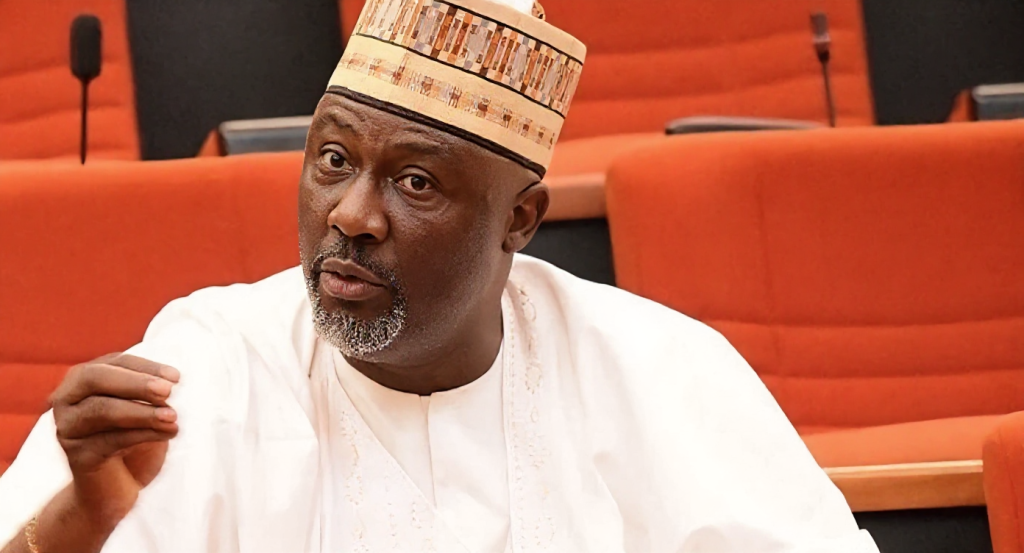
Former lawmaker, Dino Melaye Esq, has raised concerns over the Senate’s reported rejection of the electronic transmission of election results.
The move, according to Melaye, is a clear endorsement of election rigging and an indication of a sinister plan to rig the 2027 elections.
In a statement on Friday, the former lawmaker criticized the Senate’s decision, stating that it undermines the credibility of the electoral process.
The African Democratic Congress, ADC chieftain, also stated that the move opens the door for electoral manipulation and fraud.
He further warned that the rejection of electronic transmission of results is a step backwards for democracy in Nigeria.
Melaye called on lawmakers and citizens to stand up against “this blatant attempt to undermine the will of the people and ensure that future elections are free, fair, and transparent”.
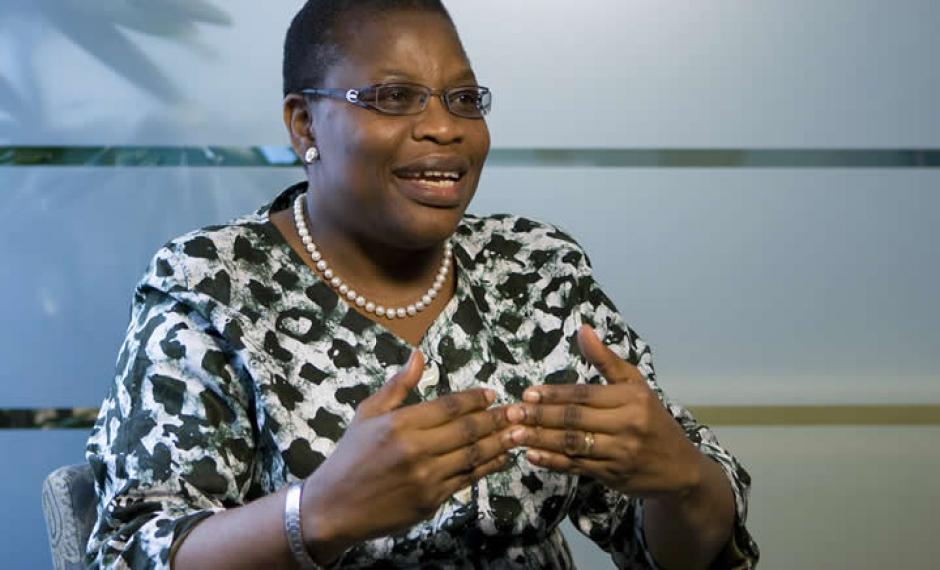
Former Minister of Education, Oby Ezekwesili, has said Nigerians have every reason to be mad at the Senate over the ongoing debate on e-transmission of election results.
Ezekwesili made this known on Friday when she featured in an interview on Arise Television’s ‘Morning Show’ monitored by DAILY POST.
DAILY POST reports that the Senate on Wednesday turned down a proposed change to Clause 60, Subsection 3, of the Electoral Amendment Bill that aimed to compel the electronic transmission of election results.
Reacting to the matter, Ezekwesili said, “The fundamental issue with the review of the Electoral Act is that the Senate retained the INEC 2022 Act, Section 60 Sub 5.
“This section became infamous for the loophole it provided INEC, causing Nigerians to lose trust. Since the law established that it wasn’t mandatory for INEC to transmit electoral results in real-time, there wasn’t much anyone could say.
“Citizens embraced the opportunity to reform the INEC Act, aiming to address ambiguity and discretionary opportunities for INEC. Yet, the Senate handled it with a “let sleeping dogs lie” approach. The citizens have every reason to be as outraged as they currently are.”
Politics
Electoral act: Senate’s action confirms Nigeria ‘fantastically corrupt’, ‘disgraced’ – Peter Obi
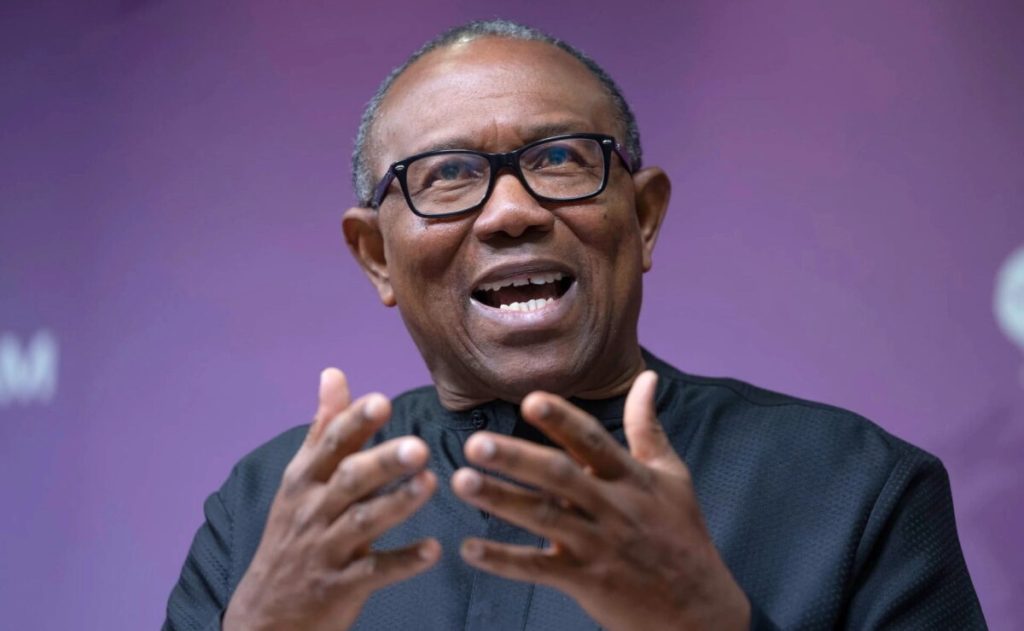
Former Labour Party presidential candidate, Peter Obi, has condemned the Senate’s refusal to make electronic transmission of election results mandatory, saying the move further exposes Nigeria as a fantastically corrupt and disgraced country.
Obi expressed his views in a statement shared on X on Friday, where he accused lawmakers of deliberately weakening Nigeria’s democratic process ahead of the 2027 general elections.
He explained that his reaction came after a brief pause to mourn victims of a deadly tragedy in Kwara State, where over 150 people reportedly lost their lives.
“Let us first pray for the souls of the innocent Nigerians lost in Kwara. That painful incident is why I delayed responding to the shameful development surrounding our electoral system,” he wrote.
Describing the Senate’s decision as intentional and dangerous, Obi said rejecting mandatory electronic transmission was not a simple oversight but a calculated attempt to block transparency.
“The Senate’s open rejection of electronic transmission of results is an unforgivable act of electoral manipulation ahead of 2027,” he said.
According to him, the action strikes at the heart of democracy and raises serious questions about the true purpose of governance in Nigeria.
“This failure to pass a clear safeguard is a direct attack on our democracy. By refusing these transparency measures, the foundation of credible elections is being destroyed. One must ask whether government exists to ensure justice and order or to deliberately create chaos for the benefit of a few.”
The former Anambra State governor linked the post-election controversies of the 2023 general elections to the failure to fully deploy electronic transmission of results, insisting that Nigerians were misled with claims of technical failures.
“
The confusion, disputes and manipulation that followed the 2023 elections were largely due to the refusal to fully implement electronic transmission,” he said.
He added that the so-called system glitch never truly existed.
Obi compared Nigeria’s electoral process with those of other African countries that have embraced technology to improve credibility, lamenting that Nigeria continues to fall behind.
“Many African nations now use electronic transmission to strengthen their democracy. Yet Nigeria, which calls itself the giant of Africa, is moving backwards and dragging the continent along.”
He criticised Nigeria’s leadership class, saying the country’s problems persist not because of a lack of ideas but because of deliberate resistance to meaningful reform.
“We keep organising conferences and writing policy papers about Nigeria’s challenges. But the truth is that the leaders and elite are the real problem. Our refusal to change is pushing the nation backwards into a primitive system of governance.”
Warning of the dangers ahead, Obi said rejecting electronic transmission creates room for confusion and disorder that only serves the interests of a small group.
He also recalled past remarks by foreign leaders who described Nigeria as corrupt, arguing that actions like this continue to justify those statements.
“When a former UK Prime Minister described Nigeria as ‘fantastically corrupt,’ we were offended. When former US President Donald Trump called us a ‘disgraced nation,’ we were angry. But our continued resistance to transparency keeps proving them right.”
Obi warned that Nigerians should not accept a repeat of the electoral irregularities witnessed in 2023.
“Let there be no mistake. The criminality seen in 2023 must not be tolerated in 2027.”
He urged citizens to be ready to defend democracy through lawful and decisive means, while also calling on the international community to closely monitor developments in Nigeria’s electoral process.
“The international community must pay attention to the groundwork being laid for future electoral manipulation, which threatens our democracy and development,” Obi stated.
He concluded by expressing hope that change is still possible if Nigerians take collective responsibility.
“A new Nigeria is possible but only if we all rise and fight for it.”

Police bust syndicate behind nude photo blackmail in Lagos

Man in shock after lady he lodged with in a hotel in Abuja flees with his car and other valuables

US Reacts As De@th Toll In Kwara Terror Attacks Hits 200

-
Business1 year ago
US court acquits Air Peace boss, slams Mayfield $4000 fine
-

 Trending1 year ago
NYA demands release of ‘abducted’ Imo chairman, preaches good governance
-

 Politics1 year ago
Mexico’s new president causes concern just weeks before the US elections
-

 Politics1 year ago
Putin invites 20 world leaders
-

 Politics1 year ago
Russia bans imports of agro-products from Kazakhstan after refusal to join BRICS
-
Entertainment1 year ago
Bobrisky falls ill in police custody, rushed to hospital
-
Entertainment1 year ago
Bobrisky transferred from Immigration to FCID, spends night behind bars
-
Education1 year ago
GOVERNOR FUBARA APPOINTS COUNCIL MEMBERS FOR KEN SARO-WIWA POLYTECHNIC BORI