
Business
Electricity, telecom, Multichoice tariff hike: Nigerians knock NLC

As Nigerians continue to grapple with several policies considered to be unfavourable, the Nigeria Labour Congress, NLC, has come under scrutiny.
Ekwutosblog reports that NLC which was hitherto known for its formidable force, holding the government and private sector accountable, recently lost its influence due to a series of ’empty’ threats that have over time yielded little or no results.
To some Nigerians, the NLC that commanded a huge respect in the days of Pa Michael Imoudu, Alhaji Hassan Sunmonu, Alhaji Ali Ciroma and Adams Oshiomhole is dead.
Prior to the reign of Joe Ajaero as NLC National President, the congress was known for its powerful advocate for the middle class, ensuring that policymakers did not trample on the rights and welfare of citizens, particularly the Nigerian workers.
However, the name NLC no longer commands respect.
It has been observed that NLC, especially in the last few years, lost its assertiveness and relevance in shaping national policies, giving room for government at all levels to make unilateral decisions on important national issues including workers’ welfare without a formidable response from the Congress.
Recently, especially since the current administration kicked off in May 2023, the once-powerful NLC has been accused of entangling in political compromises, making workers unnecessarily vulnerable.
Fuel subsidy removal
According to many Nigerians, NLC weakness became obvious shortly after President Bola Tinubu scrapped the fuel subsidy on May 29, 2023.
Recall that the Nigerian main labour union had declared a nationwide strike aimed at forcing the government to reverse the decision on fuel subsidy removal.
A few days after Tinubu announced the abolition of the subsidy, which skyrocketed the price of fuel, leading to unbearable cost of living, NLC’s national executive council met in Abuja where they declared an indefinite nationwide strike.
With Less than 24 hours to the proposed nationwide strike, the Labour movement suspended its plans to down tools.
According to the labour leaders, the decision was taken after an expanded meeting with the Federal Government, where the parties agreed to continue to dialogue on the implementation of demands made by NLC and the Trade Union Congress, TUC.
The demands were for the government to come up with policies including reviving the CNG conversion program to cushion the effects of the subsidy removal.
Ekwutosblog reports that the hardship birthed by the subsidy removal nearly two years ago has, however, increased tremendously without any profitable move by the NLC.
The Compressed Natural Gas, CNG buses promised by the government to aid movement within the cities are yet to get to the majority of Nigerian workers.
Electricity tariff hike
In July 2024, the electricity Distribution companies, DisCos, announced an upward review in electricity tariff, a move that stirred anger across the country.
Following the announcement, the NLC President, Joe Ajaero in a statement titled, ‘Stop killing the people and the economy’ said the hike for “the so-called band A” customers represents the height of impunity and arrogance.
Ajaero noted that the 250 per cent hike drew the ire of the citizenry and the rage of organised labour.
After a one-day protest, the NLC backed down with Ajaero claiming that the action was paused due to a firm assurance from relevant quarters, including the National Assembly, that the matter would be dealt with quietly.
DAILY POST reports that the tariff was, however, implemented amid grave silence from the labour union.
Telecom tariff hike
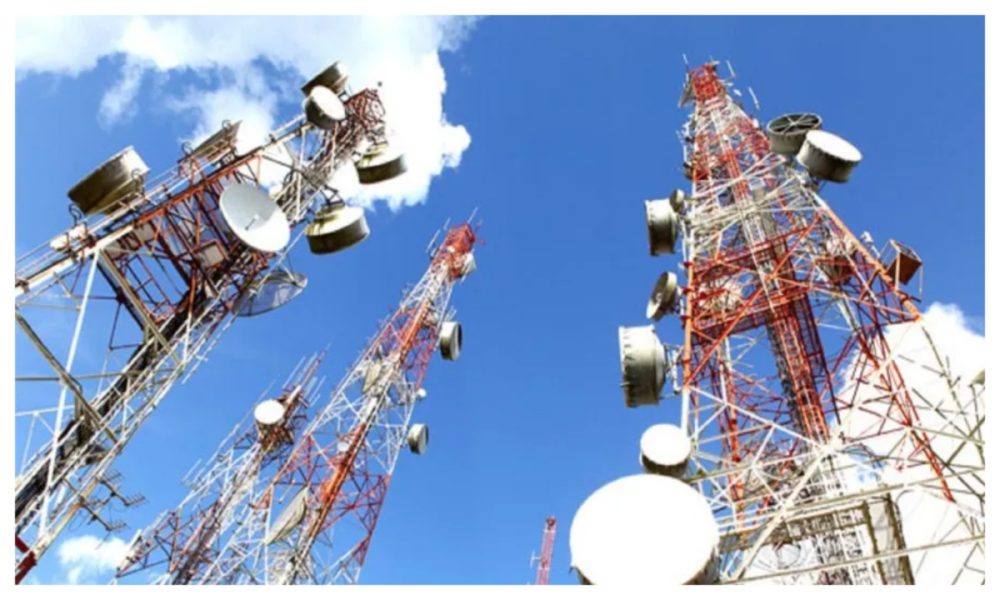
NLC’s diminishing influence was further noted in January this year when the Nigerian Communications Commission, NCC, approved a 50% increase in telecom tariffs for operators in Nigeria.
NLC in its usual statements, outrightly rejected the hike and without hesitation, threatened a showdown with the telecommunication sector.
The labour union vowed to shut down the country’s economy via protest if the federal government fails to rescind the decision.
However, after a meeting with government representatives at the Office of the Secretary to the Government of the Federation on February 4, 2025, the union called off the planned rally.
Multichoice: DStv, Gotv subscription hike
When Multichoice Nigeria increased prices of its subscription fees on DStv and GOtv recently, NLC vowed that the hike would not stand, creating an illusion of a brewing showdown.
But despite all the song and dance, the popular cable television service provider in Nigeria proceeded with its unchallenged decision, exposing the NLC’s inability to back its words with decisive action.
A few days ago, the company announced another hike in subscription fees but the NLC has kept mum on the matter.
Some Nigerians, who spoke with DAILY POST, expressed disappointment at the Congress.
An On-Air Personality, Joseph Ojobo, told our correspondent in Abuja that the era of strong labour unions had ended in Nigeria.
According to him, “There is nothing like a labour union in Nigeria right now. They are all about their selfish interests.
“When NLC was NLC, all this nonsense won’t happen. I remember in 2012 when former president Goodluck Jonathan removed the fuel subsidy, labour shut down the whole country and I was stuck in the village after Christmas.
“These days, the only thing NLC does is issuing statements here and there. No action, no strike, no protest. See the level of hardship Nigerians are going through yet everywhere is quiet as if nothing is happening.
“Anybody can come up anytime and increase the price of whatever service they provide and Nigerian workers have no one to speak on their behalf.”
Similarly, a socio-political activist, Adebanjo Idowu Mathew called for the sack of NLC leadership to pave the way for another set of labour leaders.
He said, “The truth is that even the government doesn’t take them seriously again since they became involved in politics. Imagine a labour union claiming ownership of a political party. They publicly declared support for a presidential candidate in the 2023 general elections.
“So the ruling party sees them as opposition. To redeem the name, the current leadership needs to go let’s have fresh people, who understand the struggle better and not those interested in themselves alone.
“The first mistake they made was endorsing a presidential candidate. Even if the candidate had won, there would still be problems because, how do you hold a government you brought into power accountable? It won’t work”.
Also, a civil servant, Mrs Anthonia Adikwu accused the leadership of the union of living large at the “expense of those they are meant to protect”.
“They travel abroad for checkups, driving exotic cars and living large at the expense of those they are meant to protect.
“They are not different from those at the helm of power. NLC leadership and government officials are all fighting for themselves. Nobody cares about the masses,” she stated.
Meanwhile, NLC’s Head of Information, Benson Upah, could not be reached for comment as of the time of filing the report.
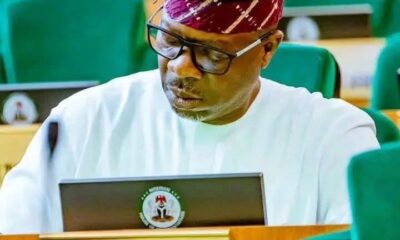






The Trade Union of Nigeria, TUC, has raised the alarm that the price of Premium Motor Spirit aka Petrol may climb to about N2,000 per litre if urgent measures are not taken to cushion the impact of rising global crude prices and the depreciating naira.
Speaking to newsmen on Thursday, April 9, the president of the TUC, Festus Osifo, called on the Federal Government to immediately deploy 60 percent of excess crude oil revenue above the 2026 budget benchmark to subsidise crude feedstock supplies to the Dangote Refinery and other modular refineries, a move it says will slash pump prices of petrol, diesel, and jet fuel within two weeks
“Today, comrades, we are seeing that the cost of petrol is edging towards N2,000 per litre depending on the part of the country that you are. Nigerian workers are already passing through excruciating pain as we speak.
The same way it is affecting transportation, it is also affecting manufacturing. The cost of diesel has also gone northward, meaning that the cost of production has increased. When production costs rise, the final price of goods on the shelves will also skyrocket.
If this continues unchecked, the inflation that we are currently celebrating as going downwards will reverse and start moving up again,” he stated.
Osifo outlined the proposal as an urgent intervention to cushion Nigerian workers from excruciating pain caused by petrol prices edging towards ₦2,000 per litre in some parts of the country
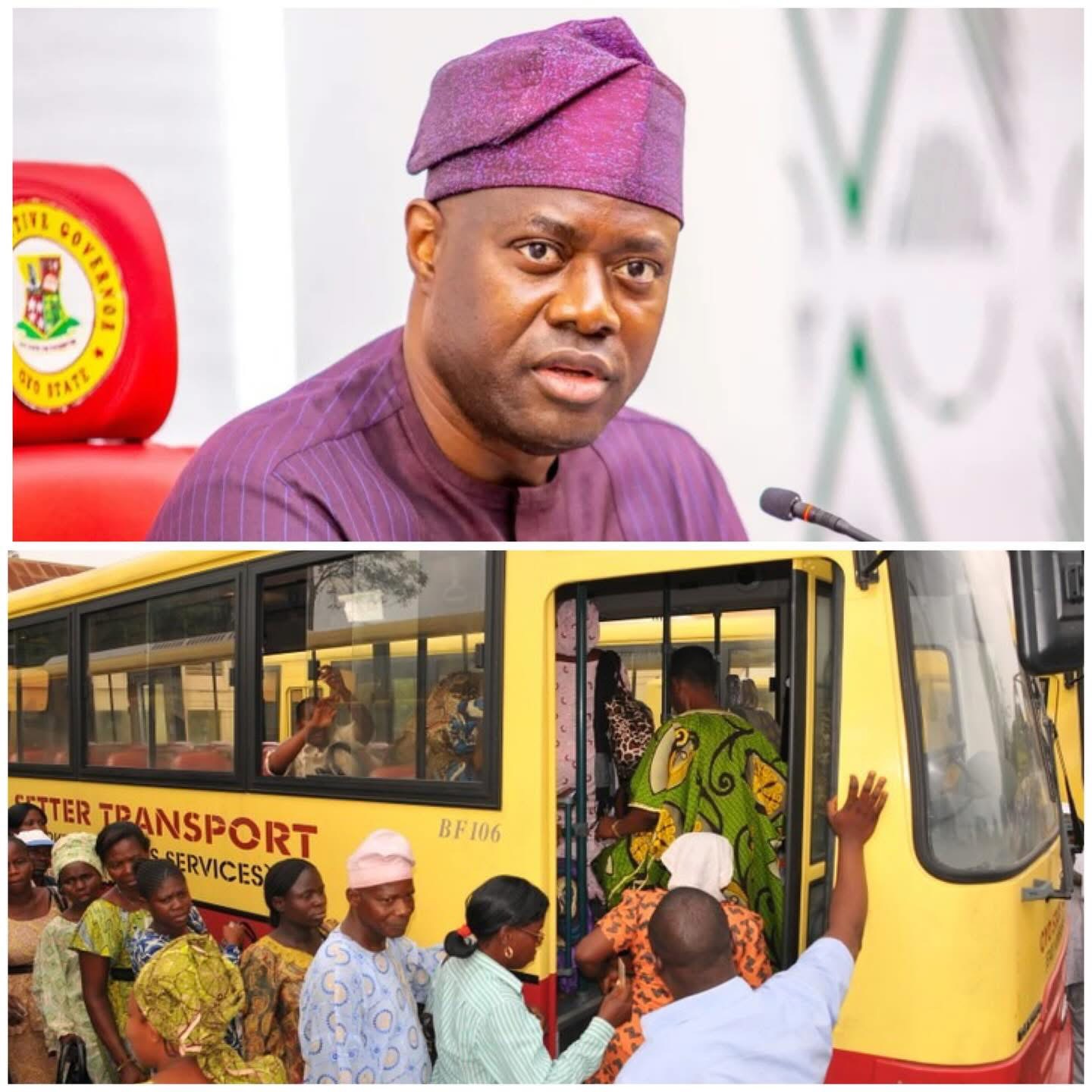
The governor of Oyo state, Seyi Makinde, has approved a N10,000 transportation allowance as a palliative for the state workforce to cushion the effects of the increase in the pump price of Premium Motor Spirit, otherwise known as petrol.
The Chairman of the Nigeria Labour Congress (NLC), Oyo State chapter, Kayode Martins, in a statement released on Monday, March 23, disclosed that the governor has granted the request of the union on the issue of transportation allowance.
The statement read
“Following the intervention and formal request made by the State Council of the Nigeria Labour Congress (NLC) earlier this morning, the state government has approved a N10,000 transportation allowance for all workers in the state.
The newly approved allowance is set to take effect from April 2026, providing much-needed relief to workers grappling with rising transportation costs amid current economic challenges.
This development comes as a direct response to sustained advocacy by the state NLC, aimed at cushioning the impact of increased living expenses on the workforce.
Further details on implementation are expected to be communicated by the relevant government authorities in due course.”
The Central Bank of Nigeria (CBN), has declared that banks and financial institutions must establish and maintain a temporary watch-list for Bank Verification Numbers (BVN) implicated in suspected fraudulent transactions.
According to the CBN in a circular dated March 12, 2026 and signed by its Director of Payments System Policy Department, Musa I. Jimoh, the apex bank said such a suspected BVN may remain on the temporary watchlist for a maximum period of twenty-four (24) hours during which the owner would be contacted to make clarifications.
The circular explained that the move is part of several new measures under a revised regulatory framework aimed at enhancing financial system stability.
“A BVN may remain on this temporary Watchlist for a maximum period of twenty-four (24) hours, during this period, the BVN owner shall be contacted to provide clarification regarding the identified transaction(s),” the circular stated.
The circular also sets an age requirement for BVN enrolment, restricting registration to individuals who have attained eighteen (18) years and above.
The CBN also added that amendments to phone numbers linked to a BVN shall be allowed only once.
“Amendments to phone numbers linked to a BVN shall be allowed only once,” the circular noted.
The apex bank stated that access to BVN databases will remain tightly controlled.
“Access to the BVN databases shall be exclusively granted to Central Bank of Nigeria (CBN) licensed financial institutions.
“Notwithstanding this provision, the Central Bank of Nigeria (the Bank) reserves the right to approve access to the BVN databases in extenuating circumstances and in accordance with the provisions of extant laws,” the circular said.
Financial institutions are expected to comply with the new requirements, and customers may be contacted by their banks if their BVNs are temporarily flagged during the new fraud monitoring process.
The new policy, as stated by the CBN, takes effect from May 1, 2026.

2027: More Than 50 Lawmakers Lose APC Reps Tickets in Major Primary Election

Bandits behind Ogbomoso school abduction will face full wrath of the law- President Tinubu

PDP to screen Goodluck Jonathan on Tuesday as its sole Presidential aspirant For 2027 race

-
Business2 years ago
US court acquits Air Peace boss, slams Mayfield $4000 fine
-

 Trending2 years ago
NYA demands release of ‘abducted’ Imo chairman, preaches good governance
-

 Politics2 years ago
Mexico’s new president causes concern just weeks before the US elections
-

 Politics2 years ago
Putin invites 20 world leaders
-

 Politics2 years ago
Russia bans imports of agro-products from Kazakhstan after refusal to join BRICS
-
Entertainment2 years ago
Bobrisky falls ill in police custody, rushed to hospital
-
Entertainment2 years ago
Bobrisky transferred from Immigration to FCID, spends night behind bars
-
Education2 years ago
GOVERNOR FUBARA APPOINTS COUNCIL MEMBERS FOR KEN SARO-WIWA POLYTECHNIC BORI