
News
EU Parliament president: extending border controls only possible with ‘balanced, comprehensive approach to migration’

In this interview — conducted before Germany’s decision to re-introduce border checks — EU Parliament President Roberta Metsola spoke to DW about disinformation, migration and the right-wing surge in the EU election.

Maltese conservative Roberta Metsola was reelected president of the European Parliament in July 2024, only the second person and the first woman to serve in the role for two terms
© Philipp von Ditfurth/dpa/picture alliance
DW: Right before the EU elections in June, the then European Parliament media chief Jaume Duch told me that an information war is being waged against the EU. You saw disinformation on your son’s phone. What did you feel as a mother and a politician?
Roberta Metsola: First concern, then resolve.
I was concerned. “Will this disinformation influence his choices? Had the school taught him to distinguish fact from fiction?”I thought: “If this is happening to a boy whose mother is a candidate in the elections, what influence would it have on a person who is very far away from politics?”
Then came the resolve: Fix it. Fix it with strong legislation that will enable us to act strongly, politically against those who are essentially trying to undermine the EU’s political system.
At the Campus Poland of the Future conference in Olsztyn in late August, you complained that the Member States are reluctant to implement even the best legislative answers to European problems.
Metsola: Absolutely.

Metsola says that strong legislation is needed to allow the EU to act against ‘those who are essentially trying to undermine the EU’s political system’
© Jonathan Raa/NurPhoto/picture alliance
What are the issues you are most concerned about?
Metsola: Corporate social responsibility, gender rights — we need more women in various boards — whether our laws that tackle violence against women across the EU are strong enough to protect them and, considering where I come from, migration.
You said in Olsztyn that behind every migrant story is a human being. Yet at the same time, the EU is adopting stricter migration rules — and Member States are doing the same on their own — to make the Schengen zone endure. How can a balance be found between the EU as a human rights beacon and the realpolitik of “fortress Europe?”
Metsola: It’s not an easy question. It is exactly because of our inability as the EU to find that balance that our migration policy has been failing for so long.
We have so many different national contexts — land borders, sea borders. I was speaking also from the perspective of a citizen of Malta, an island migrants are trying to reach.
I’m not a politician who would say “let’s make sure that Europe does not open its door to anyone.” I have met too many people who had no choice but to place their child on a boat, because it was safer than on land.
In the past five years we have seen the temporary reintroduction of internal border controls in many EU countries.
Metsola: The Schengen freedom of movement is sacrosanct. We fought so hard to get it. Extending internal border controls can only be done with a balanced and comprehensive approach to migration — not one that would create a silo.

Roberta Metsola comes from EU Member State Malta, an island that many migrants attempt to reach by sea
© Darrin Zammit Lupi/REUTERS
For many years we would say that the EU focuses on the countries that border it. We held summits with them, telling them we’ll invest in them on the condition that they take back their migrants. I think it will require a revolution in our international relations to develop a more coherent migration policy.
How do we find the middle road?
Metsola: I believe that the Migration Pact we adopted in March can start to work on that middle road. On the one hand, solidarity between the Member States; on the other, strong external border protection — obviously different on land and on sea, the return of those who are not eligible for protection, but not isolating our migration policy from our neighborhood and development policy.
But again, we can have the best laws on paper, but if they are not implemented, then they will never work, and citizens will feel cheated.
Don’t you feel a bit powerless as the president of the institution that actually votes on these laws? After all, it is up to national governments to implement them. Don’t you wish you had some sort of figurative baseball bat to force the leaders of the Member States to implement these laws?
Metsola: Well, I see that as a little bit of my role. I have a very good relationship with the leaders of the Member States, and I present them with the fact that we are now directly elected.
The interesting situation is that all EU prime ministers are party leaders, and during the EU election campaign, they were committing, among other things, to a better implementation of EU acquis [the legislative application all EU candidate countries need to fulfill before being considered for accession – ed.].
I will hold them to it. Whenever I go to the European Council, whenever I meet any of the leaders, either individually or with my colleagues, it is my job to do it.
In early 2024, Time magazine wrote that “Metsola wants the parliament to have the power its name implies and generate laws itself.” In the light of war, migration pressure, climate change, struggling industries and the Green Deal, do you see any chance for the European Parliament to actually carve out a bit of power for itself?
Metsola: I would say that we’ve already done it. For example, the Media Freedom Act would not have been possible without a non-legislative report from the parliament.

Roberta Metsola says the European Parliament will hold EU Commission President Ursula von der Leyen (pictured here) and her commissioners to account © Dursun Aydemir/Anadolu/picture alliance
Also, look at the power the parliament wields in terms of budgetary negotiations, for example, making sure that the money goes to Ukraine, or the framework programs for EU candidate countries, the solidarity funds, Erasmus, Horizon… Without the parliament, the amounts of EU money for these programs would never have been so visible, so effective.
Now, from a legislative perspective, where does the parliament not yet have competence? Foreign affairs.
The parliamentary hearings for commissioners-designate will begin soon. Isn’t that the first and last moment when they say and do what the EP wants, and once they’re voted in, then off they go?
Metsola: I don’t think this chamber will allow that to happen. This is the first time I’m going through this process as president of the parliament and I want all commissioners to be absolutely willing to face — and respond to — tough questions from the MEPs according to their portfolio.
We expect commitments from the Commission President and her designated commissioners, and we will hold them to account.
At the press conference with Ursula von der Leyen after the vote on her second term, you said that you saw, on the Commission’s side, the acknowledgement of a stronger parliament and the will to cooperate with it. After the last five years, are you really optimistic that the institutions will cooperate?
Metsola: If the last five years showed us anything, it is that even in areas where there once was no cooperation, there was cooperation when we had no choice. I refer specifically to the Russian invasion of Ukraine and the immediate responses that had to be taken. We saw great cooperation on the political and the legislative level.
Would I have wished for more? Absolutely. Would I have expected some commissioners to be more respectful towards the parliament? Absolutely. Will I insist that the next five years be better? Always.

Populist, far-right parties such as Alternative for Germany (AfD) polled strongly across Europe in June’s EU elections
© Jörg Carstensen/dpa/picture alliance
We now have an incumbent president of the European Commission, a number of incumbent commissioners, but also many new ones. We will hold them all to account, not only at the beginning and at the end of their terms.
We’ve seen the parliament taking other EU institutions to court when this sincere respect and cooperation wasn’t upheld. And I’m the one who signs the decisions to do it — without hesitation — because I was given the mandate to do so. I will not stop.
Two years ago you had to assist the police in an operation that uncovered the so-called “Qatargate” corruption scandal. Senior MEPs were involved. The press accused a former Latvian MEP of spying for Russia. That didn’t help the image of the parliament. Are you sure political corruption will never happen again?
Metsola: It goes without saying that I hope such things will not happen again. I understand that for many parts of the world, near and far, the European Parliament, its members and its very existence are a threat.
And as someone who has fought corruption all my life — not only in my own country but in others, too — if I have a real problem on my hands, I will not make an excuse to do nothing simply because it might happen again.
Back then, my colleagues and I immediately embarked on a quest for a series of reforms that were very difficult to pass. We looked for majorities. Some new regulations went as far as I wished them to, some didn’t.
But I am glad that the election showed that people recognized our efforts. Does that mean it will never happen again? I cannot say that. But at least we have inbuilt firewalls and alarm bells to hear the signals earlier.
The outcome of the EU elections means that for the next five years, you will be dealing with a huge representation of far-right parties. Do you think such a divided parliament will be able to pass the right legislation and then ensure its implementation in the Member States?
Metsola: I consider myself part of the constructive pro-European majority that wants to build rather than destroy. And I hope that this majority, which elected me in 2022 and reelected me in 2024, will stick together to adopt tough legislation, to hold other institutions to account, to self-reform and to be ready to adapt to challenges.
So, I look forward to a parliament where majorities are formed, rather than a divided one. Will it be harder? Yes. But I am not going to question the voters’ choice. I consider myself a president of every member of the EP, my job is to make sure decisions are made here. I am confident that we can find majorities, although the MEPs are responsible for their own actions.
This interview has been edited and condensed for length.
Edited by: Aingeal Flanagan
Author: Michal Gostkiewicz



News
𝗛𝗢𝗡. 𝗧𝗢𝗦𝗞𝗔 𝗖𝗢𝗡𝗗𝗘𝗠𝗡𝗦 𝗧𝗛𝗘 𝗞𝗜𝗟𝗟𝗜𝗡𝗚𝗦, 𝗞𝗜𝗗𝗡𝗔𝗣𝗣𝗜𝗡𝗚𝗦 𝗔𝗡𝗗 𝗥𝗔𝗣𝗘𝗦 𝗜𝗡 𝗜𝗛𝗜𝗔𝗚𝗪𝗔, 𝗢𝗕𝗜𝗕𝗜𝗘𝗭𝗘𝗡𝗔, 𝗘𝗭𝗜𝗢𝗕𝗢𝗗𝗢, 𝗘𝗠𝗘𝗔𝗕𝗜𝗔𝗠, 𝗢𝗞𝗢𝗟𝗢𝗖𝗛𝗜, 𝗨𝗠𝗨𝗚𝗨𝗠𝗔, 𝗔𝗩𝗨 𝗔𝗡𝗗 𝗢𝗧𝗛𝗘𝗥 𝗖𝗢𝗠𝗠𝗨𝗡𝗜𝗧𝗜𝗘𝗦: 𝗖𝗔𝗟𝗟𝗦 𝗙𝗢𝗥 𝗜𝗠𝗠𝗘𝗗𝗜𝗔𝗧𝗘 𝗖𝗘𝗦𝗦𝗔𝗧𝗜𝗢𝗡
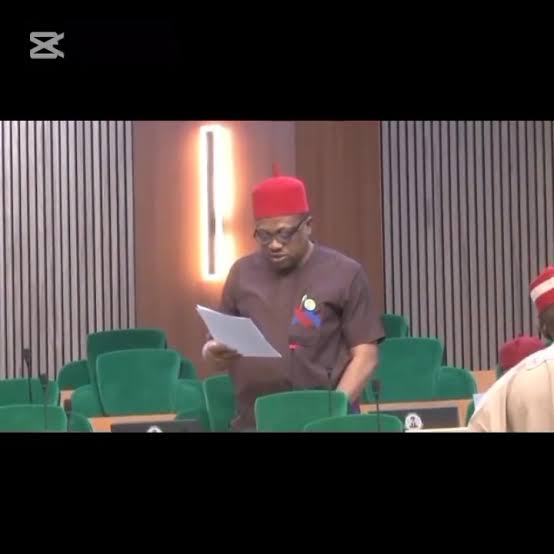
Hon. Sir Tochukwu Okere(TOSKA), Member Representing Owerri Federal Constituency, has strongly condemned the incessant gruesome killings, kidnappings, rapes and violent attacks carried out by unscrupulous and criminal elements terrorizing communities within Owerri Federal Constituency, especially in Ihiagwa, Obibiezena, Eziobodo, Emeabiam, Okolochi, Umuguma, Avu and other neighbouring communities.
The recent killings of vigilante operatives and innocent constituents at Umuguma and Ihiagwa call for urgent and deterrent response by our security agencies.
In a passionate motion raised before the Federal House of Representatives, Hon. Okere called on the Federal Government of Nigeria and relevant security agencies to immediately deploy adequate security personnel to the affected communities and take decisive actions against the worsening insecurity threatening the lives and properties of his people.
According to him, the continuous attacks on harmless villagers, farmers, women and youths can no longer be tolerated under any guise.
“I urge the Federal Government of Nigeria to urgently look into this motion and act swiftly before more innocent lives are lost. Our people deserve to live and to live in peace without fear of being kidnapped, raped or butchered in their own communities,” Hon. TOSKA stressed.
The lawmaker further emphasized that the people of Owerri Federal Constituency will not fold their arms and watch criminals continue to unleash terror across Ihiagwa, Obibiezena, Eziobodo, Emebiam, Okolochi, Umuguma, Avu and other communities while families continue to mourn their loved ones daily.
This courageous move by Hon. Sir Tochukwu Okere has continued to attract commendations from constituents who describe his intervention as timely, bold and people-oriented.
Hon. Okere is the light and the voice of Owerri Federal Constituency.
May God keep him to keep standing for us and for our interest.
News
TENSIONS RISE IN OGUTA LGA AS CHAIRMAN MOVED AHEAD WITH Town UNION ELECTIONS AGAINST STATE DIRECTIVE
By Nwauwa Ikedi Justice
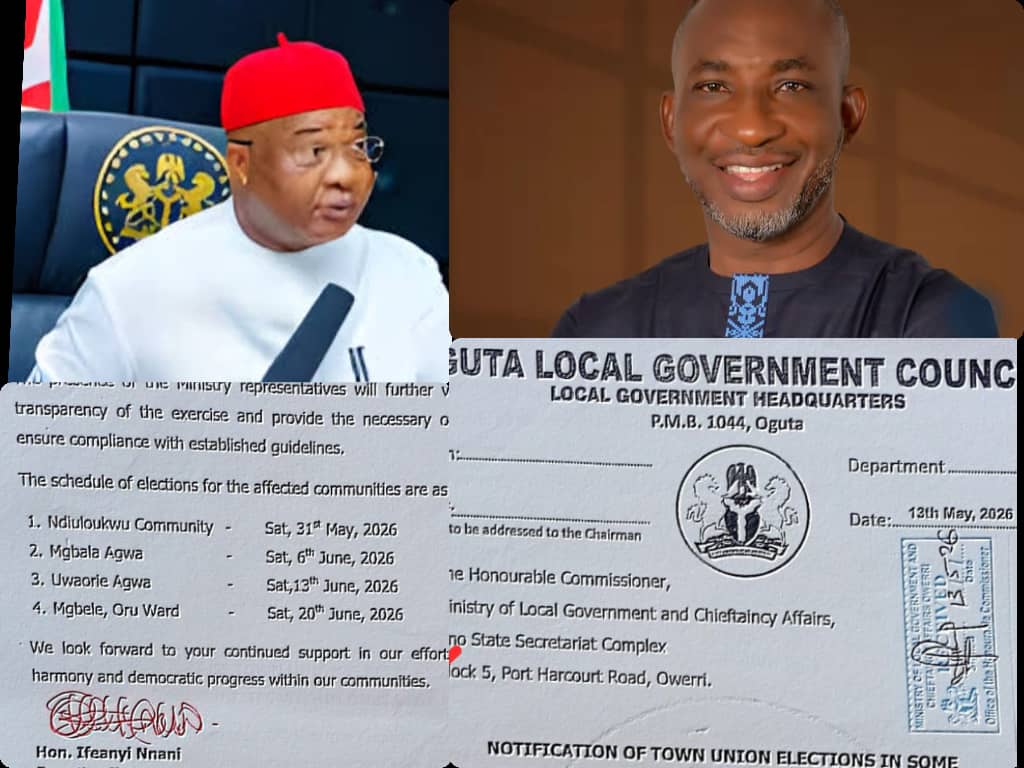
An emerging standoff between the Oguta Local Government Area executive and the Imo State Government has sparked concerns of unrest in several communities, after the council chairman proceeded with plans to conduct Town Union elections in defiance of a statewide directive from Governor Hope Uzodimma.
Last week, Hon. Ifeanyi Nnani, Executive Chairman of Oguta LGA, initiated steps to organize elections in five autonomous communities, an action seen by observers as a direct challenge to the governor’s order prohibiting local government chairmen from interfering in Town Union affairs.
The controversy stems from earlier complaints by traditional rulers across the state, who alleged that some local government chairmen had been imposing proxies as Town Union executives in their domains.
In response, Governor Uzodimma convened a statewide stakeholders’ meeting on January 17, 2026, at the Eze Imo Palace. Citing the Imo State Town Union Law No. 6 of 2003, as amended, the governor lifted the existing ban on Town Union elections and ruled that the process should be conducted in line with each community’s established customs. He also transferred supervisory responsibility from local government chairmen to the Ministry of Local Government and Chieftaincy Affairs, designating it the appropriate authority for such matters. The directive has since been credited with restoring relative peace across the state.
Despite this, sources indicate that Hon. Nnani’s administration has quietly begun conducting elections in villages within Oguta LGA without consulting the affected Town Unions or seeking clearance from the supervising ministry.
A letter dated last week and personally signed by the chairman to the Commissioner for Local Government and Chieftaincy Affairs has since come to light. Rather than seeking approval, the correspondence served as notification of the council’s intent to proceed with elections in Ndiuloukwu, Mgbala, Uworie, and Mgbele autonomous communities—a move that appears to contradict the state government’s directive.
The emergence of the letter has alarmed traditional rulers, with reports of growing unease in the affected communities. Community leaders have vowed to resist what they describe as an unlawful intrusion into their internal affairs.
Attempts to reach Hon. Nnani for comment have so far been unsuccessful, as calls to his office went unanswered.
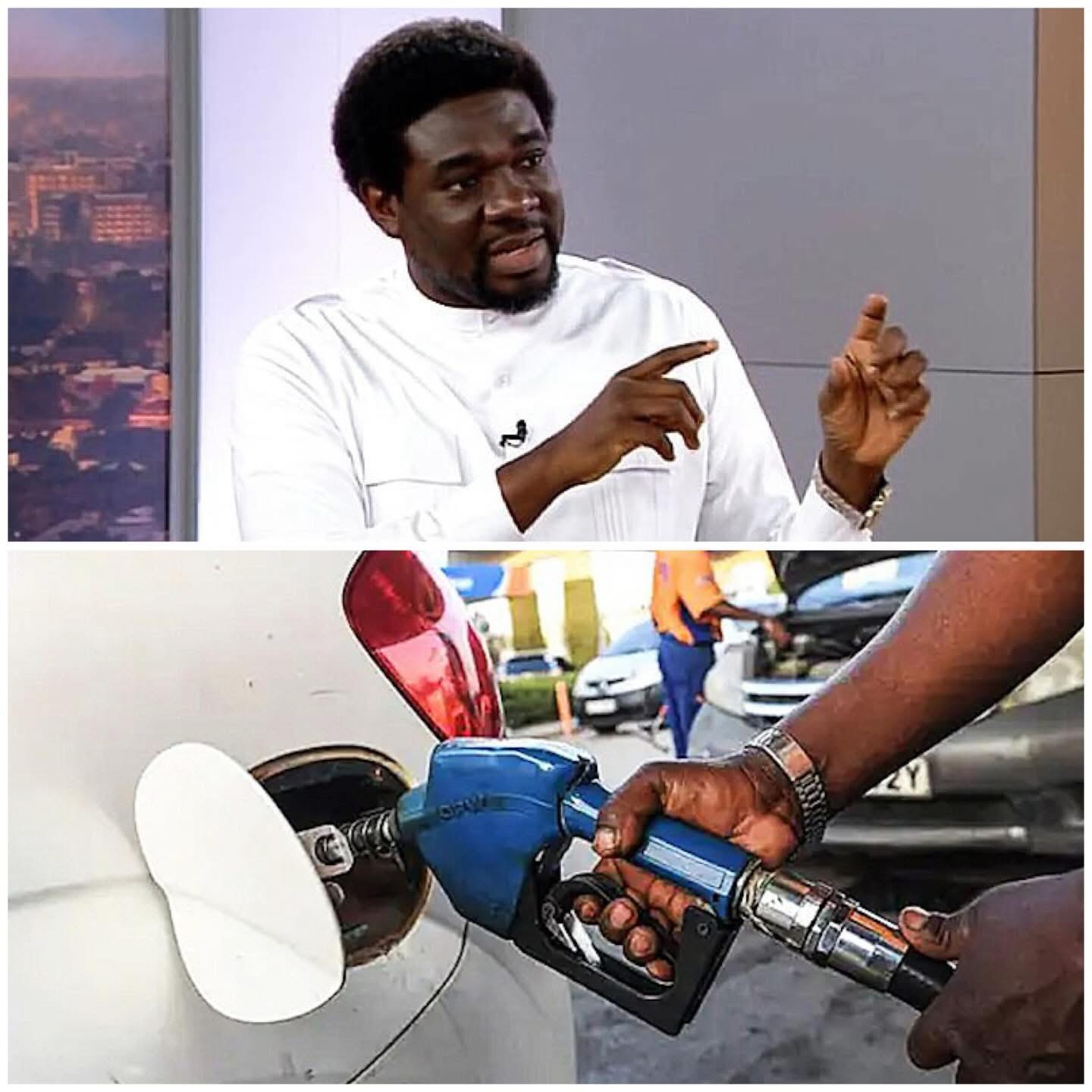
The Trade Union of Nigeria, TUC, has raised the alarm that the price of Premium Motor Spirit aka Petrol may climb to about N2,000 per litre if urgent measures are not taken to cushion the impact of rising global crude prices and the depreciating naira.
Speaking to newsmen on Thursday, April 9, the president of the TUC, Festus Osifo, called on the Federal Government to immediately deploy 60 percent of excess crude oil revenue above the 2026 budget benchmark to subsidise crude feedstock supplies to the Dangote Refinery and other modular refineries, a move it says will slash pump prices of petrol, diesel, and jet fuel within two weeks
“Today, comrades, we are seeing that the cost of petrol is edging towards N2,000 per litre depending on the part of the country that you are. Nigerian workers are already passing through excruciating pain as we speak.
The same way it is affecting transportation, it is also affecting manufacturing. The cost of diesel has also gone northward, meaning that the cost of production has increased. When production costs rise, the final price of goods on the shelves will also skyrocket.
If this continues unchecked, the inflation that we are currently celebrating as going downwards will reverse and start moving up again,” he stated.
Osifo outlined the proposal as an urgent intervention to cushion Nigerian workers from excruciating pain caused by petrol prices edging towards ₦2,000 per litre in some parts of the country

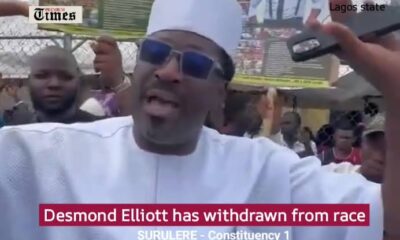
Desmond Elliot Withdraws from APC Lagos Assembly Primaries, Cites Intimidation

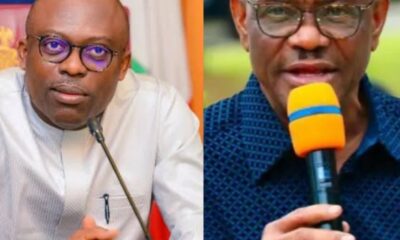
Political Shockwave in Rivers as Fubara Pulls Out of APC Governorship Race, Backs Party’s Candidate

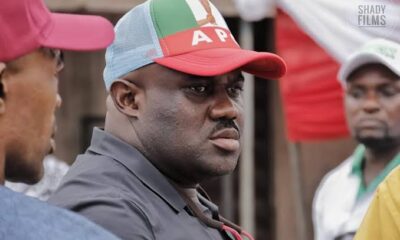
Ugochukwu Obodo wins Owerri Municipal APC ticket again as APC Elects 27 Imo Assembly Candidates After Successful Primaries

-
Business2 years ago
US court acquits Air Peace boss, slams Mayfield $4000 fine
-

 Trending2 years ago
NYA demands release of ‘abducted’ Imo chairman, preaches good governance
-

 Politics2 years ago
Mexico’s new president causes concern just weeks before the US elections
-

 Politics2 years ago
Putin invites 20 world leaders
-

 Politics2 years ago
Russia bans imports of agro-products from Kazakhstan after refusal to join BRICS
-
Entertainment2 years ago
Bobrisky falls ill in police custody, rushed to hospital
-
Entertainment2 years ago
Bobrisky transferred from Immigration to FCID, spends night behind bars
-
Education2 years ago
GOVERNOR FUBARA APPOINTS COUNCIL MEMBERS FOR KEN SARO-WIWA POLYTECHNIC BORI