
Politics
EXPLAINER: PROPOSED TAX REFORM BILLS NOT AGAINST THE NORTH; THEY WILL BENEFIT ALL STATES

STATE HOUSE PRESS STATEMENT
EXPLAINER: PROPOSED TAX REFORM BILLS NOT AGAINST THE NORTH; THEY WILL BENEFIT ALL STATES
Governors of 19 Northern States of Nigeria, under the platform of the Northern Governors’ Forum, at their meeting on Monday, October 28, 2024, expressed their opposition to the new derivation-based model for Value-Added Tax (VAT) distribution in the new tax reform bills before the National Assembly.
Chairman of the forum, Governor Muhammed Inuwa Yahaya of Gombe State, read the communiqué.
The Northern Governors’ Forum meeting also had traditional rulers from the region, led by the Sultan of Sokoto, His Eminence Muhammadu Sa’ad Abubakar III, in attendance.
While we commend the Governors and traditional rulers for supporting President Bola Tinubu over the success recorded in addressing the country’s security challenges, we consider it necessary to address the misunderstandings and misgivings around the tax reform already embarked upon by the administration.
President Tinubu and the Federal Executive Council recently endorsed new policy initiatives aimed at streamlining Nigeria’s tax administration processes, enhancing efficiency and eliminating redundancies across the nation’s tax operations.
These reforms emerged after an extensive review of existing tax laws. The National Assembly is considering four executive bills designed to transform and modernise Nigeria’s tax landscape.
First is the Nigeria Tax Bill, which aims to eliminate unintended multiple taxation and make Nigeria’s economy more competitive by simplifying tax obligations for businesses and individuals nationwide.
Second, the Nigeria Tax Administration Bill (NTAB) proposes new rules governing the administration of all taxes in the country. Its objective is to harmonise tax administrative processes across federal, state and local jurisdictions for ease of compliance for taxpayers in all parts of the country.
Third, the Nigeria Revenue Service (Establishment) Bill seeks to rename the Federal Inland Revenue Service (FIRS) as the Nigeria Revenue Service (NRS) to better reflect the mandate of the Service as the revenue agency for the entire federation, not just the Federal Government.
Fourth, the Joint Revenue Board Establishment Bill proposes the creation of a Joint Revenue Board to replace the Joint Tax Board, covering federal and all states’ tax authorities.
The fourth bill also suggests establishing the Office of Tax Ombudsman under the Joint Revenue Board, which would serve as a complaint resolution body for taxpayers.
It is instructive to note that these proposed laws will not increase the number of taxes currently in operation. Instead, they are designed to optimise and simplify existing tax frameworks.
The tax rates or percentages will remain the same under these reforms, as they focus on ensuring a more equitable distribution of tax obligations without adding to the burden on Nigerians.
The reforms will not lead to job losses. On the contrary, they are structured to stimulate new avenues for job creation by supporting a dynamic, growth-oriented economy.
Importantly, these laws will not absorb or eliminate the duties of any existing department, agency, or ministry. Instead, they aim to harmonise revenue collection and administration across the federation to ensure efficiency and cooperation.
At the moment, tax administration lacks coordination among federal, state, and local tax authorities, often resulting in overlapping responsibilities, confusion, and inefficiency. Without reform, this inefficiency will persist.
The proposed laws aim to coordinate efforts between different tiers of government, resulting in better tax resource management and greater clarity for taxpayers.
Under existing laws, taxes like Company Income Tax (CIT), Personal Income Tax (PIT), Capital Gains Tax (CGT), Petroleum Profits Tax (PPT), Tertiary Education Tax (TET), Value-Added Tax (VAT), and other taxing provisions in numerous laws are administered separately, with individual legislative frameworks.
The proposed reforms seek to consolidate these multiple taxes, integrating CIT, PIT, CGT, VAT, PPT, and excise duties into a unified structure to reduce administrative fragmentation.
On the proposed derivation-based VAT distribution model, which the Northern Governors oppose, it must be stressed that the new proposal, as enunciated in the Bill, is designed to create a fairer system.
The current model for distributing VAT is based on where the tax is remitted rather than where goods and services are supplied or consumed. The ongoing tax reform seeks to correct the inherent inequity in the current derivation model as a basis for distributing VAT revenue.
The new proposal before the National Assembly outlines a different form of derivation which considers the place of supply or consumption for relevant goods and services. This means that states in the Northern region that produce the food we eat should not lose out just because their products are VAT-exempt or consumed in other states.
These reforms are critical to improving the lives of Nigerians and were not put forward by President Tinubu to undermine any part of the country. There is no better time than now for the National Assembly to give due consideration to these bills that will overhaul our tax systems and create the revenue all the tiers of government require to fund the development our country and people urgently need.
Bayo Onanuga
Special Adviser to the President
(Information & Strategy)
October 31, 2024
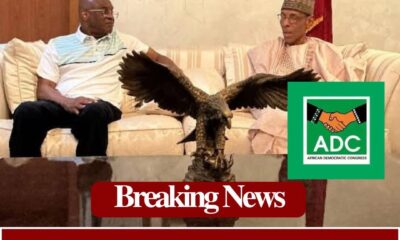



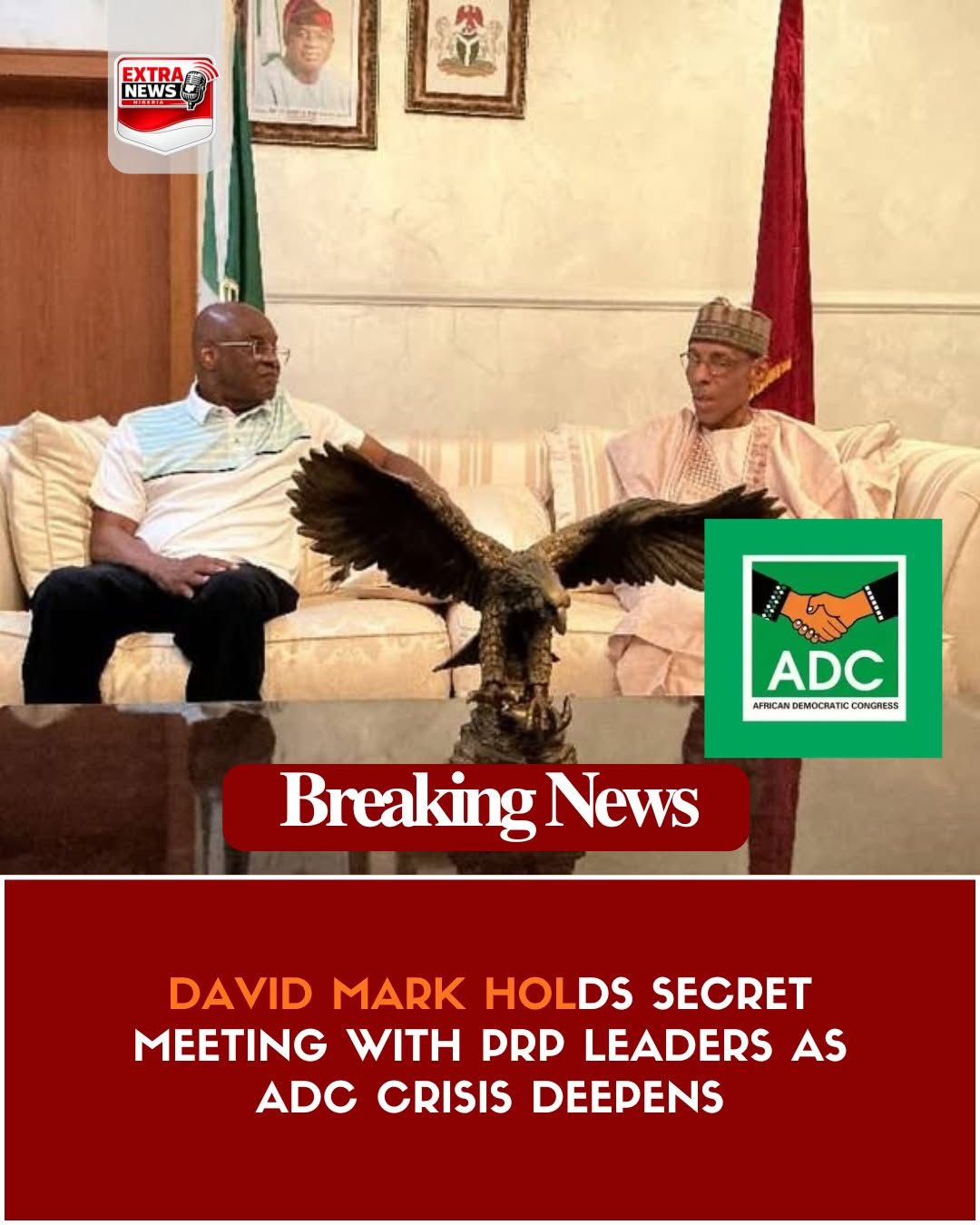
The embattled National Chairman of the African Democratic Congress, David Mark, on Friday held a closed-door meeting with leaders of the Peoples Redemption Party in Abuja. The private consultation is seen as a fresh round of political moves as the ADC continues to battle a lingering leadership crisis and growing internal divisions.
Top figures from both parties were said to be present at the meeting, including PRP National Chairman Hakeem Baba-Ahmed and senior ADC officials. The development is already drawing attention as opposition parties continue realignments ahead of the 2027 political season, with many watching closely for possible alliances and next steps in the party crisis.
Politics
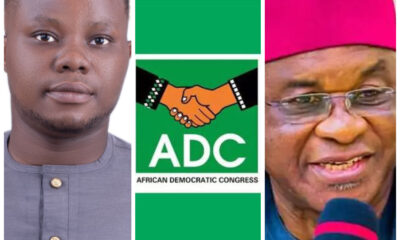
“ADC is a Holy Party, Cannot be used to Scam Nigerians Again” – Hon Success Opara tells David Mark
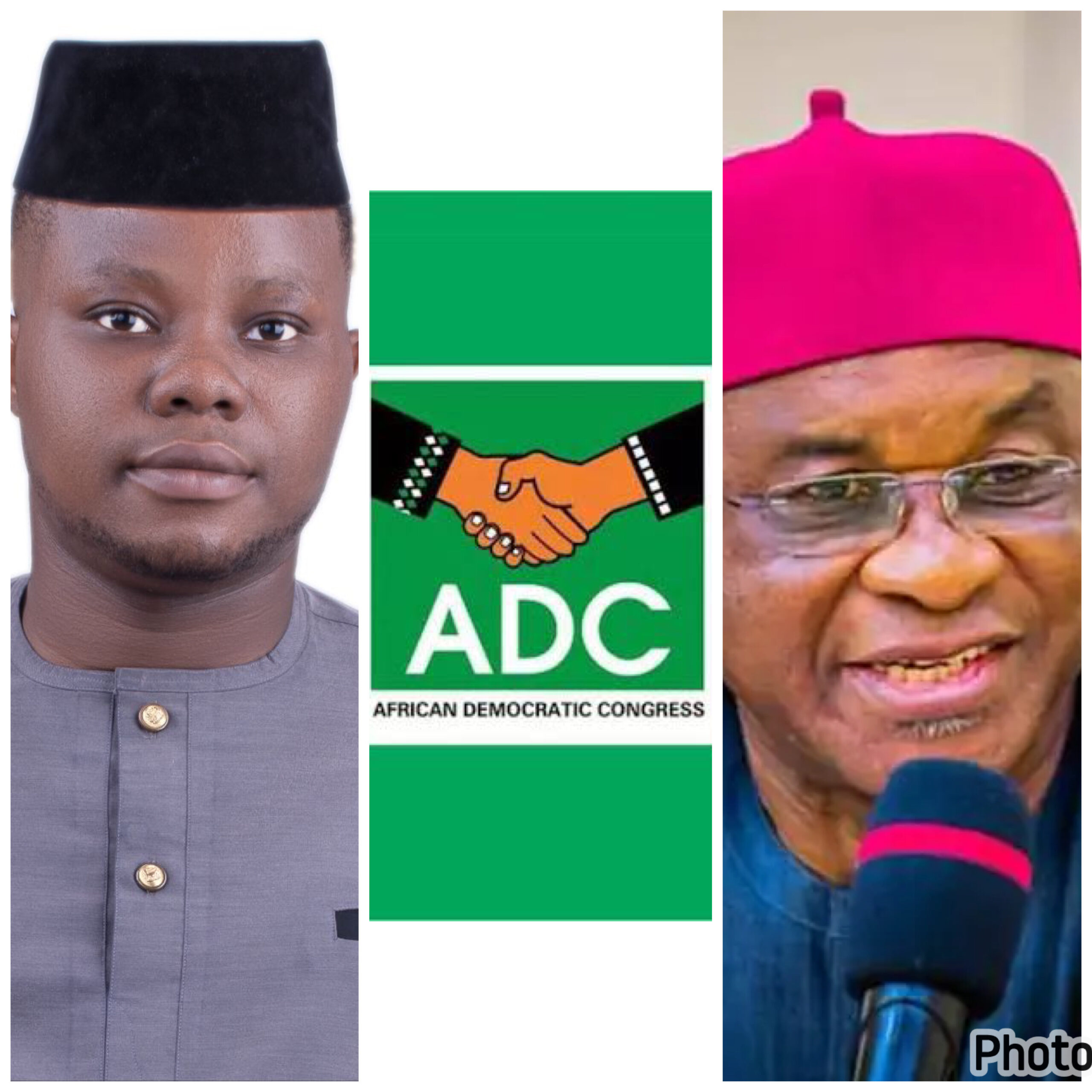
ADC Party in Turmoil: Hon Success Opara Slams Leadership, Warns Against Scamming Nigerians
Abuja, Nigeria – The African Democratic Congress (ADC) is facing internal strife as Hon Success Opara, a prominent party official, has warned against attempts to use the party to deceive Nigerians. Opara specifically criticized the leadership of David Mark, stating that the party cannot be used to scam citizens again.
“ADC holy Party cannot be used to scam Nigerians again,” Opara said, emphasizing that those forming coalitions are hindering the party’s growth and denying youths opportunities to thrive.
“Those who are forming coalition don’t want to give the youths the chance to strive in the party,” she added.
Opara’s statement highlights the deepening divisions within the ADC, with concerns over leadership and the party’s direction.
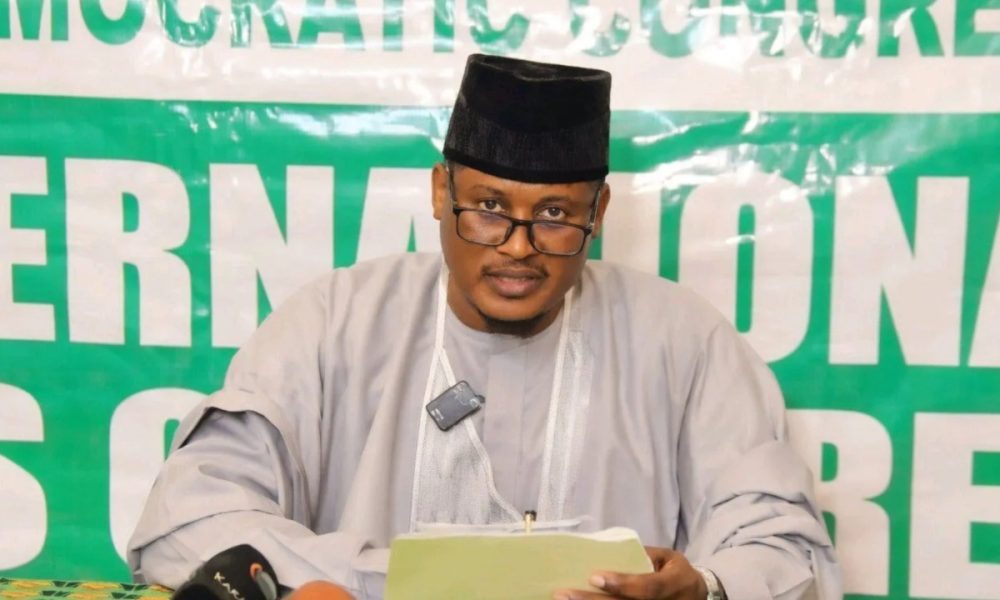
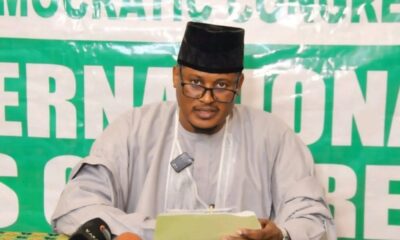
The factional National Chairman of the African Democratic Congress (ADC), Nafiu Bala Gombe, has announced that the party under his leadership will bar individuals above the age of 55 from contesting for political positions.
Gombe made the disclosure during an interview with BBC Hausa, where he outlined a vision centred on generational change and greater youth participation in politics.
“The African Democratic Congress (ADC) is a party that belongs to all Nigerians. What we are doing now is to ensure the party moves forward properly.
“We have decided that we will give the youths a real chance. The time has come for young people to take the lead in politics.
“If you are over 55 years old, you are not going to contest for positions in the ADC under our leadership.
“We want to bring in fresh blood, new ideas, and energy from the youth. Nigeria’s future depends on the young generation.
“The old ways have not worked well for the country. We need to open the door wide for youths to participate fully as candidates, leaders, and decision-makers,” he said.

David Mark Holds Secret Meeting With PRP Leaders as ADC Crisis Deepens

Chaos As Military Officers Exchange Blows During Tinubu’s Visit To Bayelsa (Videos)

HRH Ekwueme of Ochia Kingdom Iynched & kiIIed in Imo.

-
Business1 year ago
US court acquits Air Peace boss, slams Mayfield $4000 fine
-

 Trending1 year ago
NYA demands release of ‘abducted’ Imo chairman, preaches good governance
-

 Politics1 year ago
Mexico’s new president causes concern just weeks before the US elections
-

 Politics1 year ago
Putin invites 20 world leaders
-

 Politics1 year ago
Russia bans imports of agro-products from Kazakhstan after refusal to join BRICS
-
Entertainment1 year ago
Bobrisky falls ill in police custody, rushed to hospital
-
Entertainment1 year ago
Bobrisky transferred from Immigration to FCID, spends night behind bars
-
Education2 years ago
GOVERNOR FUBARA APPOINTS COUNCIL MEMBERS FOR KEN SARO-WIWA POLYTECHNIC BORI