
Columns
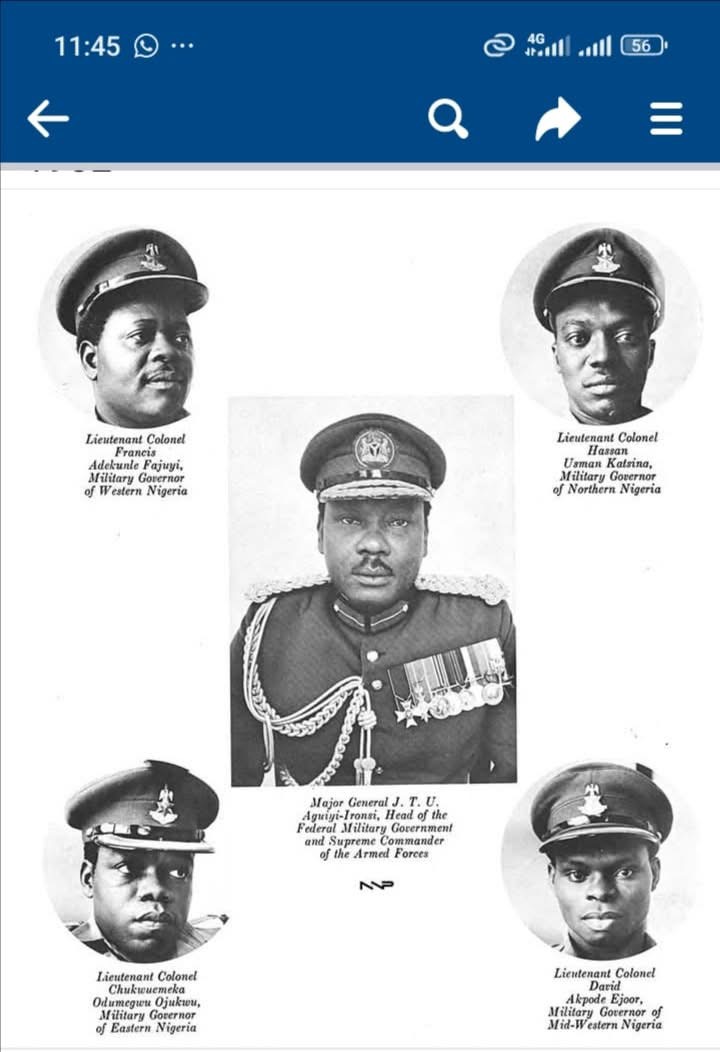
Federal Nigeria, January/April 1966 Vol. IX No.14

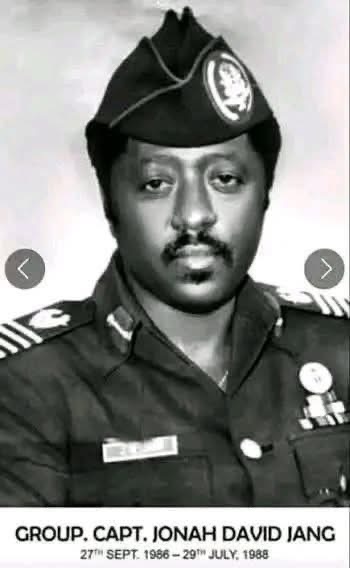
Jonah David Jang (born March 13, 1944) is a retired Nigerian Air Force Air Commodore and prominent politician who has played significant roles in both military and civilian leadership in Nigeria.
Military Career
Jang enlisted in the Nigerian Air Force in 1965 and rose steadily through the ranks. He attained the rank of Air Commodore before voluntarily retiring in 1990. At the time of the referenced photograph, he held the rank of Group Captain.
Military Governorships
During the military era under Ibrahim Babangida, Jang served as:
Military Governor of Benue State (August 1985 – August 1986)
Military Governor of Gongola State (27 September 1986 – 29 July 1988)
Gongola State at the time comprised areas that are now Adamawa and Taraba States. The dates shown in the image (27th Sept. 1986 – 29th July 1988) refer to his tenure as Military Governor of Gongola State, not his lifespan.
Civilian Political Career
Following Nigeria’s return to democratic rule, Jang transitioned into partisan politics.
Served two terms as Executive Governor of Plateau State (2007–2015).
Represented Plateau North Senatorial District in the Nigerian Senate (2015–2019).
As governor, he was widely associated with infrastructural development initiatives in Plateau State, including road construction, urban renewal projects, and public sector reforms.
Legacy and Influence
Jonah David Jang remains a significant political figure in Nigeria’s Middle Belt region. His career reflects a transition from military administration to democratic governance—an experience shared by several Nigerian leaders of his generation.
From military officer to state governor and senator, Jang’s public life spans decades of Nigeria’s political evolution.
Photo Credit: The Nigerian Newsletter
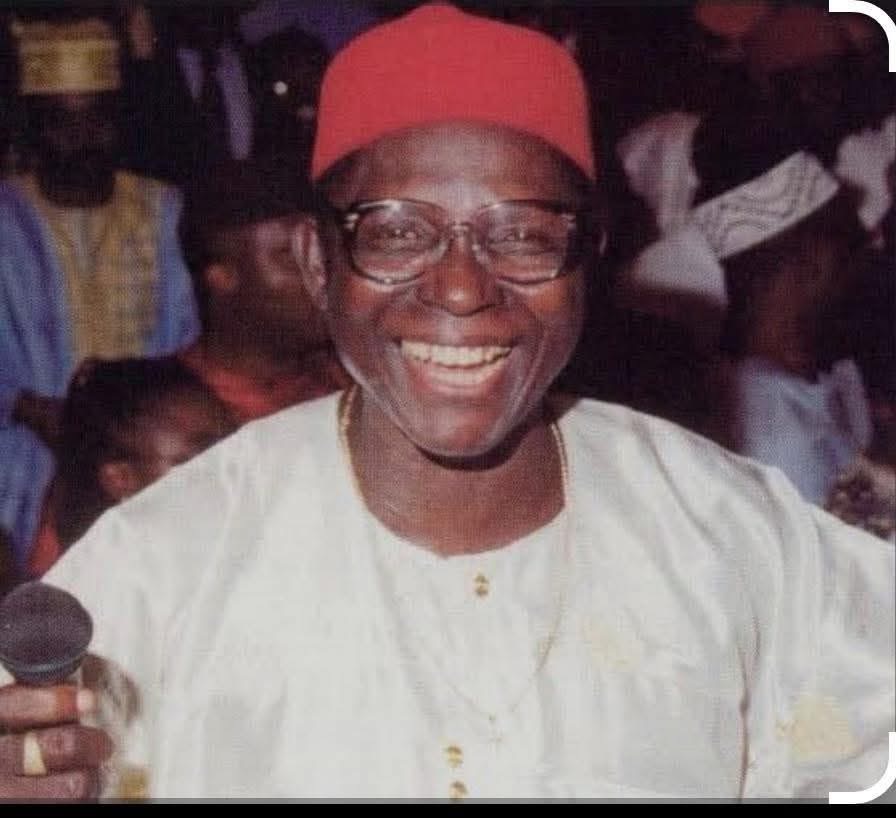
Osadebe and his band were billed to perform outside the country. He lodged his crew at a hotel close to the airport and instructed them not to leave the hotel premises come what may.
This was a period when there was no mobile telecommunication.
Osadebe left to finalize the visa procession and traveling documents of him and his crew. He actually didn’t know when he will be back.
A day or two passed, Osadebe was not seen. One of his band members who was an abali agba aka couldn’t hold it any longer. He felt he needed to satisfy his sexual urge or else he will go crazy.
So, off he went in search of the quarters of umu oma osiso. It was at this moment of escape that Osadebe arrived and asked the available band members to pack up, it’s time to jet out of the country.
When the pleasure seeking band member returned and learnt Osadebe and the rest have left the country, he broke down in tears and cried profusely.
Performing outside the country remains professional highlight for artistes all over the world.
It is this uncontrollable cry of regret from this band member for being abandoned in what was supposed to be a career highlight that informed the song Ebezina.
Ebezina simply means, stop crying or don’t cry.
In the song, Osadebe, upon their return, was telling this particular fellow to stop crying, that he Osadebe left an instruction and he didn’t listen. Rather, he went to look for ‘Akwuna’.
If you understand this backstory, then the repeated refrain in the song, Ogazi amaka mana ejiro ya ago muo will now make better meaning to you.
The literal meaning of the above line is not entirely correct. But the metaphorical meaning is what packs depth. Ogazi was a metaphor for the fairer sex.
So, Osadebe was simply saying, the pleasure found in women are immeasurably sweet, yet you cannot use investment in such pleasure to do something meaningful with your life.
I have always argued, guinea fowls are used in Ife Muo. Therefore, Osadebe was not literally talking about Ogazi. Rather, he used the beauty of a guinea fowl as a graphic metaphor for women.
Many have listened to the song and concluded, wow so they do not use a guinea fowl in igbo spirituality?
Those who know ife ana atu okuko na anya know that a guinea fowl or other birds can be used in Igo Muo.
You need to know the backstory behind the song for you to understand exactly what that graphic refrain that has served as the hook of the evergreen song, Ebezina, really means.
Ezeikolomuo
Igbo Consciousness Teacher
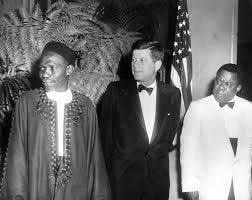
In July 1961, Sir Abubakar Tafawa Balewa, the Prime Minister of Nigeria, visited the White House in Washington, D.C., where he was formally received by John F. Kennedy, the President of the United States. This historic visit marked the first time a Nigerian leader was hosted by an American president, reflecting Nigeria’s growing diplomatic presence in the early post-independence era.
Key Highlights of the Meeting
Diplomatic Significance: The meeting symbolized strengthening ties between Nigeria, newly independent in 1960, and the United States.
Participants: Chief Momo Udochi, a senior Nigerian official, was also present during the discussions, representing aspects of Nigeria’s civil administration and governance interests.
Bilateral Discussions: Topics likely included trade, education, technical assistance, and geopolitical collaboration in the context of the Cold War.
Historical Note
Tragically, both leaders were assassinated within a few years after this meeting:
John F. Kennedy in November 1963, during his presidency in the United States.
Sir Abubakar Tafawa Balewa in January 1966, during the military coup in Nigeria.
This meeting remains a milestone in Nigeria–United States relations, symbolizing the diplomatic strides of newly independent African nations during the early 1960s.
Sources:
National Archives, Nigeria – Diplomatic Records (1961)
White House Historical Association – Presidential Visits
Britannica, Biography of Sir Abubakar Tafawa Balewa
U.S. Department of State – Historical Diplomatic Visits

Gov Makinde Speaks on Dumping PDP

Federal Nigeria, January/April 1966 Vol. IX No.14

Opposition Leaders Reject Amended Electoral Act 2026

-
Business1 year ago
US court acquits Air Peace boss, slams Mayfield $4000 fine
-

 Trending1 year ago
NYA demands release of ‘abducted’ Imo chairman, preaches good governance
-

 Politics1 year ago
Mexico’s new president causes concern just weeks before the US elections
-

 Politics1 year ago
Putin invites 20 world leaders
-

 Politics1 year ago
Russia bans imports of agro-products from Kazakhstan after refusal to join BRICS
-
Entertainment1 year ago
Bobrisky falls ill in police custody, rushed to hospital
-
Entertainment1 year ago
Bobrisky transferred from Immigration to FCID, spends night behind bars
-
Education1 year ago
GOVERNOR FUBARA APPOINTS COUNCIL MEMBERS FOR KEN SARO-WIWA POLYTECHNIC BORI