
Politics
FG seeks fresh $1.75bn World Bank loan

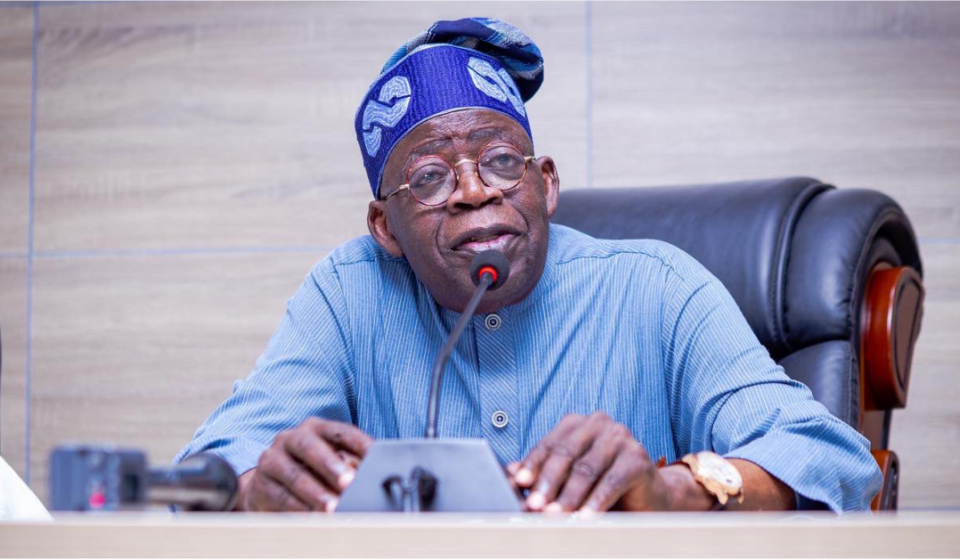
The Federal Government plans to increase its borrowing despite a significant 40.5 per cent surge in revenue for the first eight months of 2025. This boost in revenue has largely been driven by substantial gains in non-oil revenue collections, as confirmed in a press statement on Wednesday by Special Adviser to the President on Information and Strategy, Bayo Onanuga.
Based on the figures released by the Presidency, Nigeria’s fiscal performance from January to August 2025 saw total collections reach a record N20.59tn, surpassing the N14.6tn collected during the same period in 2024. It was noted that non-oil revenues now account for 75 per cent of the total collections.
The statement read, “From January to August 2025, total collections reached N20.59tn, a 40.5 per cent increase from N14.6tn recorded in 2024. This strong performance aligns with projections, placing the government firmly on course to achieve its annual non-oil revenue target.”
However, despite these positive developments, Nigeria still faces substantial funding gaps in crucial sectors such as infrastructure, with low capital spending. Local contractors under the All Indigenous Contractors Association of Nigeria, on Wednesday, staged a protest at the Headquarters of the Ministry of Finance in Abuja, to demand payment for capital projects executed in 2024, amounting to about N4tn.
To address these funding gaps, the government plans to borrow locally and domestically despite an earlier claim by President Bola Tinubu on Tuesday in Abuja that Nigeria had met its revenue target for 2025 ahead of schedule and would no longer rely on borrowing to fund its budget.
On Thursday, The Ekwutosblog gathered that the World Bank is expected to approve loans totalling $1.75bn before the end of the year to support key development projects in Nigeria, according to official data obtained from the bank’s official website. These loans will finance several key initiatives, including projects in agriculture, health, and digital infrastructure.
One of the major projects set to benefit from this financial backing is the Nigeria Sustainable Agricultural Value-Chains for Growth project, which will receive $500m. This initiative is aimed at improving agricultural productivity and integrating value chains to support rural development and economic diversification. The project is currently in the Concept Review phase, with approval expected on December 11, 2025.
Another project, the Building Resilient Digital Infrastructure for Growth, which has a commitment of $500m, aims to enhance Nigeria’s digital infrastructure and foster economic growth, particularly in the technology sector. The project is currently in the Begin Negotiation phase, with approval scheduled for October 31, 2025.
Similarly, the Health Security Programme in Western and Central Africa, Nigeria – Phase II, will receive $250m to strengthen Nigeria’s health systems and improve the country’s preparedness for health emergencies. This project is also in the Begin Negotiation phase, with approval expected by September 30, 2025.
Lastly, the Fostering Inclusive Finance for MSMEs in Nigeria project, which aims to improve access to finance for small and medium-sized enterprises, will be allocated $500m. This project is in the Concept Review phase, with approval set for December 18, 2025.
Collectively, these projects comprise the $1.75bn in loans expected to be approved by the World Bank before the end of the year. The PUNCH earlier reported that the World Bank approved a total of $8.40bn in fresh loans to Nigeria over the past two years, according to data obtained from the bank’s official website.
The approvals, covering the period from June 2023 to August 2025, spanned 15 projects in the energy, education, healthcare, rural infrastructure, and governance sectors. The amount comprises $1.95bn from the International Bank for Reconstruction and Development and $6.50bn from the International Development Association.
The International Bank for Reconstruction and Development provides loans on commercial or near-commercial terms to middle-income and creditworthy low-income countries, while the International Development Association offers highly concessional loans and grants to the world’s poorest nations.
Economists warn that the rising loan pipeline, while potentially beneficial for long-term development, could deepen fiscal pressures if not matched with stronger domestic revenue mobilisation and prudent expenditure management.
Lagos-based economist, Adewale Abimbola, reacting to the rising World Bank commitments to Nigeria, said loans from multilateral institutions such as the World Bank are largely concessionary, with interest rates typically below market levels and longer repayment tenors.
He noted that the critical question is not whether Nigeria should be borrowing, but whether the loans are structured and deployed effectively. “If it’s concessionary and tied to viable projects with medium-term revenue prospects, I don’t think it’s a bad idea,” Abimbola explained. “Borrowing isn’t bad; what matters is utilization.”
He stressed that the economic impact of such loans depends on how well they are channelled into projects that can generate sustainable growth, strengthen revenue, and improve public services over time.
Development economist and CEO of CSA Advisory, Dr Aliyu Ilias, has expressed strong reservations over Nigeria’s rising debt profile in light of fresh World Bank commitments. He recalled that when former President Muhammadu Buhari left office for President Bola Tinubu, the nation’s debt stock stood at about N87tn, but has since risen to around N149tn, with fears it could approach N180tn.
While acknowledging that borrowing is not inherently bad for an economy, he questioned the rationale for taking on more debt at a time when the government claims to have higher revenues.
Ilias pointed out that following the removal of fuel subsidy, Tinubu had announced increased revenue inflows. He added that both the Federal Inland Revenue Service and the Nigeria Customs Service had declared revenue surpluses, further suggesting the government should be able to fund projects without resorting to heavy borrowing.
According to him, the impact of the current borrowing spree is being felt in reduced public service delivery, particularly in capital expenditure, as debt servicing now consumes a significant portion of available revenue. He warned that this crowding-out effect limits job creation, fuels inflation, and worsens Nigeria’s foreign exchange imbalance, with the naira trading at historically weak levels.
He argued that given the claimed revenue surpluses, the Tinubu administration should not have needed to borrow within its first two years in office, let alone at the scale currently being witnessed.
Economist and CEO of the Centre for the Promotion of Private Enterprise, Dr Muda Yusuf, said the rising World Bank commitments to Nigeria should be examined within the context of the country’s Medium-Term Expenditure Framework and annual budgets, which already provide for both domestic and foreign borrowing.
He noted that deficit financing is a common feature of budgets worldwide and is not inherently wrong, as it allows governments to make critical investments without waiting to generate all the required revenue upfront. However, he stressed that borrowing should always be backed by sound economic reasoning and clear development priorities.
Yusuf emphasised that the key issue is debt sustainability, which depends primarily on the country’s revenue capacity to service its obligations. Without a strong cash flow to meet repayment schedules, he warned, Nigeria risks falling into a vicious cycle of borrowing to service existing loans, which would perpetuate fiscal vulnerability. He said it is essential that projects funded by loans directly support the economy’s capacity to repay.
According to him, Nigeria should be cautious with foreign loans due to the exchange rate risks they pose, noting that domestic debt is generally easier to manage. Excessive foreign borrowing, he warned, could put pressure on the country’s reserves and further weaken the exchange rate. He stressed that a disciplined approach to debt sustainability will be crucial for Nigeria to avoid long-term fiscal distress.
Meanwhile, data from the Debt Management Office showed that Nigeria’s total debt to the World Bank rose to $18.23bn as of March 31, 2025. This marks a $420m increase in just three months since December 2024, when Nigeria’s total exposure to the World Bank stood at $17.81bn.
The DMO data showed that borrowings from the International Development Association, the concessional financing arm of the World Bank, rose from $16.56bn in December 2024 to $16.99bn in March 2025.
At the same time, loans from the International Bank for Reconstruction and Development — the non-concessional lending window of the World Bank — remained unchanged at $1.24bn. In total, the World Bank Group now accounts for $18.23bn, or about 39.7 per cent of Nigeria’s total external debt stock, which stood at $45.98bn as of March 2025.
This reflects a marginal increase in the World Bank’s share of the debt portfolio, up from 38.9 per cent recorded in December 2024 and 36.4 per cent at the end of 2023. Further analysis indicates that the World Bank now constitutes 81.2 per cent of Nigeria’s total multilateral debt, which reached $22.43bn in Q1 2025.
This represents a rise from the 79.8 per cent share recorded at the end of 2024 and underlines the central role the institution continues to play in Nigeria’s financing framework.





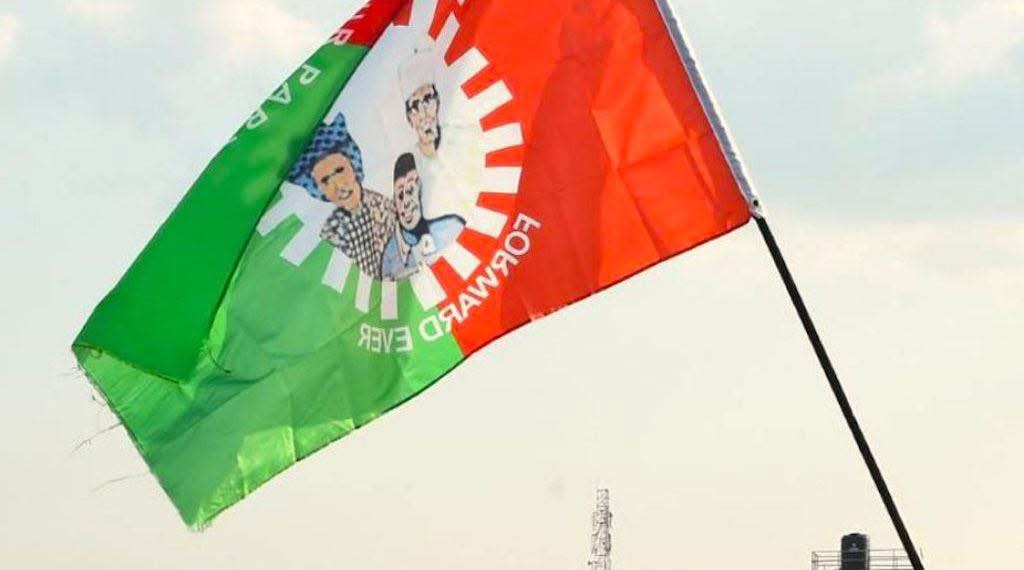
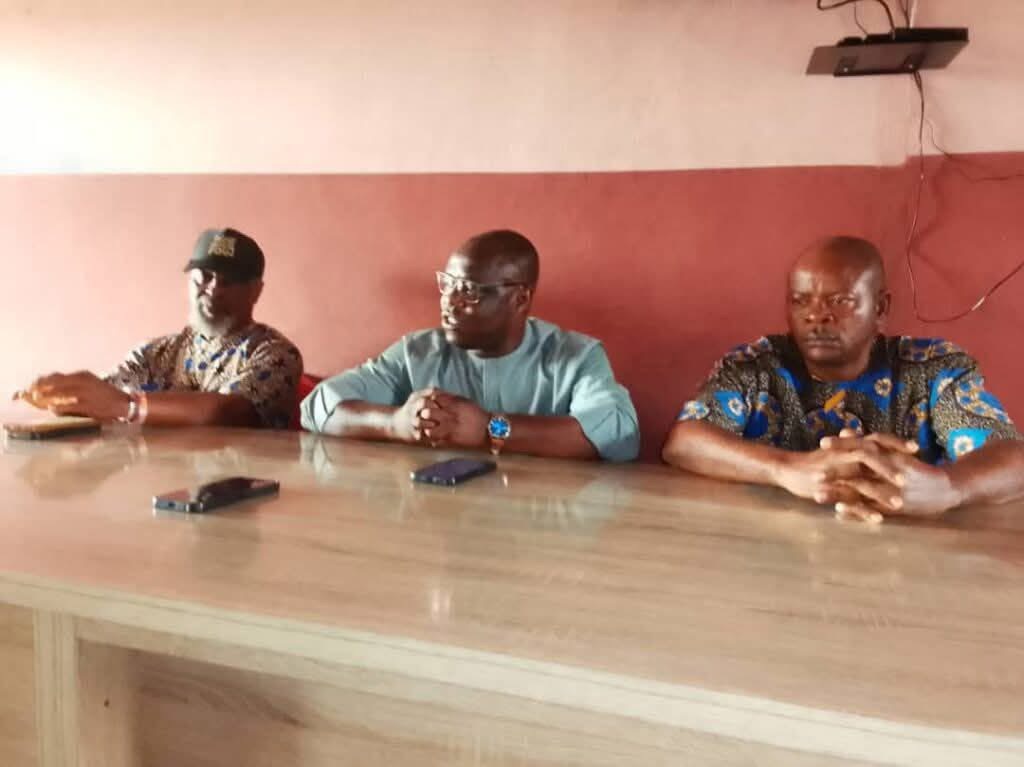
The Labour Party in Imo State is engulfed in a bitter leadership clash as the Callistus Ihejiagwa-led faction warns members not to participate in any party activities not sanctioned by his leadership.
The warning comes in response to claims that Sen. Nenadi Usman and Darlington Nwokocha’s faction plans to hold Ward, LGA, and State congresses starting March 26, 2026—moves Ihejiagwa calls illegal and unconstitutional.
Ihejiagwa insists that the Independent National Electoral Commission (INEC) has already refused to dissolve existing party structures, meaning any attempt to replace sitting executives is null and void.
He dismissed arguments that INEC officials attending Usman/Nwokocha’s National Executive Council meeting on March 17 would confer legality, stressing that presence does not equal approval.
March 20, 2026
The All Progressives Grand Alliance in Abia State has called on the Senate to declare the seat of the Senator representing Abia South, Enyinnaya Abaribe, vacant following his resignation from the party.
The party made the call on Thursday during a press briefing in Umuahia, where its leadership, led by a former member of the Abia State House of Assembly, Obinna Ichita, insisted that Abaribe voluntarily resigned from APGA and was not sacked, contrary to his claim at the Senate.
Ichita argued that Abaribe’s exit from the party that sponsored his election violates constitutional provisions, stressing that there was no leadership crisis within APGA to justify his defection.
“The senator resigned in his ward. He did so voluntarily, which is his right. However, if you leave the party that gave you the platform for another party when there is no leadership crisis, that seat must be declared vacant,” he said.
He further alleged that Abaribe misrepresented the circumstances of his exit by claiming he was sacked.
“The party has documentary evidence to show that Senator Abaribe was not sacked. He resigned three months after disciplinary measures were taken against him over actions the court did not consider appropriate,” Ichita added.
According to him, the mandate belongs to the people and the party, not the individual office holder.
“They gave him the mandate on the platform of APGA, not any other party. There was nothing like ADC when he was elected. He cannot take the mandate elsewhere without consulting the people who gave it to him,” he said.
Ichita maintained that the constitution is clear on defection, noting that any lawmaker who leaves a party without a valid internal crisis must vacate the seat.
“My message to Senator Abaribe is to honourably vacate the seat instead of waiting for the National Assembly to declare it vacant. That would amount to national embarrassment,” he added.
Also speaking, the APGA State Chairman, Sunday Onukwubiri, and the party’s Public Relations Officer, Chukwuemeka Nwokoro, reiterated that Abaribe had distanced himself from the party’s activities at various levels in the state.
They insisted that he neither holds dual membership nor was he expelled, maintaining that his resignation was voluntary.
“He was invited by the party but failed to appear and was subsequently suspended in line with the party’s constitution. Three months later, he resigned,” the officials said.
Reacting, Abaribe defended his position, insisting that he acted within his constitutional rights.
“When you are no longer a member of a party by virtue of being sent away, you have the fundamental right of association to join another party,” he said.
He argued that his indefinite suspension by APGA effectively amounted to expulsion.
“If a party places you on indefinite suspension for more than six months, what does that mean? It means you have been told to go elsewhere, and that is exactly what I did,” he stated.
The senator added that the proper constitutional procedure for removing him from office would be through a recall process by his constituents.
“If the people who elected me no longer want me, the right thing to do is to initiate a recall. That is the position of the law,” he said.
Politics
Tinubu’s Reforms May Be Challenging, but They’ve Boosted Nigeria’s Global Respect — Information Minister Mohammed Idris
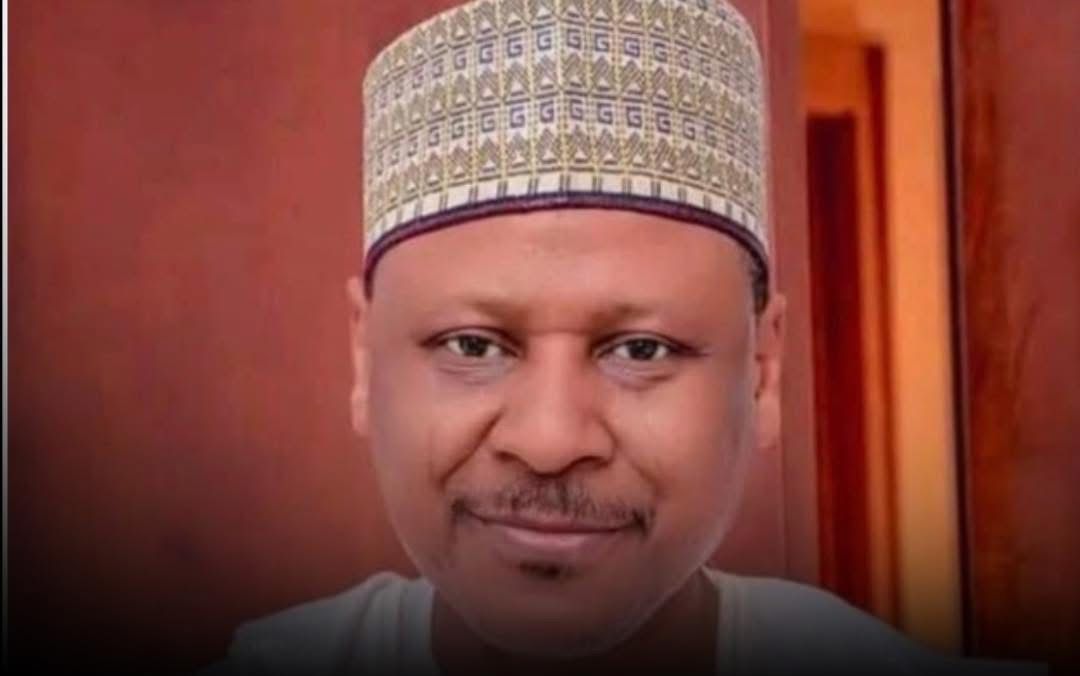
The Minister of Information and National Orientation, Mohammed Idris, has stated that Nigeria is receiving greater respect internationally under the leadership of President Bola Tinubu.
Speaking on Friday after attending Jumaat prayers at Yahaya Road Mosque in Kaduna, Mr Idris said, “Nigeria is indeed taking its rightful place. The country is respected more than ever before on the international scene. The reforms that the president has instituted, as challenging as they are, are meant for the benefit of all Nigerians.”
He urged Nigerians to stay calm as the government continues its efforts to restore security across the nation. Referring to the recent multiple b%mb att@cks in Maiduguri, Borno State, the minister assured that such incidents would not be allowed to recur.
“Indeed, our country is facing challenges, and the government is working tirelessly to ensure security throughout Nigeria. We have seen what has happened, particularly in Borno State. We pray to Allah to make this the last one, as the government is committed to preventing any repetition of such incidents,” he said.
Mr Idris also stressed the importance of citizens being prayerful and working together to address the country’s challenges. He encouraged both Muslims and non-Muslims to unite in the interest of Nigeria’s growth and development.
“This is a time for reflection for all Nigerians. We pray that everyone will consider this moment and recognize the need for unity, progress, and national development. All hands must be on deck for the unity of the country. As we earn respect internationally, we also hope and pray that unity will strengthen within our nation,” he added.

IMO STATE LABOUR PARTY DESCENDS INTO FACTIONAL WAR

EFCC evicts Malami from Abuja home amid forfeiture dispute

Fuel price hike: Gov Makinde announces N10,000 transport support for workers

-
Business1 year ago
US court acquits Air Peace boss, slams Mayfield $4000 fine
-

 Trending1 year ago
NYA demands release of ‘abducted’ Imo chairman, preaches good governance
-

 Politics1 year ago
Mexico’s new president causes concern just weeks before the US elections
-

 Politics1 year ago
Putin invites 20 world leaders
-

 Politics1 year ago
Russia bans imports of agro-products from Kazakhstan after refusal to join BRICS
-
Entertainment1 year ago
Bobrisky falls ill in police custody, rushed to hospital
-
Entertainment1 year ago
Bobrisky transferred from Immigration to FCID, spends night behind bars
-
Education2 years ago
GOVERNOR FUBARA APPOINTS COUNCIL MEMBERS FOR KEN SARO-WIWA POLYTECHNIC BORI