
Politics
G20 Summit: Brazil’s billionaire tax plan faces pushback

The G20 summit in Rio aims to build consensus on taxing the super-rich for climate action and poverty relief. But as geopolitical issues take priority, President Lula may struggle to quell skepticism over the proposal.
Brazilian President Luiz Inacio Lula da Silva, hosting the G20 summit in Rio de Janeiro from Monday, will try to progress plans to tax the world’s richest billionaires, who often use complex loopholes to avoid tax.
At a July meeting of G20 finance ministers in Rio, the world’s wealthiest nations agreed to start a “dialogue on fair and progressive taxation, including of ultra-high-net-worth individuals,” despite fierce resistance from the United States and within Germany’s now collapsed coalition government.
While the world’s growing geopolitical issues — the Ukraine and Gaza conflicts, the prospect of a second Trump term in the US and China trade — are expected to dominate the two-day summit, Lula hopes to move the wealth tax plan forward as the money raised from billionaires will help boost other pressing global issues.

Campaigners have called for years for greater scrutiny over how the wealthy avoid taxes
© Fabrice Coffrini/AFP
Advocates say new tax would cause little pain
Devised by French economist Gabriel Zucman, the plan would introduce an annual tax of 2% on the total net worth of the uberwealthy — not just their annual income. This would include real estate assets, corporate shareholdings and other investments. Zucman estimates that the top 0.01% of the population pay an effective tax rate of just 0.3% of their wealth.
The new levy could raise up to $250 billion (€237 billion) a year from the nearly 2,800 billionaires globally, who have a combined net worth estimated at some $13.5 trillion, according to the Forbes Richest World’s Billionaires List. The funds raised would be used to tackle growing global inequalities, especially among heavily indebted low-income countries, including many in Africa.
“The taxation of high net-worth individuals is very important as it could be a source for funding initiatives that fight hunger and poverty, and also tackle climate change,” Tomas Marques, a research fellow at Hamburg’s GIGA Institute for Latin American Studies, told DW.
Developing nations, who many scientists say are being disproportionately affected by climate change, have for years demanded funding to offset its worst impacts. Success stories include World Bank and Green Climate Fund support for India’s bid to boost solar power capacity and Brazil’s Amazon Fund, aimed at reducing deforestation, which is part-funded by Norway and Germany.
Skepticism over G20 spending plans
While there may be broad public support for new taxes on the ultra-wealthy, the rise of national populism in many G20 countries is increasing scrutiny about how public money is spent, amid concerns that international aid and development funds could be better deployed at home.
“Most of the G20 countries are having a hard time balancing their budgets,” Maria Antonieta Del Tedesco Lins, an economist and associate professor at the University of Sao Paulo, told DW. “While extra taxes would help, it’s very hard to juggle national pressures with new international or multilateral obligations.”
Monday’s opening ceremony in Rio will launch the Global Alliance Against Hunger and Poverty, an initiative under Brazil’s G20 presidency that seeks to accelerate efforts in the fight against poverty and a lack of food by 2030.
The Brazilian government is also the principal backer of the proposed tax on the ultrawealthy, along with France, Spain and South Africa. Despite this support, the lower house of Brazil’s parliament, the Chamber of Deputies, last month rejected plans for an additional domestic levy on those with large fortunes.
“It’s a shame because Brazil could benefit a lot [from this tax] because we are a very unequal country. If there was an international consensus [on taxing the superrich] it could help negotiations in the Brazilian Congress,” said Lins, who took part in a G20 academic engagement group ahead of the summit.
In Brazil, as in the rest of the world, the wealthy often shield their wealth from tax authorities by creating shell companies in countries with low or zero taxes, taking advantage of banking secrecy laws and forming trusts and charitable foundations, which offer generous tax breaks.
US spurns wealth-tax proposal
While China’s and India’s positions on the new tax are ambiguous, Washington remains firmly opposed. US Treasury Secretary Janet Yellen told the Wall Street Journal in May that the measure was “something we can’t sign on to.”
President-elect Donald Trump has yet to comment on the proposal but is unlikely to back hiking taxes on the uber-rich. His first term was marked by large tax cuts — which benefited wealthy individuals and corporations the most. But during his short-lived run for the White House in 2000, he did promise to cut the national debt by levying a one-time 14.25% tax on the wealthy.
Lula then faces tough odds in making any meaningful progress during the two-day summit, especially as many critical geopolitical issues, as well as Brazil’s proposal to improve global governance will also dominate the talks.
“Lula is a great negotiator,” Marques said. “He bills himself as a bridge builder between the Global South and Global North. But I don’t know how he can reach a consensus around this very sensitive topic.”

Brazilian President Luiz Inacio Lula da Silva is a shrewed negotiator, who is determined to push ahead with higher taxes on billionaires
© Erica Martin/TheNEWS2/picture alliance
Wealth tax — a boon for Africa
Better representation at G20 for Africa is now critical, as the continent seeks to benefit from any new tax plan, through the receipt of poverty and climate alleviation funds. The African Union, the regional bloc of 55 African countries, will be attending the Rio summit for the first time, after being admitted as a full G20 member in August.
Next year, South Africa will take over the rotating G20 presidency — the fourth consecutive leadership of the bloc from the Global South, after Indonesia, India, and Brazil. The role will give the country and Africa as a whole further opportunities to shape global policies and advocate for the continent’s interests.
“African countries have been underrepresented in the G20 despite the continent’s importance globally,” Marques, who is in Rio for the summit, told DW. “But things are changing, and the African Union is now starting to have some influence on policymaking.”
Edited by: Uwe Hessler
Author: Nik Martin
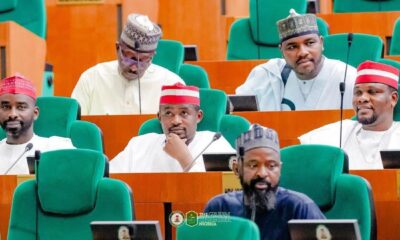



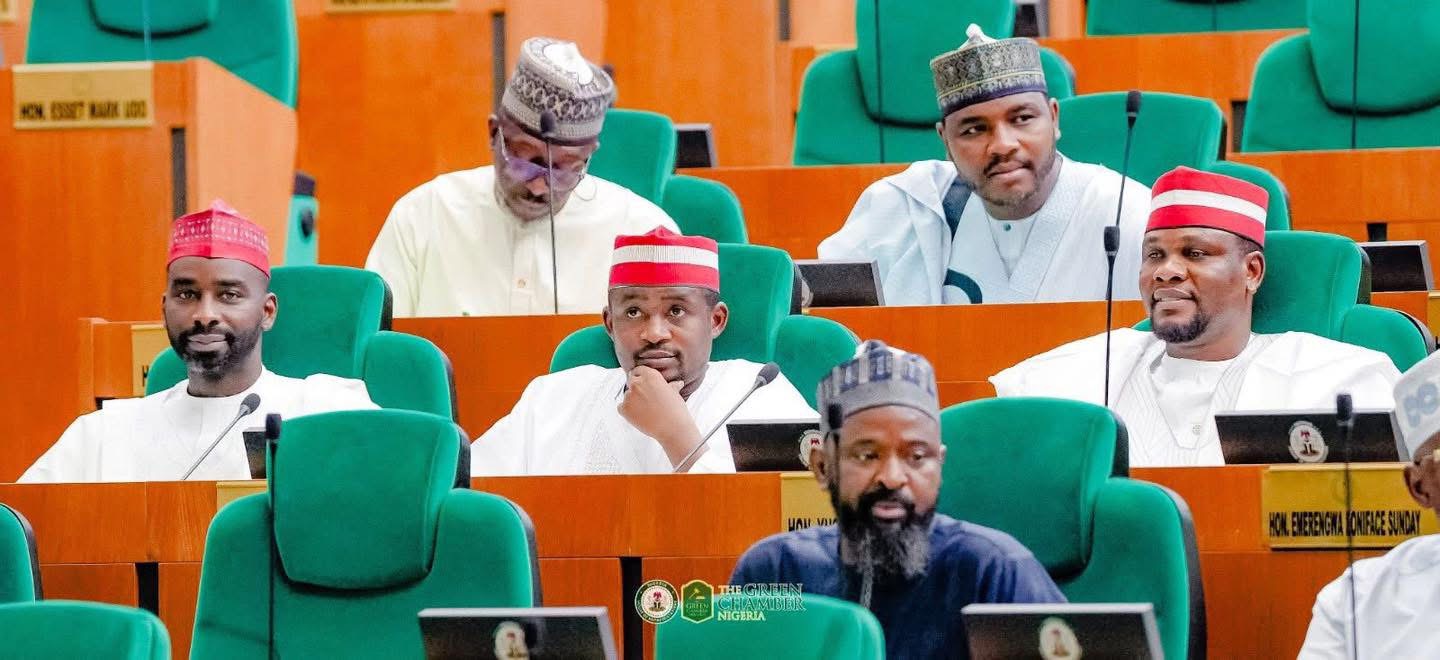
No fewer than 50 members of the 10th House of Representatives are unlikely to be part of the 11th Assembly after losing out in the All Progressive Congress (APC) primaries held on Saturday.
This marks one of the largest turnovers of sitting federal lawmakers since 2015 and signals intensifying internal competition within the ruling party eight months to the 2027 general elections.
While House Speaker Tajudeen Abbas (Kano) and Deputy Speaker Benjamin Kalu (Abia) successfully defended their tickets, several ranking and long-serving lawmakers were defeated, exposing strong anti-incumbent sentiment and the decisive role of state governors in candidate selection.
Major casualties
One of the biggest upsets was the defeat of House Majority Leader Julius Ihonvbere in Edo State’s Owan Federal Constituency. He polled 1,005 votes out of 7,587 cast, finishing third behind Andrew Ijegbia, who scored 3,695 votes. Abdul Oroh placed second with 1,740 votes.
In Delta State, veteran lawmaker Nicholas Mutu, who has represented Bomadi/Patani Federal Constituency since 1999, lost his re-election bid. Ngozi Okolie also lost the Aniocha/Oshimili ticket to former House Minority Leader Ndudi Elumelu.
Cross River State recorded one of the highest casualty rates, with five of eight incumbents failing to secure re-nomination.
They include three-term member Mike Etaba (Obubra/Etung), Godwin Offiono (Ogoja/Yala), Emil Inyang (Akamkpa/Biase), and Bassey Akiba (Odukpani/Calabar Municipality).
Only Peter Akpanke, Joseph Bassey, and Victor Abang won return tickets.
In Plateau State, conflicting results in Pankshin/Kanke/Kanam Federal Constituency triggered early confusion. One returning officer declared challenger John Tongshinen winner with 29,968 votes against incumbent Yusuf Gagdi’s 5,849.
The APC Plateau State primaries committee, chaired by Stella Okotete, later dismissed that declaration as unauthorised and affirmed Mr Gagdi as the authentic winner with 29,207 votes.
At a press briefing, Mrs Okotete stated that Nandom Kura was the recognised returning officer. “The returning officer approved by my committee that has gone to do fake declaration is null and void,” she said.
Other significant losses occurred in Ogun State (at least five incumbents, including Deputy Chief Whip Ibrahim Isiaka and Tunji Akinosi) and Ekiti State (three sitting members).
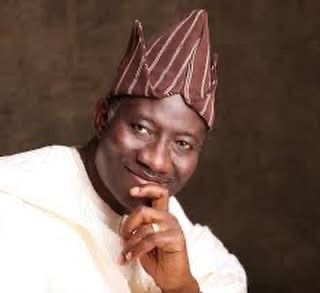
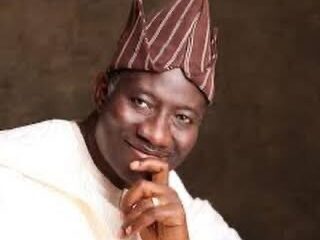
The Peoples Democratic Party (PDP), led by Tanimu Turaki, SAN, has scheduled to screen former president Goodluck Jonathan tomorrow, Tuesday, aMay 19, as the lone presidential candidate of party.
According to a statement from the PDP faction backed by the Oyo State Governor, Seyi Makinde, Former Vice-President Namadi Sambo, former governor of Plateau State, Jona Jang and a former Minister of Foreign Affairs, Tom Ikimi have been listed among a committee of 14 members to screen Jonathan described as a lone candidate by the party.
Other members of the committee were Chief Olabode George, Babangida Aliyu, Maryam ciroma, Zainab Maina, Josephine Anenin, Dr. Abdul Bulama, Dr. Esther Uduehi, Edo State PDP chairman, Tony Aziegbemi, Dr. Sunday Solarium and Chief Anicho Okoro, who would serve as administrative secretary of the committee.
Last week, the national Publicity Secretary of the faction, Ini Ememobong, disclosed that former president Jonathan has successfully registered as a member of the party in the fresh digital registration exercise directed by INEC.
The PDP faction also announced that it was set to screen 748 house of representatives aspirants, 198 senatorial aspirants, and 112 governorship aspirants.
The screening committee would screen 2122 states houses of assembly aspirants. The exercise will commence tomorrow, Tuesday in different states.
According to the statement, the screening exercise would take place nationwide on Tuesday, May 19, 2026, at 10:00 a.m.
The statement said the Interim National Working Committee (iNWC) has also released the names of members to serve on the Screening Committees and Screening Appeal Panels.
It added that the publication of the screening details “is in accordance with the party’s guidelines and timetable for the conduct of the 2027 general elections.”
A former governor and incumbent Senator, Adams Oshiomhole, along with his counterpart Senator Joe Ikpea, sailed through the All Progressives Congress senatorial primary in Edo unopposed, and securing their tickets without a single vote cast against them.
Also Omoregie Ogbeide-Ihama emerged the winner in the APC primary for the Edo South senatorial district.
Ogbeide-Ihama won in the seven local government areas of Edo South in the results announced by the Chairman of APC National Assembly Primary Election, Muhammed Ajana at the Urokpota Hall, Benin.
He polled 27,154 votes while his opponents, Senator Neda Imasuen, got 13,580, and Pastor Osagie Ize-Iyamu got 6785.
The elections were hitch-free in Edo North and Edo Central, where there was no contest against the incumbents, Senators Oshiomhole of Edo North and Ikpea of Edo Central, respectively.
Ajana at the Urokpota Hall said the collation arose from votes cast in the seven local government areas made up of 77 wards where elections were conducted by members of the committee.
He said, “There are seven local governments that make up the Edo South Senatorial District. We have heard from the Returning officers from the seven local government areas. From the collation, the cumulative result we have for Edo South Senatorial District is this; Ogbeide-Ihama with 27,154 votes, Imasuen with 13,580 votes and Ize-Iyamu with 6, 785.
“This is the total reflection of what has transpired from the ward level to the local government and the Edo South senatorial district collation centre. With this we await further directives from the National Secretariat, we have done our best by collating the results which is our mandate, to collate the results and send them to the National Secretariat.”
However, it was gathered that Ize-Iyamu emerged as the APC candidate for Edo South Senatorial race. He claimed to have clinched the party’s ticket after defeating Ogbeide-Ihama and Imasuen.
It was claimed that the Chief Returning Officer, Abubakar Muhammad Kabiru, officially declared Ize-Iyamu the winner after securing the highest number of votes cast.
On his part, the senator representing the district condemned the exercise describing it as a sham allegedly designed to favour a preferred aspirant.
Imasuen spoke while reacting to events at his polling unit in Umagbae North Ward 5, Urhokuosa where he said he was denied the opportunity to vote following what he described as a chaotic and manipulated process.
The lawmaker accused leaders of the party of openly adopting a preferred candidate ahead of the exercise and intimidating members into supporting that aspirant.
He said, “There is nothing satisfactory about this sham of election they did today and it is very unfortunate because as a loyal party member, I expected something better than this.”
He said the warning signs emerged days before the primary when some ward chairmen allegedly informed him that they had been directed not to receive him during consultations.
Imasuen claimed that some ward leaders openly told him the party had already adopted a preferred aspirant, identified as Hon. Omoregie Ogbeide-Ihama, making further consultations unnecessary.

𝗛𝗢𝗡. 𝗧𝗢𝗦𝗞𝗔 𝗖𝗢𝗡𝗗𝗘𝗠𝗡𝗦 𝗧𝗛𝗘 𝗞𝗜𝗟𝗟𝗜𝗡𝗚𝗦, 𝗞𝗜𝗗𝗡𝗔𝗣𝗣𝗜𝗡𝗚𝗦 𝗔𝗡𝗗 𝗥𝗔𝗣𝗘𝗦 𝗜𝗡 𝗜𝗛𝗜𝗔𝗚𝗪𝗔, 𝗢𝗕𝗜𝗕𝗜𝗘𝗭𝗘𝗡𝗔, 𝗘𝗭𝗜𝗢𝗕𝗢𝗗𝗢, 𝗘𝗠𝗘𝗔𝗕𝗜𝗔𝗠, 𝗢𝗞𝗢𝗟𝗢𝗖𝗛𝗜, 𝗨𝗠𝗨𝗚𝗨𝗠𝗔, 𝗔𝗩𝗨 𝗔𝗡𝗗 𝗢𝗧𝗛𝗘𝗥 𝗖𝗢𝗠𝗠𝗨𝗡𝗜𝗧𝗜𝗘𝗦: 𝗖𝗔𝗟𝗟𝗦 𝗙𝗢𝗥 𝗜𝗠𝗠𝗘𝗗𝗜𝗔𝗧𝗘 𝗖𝗘𝗦𝗦𝗔𝗧𝗜𝗢𝗡

TENSIONS RISE IN OGUTA LGA AS CHAIRMAN MOVED AHEAD WITH Town UNION ELECTIONS AGAINST STATE DIRECTIVE

2027: More Than 50 Lawmakers Lose APC Reps Tickets in Major Primary Election

-
Business2 years ago
US court acquits Air Peace boss, slams Mayfield $4000 fine
-

 Trending2 years ago
NYA demands release of ‘abducted’ Imo chairman, preaches good governance
-

 Politics2 years ago
Mexico’s new president causes concern just weeks before the US elections
-

 Politics2 years ago
Putin invites 20 world leaders
-

 Politics2 years ago
Russia bans imports of agro-products from Kazakhstan after refusal to join BRICS
-
Entertainment2 years ago
Bobrisky falls ill in police custody, rushed to hospital
-
Entertainment2 years ago
Bobrisky transferred from Immigration to FCID, spends night behind bars
-
Education2 years ago
GOVERNOR FUBARA APPOINTS COUNCIL MEMBERS FOR KEN SARO-WIWA POLYTECHNIC BORI