
Politics
G20 Summit: Brazil’s billionaire tax plan faces pushback

The G20 summit in Rio aims to build consensus on taxing the super-rich for climate action and poverty relief. But as geopolitical issues take priority, President Lula may struggle to quell skepticism over the proposal.
Brazilian President Luiz Inacio Lula da Silva, hosting the G20 summit in Rio de Janeiro from Monday, will try to progress plans to tax the world’s richest billionaires, who often use complex loopholes to avoid tax.
At a July meeting of G20 finance ministers in Rio, the world’s wealthiest nations agreed to start a “dialogue on fair and progressive taxation, including of ultra-high-net-worth individuals,” despite fierce resistance from the United States and within Germany’s now collapsed coalition government.
While the world’s growing geopolitical issues — the Ukraine and Gaza conflicts, the prospect of a second Trump term in the US and China trade — are expected to dominate the two-day summit, Lula hopes to move the wealth tax plan forward as the money raised from billionaires will help boost other pressing global issues.

Campaigners have called for years for greater scrutiny over how the wealthy avoid taxes
© Fabrice Coffrini/AFP
Advocates say new tax would cause little pain
Devised by French economist Gabriel Zucman, the plan would introduce an annual tax of 2% on the total net worth of the uberwealthy — not just their annual income. This would include real estate assets, corporate shareholdings and other investments. Zucman estimates that the top 0.01% of the population pay an effective tax rate of just 0.3% of their wealth.
The new levy could raise up to $250 billion (€237 billion) a year from the nearly 2,800 billionaires globally, who have a combined net worth estimated at some $13.5 trillion, according to the Forbes Richest World’s Billionaires List. The funds raised would be used to tackle growing global inequalities, especially among heavily indebted low-income countries, including many in Africa.
“The taxation of high net-worth individuals is very important as it could be a source for funding initiatives that fight hunger and poverty, and also tackle climate change,” Tomas Marques, a research fellow at Hamburg’s GIGA Institute for Latin American Studies, told DW.
Developing nations, who many scientists say are being disproportionately affected by climate change, have for years demanded funding to offset its worst impacts. Success stories include World Bank and Green Climate Fund support for India’s bid to boost solar power capacity and Brazil’s Amazon Fund, aimed at reducing deforestation, which is part-funded by Norway and Germany.
Skepticism over G20 spending plans
While there may be broad public support for new taxes on the ultra-wealthy, the rise of national populism in many G20 countries is increasing scrutiny about how public money is spent, amid concerns that international aid and development funds could be better deployed at home.
“Most of the G20 countries are having a hard time balancing their budgets,” Maria Antonieta Del Tedesco Lins, an economist and associate professor at the University of Sao Paulo, told DW. “While extra taxes would help, it’s very hard to juggle national pressures with new international or multilateral obligations.”
Monday’s opening ceremony in Rio will launch the Global Alliance Against Hunger and Poverty, an initiative under Brazil’s G20 presidency that seeks to accelerate efforts in the fight against poverty and a lack of food by 2030.
The Brazilian government is also the principal backer of the proposed tax on the ultrawealthy, along with France, Spain and South Africa. Despite this support, the lower house of Brazil’s parliament, the Chamber of Deputies, last month rejected plans for an additional domestic levy on those with large fortunes.
“It’s a shame because Brazil could benefit a lot [from this tax] because we are a very unequal country. If there was an international consensus [on taxing the superrich] it could help negotiations in the Brazilian Congress,” said Lins, who took part in a G20 academic engagement group ahead of the summit.
In Brazil, as in the rest of the world, the wealthy often shield their wealth from tax authorities by creating shell companies in countries with low or zero taxes, taking advantage of banking secrecy laws and forming trusts and charitable foundations, which offer generous tax breaks.
US spurns wealth-tax proposal
While China’s and India’s positions on the new tax are ambiguous, Washington remains firmly opposed. US Treasury Secretary Janet Yellen told the Wall Street Journal in May that the measure was “something we can’t sign on to.”
President-elect Donald Trump has yet to comment on the proposal but is unlikely to back hiking taxes on the uber-rich. His first term was marked by large tax cuts — which benefited wealthy individuals and corporations the most. But during his short-lived run for the White House in 2000, he did promise to cut the national debt by levying a one-time 14.25% tax on the wealthy.
Lula then faces tough odds in making any meaningful progress during the two-day summit, especially as many critical geopolitical issues, as well as Brazil’s proposal to improve global governance will also dominate the talks.
“Lula is a great negotiator,” Marques said. “He bills himself as a bridge builder between the Global South and Global North. But I don’t know how he can reach a consensus around this very sensitive topic.”

Brazilian President Luiz Inacio Lula da Silva is a shrewed negotiator, who is determined to push ahead with higher taxes on billionaires
© Erica Martin/TheNEWS2/picture alliance
Wealth tax — a boon for Africa
Better representation at G20 for Africa is now critical, as the continent seeks to benefit from any new tax plan, through the receipt of poverty and climate alleviation funds. The African Union, the regional bloc of 55 African countries, will be attending the Rio summit for the first time, after being admitted as a full G20 member in August.
Next year, South Africa will take over the rotating G20 presidency — the fourth consecutive leadership of the bloc from the Global South, after Indonesia, India, and Brazil. The role will give the country and Africa as a whole further opportunities to shape global policies and advocate for the continent’s interests.
“African countries have been underrepresented in the G20 despite the continent’s importance globally,” Marques, who is in Rio for the summit, told DW. “But things are changing, and the African Union is now starting to have some influence on policymaking.”
Edited by: Uwe Hessler
Author: Nik Martin





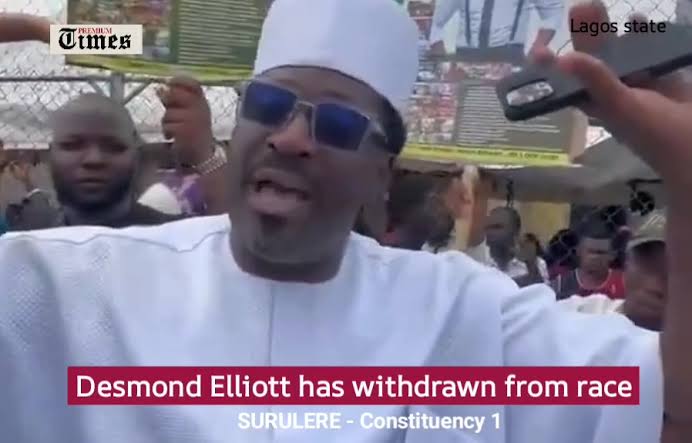
Surulere I lawmaker Desmond Elliot has withdrawn from the All Progressives Congress Lagos House of Assembly primaries, citing intimidation across multiple zones.
In a viral video posted online, the lawmaker said he was stepping out of the race despite seeking re-election under the APC. He alleged that his supporters faced intimidation during the process in several parts of the constituency.
Elliot’s decision came as the primaries held across Lagos on Tuesday. Chief of Staff to the President Femi Gbajabiamila, who represents Surulere Federal Constituency, praised the conduct of the exercise in Surulere, describing it as peaceful.
The withdrawal narrows the contest for the APC ticket in Surulere I ahead of the 2027 general election. Party officials in Lagos have not yet responded to Elliot’s claims, and the APC state chapter has not announced whether the primary in the constituency will proceed with other aspirants.
Elliot has represented Surulere I in the Lagos State House of Assembly since 2015.
https://www.instagram.com/reel/DYkCaAiMxxt/?igsh=ZWw5czl6MHJhNnRy
Politics
Political Shockwave in Rivers as Fubara Pulls Out of APC Governorship Race, Backs Party’s Candidate
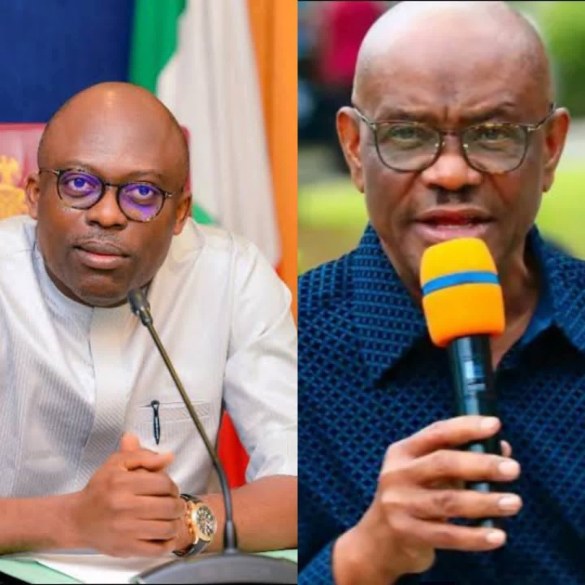
Rivers State Governor, Siminalayi Fubara, has officially withdrawn from the All Progressives Congress (APC) governorship primaries scheduled to take place on Thursday, a development that has stirred fresh political conversations across the state.
The governor announced his decision in a personally signed statement titled “My Decision to Withdraw from the Rivers State Gubernatorial Primaries,” which was released on Wednesday night.
In the statement, Fubara explained that his withdrawal followed wide consultations with political associates, stakeholders, and supporters. He stated that the decision was taken in the overall interest of peace, unity, and stability within the APC and Rivers State at large.
According to the governor, politics should not be allowed to divide the people or create unnecessary tension within the party. He stressed that preserving unity among party members and maintaining stability in the state remain more important than personal political ambition.
Fubara further pledged his total loyalty and support to whoever eventually emerges as the APC governorship candidate, assuring party faithful that he remains committed to the success and progress of the party ahead of the next general elections.
The Rivers governor also appreciated his supporters across the state for standing by him throughout the political process. He thanked party leaders, youth groups, women supporters, and political associates who had continued to show him solidarity and encouragement.
He urged his supporters not to see his withdrawal as the end of his political journey, but rather as a decision made in the collective interest of the party and the state. He also appealed to them to remain peaceful, united, and committed to the ideals of the APC.
Political observers have described the development as one of the biggest political surprises in Rivers State in recent times, especially considering the growing speculations and intense political alignments ahead of the governorship primaries.
Analysts believe the governor’s withdrawal may reshape the political calculations within the APC and influence the direction of the party’s governorship race moving forward.
The announcement has continued to generate mixed reactions from political stakeholders and residents across Rivers State. While some supporters described the move as strategic and mature, others expressed surprise over the governor’s sudden exit from the contest.
Several party faithful, however, commended Fubara for placing party unity and stability above personal ambition, noting that his decision may help reduce internal tensions and strengthen the APC ahead of the elections.
The development has also intensified attention on the remaining aspirants contesting for the APC governorship ticket, as consultations and political meetings continue ahead of the primary election.
Many observers believe the governor’s endorsement of the eventual APC candidate could play a major role in shaping the outcome of the party’s governorship battle and future political structure in the state.
As political activities continue to gather momentum in Rivers State, all eyes are now on the APC primaries and the next phase of political developments expected to unfold in the coming days.
Politics
Ugochukwu Obodo wins Owerri Municipal APC ticket again as APC Elects 27 Imo Assembly Candidates After Successful Primaries
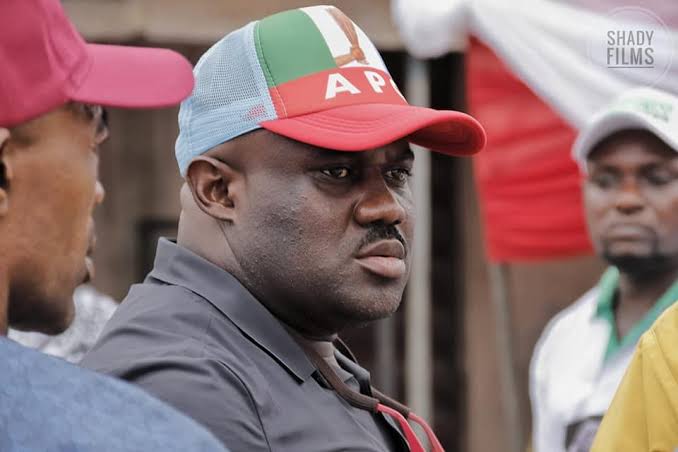
The leadership and members of the All Progressives Congress (APC) in Imo State have successfully elected 27 candidates who emerged victorious during the recently concluded Imo State House of Assembly primary elections conducted across the 305 wards of the State.
In a statement obtained by ThePressman Newspaper, the leadership of Imo APC described the primary election exercise as peaceful, transparent, credible, and reflective of the democratic ideals and internal cohesion of the party.
The information from the party commended party faithful, delegates, stakeholders, and supporters for their maturity, discipline, unity, and sportsmanship throughout the electoral process, noting that the successful conduct of the primaries further demonstrated the organizational strength and readiness of the APC ahead of the 2027 general elections.
According to the statement, the outcome of the primaries reaffirmed the confidence reposed in the party by members across the State, while also positioning the APC for a formidable outing in the forthcoming elections.
The Imo APC leadership warmly congratulated the party’s standard bearers who emerged across the 27 State Constituencies, namely:
Uchenna Osigwe – Orsu LGA
Chantel Adanna Onwumere – Ikeduru
Obodo Ugochukwu – Owerri Municipal
Hon. Ernest Udeze – Ideato North
Godspower Onyeibe – Ideato South
Mrs Julie Egbo – Owerri North
Rt. Hon. Kanayo Onyemaechi – Owerri West
Prince Marcel Amadioha – Ohaji Egbema
Hon. Gilbert Nwosu – Oguta
Hon. Uche Obiozor – Oru East
Hon. Emeka Agbor – Oru West
Rt. Hon. Obinna Egu – Ngor-Okpala
Hon. Magnus Okolie – Orlu
Hon. Innocent Ikpamezie – Mbaitoli
Hon. Modestus Osakwe – Isu
Hon.Ebonine Ozioma Worship – Njaba
Rt Hon Amarachi Chyna Iwuanyanwu – Nwangele
Hon. Chisom Ojukwu – Nkwerre
Hon. Doris Anyanwu – Ahiazu Mbaise
Hon. Princewill Amuchie – Aboh Mbaise
Hon. Henry Agbasonu – Ezinihitte Mbaise
Hon. Sam Osuji – Isiala Mbano
Ben Ozoemenam – Ehime Mbano
Hon. Emeka Okoronkwo – Okigwe
Prince Humphrey Okeke – Obowo
Lady Blessing Nwoba – Ihitte-Uboma
Hon. Chibuzor Umunnakwe – Onuimo
The party further expressed confidence that the emergence of the candidates would strengthen the APC’s chances of securing victory across the State during the 2027 general elections.

Desmond Elliot Withdraws from APC Lagos Assembly Primaries, Cites Intimidation

Political Shockwave in Rivers as Fubara Pulls Out of APC Governorship Race, Backs Party’s Candidate

Ugochukwu Obodo wins Owerri Municipal APC ticket again as APC Elects 27 Imo Assembly Candidates After Successful Primaries

-
Business2 years ago
US court acquits Air Peace boss, slams Mayfield $4000 fine
-

 Trending2 years ago
NYA demands release of ‘abducted’ Imo chairman, preaches good governance
-

 Politics2 years ago
Mexico’s new president causes concern just weeks before the US elections
-

 Politics2 years ago
Putin invites 20 world leaders
-

 Politics2 years ago
Russia bans imports of agro-products from Kazakhstan after refusal to join BRICS
-
Entertainment2 years ago
Bobrisky falls ill in police custody, rushed to hospital
-
Entertainment2 years ago
Bobrisky transferred from Immigration to FCID, spends night behind bars
-
Education2 years ago
GOVERNOR FUBARA APPOINTS COUNCIL MEMBERS FOR KEN SARO-WIWA POLYTECHNIC BORI