Connect with us

Columns

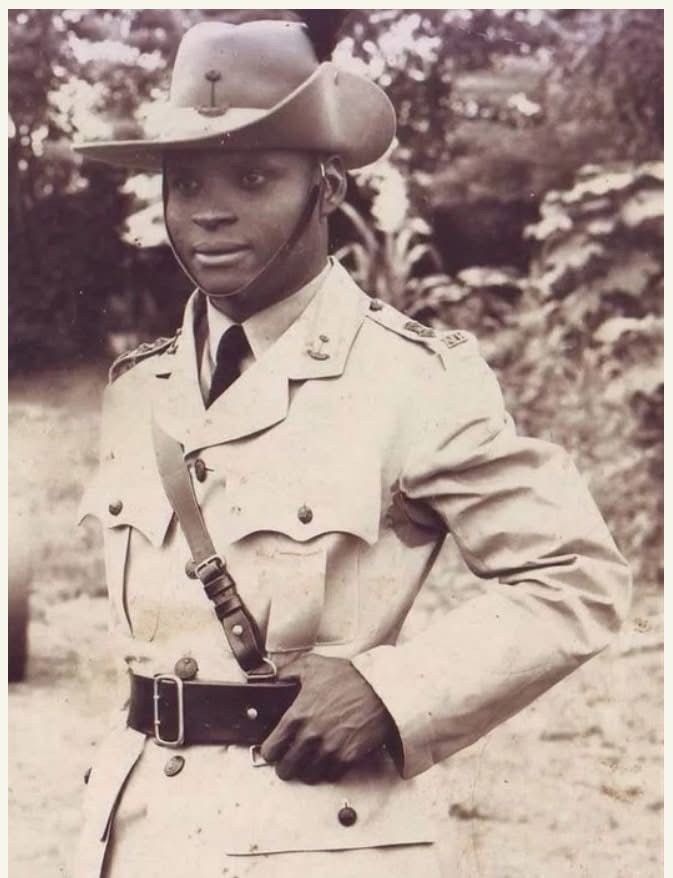
General Conrad Dibia Nwawo

Published

on


General Conrad Dibia Nwawo was a distinguished and strategic military leader whose legacy is deeply tied to one of the most defining chapters in Nigerian history—the Nigerian Civil War (1967–1970). Known for his courage, tactical brilliance, and leadership, Nwawo’s contributions both on and off the battlefield left a lasting impression on Nigeria’s military and political landscape.

Early Life and Military Background

Born in 1922 in Onicha Olona, a town in present-day Delta State, Nigeria, Conrad Dibia Nwawo rose through the ranks of the Nigerian military with distinction. Before the outbreak of civil conflict, he had already built a reputation as one of Nigeria’s earliest and most capable military officers, respected for his discipline, intellect, and dedication.

Role in the Nigerian-Biafran Civil War

When the Nigerian Civil War broke out in 1967, following the declaration of the Republic of Biafra by the Eastern Region, Nwawo aligned with the Biafran cause. As a top military strategist, he took on key leadership roles, including:

Commanding the 11th and 13th Divisions of the Biafran Army.

Leading the Biafra Commando Forces, a special unit known for engaging in unconventional and high-risk combat operations.

He was recognized for his bravery in battle, often leading his troops directly on the front lines, which inspired loyalty among his men and fear in his adversaries.
Despite the immense resource disadvantage faced by Biafran forces, Nwawo’s tactical ingenuity and resilience helped prolong the resistance and maintain the morale of Biafran troops during critical phases of the conflict.

Post-War Contributions and Legacy

After the war ended in 1970, Nwawo, like many Biafran officers, quietly returned to civilian life. But his role in post-war reconciliation and peace-building was equally impactful. Rather than retreating into isolation or bitterness, he embraced efforts that promoted national unity and healing.
He continued to be a respected elder statesman, advocating for the rights and development of the Niger Delta and the Igbo-speaking minorities of the South-South region. His experiences as both a Nigerian and Biafran general gave him a unique voice in dialogues around federalism, justice, and inclusivity in post-war Nigeria.

A Courageous and Strategic Leader

General Conrad Dibia Nwawo is remembered not just as a warrior, but as a peace advocate and visionary leader. His military service and post-war engagement reflect the complex identity of many Nigerian officers who found themselves on both sides of the country’s internal divisions.

Through his life, Nwawo embodied the difficult yet necessary transition from war to peace—a legacy that continues to inspire reflection on unity, identity, and leadership in modern Nigeria.
Columns

Professor Benjamin Oluwakayode Osuntokun (1935–1995): Pioneer of Tropical Neurology in Nigeria

Published

on


How a Nigerian neurologist reshaped global understanding of diet-related neurological disease
Professor Benjamin Oluwakayode Osuntokun stands as one of Nigeria’s most distinguished medical scientists, whose work placed African neurological research firmly on the global map. A neurologist, academic, and administrator, Osuntokun combined clinical excellence with rigorous research, becoming internationally recognised for his groundbreaking studies on tropical ataxic neuropathy and diet-related neurological disorders.

Early Life and Education

Benjamin Oluwakayode Osuntokun was born in 1935 in Ilawe-Ekiti, then part of Ondo State (now Ekiti State), Nigeria. He began his formal education at Trinity Primary School, Ilawe-Ekiti, before proceeding to Emmanuel School and later Christ’s School, Ado-Ekiti, one of Nigeria’s most prestigious secondary schools known for producing leading intellectuals and professionals.
His early academic brilliance paved the way for admission to the University of Ibadan, Nigeria’s premier university and first medical school, where he studied Medicine and Surgery. After qualifying as a medical doctor, Osuntokun pursued specialist training in neurology at Newcastle University in the United Kingdom, at a time when very few Africans had access to advanced neurological training.

Academic Career at the University of Ibadan

On returning to Nigeria, Osuntokun joined the University of Ibadan Medical School, where he would spend most of his professional life. In 1970, at a relatively young age, he was appointed Professor of Neurology and Head of Department, becoming one of the earliest Nigerian professors in this highly specialised field.
As an educator, he trained generations of Nigerian and African doctors, many of whom later became consultants and professors themselves. Beyond Nigeria, he served as a Visiting Professor at several leading institutions abroad, reflecting his growing international reputation.

Groundbreaking Research and Global Impact

Professor Osuntokun’s most influential contribution was his pioneering research into tropical ataxic neuropathy, a neurological disorder prevalent in parts of Nigeria and other tropical regions. Through meticulous clinical observation and biochemical investigation, he demonstrated that the condition was closely linked to dietary deficiencies associated with improperly processed cassava, a staple food in many Nigerian communities.
This work was revolutionary. It shifted understanding of the disease from vague clinical descriptions to a clear nutritional and biochemical basis, influencing public health policy, food processing practices, and neurological research worldwide. His findings were so influential that specific clinical features of the disorder became known in medical literature as the “Osuntokun sign.”
Over the course of his career, Osuntokun authored more than 300 scientific publications, an extraordinary output that covered neurology, nutrition, epidemiology, and tropical medicine.

Leadership and Professional Service

Osuntokun was also deeply committed to building African scientific institutions. He was a founding member of the Pan African Association of Neurological Sciences, advocating for the recognition of tropical neurology as a distinct and vital field of study. His work challenged the dominance of Euro-American disease models by highlighting conditions rooted in African environments and diets.
In recognition of his exceptional scholarly achievements, he was awarded the Nigerian National Order of Merit (NNOM) in 1984, Nigeria’s highest academic honour.

Death and Enduring Legacy

Professor Benjamin Oluwakayode Osuntokun died in 1995, leaving behind an enduring intellectual and institutional legacy. In his honour, the Benjamin Oluwakayode Osuntokun Trust was established to promote excellence in medical research and education in Nigeria.
Today, Osuntokun is remembered not only as a brilliant neurologist but as a scientist who demonstrated that world-class medical research could be conducted in Africa, by Africans, and for global benefit. His life’s work remains a cornerstone of neurological science and public health in Nigeria and beyond.

Sources

Osuntokun, B. O. Clinical and Biochemical Studies on Tropical Ataxic Neuropathy. University of Ibadan Press.

Adeloye, A. African Pioneers of Neurological Science. Ibadan University Press.

Nigerian National Order of Merit Secretariat. List of NNOM Laureates.

University of Ibadan Archives, Faculty of Medicine Records.

Pan African Association of Neurological Sciences, Historical Publications.

Continue Reading

Columns

Sir Ahmadu Bello’s Christmas Message in 1959

Published

on


“We are people of many different races, tribes and religions, who are knit together by common history, common interests and common ideals. Our diversity may be great but the things that unite us are stronger than the things that divide us.

On an occasion like this, I always remind people about our firmly rooted policy on religious tolerance. Families of all creeds and colour can rely on these assurances.

We have no intention of favouring one religion at the expense of another. Subject to overriding
need to preserve law and order, it is our determination that everyone should have absolute liberty to practise his beliefs.

It is befitting on this momentous day, on behalf of my ministers and myself, to send a special word of gratitude to all Christian missions. Let me conclude this with a personal message.

I extend my greetings to all our people who are christians on this great feast day. Let us forget the difference in our religion and remember the common brotherhood before God, by dedicating ourselves afresh to the great tasks which lie before us.”.

Continue Reading

Columns

HISTORY OF OWERRI AND ITS ORIGIN

Published

on


Owerri was founded about the 14th century by father Ekwem Oha.

His mother’s name was Arugo.
He fled from Umuori Village, Uratta in Owerri North Local Government Area of Imo State when his life was threatened by his younger brother Ndum. The threat to his life arose from the dispute over the sharing of the Funeral Cow slaughtered when their father Oha the aristocrat and embodiment of royalty died. The first son (Opara in Igbo) Ekwem was to provide the funeral cow as demanded by custom. He did not have the means to do so. He appealed to his younger brother Ndum popularly known as Ndumoha to buy the cow, which he did. Ndum asked for the head, heart and other parts of the cow that go to the first son in keeping with custom. His reason being that he Ndum, bought the funeral cow. Ekwem turned down his request and a quarrel ensued. The elders (Oha Uratta) were invited to settle the dispute. They did so by allowing tradition to prevail. Ekwem was’entitled to the aforementioned parts of the cow being the first son. Ndum did not take kindly to this and so planned to kill Ekwem in order to have his way. The plot leaked and Ekwem fled with his family at the dead of the night to Egbu a neighboring town (Community) taking with them some stores and domestic assistants. History has it that his sister was married at Egbu. His sister fearing that Ndum may look for him asked him to continue his journey to an unknown and uninhabited land for safety and settle there permanently. They set out during the night with the aid of owa (native torch) and arrived at a hill top now known as Ugwu Ekwema and settled there. They heaved a sigh of relief saying OWERELA IHE MARAYA AKA meaning HE HAS TAKEN WHAT IS HIS RIGHT or what rightly belonged to him. He sounded the drum (as he was told by his sister) to indicate his location. His sister was happy to locate him and his family the following morning. She returned to Egbu thereafter.
The morning broke and they took their first meal roast old yam together in a typical communion fashion (not served) with thanks to Almighty and merciful Father our Lord God for their safety, the thick forest in the area being infested with dangerous animals such as lions, tigers and snakes like pythons, vipers and cobras.

THE NAME OWERRI (OWERE)

The advent of the British saw the anglicizing of Owere to Owerri but pronounced as though it was spelt Owere. All the neighboring towns (communities) of Owerri were founded and existed on planet earth centuries or decades before Owerri came into existence. It is a God given land (DESTINY LAND being the slogan for Owerri Municipal) and has remained protected with all the people therein by the same God Almighty.
The British found them very clean people. Recall the presence of Nwaorie and
Otamiri rivers flanking Owerri on the West and South respectively. Owerri people
were caring, friendly and accommodating hence *:he choice of Owerri by the
British Colonial Government as first, Divisional Headquarters later Provincial
Headquarters and today a state capital of Municipal status. It is sad to note what
the so-called modern technology in culverting had done to both Nwaorie and
Otamiri rivers at the creation of Imo state in 1976 when Owerri became the state
capital. The fine bridges that flew across the rivers that once flowed with beauty
were pulled down to give way to the culverts which were perhaps
unprofessionally constructed. The rivers are now almost stagnant and would
require millions of Naira to dredge. The influence of the two rivers on the culture
of Owerri people is now historical.

THE FESTIVAL OR FEAST OF OWERRI INDGENES – ORU OWERE

Oru Owere the annual festival or feast of Owerri indigenes cannot be written
without reference to the founding of Owerri. It has been mentioned earlier that
the first meal of the founding father of Owere and his family was roast old yam,
which they ate with oil bean salad at Ugwu Ekwema (Ekwema’s hill) Our ancestral
home.
After breakfast on arriving and settling at Ugwu Ekwema, there was the need for
water for obvious reasons. They knew that the source of Otamiri was at Egbu but
were ignorant of the course of the river owing to t(ie thick rain forest of the area.
The communities or towns through which Otamirii flowed, were also known. It is
common knowledge that peculiar sounds or noise|s are characteristic of running
water from streams and rivers. That was Ekwem’ls experience that morning. He
ordered his men to use the direction of the sounds/noise to see if any could be
sighted. They obeyed his wish and by surprise stumbled on Otamiri river, close to
where Emmanuel College Owerri now stands. They ran back in excitement to
Ugwu Ewema and broke the news of the presence of what they described as
OGBU AMUMA – a pleasant early morning sunrise experience of flashing rays of
the sun on the waters of Otamiri river reminiscent:of the historical account of the
sighting of River Niger by the Scottish Explorer Mungo Park- GLITTERING IN THE
MORNING SUN.
OTAMIRI RIVER SIGHTED: Ekwem immediately commissioned his men to clear the route to the river -IKPU UZO. The route cleared after which he feasted them with corn porridge.

TWO REMARKEABLE EVENTS AND THEIR IMPACT ON OWERRI (OWERE) CULTURE

The roasting of old yams the first meal and the! corn meal entertainment developed into a cultural festival or feast ORU OWERE with which indigenes commemorate the founding of Owerri. These events tell the story of the founding of Owerri and the time or period of the year Owerri was founded viz the old yam and corn meal, which are commonly consumed at that time of the year, the rainy season. Worthy of note is the fact that the yam is old not new yam, as new yam had not yet been harvested. Therefore Oru Owere is not new yam festival.
ORU OWERE (ORU EZE)
Oru Owere is Oru Eze (the Eze’s festival). The festival is marked by a period of the observance of peace, love, friendliness and togetherness, devoid of bitterness, quarrels, antagonism and physical confrontation, no weeping when death occurs during the period, no firing of cannon and a time to make up quarrels without third party intervention as stipulated by custom. However Oha Owere is the traditional institution responsible for its conduct and yearly observance. They determine the commencement of the period by a system handed down by our ancestors. The duration of the period is equally guided) by the same system. All the key events namely the beginning of the period, the roasting of the old yam, the corn porridge entertainment (MKPU KPU UZO) and the day marking the end of the period are Orie market days. The period begins in the month of June and lasts till mid August. Between the roasting of old yam (Oru Owere Proper) and the corn porridge meal is the GRAND FINALE characterized by a colourful procession of age grade formations in Owerri community through given routes in the Old City. The Civic procession assembles at Ugwu Ekwema Civic Center (the civic center of Owerri Community) from where it talks off and terminates at the end of the procession where invited guests are received and made to have a feel of Oru Owere with traditional dances displays and entertainment. The first item of entertainment after the breaking of kolanuts by Eze Ojwere is roast old yam. Ugwu Ekwema is our ancestral home which significance informed our choice of locating the Community Civic Center.
Perhaps the reader may wish to know when Owerri indigenes are free to eat the New Yam. The eating of the new yam by Owerp indigenes begin the day immediately after MKPU KPU OZU which is the day that marks the beginning of the new calendar year in Igbo culture.
Accordingly, it is pertinent to note that Owerri people the indigenes of the capital
of Imo state do not celebrate the New Yam.
When increase in population began, there was the need to expand to other fronts. The sons of Ekwem and their families moved away from the ancestral home at Ugwu Ekwema, to different directions within the confines of the two rivers close to each other with their families leading to the growth and development of the villages of Owerri which derived their names from the sons of Ekwem. The grave of Ekwem stands prominently on the grounds of Ugwu Ekwem Civic Center. Ikenegbu was the first son followed by Onyeche, Odu and their sister Oyima hence the villages namely;
Umuororonjo
Amawom Children of Ikenegbu Umuonyeche
Umuodu
Umuoyima
The villages were named after the sons and daughter of the founder. Information has it that about eight to ten villages emerged. Some were sacked and others migrated away to places far and near in Igbo Land, East and west of the Niger with Owerri featuring in the name of their new hometowns as Owere in Diaspora. In recent times some persons who are not indigenes of Owerri, the state capital and who have never written or published for public consumption any historical account of the founding or origin of their home town or communities have become Owereologists who give unprecedented calculated false and hopelessly distorted account of the origin of Owerri as though Owerri town or community which was in existence centuries before the British expedition in 1901 had no known origin. Her indigenes are not by accident of birth but divine providence. Owerri is not a geographical expression. It has a local setting given by the indigenes. It is not a coming together or movement of people from different places coming together to settle in a place or a place mixed with occupiers and intruders or invaders. It is founded through one person and his family. Prior to the early eighties of the last century, Owerri people the indigenes of capital of Imo state did not intermarry for the reason of one blood.

Owerri people are peace loving, very friendly, dq not discriminate against any ethnic or tribal group and treat you in a way more affectionate than they do to their brothers and sisters. They are not criminal or violent by nature. Those who come to Owerri to work or find a source of livelihood come to stay and not to return from whence they came for her peace and security.

KNOWING MORE ABOUT OWERRI

If you are in Imo State without knowing something about Owerri, the State Capital, your knowledge of the State is hopelessly incomplete.
The facts to note. Owerrl i.e. Owerrl Municipal the capital of Imo State
A. The advent of the British – 1901
B. The Monarchy – the last quarter of the 17th century about 1670-1680.
The Title of the Eze of Owerrl – OZURUIGBO (The King whose authority spans a
large area of Igboland).
The first king that is, the Eze-Eze Eke Onunwa
1. Eze Eke Onunwa
1690 – 1735
2. Eze Okorie Onunwa
1735 – 1788
3. Eze Iheancho Okorie Onunwa
1788 – 1845
4. Eze Njemanze Iheanacho Okorie Onunwa Ozurigbo the First
1845 – 1920
5. Eze Ihemeje Njemanze
1921 – 1931
6. Eze Onwuegbuchulam Njemanze
1931 – 1941
7. Eze Johnson Osuji Njemanze Ozuruigbo the 2nd
1941 – 1965
8. Eze Reverend Samuel Njemanze
1966 – 1970
9. Eze Reginald Anugwolu Njemanze Ozuruigbo the 3rd
1970 – 1976
10. Eze Alexuis Anumaku Njemanze Ozuruigbo the|4th
1976 – 1988
11. Eze Emmanuel Emenyonu Njemanze Ozuruigbo the 5th
Was on the throne as Ozuruigbo the 5th by title, the 8th Njemanze on the throne and 11th king of Owerrl, was crowned on the 11th of November 1989 (11/11/89) About 1840-1850, the kindred’s of Eke Onunwa an;d Okorie Onunwa agreed to leave the crown permanently with the Njemanze family and became the kingmakers of Owerrl who decide the Njemanze that wears the crown. The oldest man from the lineage of Akalonu Okorie kindred crowns the Eze of Owerri.

C. The British Occupation: The peace with friendliness of Owerrl people was encouraging.
The British settled and built;
a. Military Hospital later named African Hospital which thereafter was renamed General Hospital and today is the Federal Medical ; Centre Owerri. The Owerri General Hospital is relocated to New Owerrl in Owerri Municipal.
b. Government School in 1906 and added the secondary wing now
Government Secondary School Owerrl in 1935 and moved the Primary School to
Wetheral Road Owerrl as Owerri Township School in 1952.

Owerrl not only Divisional Headquarters but became the provincial headquarters
of the Old Owerrl Province was what is now Imo, Abia plus Afikpo up to Diobu in
the Rivers State. The need to have a seaport informed the building of Port
Harcourt from Owerrl the Provincial headquarters. When Port Harcourt was finally
built, Delta province was carved out of Owerrl Province with Port Harcourt as its
headquarters. Note that Port Harcourt was built from Owerri as Port Harcourt never existed before the advent of the British.

Physical Features:- Owerri is a land approached as you descend hills. There are two rivers:- Nworie on the West flank while Otamiri Is on the Southern flank. The two rivers influenced the culture of the people, Owerri people do not fish in Nworie River but do so in Otamiri River, they do not eat fish from Nworie River. The source of Nworie river had a deposit of Emerald a precious solid mineral but not in commercial quantity. There is also Lake Nwebere at Imo State University, Owerri.
Owerri people were subsistence farmers but have since abandoned farming when
it became a State capital in 1976 and the arable lands acquired by government for
other development projects.

Owerri is a well planned city and is listed by the Federal government as one of the planned cities in Nigeria. It was planned by Mr. Tetlow being the headquarters of Owerri province and later by a Swiss Consortium – Finger Hooth and Partners who designed New Owerri an idea conceived by the first military Governor the then Commander Ndubuisi Kanu now Rear Admiral Rtd. which is indeed an extension of Owerri Urban.

Education:- Embraced education ab initio with schools such as the Government School, Government Secondary School Owerri and schools both primary and secondary built by the missionaries – Anglican, Catholic, Methodist, Baptist etc. and later the Alvan Ikoku College of Education Owerri the Federal government Girls’ College Owerri many private and other missiorjary secondary schools. Today there is Imo State University Owerri and the Federal Polytechnic and the Federal University of Technology Owerri in Owerri West Local Government Area.
All the missionaries have cathedrals e.g the Anglican, Catholic and Methodist and the Pentecostals while the Moslems have a Central Mosque, and the Cherubim and Seraphim all in Owerri.

The Monarchy Revisited: All Traditional Institutions in Owerri are hereditary and do not rotate. There are no ruling houses. The institution stands in one family. The hereditary system is not necessarily father to son but to a fit and proper son of the royal family.

The Njemanze / Owerri dynasty is a first class institution and has been involved in Nation Building and took part in the 1958 Constitutional Conference that ushered independence to Nigeria where Ozuruigbo of Owerri (HRH Eze Johnson Osuji Njemanze represented the Old Owerri province of the former of Eastern Nigeria as part of the delegation led by late Dr. Nnamdi Azikiwe as did the North and the West led by the late Ahmadu Bello and late Chief Obafemi Awolowo respectively.
Eze Njemanze Ihenacho of Owerri was the Vice chairman of the Council of the Traditional Rulers of the former Oil River Protectorate with Calabar as its headquarters. The Obong of Calabar was the Chairman of the Council Diplomatic Ties: Owerri monarchy had diplomatic ties with Arochukwu, Nkwere and the Benin Kingdom.

Oil Prospecting in Nigeria: This began in Owerri before the second world war. The Second World War broke out and it was suspended. The war ended and shell D’arcy returned to Owerri in the forties of the last century to continue the oil prospecting hence the shell camp in Owerri. Shell was in Owerri up to the early sixties before moving to Port Harcourt when their level of technology could not strike oil in Iho in Ikeduru LG.A of Imo state a few Kilometers away from Owerri. However, today there is a Chevron Rig in Owerri but not yet commissioned.

Culture: As subsistence farmers had implements for farming, practiced crop rotation, built barns for the storage of yams, built native wooden bridges (Igbo) across the rivers to link their farm land across the rivers Nworie and Otamiri, had their cultural dances, songs, moonlight songs, musical instruments, the wooden xylophone, opi or oja and odu as wind instruments, drums and percussions made of wood and animal skin, clay pot instruments etc. marriage rites, birth ceremonies and funeral ceremonies punishment for crimes depending on the scene of the act.

Mbari Culture had its root in Owerri: It is now a thing of the past as religion had dealt a big blow on the arts and crafts etc.
Generally religion/Christianity in the main relegated our culture


Continue Reading

Trending