
Columns
HISTORY OF OWERRI AND ITS ORIGIN

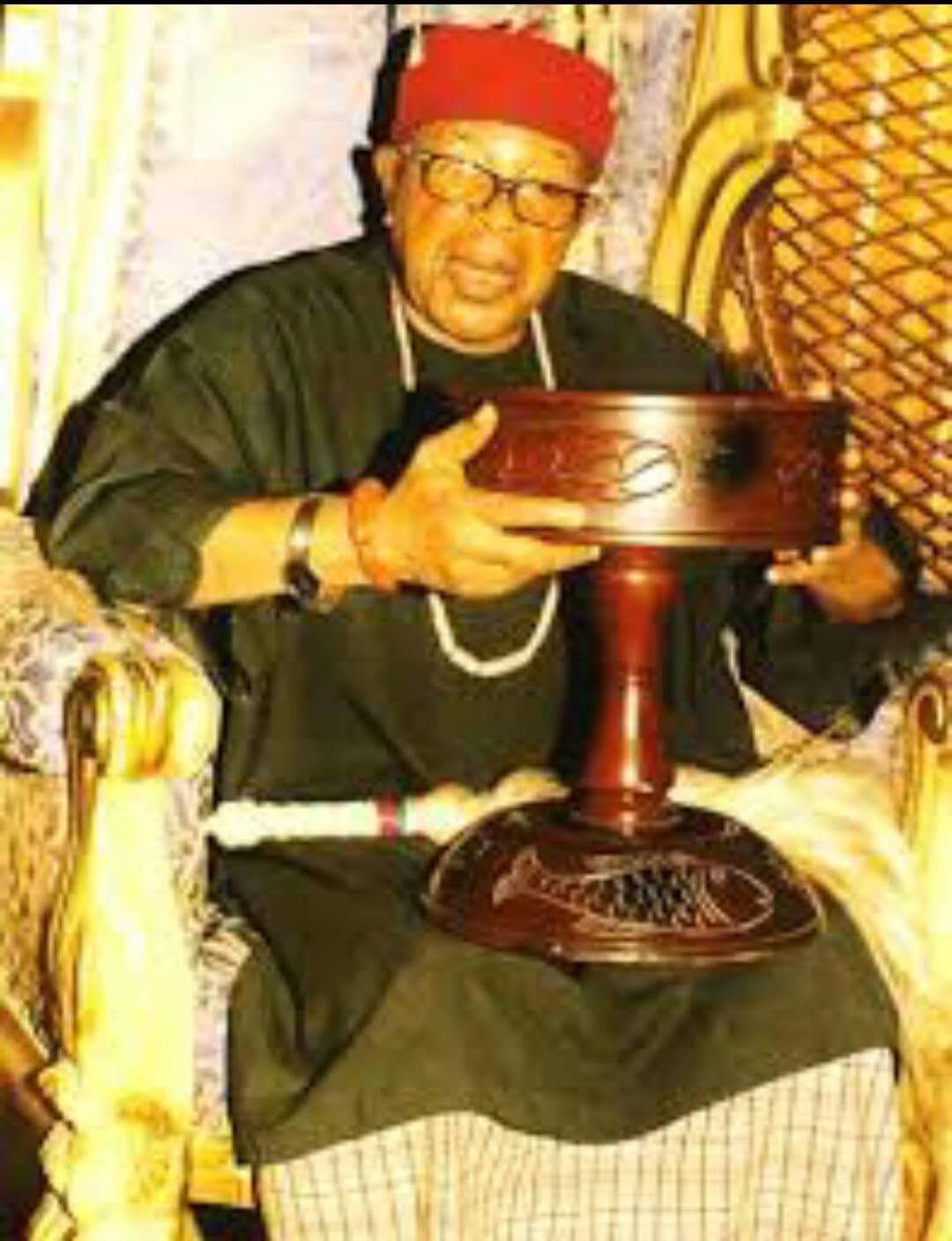
Owerri was founded about the 14th century by father Ekwem Oha.
His mother’s name was Arugo.
He fled from Umuori Village, Uratta in Owerri North Local Government Area of Imo State when his life was threatened by his younger brother Ndum. The threat to his life arose from the dispute over the sharing of the Funeral Cow slaughtered when their father Oha the aristocrat and embodiment of royalty died. The first son (Opara in Igbo) Ekwem was to provide the funeral cow as demanded by custom. He did not have the means to do so. He appealed to his younger brother Ndum popularly known as Ndumoha to buy the cow, which he did. Ndum asked for the head, heart and other parts of the cow that go to the first son in keeping with custom. His reason being that he Ndum, bought the funeral cow. Ekwem turned down his request and a quarrel ensued. The elders (Oha Uratta) were invited to settle the dispute. They did so by allowing tradition to prevail. Ekwem was’entitled to the aforementioned parts of the cow being the first son. Ndum did not take kindly to this and so planned to kill Ekwem in order to have his way. The plot leaked and Ekwem fled with his family at the dead of the night to Egbu a neighboring town (Community) taking with them some stores and domestic assistants. History has it that his sister was married at Egbu. His sister fearing that Ndum may look for him asked him to continue his journey to an unknown and uninhabited land for safety and settle there permanently. They set out during the night with the aid of owa (native torch) and arrived at a hill top now known as Ugwu Ekwema and settled there. They heaved a sigh of relief saying OWERELA IHE MARAYA AKA meaning HE HAS TAKEN WHAT IS HIS RIGHT or what rightly belonged to him. He sounded the drum (as he was told by his sister) to indicate his location. His sister was happy to locate him and his family the following morning. She returned to Egbu thereafter.
The morning broke and they took their first meal roast old yam together in a typical communion fashion (not served) with thanks to Almighty and merciful Father our Lord God for their safety, the thick forest in the area being infested with dangerous animals such as lions, tigers and snakes like pythons, vipers and cobras.
THE NAME OWERRI (OWERE)
The advent of the British saw the anglicizing of Owere to Owerri but pronounced as though it was spelt Owere. All the neighboring towns (communities) of Owerri were founded and existed on planet earth centuries or decades before Owerri came into existence. It is a God given land (DESTINY LAND being the slogan for Owerri Municipal) and has remained protected with all the people therein by the same God Almighty.
The British found them very clean people. Recall the presence of Nwaorie and
Otamiri rivers flanking Owerri on the West and South respectively. Owerri people
were caring, friendly and accommodating hence *:he choice of Owerri by the
British Colonial Government as first, Divisional Headquarters later Provincial
Headquarters and today a state capital of Municipal status. It is sad to note what
the so-called modern technology in culverting had done to both Nwaorie and
Otamiri rivers at the creation of Imo state in 1976 when Owerri became the state
capital. The fine bridges that flew across the rivers that once flowed with beauty
were pulled down to give way to the culverts which were perhaps
unprofessionally constructed. The rivers are now almost stagnant and would
require millions of Naira to dredge. The influence of the two rivers on the culture
of Owerri people is now historical.
THE FESTIVAL OR FEAST OF OWERRI INDGENES – ORU OWERE
Oru Owere the annual festival or feast of Owerri indigenes cannot be written
without reference to the founding of Owerri. It has been mentioned earlier that
the first meal of the founding father of Owere and his family was roast old yam,
which they ate with oil bean salad at Ugwu Ekwema (Ekwema’s hill) Our ancestral
home.
After breakfast on arriving and settling at Ugwu Ekwema, there was the need for
water for obvious reasons. They knew that the source of Otamiri was at Egbu but
were ignorant of the course of the river owing to t(ie thick rain forest of the area.
The communities or towns through which Otamirii flowed, were also known. It is
common knowledge that peculiar sounds or noise|s are characteristic of running
water from streams and rivers. That was Ekwem’ls experience that morning. He
ordered his men to use the direction of the sounds/noise to see if any could be
sighted. They obeyed his wish and by surprise stumbled on Otamiri river, close to
where Emmanuel College Owerri now stands. They ran back in excitement to
Ugwu Ewema and broke the news of the presence of what they described as
OGBU AMUMA – a pleasant early morning sunrise experience of flashing rays of
the sun on the waters of Otamiri river reminiscent:of the historical account of the
sighting of River Niger by the Scottish Explorer Mungo Park- GLITTERING IN THE
MORNING SUN.
OTAMIRI RIVER SIGHTED: Ekwem immediately commissioned his men to clear the route to the river -IKPU UZO. The route cleared after which he feasted them with corn porridge.
TWO REMARKEABLE EVENTS AND THEIR IMPACT ON OWERRI (OWERE) CULTURE
The roasting of old yams the first meal and the! corn meal entertainment developed into a cultural festival or feast ORU OWERE with which indigenes commemorate the founding of Owerri. These events tell the story of the founding of Owerri and the time or period of the year Owerri was founded viz the old yam and corn meal, which are commonly consumed at that time of the year, the rainy season. Worthy of note is the fact that the yam is old not new yam, as new yam had not yet been harvested. Therefore Oru Owere is not new yam festival.
ORU OWERE (ORU EZE)
Oru Owere is Oru Eze (the Eze’s festival). The festival is marked by a period of the observance of peace, love, friendliness and togetherness, devoid of bitterness, quarrels, antagonism and physical confrontation, no weeping when death occurs during the period, no firing of cannon and a time to make up quarrels without third party intervention as stipulated by custom. However Oha Owere is the traditional institution responsible for its conduct and yearly observance. They determine the commencement of the period by a system handed down by our ancestors. The duration of the period is equally guided) by the same system. All the key events namely the beginning of the period, the roasting of the old yam, the corn porridge entertainment (MKPU KPU UZO) and the day marking the end of the period are Orie market days. The period begins in the month of June and lasts till mid August. Between the roasting of old yam (Oru Owere Proper) and the corn porridge meal is the GRAND FINALE characterized by a colourful procession of age grade formations in Owerri community through given routes in the Old City. The Civic procession assembles at Ugwu Ekwema Civic Center (the civic center of Owerri Community) from where it talks off and terminates at the end of the procession where invited guests are received and made to have a feel of Oru Owere with traditional dances displays and entertainment. The first item of entertainment after the breaking of kolanuts by Eze Ojwere is roast old yam. Ugwu Ekwema is our ancestral home which significance informed our choice of locating the Community Civic Center.
Perhaps the reader may wish to know when Owerri indigenes are free to eat the New Yam. The eating of the new yam by Owerp indigenes begin the day immediately after MKPU KPU OZU which is the day that marks the beginning of the new calendar year in Igbo culture.
Accordingly, it is pertinent to note that Owerri people the indigenes of the capital
of Imo state do not celebrate the New Yam.
When increase in population began, there was the need to expand to other fronts. The sons of Ekwem and their families moved away from the ancestral home at Ugwu Ekwema, to different directions within the confines of the two rivers close to each other with their families leading to the growth and development of the villages of Owerri which derived their names from the sons of Ekwem. The grave of Ekwem stands prominently on the grounds of Ugwu Ekwem Civic Center. Ikenegbu was the first son followed by Onyeche, Odu and their sister Oyima hence the villages namely;
Umuororonjo
Amawom Children of Ikenegbu Umuonyeche
Umuodu
Umuoyima
The villages were named after the sons and daughter of the founder. Information has it that about eight to ten villages emerged. Some were sacked and others migrated away to places far and near in Igbo Land, East and west of the Niger with Owerri featuring in the name of their new hometowns as Owere in Diaspora. In recent times some persons who are not indigenes of Owerri, the state capital and who have never written or published for public consumption any historical account of the founding or origin of their home town or communities have become Owereologists who give unprecedented calculated false and hopelessly distorted account of the origin of Owerri as though Owerri town or community which was in existence centuries before the British expedition in 1901 had no known origin. Her indigenes are not by accident of birth but divine providence. Owerri is not a geographical expression. It has a local setting given by the indigenes. It is not a coming together or movement of people from different places coming together to settle in a place or a place mixed with occupiers and intruders or invaders. It is founded through one person and his family. Prior to the early eighties of the last century, Owerri people the indigenes of capital of Imo state did not intermarry for the reason of one blood.
Owerri people are peace loving, very friendly, dq not discriminate against any ethnic or tribal group and treat you in a way more affectionate than they do to their brothers and sisters. They are not criminal or violent by nature. Those who come to Owerri to work or find a source of livelihood come to stay and not to return from whence they came for her peace and security.
KNOWING MORE ABOUT OWERRI
If you are in Imo State without knowing something about Owerri, the State Capital, your knowledge of the State is hopelessly incomplete.
The facts to note. Owerrl i.e. Owerrl Municipal the capital of Imo State
A. The advent of the British – 1901
B. The Monarchy – the last quarter of the 17th century about 1670-1680.
The Title of the Eze of Owerrl – OZURUIGBO (The King whose authority spans a
large area of Igboland).
The first king that is, the Eze-Eze Eke Onunwa
1. Eze Eke Onunwa
1690 – 1735
2. Eze Okorie Onunwa
1735 – 1788
3. Eze Iheancho Okorie Onunwa
1788 – 1845
4. Eze Njemanze Iheanacho Okorie Onunwa Ozurigbo the First
1845 – 1920
5. Eze Ihemeje Njemanze
1921 – 1931
6. Eze Onwuegbuchulam Njemanze
1931 – 1941
7. Eze Johnson Osuji Njemanze Ozuruigbo the 2nd
1941 – 1965
8. Eze Reverend Samuel Njemanze
1966 – 1970
9. Eze Reginald Anugwolu Njemanze Ozuruigbo the 3rd
1970 – 1976
10. Eze Alexuis Anumaku Njemanze Ozuruigbo the|4th
1976 – 1988
11. Eze Emmanuel Emenyonu Njemanze Ozuruigbo the 5th
Was on the throne as Ozuruigbo the 5th by title, the 8th Njemanze on the throne and 11th king of Owerrl, was crowned on the 11th of November 1989 (11/11/89) About 1840-1850, the kindred’s of Eke Onunwa an;d Okorie Onunwa agreed to leave the crown permanently with the Njemanze family and became the kingmakers of Owerrl who decide the Njemanze that wears the crown. The oldest man from the lineage of Akalonu Okorie kindred crowns the Eze of Owerri.
C. The British Occupation: The peace with friendliness of Owerrl people was encouraging.
The British settled and built;
a. Military Hospital later named African Hospital which thereafter was renamed General Hospital and today is the Federal Medical ; Centre Owerri. The Owerri General Hospital is relocated to New Owerrl in Owerri Municipal.
b. Government School in 1906 and added the secondary wing now
Government Secondary School Owerrl in 1935 and moved the Primary School to
Wetheral Road Owerrl as Owerri Township School in 1952.
Owerrl not only Divisional Headquarters but became the provincial headquarters
of the Old Owerrl Province was what is now Imo, Abia plus Afikpo up to Diobu in
the Rivers State. The need to have a seaport informed the building of Port
Harcourt from Owerrl the Provincial headquarters. When Port Harcourt was finally
built, Delta province was carved out of Owerrl Province with Port Harcourt as its
headquarters. Note that Port Harcourt was built from Owerri as Port Harcourt never existed before the advent of the British.
Physical Features:- Owerri is a land approached as you descend hills. There are two rivers:- Nworie on the West flank while Otamiri Is on the Southern flank. The two rivers influenced the culture of the people, Owerri people do not fish in Nworie River but do so in Otamiri River, they do not eat fish from Nworie River. The source of Nworie river had a deposit of Emerald a precious solid mineral but not in commercial quantity. There is also Lake Nwebere at Imo State University, Owerri.
Owerri people were subsistence farmers but have since abandoned farming when
it became a State capital in 1976 and the arable lands acquired by government for
other development projects.
Owerri is a well planned city and is listed by the Federal government as one of the planned cities in Nigeria. It was planned by Mr. Tetlow being the headquarters of Owerri province and later by a Swiss Consortium – Finger Hooth and Partners who designed New Owerri an idea conceived by the first military Governor the then Commander Ndubuisi Kanu now Rear Admiral Rtd. which is indeed an extension of Owerri Urban.
Education:- Embraced education ab initio with schools such as the Government School, Government Secondary School Owerri and schools both primary and secondary built by the missionaries – Anglican, Catholic, Methodist, Baptist etc. and later the Alvan Ikoku College of Education Owerri the Federal government Girls’ College Owerri many private and other missiorjary secondary schools. Today there is Imo State University Owerri and the Federal Polytechnic and the Federal University of Technology Owerri in Owerri West Local Government Area.
All the missionaries have cathedrals e.g the Anglican, Catholic and Methodist and the Pentecostals while the Moslems have a Central Mosque, and the Cherubim and Seraphim all in Owerri.
The Monarchy Revisited: All Traditional Institutions in Owerri are hereditary and do not rotate. There are no ruling houses. The institution stands in one family. The hereditary system is not necessarily father to son but to a fit and proper son of the royal family.
The Njemanze / Owerri dynasty is a first class institution and has been involved in Nation Building and took part in the 1958 Constitutional Conference that ushered independence to Nigeria where Ozuruigbo of Owerri (HRH Eze Johnson Osuji Njemanze represented the Old Owerri province of the former of Eastern Nigeria as part of the delegation led by late Dr. Nnamdi Azikiwe as did the North and the West led by the late Ahmadu Bello and late Chief Obafemi Awolowo respectively.
Eze Njemanze Ihenacho of Owerri was the Vice chairman of the Council of the Traditional Rulers of the former Oil River Protectorate with Calabar as its headquarters. The Obong of Calabar was the Chairman of the Council Diplomatic Ties: Owerri monarchy had diplomatic ties with Arochukwu, Nkwere and the Benin Kingdom.
Oil Prospecting in Nigeria: This began in Owerri before the second world war. The Second World War broke out and it was suspended. The war ended and shell D’arcy returned to Owerri in the forties of the last century to continue the oil prospecting hence the shell camp in Owerri. Shell was in Owerri up to the early sixties before moving to Port Harcourt when their level of technology could not strike oil in Iho in Ikeduru LG.A of Imo state a few Kilometers away from Owerri. However, today there is a Chevron Rig in Owerri but not yet commissioned.
Culture: As subsistence farmers had implements for farming, practiced crop rotation, built barns for the storage of yams, built native wooden bridges (Igbo) across the rivers to link their farm land across the rivers Nworie and Otamiri, had their cultural dances, songs, moonlight songs, musical instruments, the wooden xylophone, opi or oja and odu as wind instruments, drums and percussions made of wood and animal skin, clay pot instruments etc. marriage rites, birth ceremonies and funeral ceremonies punishment for crimes depending on the scene of the act.
Mbari Culture had its root in Owerri: It is now a thing of the past as religion had dealt a big blow on the arts and crafts etc.
Generally religion/Christianity in the main relegated our culture





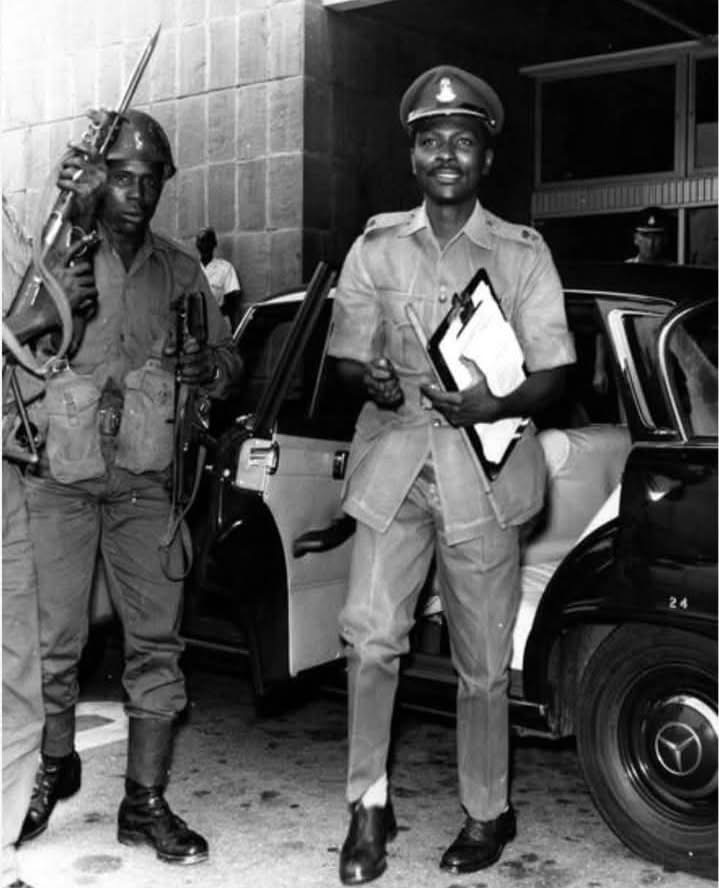
How Yakubu Gowon decided to enter the Army is quite interesting. Encouraged by his British Principal and Vice-Principal to go military, he was nevertheless torn between a career in the Army and competing options as a teacher, engineer, or physician. So he wrote out the options on little pieces of paper placed them inside a Bible and prayed. Then, with his eyes closed, he opened the Bible and picked one at random. It was the Army.
Throughout his military career he would repeatedly approach issues with a r!fle in one hand and a Bible in the other. Years later he would come to be regarded by most as a model of a “kinder, gentler” soldier. Some have nicknamed him “The Preacher”.
In 1954, after passing an entrance examination, he attended several interviews before being sent to the Regular Officers Cadet School at Teshie in Ghana – along with Patrick Anwuna, Alexander Madiebo, Michael Okwechime and Arthur Unegbe. This was followed by a course at Eton Hall in Chester, UK, followed by formal cadet training at the Royal Military Academy, Sandhurst (RMAS). He was a Cadet Sergeant at the RMAS and was commissioned 2/Lt in December 1956. It was at the RMAS that he acquired the nickname “Jack,” the closest sound to “Yakubu” his British instructors could think of.
The above is part of a piece put lol together by Nowa Omoigui, Nigerian military historian and cardiologist.
Gowon later became Head of State and had one of the most troubling dispensation in the history of Nigeria. He was removed from office in 1975 by Murtala Muhammed.
On how he survived immediately after his removal from office, he said in an interview:
“I can say with absolute authority that I may not have anything today, but honestly, at least I have a clear conscience. I thank Idi Amin and (Gnassingbé) Eyadema for the help they gave me to have money to start off with.”
Ethnic African Stories
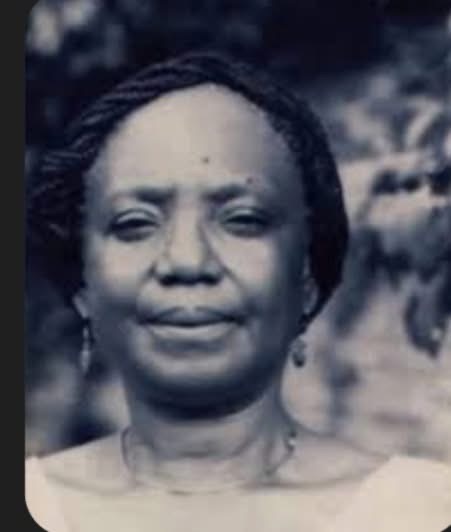
The Imo State born writer and teacher who is largely referred to as the “mother of African Literature”, was the first African woman to publish a novel in English.
Flora belived that African women were unjustly portrayed (in the books of her male counterparts) as people who were doubly malleable, as people who didn’t have even a vestige voice of their own: people who must, for instance, eat fufu not exactly because they wanted to eat fufu but because men insisted that they eat fufu, people who must live in the shadows of men… So she basically did the opposite of this in her books where she gave women prime places, using her pen to unfold to the whole world, in concrete clarity, what she believed ought to be the generally accepted societal ethos.
She celebrated the strength, tenacity and courage of African women, told their success stories in glittering terms, and sang their praises to the stratosphere.
She was born January 13, 92 years ago in Oguta – Imo State, and passed away on October 13, 1993, after enduring a server bout of pneumonia.
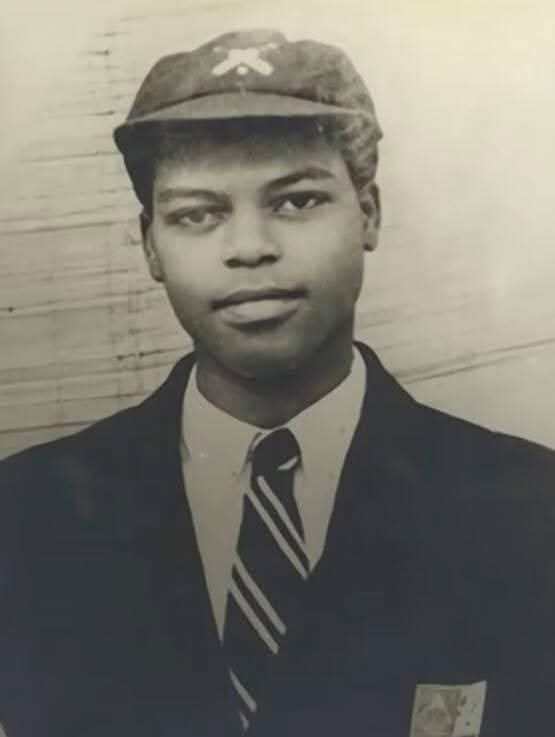
Michael Ibru was a pioneering Nigerian entrepreneur, philanthropist, and founder of the Ibru Organisation, one of the most influential business groups in West Africa. His life reflects ambition, discipline, and the transformation of opportunity into a diversified empire.
Early Life and Background
Born in 1930, Michael Ibru hailed from Agbarha-Otor, near Ughelli.
He was the eldest of seven children in a prominent family. His mother was the daughter of the wealthy Ovedje Osadjere of Olomu, which placed him within a lineage of both traditional influence and commercial awareness.
Growing up in the Niger Delta region, young Ibru was exposed early to trade, mobility, and the importance of enterprise in coastal and riverine communities.
Education and Formative Years
A defining stage of his early life was his education at Igbobi College Yaba, one of Nigeria’s most prestigious secondary schools at the time.
At Igbobi College, Michael Ibru distinguished himself not only academically but also in leadership, eventually serving as Senior Prefect. This position reflected his discipline, influence, and ability to lead peers—qualities that later shaped his business career.
His time at the institution helped refine his worldview and exposed him to structured education during a period when Nigeria was still under colonial administration.
Early Career and Exposure to Business
After completing his studies, he briefly worked with the United Africa Company (UAC), one of the most powerful trading firms operating in West Africa at the time.
This experience exposed him to:
Large-scale import and export systems
Corporate structure and logistics
Commercial distribution networks
However, rather than remain in salaried employment, he chose the path of entrepreneurship—a decision that would redefine his life and legacy.
The Birth of a Business Empire
In 1956, Michael Ibru founded a frozen fish business.
At the time, frozen food distribution was still relatively new in Nigeria, and Ibru identified a gap in the market: the need for affordable, preserved protein sources in urban centres.
His venture quickly expanded due to:
Strong demand for fish in growing cities
Efficient supply chain management
Strategic importation and distribution systems
This modest beginning became the foundation of what would evolve into the Ibru Organisation.
Expansion into a Conglomerate
Over time, the Ibru Organisation grew into a diversified business empire spanning multiple sectors, including:
Food and seafood processing
Aviation and logistics
Hospitality and real estate
Finance and banking
Oil and marine services
Media and publishing
Agriculture and industrial production
The group became one of the largest family-owned conglomerates in West Africa, with numerous subsidiaries operating across Nigeria and beyond.
Rather than relying on a single industry, Michael Ibru built a multi-sectoral business model, which helped the organisation withstand economic fluctuations and remain competitive for decades.
Leadership Style and Business Philosophy
Michael Ibru was widely regarded as a strategic thinker who believed in:
Identifying unmet market needs
Investing in scalable industries
Building long-term institutional structures
Empowering family-led continuity in business
His leadership approach combined traditional values with modern corporate thinking, allowing the Ibru Organisation to grow into a structured enterprise rather than a short-term venture.
Philanthropy and Social Impact
Beyond commerce, Michael Ibru was deeply committed to philanthropy.
His contributions included:
Support for education and scholarships
Community development initiatives
Investment in youth empowerment
Assistance to local infrastructure and social welfare projects
He believed that business success should translate into societal progress, particularly in education and opportunity creation.
Legacy of the Ibru Organisation
The Ibru Organisation remains one of Nigeria’s most recognised business groups, continuing to operate through various subsidiaries across sectors.
Its legacy is defined by:
Industrial diversification
Private sector growth in post-independence Nigeria
Family-led business continuity
Contribution to West Africa’s economic development
From a young student at Igbobi College Yaba to the founder of a continental business empire, Michael Ibru represents the story of vision, risk-taking, and entrepreneurial excellence.
His journey shows how observation, opportunity, and courage can transform a simple idea—like frozen fish distribution—into a legacy that shaped industries across Africa.
Source
Biographical and historical records on Michael Ibru
Public information on the development of the Ibru Organisation
Educational history of Igbobi College Yaba
Historical context of Nigerian post-colonial entrepreneurship and trade development

Bandits behind Ogbomoso school abduction will face full wrath of the law- President Tinubu

PDP to screen Goodluck Jonathan on Tuesday as its sole Presidential aspirant For 2027 race

Oshiomhole wins Edo APC senatorial primaries unopposed

-
Business2 years ago
US court acquits Air Peace boss, slams Mayfield $4000 fine
-
 Trending2 years ago
NYA demands release of ‘abducted’ Imo chairman, preaches good governance
-

 Politics2 years ago
Mexico’s new president causes concern just weeks before the US elections
-
 Politics2 years ago
Putin invites 20 world leaders
-
 Politics2 years ago
Russia bans imports of agro-products from Kazakhstan after refusal to join BRICS
-
Entertainment2 years ago
Bobrisky falls ill in police custody, rushed to hospital
-
Entertainment2 years ago
Bobrisky transferred from Immigration to FCID, spends night behind bars
-
Education2 years ago
GOVERNOR FUBARA APPOINTS COUNCIL MEMBERS FOR KEN SARO-WIWA POLYTECHNIC BORI