
Politics
German election 2025: Economy, Ukraine and JD Vance dominate final debate

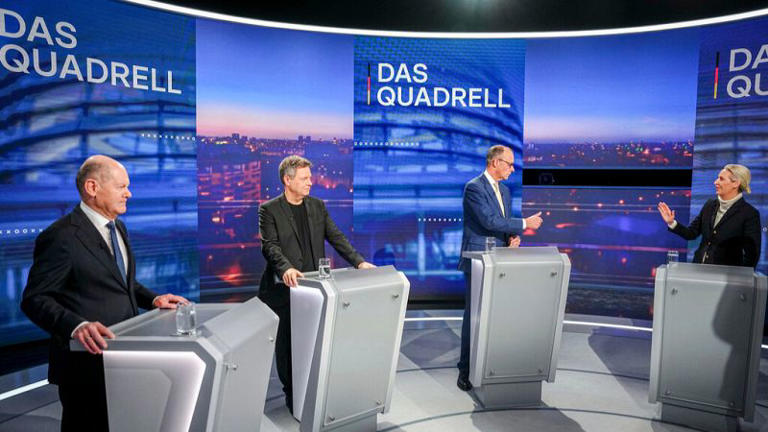
Afiery final election debate between Germany’s four leading chancellor candidates featured the economy, Ukraine, migration and US Vice President JD Vance.
The quartet sparred on Ukraine, with Friedrich Merz, the chancellor candidate for the centre-right Christian Democratic Union (CDU), saying Germany was “not neutral; we are on the side of Ukraine.”
Alice Weidel, the pick for the far-right Alternative for Germany (AfD) party, insisted that “peace and war will decide this election”.
She said that Merz’s proposal to send powerful Taurus cruise missiles to Ukraine was a “provocation to Russia” and heaped praise on US President Donald Trump’s efforts to push forward peace negotiations.
Merz suggested Weidel was avoiding discussing Moscow’s culpability for the war and that Russian President Vladimir Putin had his eyes on “NATO territory”. The Greens chancellor candidate Robert Habeck said that all parties except the AfD were in unison over their support for Ukraine, a sentiment echoed by Merz.
Economy
Germany’s faltering economy, which has seen two years of poor growth, was a central topic during the debate.
Merz said that the key to resolving the country’s economic woes was to get “bureaucracy under control.” He also suggested that the former government’s decision to shut down Germany’s remaining nuclear power plants in the midst of an energy crisis was a mistake that contributed to higher energy costs.
Weidel agreed with Merz, pledging her support for “safe and reliable nuclear power, coal and gas.” She blamed the “green energy transition” for pushing up prices.
Habeck, the country’s current economy minister, said that Germany’s poor economy could be blamed on the absence of cheap Russian gas and a shrinking export market. He blamed Putin for the country’s troubles, saying Germany’s previous reliance on Russian gas was largely to blame for its current struggle with high energy prices.
Germany needs “less bureaucracy” and more investment in “infrastructure, trains, bridges, digitalisation.” He also said the gap between the rich and poor was getting wider.
Social Democratic Party (SPD) candidate Olaf Scholz agreed with Habeck that Russia’s invasion of Ukraine was to blame for high energy prices, but also defended his government’s response and insisted that the highest prices were over.
JD Vance and Donald Trump
Scholz was delivered a blow over the weekend when it emerged that the new US administration didn’t meet him on the sidelines of the Munich Security Conference, instead meeting with Weidel.
Weidel argued her party was open to good relations with the US as well as China. She expressed her support for a controversial speech made by Vance at the summit, in which he stunned European leaders by criticising their democracies and the existence of “firewalls” against far-right parties.
Merz was clear about his disagreement with Vance, telling the audience he would not “be told by an American vice president who I can and cannot talk to.” He argued that he had accepted the election result in the US and expected the US government to do the same for Germany.
Habeck, for his part, said the Trump administration had launched a “full-frontal assault on the values of the Western world, on those things which originally came to Europe from America: law and order, liberal democracy, the free market, the rules-based order, the very foundations of our politics.”
The Greens chancellor candidate also accused the US of making deals with Putin. “Every one else should have a problem with that,” he said.
Merz emerges as winner
Merz emerged as the winner from the duel according to the result of a Forsa flash poll, which found that 32% were in his favour.
Habeck was the most likeable, with 34% of respondents backing him, with Merz following at 23%. Despite this, only 13% trusted Habeck to lead the country, compared to 42% who trusted Merz.
Merz is on track to become the country’s next likely leader with the CDU leading with 29% of the vote, according to the latest YouGov poll. The AfD are in second place with 21%, however all other parties have ruled out joining a coalition with them.
On Sunday, Merz suggested he would be open to joining a coalition with the SPD and even the Greens.
“I think the Social Democrats and the Greens have understood that they can’t just carry on as before,” he said. “But we have a plan for this country: Germany must move forward, we have to take our foot off the brakes.”





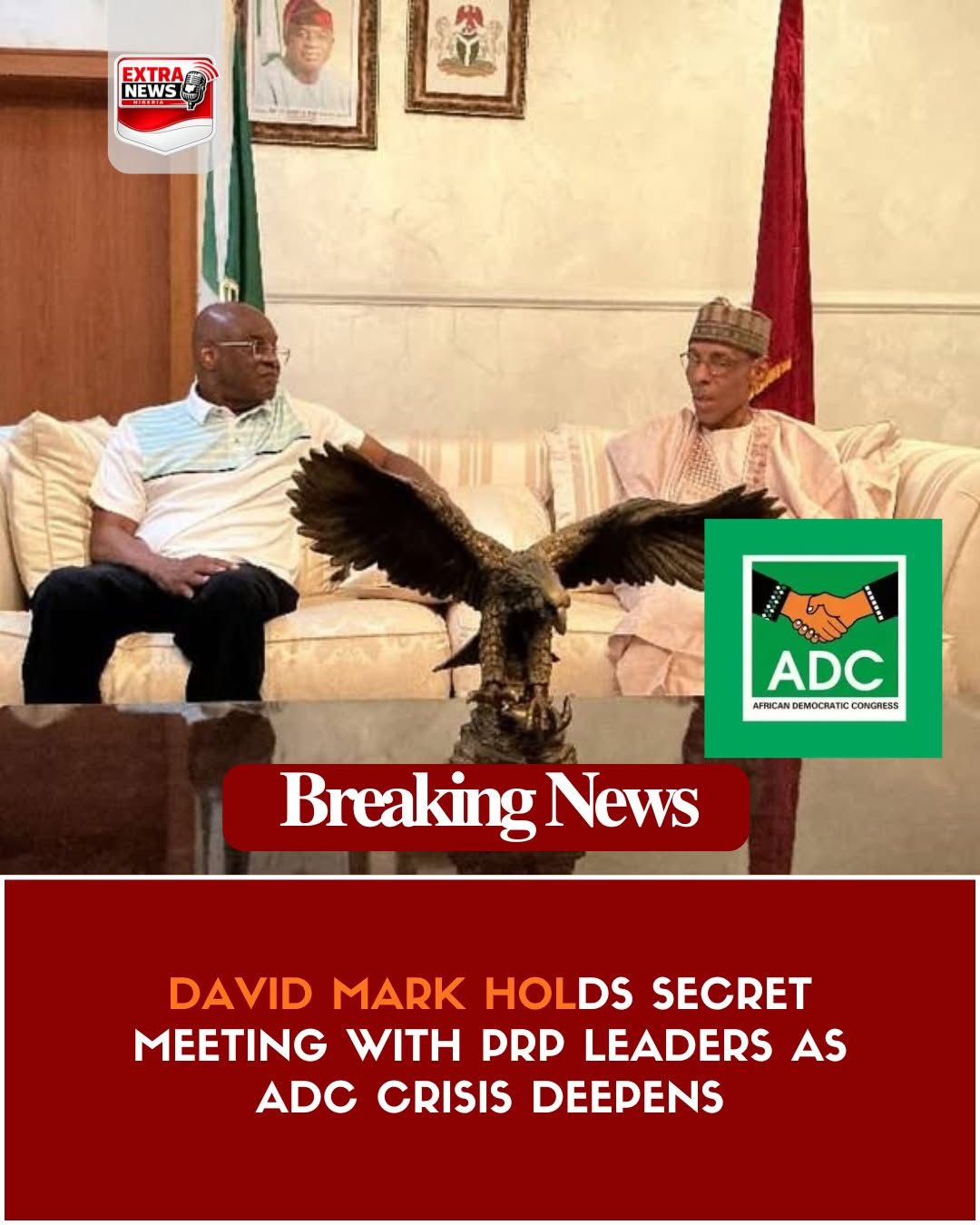
The embattled National Chairman of the African Democratic Congress, David Mark, on Friday held a closed-door meeting with leaders of the Peoples Redemption Party in Abuja. The private consultation is seen as a fresh round of political moves as the ADC continues to battle a lingering leadership crisis and growing internal divisions.
Top figures from both parties were said to be present at the meeting, including PRP National Chairman Hakeem Baba-Ahmed and senior ADC officials. The development is already drawing attention as opposition parties continue realignments ahead of the 2027 political season, with many watching closely for possible alliances and next steps in the party crisis.
Politics
“ADC is a Holy Party, Cannot be used to Scam Nigerians Again” – Hon Success Opara tells David Mark
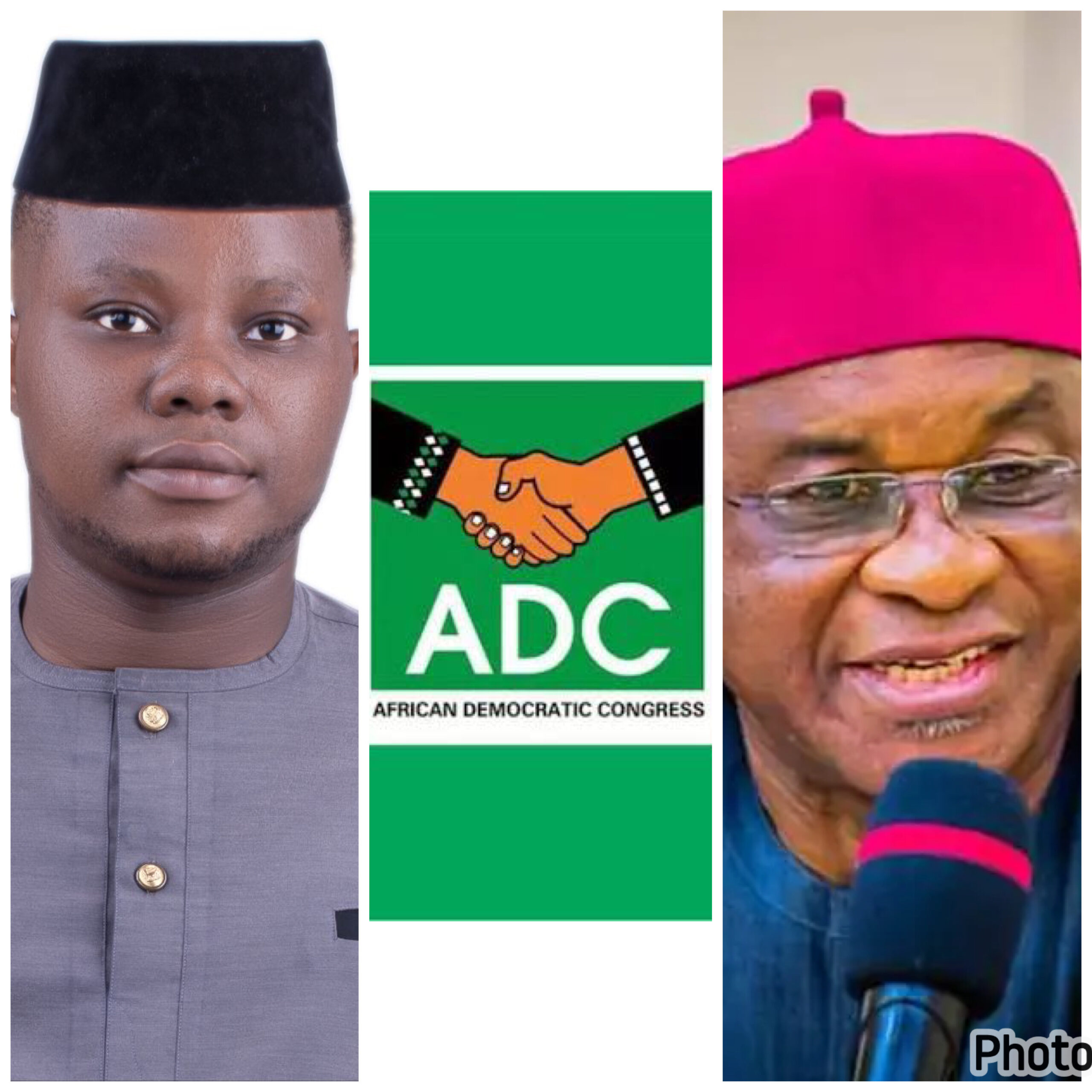
ADC Party in Turmoil: Hon Success Opara Slams Leadership, Warns Against Scamming Nigerians
Abuja, Nigeria – The African Democratic Congress (ADC) is facing internal strife as Hon Success Opara, a prominent party official, has warned against attempts to use the party to deceive Nigerians. Opara specifically criticized the leadership of David Mark, stating that the party cannot be used to scam citizens again.
“ADC holy Party cannot be used to scam Nigerians again,” Opara said, emphasizing that those forming coalitions are hindering the party’s growth and denying youths opportunities to thrive.
“Those who are forming coalition don’t want to give the youths the chance to strive in the party,” she added.
Opara’s statement highlights the deepening divisions within the ADC, with concerns over leadership and the party’s direction.
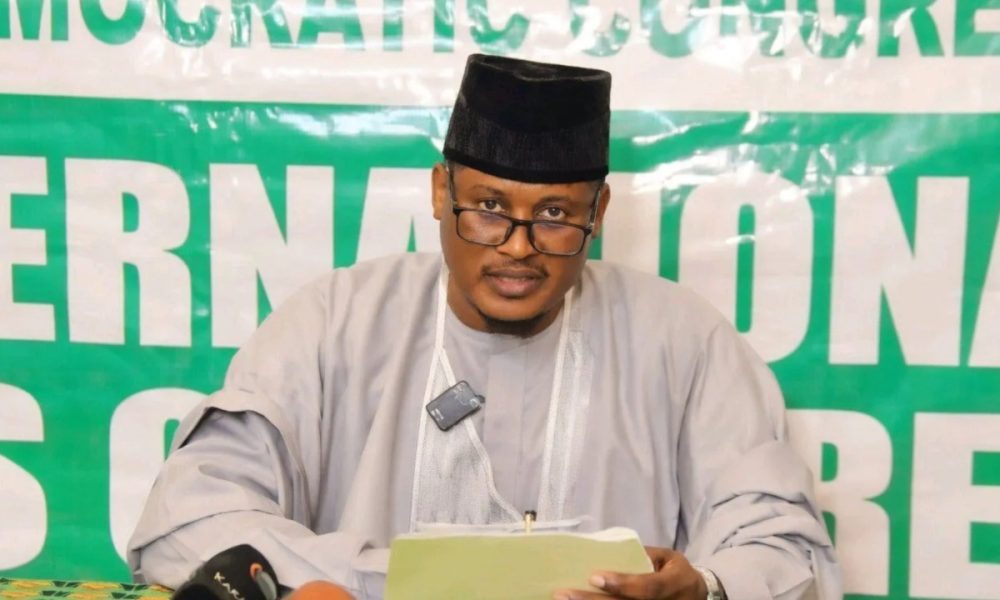
The factional National Chairman of the African Democratic Congress (ADC), Nafiu Bala Gombe, has announced that the party under his leadership will bar individuals above the age of 55 from contesting for political positions.
Gombe made the disclosure during an interview with BBC Hausa, where he outlined a vision centred on generational change and greater youth participation in politics.
“The African Democratic Congress (ADC) is a party that belongs to all Nigerians. What we are doing now is to ensure the party moves forward properly.
“We have decided that we will give the youths a real chance. The time has come for young people to take the lead in politics.
“If you are over 55 years old, you are not going to contest for positions in the ADC under our leadership.
“We want to bring in fresh blood, new ideas, and energy from the youth. Nigeria’s future depends on the young generation.
“The old ways have not worked well for the country. We need to open the door wide for youths to participate fully as candidates, leaders, and decision-makers,” he said.

David Mark Holds Secret Meeting With PRP Leaders as ADC Crisis Deepens

Chaos As Military Officers Exchange Blows During Tinubu’s Visit To Bayelsa (Videos)

HRH Ekwueme of Ochia Kingdom Iynched & kiIIed in Imo.

-
Business1 year ago
US court acquits Air Peace boss, slams Mayfield $4000 fine
-

 Trending1 year ago
NYA demands release of ‘abducted’ Imo chairman, preaches good governance
-

 Politics1 year ago
Mexico’s new president causes concern just weeks before the US elections
-

 Politics1 year ago
Putin invites 20 world leaders
-

 Politics1 year ago
Russia bans imports of agro-products from Kazakhstan after refusal to join BRICS
-
Entertainment1 year ago
Bobrisky falls ill in police custody, rushed to hospital
-
Entertainment1 year ago
Bobrisky transferred from Immigration to FCID, spends night behind bars
-
Education2 years ago
GOVERNOR FUBARA APPOINTS COUNCIL MEMBERS FOR KEN SARO-WIWA POLYTECHNIC BORI