
Politics
German government descends into crisis mode

German government descends into crisis mode
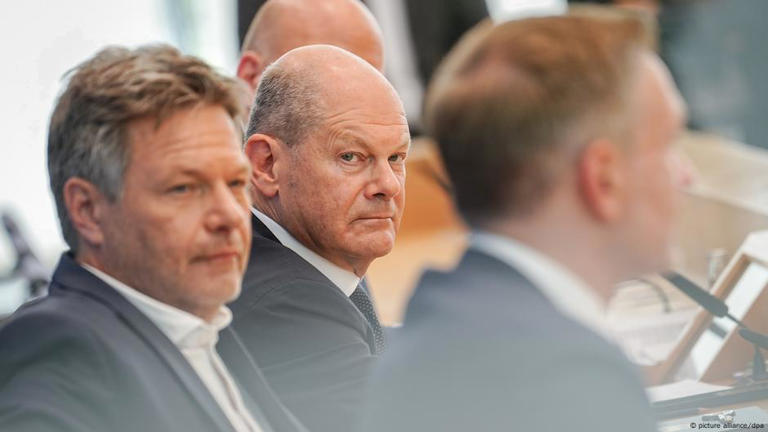
Chancellor Olaf Scholz is trying to hold his coalition government together. But the three partners, SPD, Greens and FDP, seem unable to stop the infighting, although they depend on each other to stay in power.
Give up or rescue what can still be saved? This is the choice faced by the center-left government of Social Democrats (SPD), Greens and neoliberal Free Democrats (FDP) which has been in office for almost three years. The three parties have always been at loggerheads because many of their core policies are substantially different: The SPD and Greens believe in strong state and debt-financed policies. The FDP takes the opposite view.
Initial common ground was quickly exhausted. The give and take that is necessary for a coalition is now becoming increasingly difficult.
The situation has recently escalated around economic and budgetary policy. A ruling by the Federal Constitutional Court around a year agoexposed the rifts between the coalition partners. Back then, Germany’s highest court ruled against the government’s plans to reallocate money earmarked but never spent from a cache of debt taken out to mitigate the fallout of the COVID-19 pandemic. The money was instead earmarked for the government’s climate action budget. The court ruling left the budget €60 billion ($65 bio) short.
Since then, all three coalition partners have been trying to raise their own profile at the expense of the others, publicizing proposals that had not even been discussed with their partners.
Now, Germany is in a recession and tax revenues have fallen, which will tear an additional hole into state coffers.
Last month, Chancellor Olaf Scholz (SPD) held an industry summit with leading entrepreneurs and industrial trade union members but did not invite his Vice-Chancellor, the Green Party’s Economy Minister Robert Habeck or Finance Minister Christian Lindner, who is also chairman of the business-oriented FDP.
Linder then organized his own meeting with other business representatives, Habeck responded by proposing a billion-euro, debt-financed fund to promote investment by companies.
FDP calls for a change of direction
Habeck’s proposal is not reconcilable with the positions of the FDP, which insists on compliance with the debt brake — Germany’s strict rules against a ballooning deficit limiting fresh debt to 1% of GDP per year, a provision enshrined in the constitution.
However, a veto was apparently not enough for Lindner. In an 18-page policy paper, he called for a change of direction in the economy. The paper reads like a policy election campaign program for the FDP, which has been underperforming dramatically in opinion polls and regional elections.
Lindner calls for far-reaching tax relief for companies and top earners. He wants to scrap ambitious climate protection targets and reduce welfare
These positions are unacceptable to the SPD and the Greens and contradict the coalition agreement. This is why Lindner’s partners in government are speaking of a provocation and are wondering whether Lindner’s intention is to be kicked out of the coalition hoping this move would give him enough credit with conservative voters to boost the FDP beyond the five percent threshold for representation in parliament.
The popularity ratings of the coalition government have hit rock bottom. The outlook is grim for the three parties, but for the FDP it is now a matter of survival.
The Chancellor is holding on
However, without the FDP, Chancellor Olaf Scholz (SPD) would no longer have a majority in parliament. This would not automatically mean that there would be new elections. The SPD and Greens could also continue as a minority government and attempt to seek changing majorities in the Bundestag for their plans. The strongest opposition force, the center-right bloc of Christian Democratic Union (CDU) and Christian Social Union (CSU) is currently unable to form a Bundestag majority against the SPD and Greens.
However, Chancellor Scholz wants to avert the coalition break-up at all costs. He has been holding crisis talks in the Chancellery since the weekend. First with the SPD’s party leaders, then with FDP leader Lindner on Sunday evening. On Monday, government spokesperson Steffen Hebestreit announced that several three-way meetings between Scholz, Habeck and Lindner were planned over the next few days.
“A lot is currently happening under high pressure,” emphasized Hebestreit. The aim, he said, is to develop “an overall concept” based on the various proposals on economic policy.
“The government will do its job,” said Scholz when he was asked by journalists on the sidelines of a meeting with NATO Secretary General Mark Rutte in Berlin on Monday whether his government was unstable. “I am the chancellor, it’s about pragmatism and not ideology,” Scholz said stiffly.
The steps ahead
Several closed-door meetings will culminate in a session of coalition representatives on Wednesday (November 6). Then, for the first time in weeks, the leaders of all three parties and their parliamentary groups will be sitting at the same table. They will have to look each other in the eye and clarify what they can still agree on.
There is considerable time pressure, as the 2025 budget is due to be passed in the Bundestag at the end of November. The so-called adjustment meeting of the Budget Committee, in which the package is finalized, is scheduled for November 14. The draft budget still has a shortfall of several billion euros.
In his economic paper, Linder proposed cutting the welfare payments called “citizens’ allowance.” To fill holes in the budget he also suggested using the ten billion euros originally intended as a subsidy for a new Intel chip company which has since been put on hold.
The SPD and the Greens, however, would like to see that money remain in the Climate and Transformation Fund to promote climate projects and the development of new technologies. The construction of the Intel factory has only been postponed, SPD leader Saskia Esken emphasized. “That is why it would not be expedient to let these funds disappear somewhere in the cracks of the budget,” she said.
On Monday, Esken was keen to defuse the tension.“It’s not about a showdown,” she said. “We have absolutely no inclination to let the coalition fail, we need a responsible government,” she said.
The Greens are also warning against a break-up. “VW is going down the drain, there is an election in the US, Spain is suffering from massive flooding and the Russians are breaking through one front after another in Ukraine,” said Green Party leader Omid Nouripour. “This requires a whole new level of seriousness and we are also demanding this from this coalition.”
This article was originally written in German.
While you’re here: Every Tuesday, DW editors round up what is happening in German politics and society. You can sign up here for the weekly email newsletter Berlin Briefing.
Author: Sabine Kinkartz
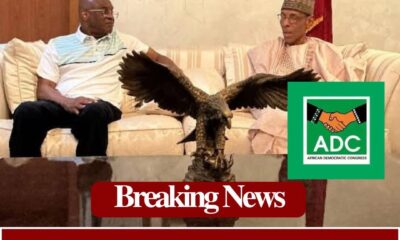



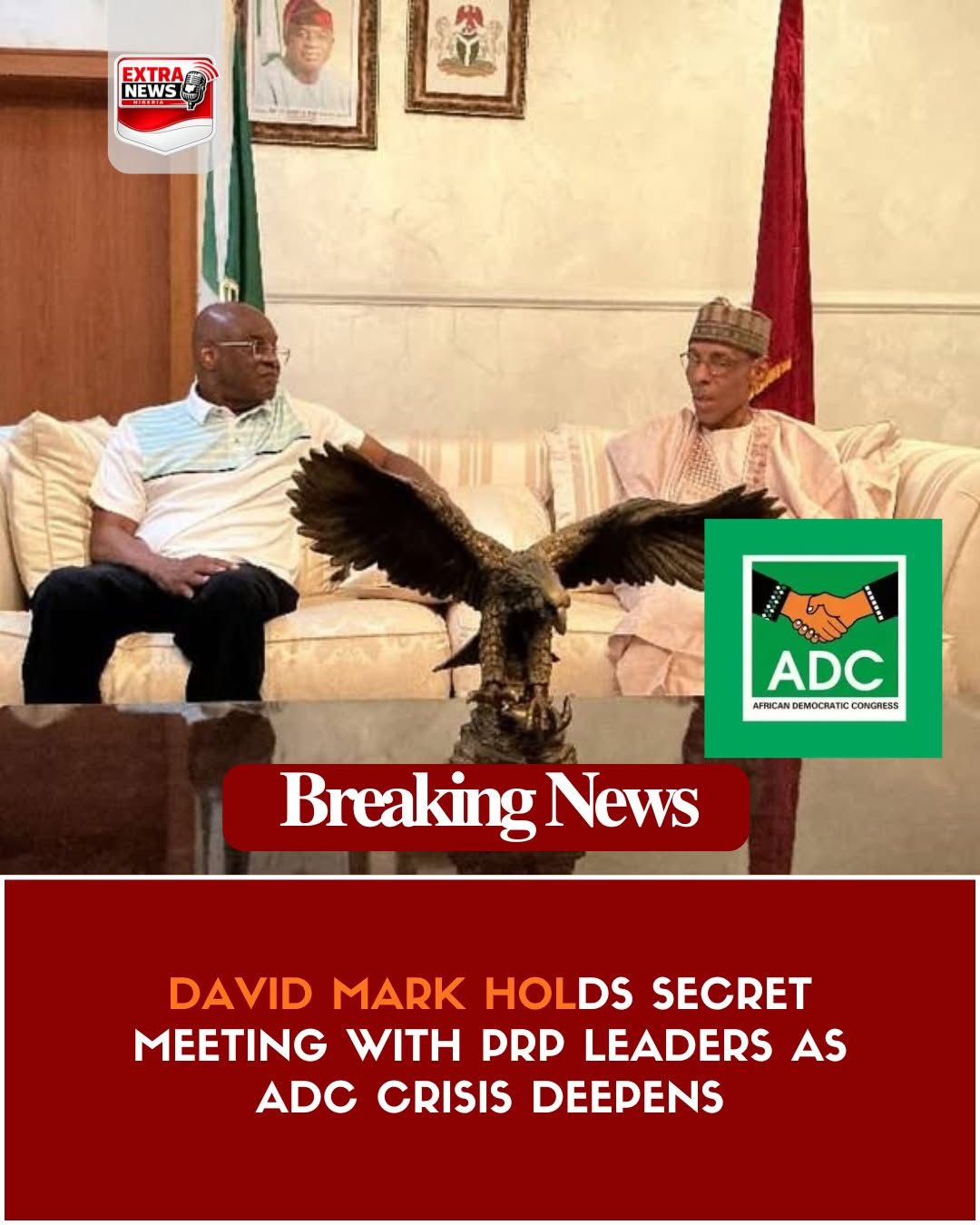
The embattled National Chairman of the African Democratic Congress, David Mark, on Friday held a closed-door meeting with leaders of the Peoples Redemption Party in Abuja. The private consultation is seen as a fresh round of political moves as the ADC continues to battle a lingering leadership crisis and growing internal divisions.
Top figures from both parties were said to be present at the meeting, including PRP National Chairman Hakeem Baba-Ahmed and senior ADC officials. The development is already drawing attention as opposition parties continue realignments ahead of the 2027 political season, with many watching closely for possible alliances and next steps in the party crisis.
Politics
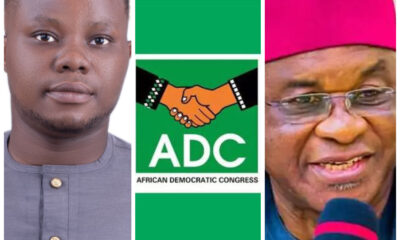
“ADC is a Holy Party, Cannot be used to Scam Nigerians Again” – Hon Success Opara tells David Mark
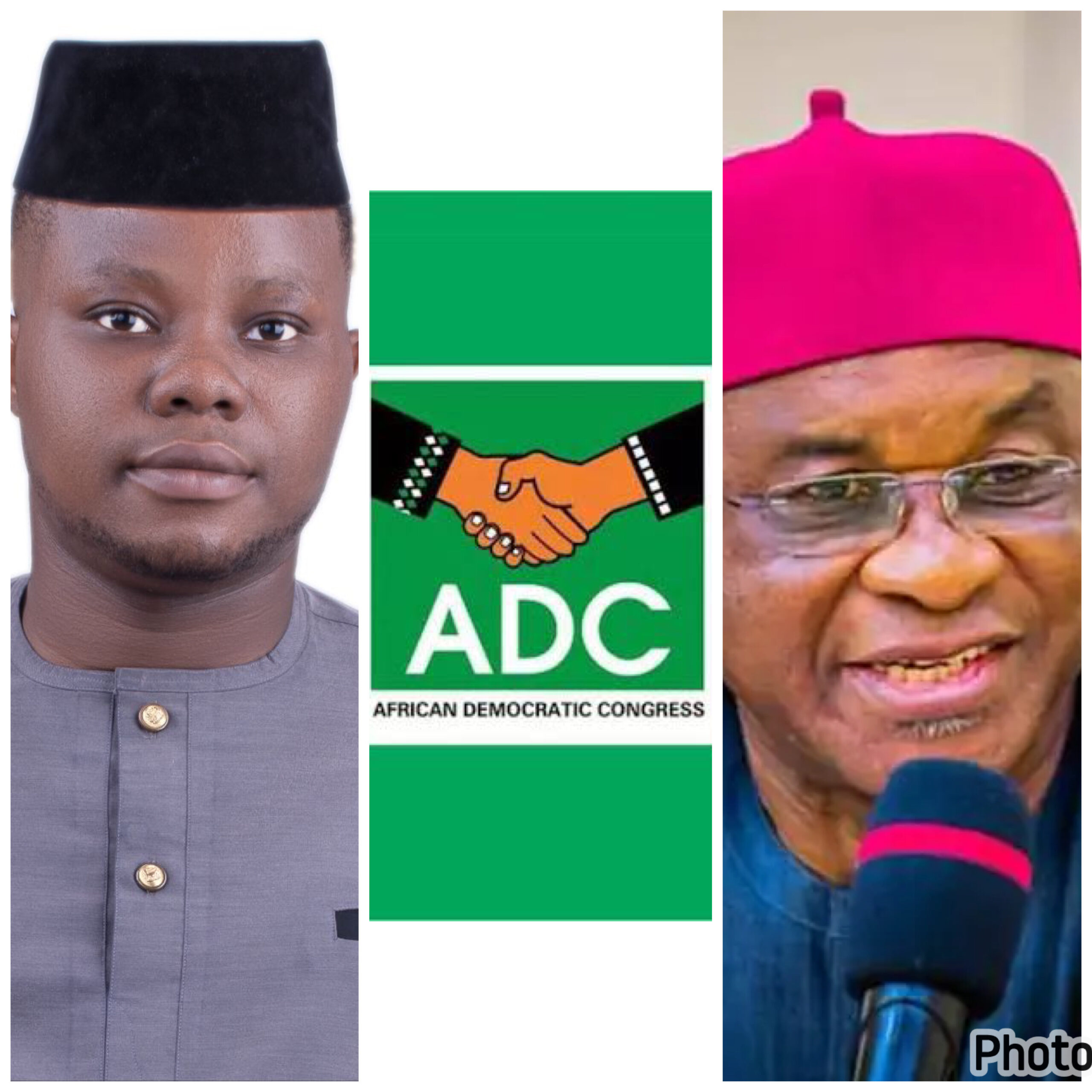
ADC Party in Turmoil: Hon Success Opara Slams Leadership, Warns Against Scamming Nigerians
Abuja, Nigeria – The African Democratic Congress (ADC) is facing internal strife as Hon Success Opara, a prominent party official, has warned against attempts to use the party to deceive Nigerians. Opara specifically criticized the leadership of David Mark, stating that the party cannot be used to scam citizens again.
“ADC holy Party cannot be used to scam Nigerians again,” Opara said, emphasizing that those forming coalitions are hindering the party’s growth and denying youths opportunities to thrive.
“Those who are forming coalition don’t want to give the youths the chance to strive in the party,” she added.
Opara’s statement highlights the deepening divisions within the ADC, with concerns over leadership and the party’s direction.
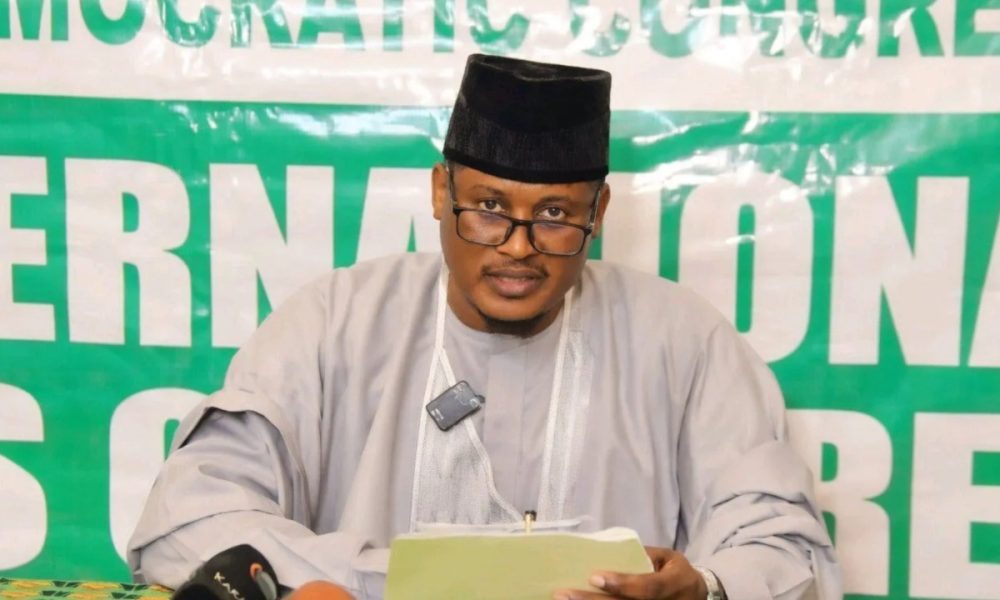
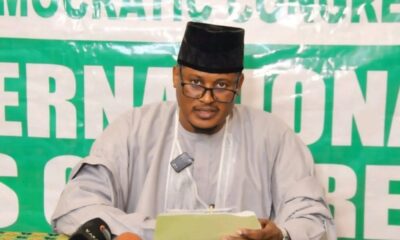
The factional National Chairman of the African Democratic Congress (ADC), Nafiu Bala Gombe, has announced that the party under his leadership will bar individuals above the age of 55 from contesting for political positions.
Gombe made the disclosure during an interview with BBC Hausa, where he outlined a vision centred on generational change and greater youth participation in politics.
“The African Democratic Congress (ADC) is a party that belongs to all Nigerians. What we are doing now is to ensure the party moves forward properly.
“We have decided that we will give the youths a real chance. The time has come for young people to take the lead in politics.
“If you are over 55 years old, you are not going to contest for positions in the ADC under our leadership.
“We want to bring in fresh blood, new ideas, and energy from the youth. Nigeria’s future depends on the young generation.
“The old ways have not worked well for the country. We need to open the door wide for youths to participate fully as candidates, leaders, and decision-makers,” he said.

David Mark Holds Secret Meeting With PRP Leaders as ADC Crisis Deepens

Chaos As Military Officers Exchange Blows During Tinubu’s Visit To Bayelsa (Videos)

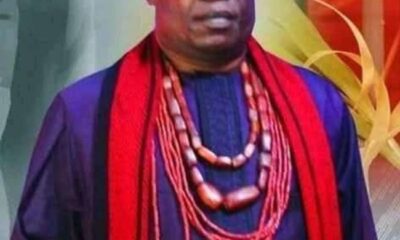
HRH Ekwueme of Ochia Kingdom Iynched & kiIIed in Imo.

-
Business1 year ago
US court acquits Air Peace boss, slams Mayfield $4000 fine
-

 Trending1 year ago
NYA demands release of ‘abducted’ Imo chairman, preaches good governance
-

 Politics1 year ago
Mexico’s new president causes concern just weeks before the US elections
-

 Politics1 year ago
Putin invites 20 world leaders
-

 Politics1 year ago
Russia bans imports of agro-products from Kazakhstan after refusal to join BRICS
-
Entertainment1 year ago
Bobrisky falls ill in police custody, rushed to hospital
-
Entertainment1 year ago
Bobrisky transferred from Immigration to FCID, spends night behind bars
-
Education2 years ago
GOVERNOR FUBARA APPOINTS COUNCIL MEMBERS FOR KEN SARO-WIWA POLYTECHNIC BORI