
Politics
Germany: nearly 90% of voters fear foreign manipulation

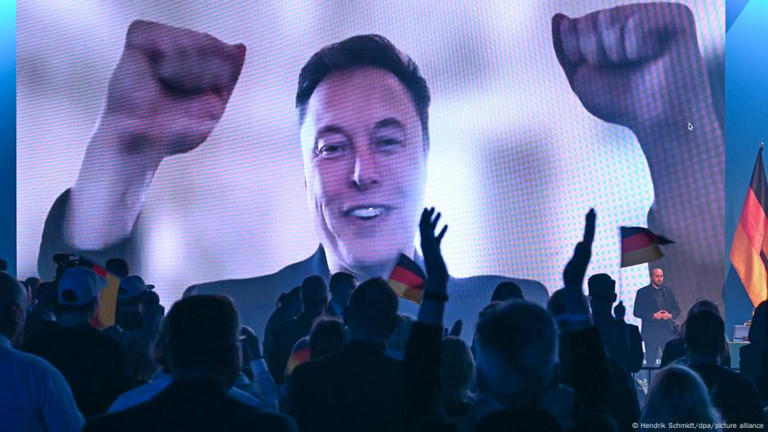
A poll of German voters found that 88% fear manipulation from foreign actors or governments as they prepare to cast ballots on February 23. Russia and the US ranked as the perceived top threats, followed by China.
German voters are overwhelmingly concerned about foreign election interference according to a new poll published by the Brussels-based digital industry association Bitkom.
Overall, the poll found that 88% of those questioned — the survey polled just over 1,000 eligible voters — expressed fear that outside forces, whether governments, groups or individuals, would actively attempt to sway the vote through social media campaigns.
Ranked highest among those suspected of nefarious activity was Russia (45%), followed by the US (42%) and China (26%). There was also concern voiced over East European actors (8%).
Those voters polled also provided insight into how they form their political opinions, with 82% citing conversations with friends and family, 76% television and 69% the internet.
Some 80% of respondents felt the next government should address the problem of potential internet and social media misinformation by prioritizing digital policy.
Bitkom President Ralf Wintergerst picked up on a trend in which 71% of respondents called for a new independent ministry to be created to address the issue, saying, “The new digital ministry must be equipped with all the necessary rights and resources, needs its own budget and a digital proviso for new laws and projects.”
German voters already seeing disinformation
One-third of those voters who say they use the internet as a source of news and information told Bitkom that they had already seen misinformation online.
The biggest concerns expressed by voters overwhelmingly had to do with the threat of so-called deepfakes — or realistic but entirely fakevideos, photos or audio — and targeted disinformation. Some 56% of respondents said German democracy was ill-prepared to counter such threats.
Another 30% of respondents said they had already run into misinformation about the coming election online.
“Voter awareness for disinformation is increasing,” said Bitkom’s Wintergerst. “That is an important first step against Fake News. Disinformation can dramatically influence Germany’s federal elections by generally skewing public opinion and defaming candidates or parties.”
Wintergerst called elections the “heart of or democracy,” but warned that “disinformation undermines trust in the democratic process.” On a positive note, he added that “an informed society is the best protection against digital manipulation.”
German voters suspicious of Russian, US meddling
Among those countries with a reputation for foreign election interference, Russia has earned a top spot. Its well-documented troll farms, its use of bots and its efforts in past US and European elections provide ample evidence thereof.
Russia also has an antagonistic relationship with most European countries, is interested in driving EU disunity and has plenty of axes to grind with all but the most extreme populist parties on the continent — both left and right.
One glaringly obvious source of active US interference is Elon Musk.
The world’s richest man, Donald Trump’s biggest single donor and the owner of the social media platform X, Musk has been brazen in his insults of German leaders and his backing of the far-right and in part extreme Alternative for Germany (AfD)party, calling it the country’s only hope.
In early January, Musk, who has 216 million followers on X, sat down with AfD leader Alice Weidel for a rambling one-hour live discussion on the platform. He has also made a name for himself by pushing far-right extremists in the UK, using his outsized media presence — and lack of accountability — to push for government change.
US social media companies have generally abdicated responsibility for keeping disinformation in check, arguing consumers need to be aware of what they read and shirking any gatekeeping responsibility for the masses of disinformation generated and distributed on their sites.
It remains an open question as to whether the EU, which generally has tougher Code of Practice on Disinformation standards than the US (as seen in the EU’S Digital Services Act, or DSA), is up to the task of holding those sites responsible.
Domestic threats cannot be ignored — social media and the far-right
China was the third entity mentioned in the study and is known for actively engaging in malign cyber activities. Beyond its digital acts, the country has also found its way into Germany’s political system by infiltrating political parties.
Specifically, questions have been raised about Chinese influence within the far-right AfD as well as an unholy Chinese-Russian alliance that has plagued the party.
Beyond party boss Weidel’s long and unclear relationship with China, the Kremlin-friendly AfD was most famously embroiled in a Chinese spy scandal when the party’s top EU candidate, Maximilian Krah, was found to have a Chinese spy working in his office.
“If Russian interference is like a storm hitting Germany, China’s is like global warming,” said Thomas Haldenwang of the problem back in 2022, when he was president of Germany’s Office for the Protection of the Constitution.
Voters polled in the Bitkom survey also voiced broad concern (66%) over AfD’s own aggressive social media campaigns, specifically those targeting young voters. Another 87% of those polled were of the opinion that society itself must do more to confront far-right voices online, 78% said the same of the far-left.
There was also largely consensus on a final related point — with 79% of survey respondents agreeing that the biggest winners on social media were populists.
Edited by: Louis Oelofse
Author: Jon Shelton




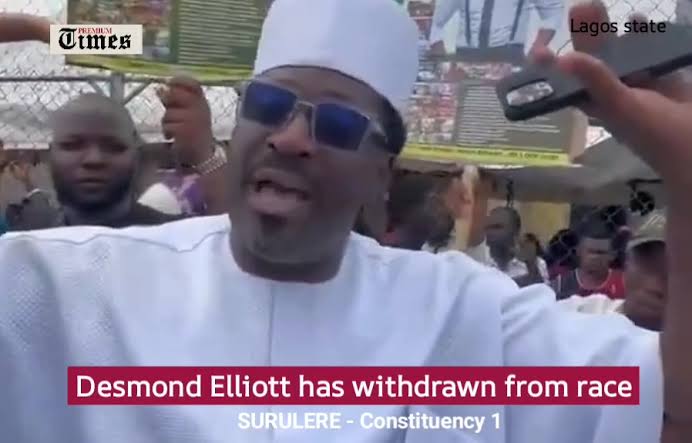
Surulere I lawmaker Desmond Elliot has withdrawn from the All Progressives Congress Lagos House of Assembly primaries, citing intimidation across multiple zones.
In a viral video posted online, the lawmaker said he was stepping out of the race despite seeking re-election under the APC. He alleged that his supporters faced intimidation during the process in several parts of the constituency.
Elliot’s decision came as the primaries held across Lagos on Tuesday. Chief of Staff to the President Femi Gbajabiamila, who represents Surulere Federal Constituency, praised the conduct of the exercise in Surulere, describing it as peaceful.
The withdrawal narrows the contest for the APC ticket in Surulere I ahead of the 2027 general election. Party officials in Lagos have not yet responded to Elliot’s claims, and the APC state chapter has not announced whether the primary in the constituency will proceed with other aspirants.
Elliot has represented Surulere I in the Lagos State House of Assembly since 2015.
https://www.instagram.com/reel/DYkCaAiMxxt/?igsh=ZWw5czl6MHJhNnRy
Politics
Political Shockwave in Rivers as Fubara Pulls Out of APC Governorship Race, Backs Party’s Candidate
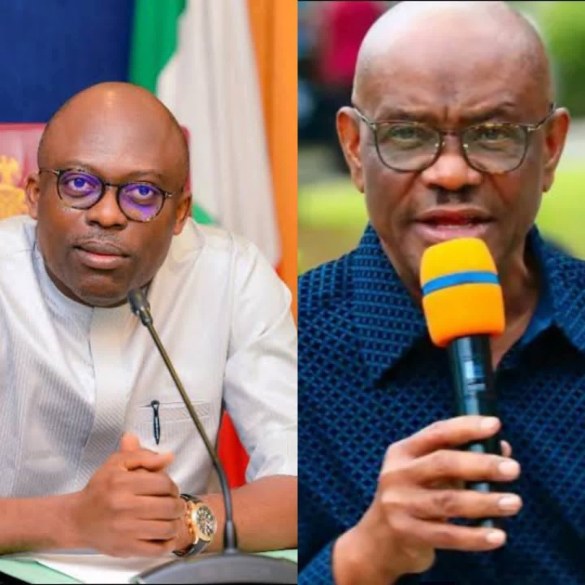
Rivers State Governor, Siminalayi Fubara, has officially withdrawn from the All Progressives Congress (APC) governorship primaries scheduled to take place on Thursday, a development that has stirred fresh political conversations across the state.
The governor announced his decision in a personally signed statement titled “My Decision to Withdraw from the Rivers State Gubernatorial Primaries,” which was released on Wednesday night.
In the statement, Fubara explained that his withdrawal followed wide consultations with political associates, stakeholders, and supporters. He stated that the decision was taken in the overall interest of peace, unity, and stability within the APC and Rivers State at large.
According to the governor, politics should not be allowed to divide the people or create unnecessary tension within the party. He stressed that preserving unity among party members and maintaining stability in the state remain more important than personal political ambition.
Fubara further pledged his total loyalty and support to whoever eventually emerges as the APC governorship candidate, assuring party faithful that he remains committed to the success and progress of the party ahead of the next general elections.
The Rivers governor also appreciated his supporters across the state for standing by him throughout the political process. He thanked party leaders, youth groups, women supporters, and political associates who had continued to show him solidarity and encouragement.
He urged his supporters not to see his withdrawal as the end of his political journey, but rather as a decision made in the collective interest of the party and the state. He also appealed to them to remain peaceful, united, and committed to the ideals of the APC.
Political observers have described the development as one of the biggest political surprises in Rivers State in recent times, especially considering the growing speculations and intense political alignments ahead of the governorship primaries.
Analysts believe the governor’s withdrawal may reshape the political calculations within the APC and influence the direction of the party’s governorship race moving forward.
The announcement has continued to generate mixed reactions from political stakeholders and residents across Rivers State. While some supporters described the move as strategic and mature, others expressed surprise over the governor’s sudden exit from the contest.
Several party faithful, however, commended Fubara for placing party unity and stability above personal ambition, noting that his decision may help reduce internal tensions and strengthen the APC ahead of the elections.
The development has also intensified attention on the remaining aspirants contesting for the APC governorship ticket, as consultations and political meetings continue ahead of the primary election.
Many observers believe the governor’s endorsement of the eventual APC candidate could play a major role in shaping the outcome of the party’s governorship battle and future political structure in the state.
As political activities continue to gather momentum in Rivers State, all eyes are now on the APC primaries and the next phase of political developments expected to unfold in the coming days.
Politics
Ugochukwu Obodo wins Owerri Municipal APC ticket again as APC Elects 27 Imo Assembly Candidates After Successful Primaries
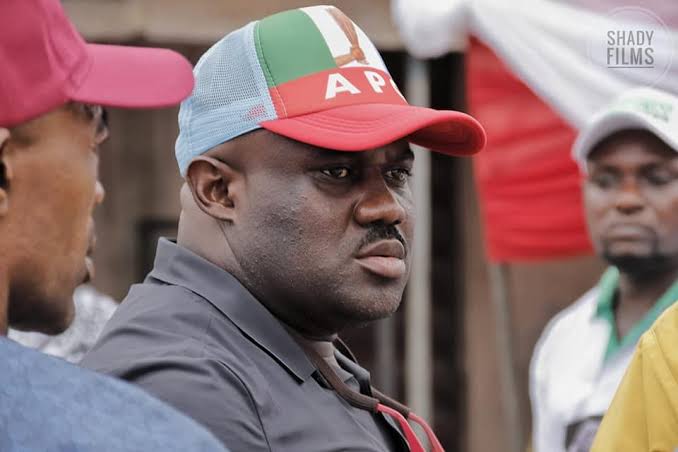
The leadership and members of the All Progressives Congress (APC) in Imo State have successfully elected 27 candidates who emerged victorious during the recently concluded Imo State House of Assembly primary elections conducted across the 305 wards of the State.
In a statement obtained by ThePressman Newspaper, the leadership of Imo APC described the primary election exercise as peaceful, transparent, credible, and reflective of the democratic ideals and internal cohesion of the party.
The information from the party commended party faithful, delegates, stakeholders, and supporters for their maturity, discipline, unity, and sportsmanship throughout the electoral process, noting that the successful conduct of the primaries further demonstrated the organizational strength and readiness of the APC ahead of the 2027 general elections.
According to the statement, the outcome of the primaries reaffirmed the confidence reposed in the party by members across the State, while also positioning the APC for a formidable outing in the forthcoming elections.
The Imo APC leadership warmly congratulated the party’s standard bearers who emerged across the 27 State Constituencies, namely:
Uchenna Osigwe – Orsu LGA
Chantel Adanna Onwumere – Ikeduru
Obodo Ugochukwu – Owerri Municipal
Hon. Ernest Udeze – Ideato North
Godspower Onyeibe – Ideato South
Mrs Julie Egbo – Owerri North
Rt. Hon. Kanayo Onyemaechi – Owerri West
Prince Marcel Amadioha – Ohaji Egbema
Hon. Gilbert Nwosu – Oguta
Hon. Uche Obiozor – Oru East
Hon. Emeka Agbor – Oru West
Rt. Hon. Obinna Egu – Ngor-Okpala
Hon. Magnus Okolie – Orlu
Hon. Innocent Ikpamezie – Mbaitoli
Hon. Modestus Osakwe – Isu
Hon.Ebonine Ozioma Worship – Njaba
Rt Hon Amarachi Chyna Iwuanyanwu – Nwangele
Hon. Chisom Ojukwu – Nkwerre
Hon. Doris Anyanwu – Ahiazu Mbaise
Hon. Princewill Amuchie – Aboh Mbaise
Hon. Henry Agbasonu – Ezinihitte Mbaise
Hon. Sam Osuji – Isiala Mbano
Ben Ozoemenam – Ehime Mbano
Hon. Emeka Okoronkwo – Okigwe
Prince Humphrey Okeke – Obowo
Lady Blessing Nwoba – Ihitte-Uboma
Hon. Chibuzor Umunnakwe – Onuimo
The party further expressed confidence that the emergence of the candidates would strengthen the APC’s chances of securing victory across the State during the 2027 general elections.

Desmond Elliot Withdraws from APC Lagos Assembly Primaries, Cites Intimidation

Political Shockwave in Rivers as Fubara Pulls Out of APC Governorship Race, Backs Party’s Candidate

Ugochukwu Obodo wins Owerri Municipal APC ticket again as APC Elects 27 Imo Assembly Candidates After Successful Primaries

-
Business2 years ago
US court acquits Air Peace boss, slams Mayfield $4000 fine
-

 Trending2 years ago
NYA demands release of ‘abducted’ Imo chairman, preaches good governance
-

 Politics2 years ago
Mexico’s new president causes concern just weeks before the US elections
-

 Politics2 years ago
Putin invites 20 world leaders
-

 Politics2 years ago
Russia bans imports of agro-products from Kazakhstan after refusal to join BRICS
-
Entertainment2 years ago
Bobrisky falls ill in police custody, rushed to hospital
-
Entertainment2 years ago
Bobrisky transferred from Immigration to FCID, spends night behind bars
-
Education2 years ago
GOVERNOR FUBARA APPOINTS COUNCIL MEMBERS FOR KEN SARO-WIWA POLYTECHNIC BORI