
Politics
Greenland leaders say they WILL enter negotiations with Trump

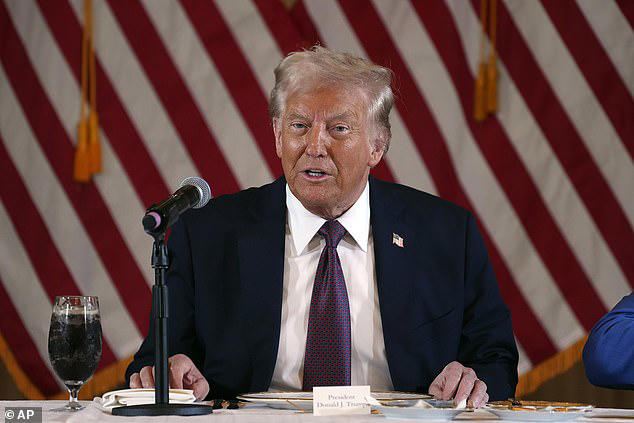
Greenland’s leader, Múte Egede, has expressed his willingness to engage in negotiations with President-elect Trump – although it won’t be over American potentially gaining control of the country.
Instead, the discussions would focus on the future of the mineral-rich Arctic territory, with a clear emphasis that Greenland’s people have no interest in becoming Americans.
Speaking at a press conference in Denmark on Friday, which holds nominal sovereignty over Greenland, Egede acknowledged the strategic importance of Greenland to the U.S. and said he was open to discussing areas of mutual interest.
While he has not yet spoken with Trump, Egede stated, ‘We are ready to talk. Cooperation is built on dialogue and finding solutions together.’
Egede was joined by Denmark’s Prime Minister, Mette Frederiksen, at the press conference.
The event comes amid an Axios report that Denmark officials have also communicated privately with Trump’s team ahead of his inauguration.
The secret communiques reportedly indicate the country’s willingness to explore how U.S. security interests could be addressed without transferring formal sovereignty over Greenland.
Greenland, a former colony of Denmark since the 18th century, became a self-governing Danish territory in 1953.
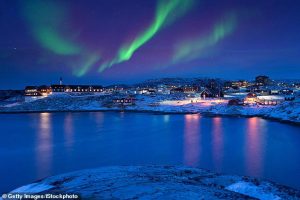
Greenland’s leader, Múte Egede, expressed his willingness to engage in negotiations with President-elect Trump
In August 2019, reports of Trump considering purchasing Greenland sparked swift rejections from political leaders in Greenland and Denmark, some labeling the idea ‘completely ridiculous’ or a ‘joke’
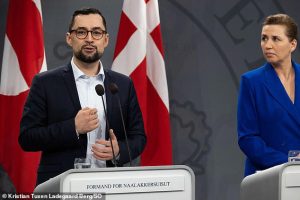
Egede acknowledged Greenland’s strategic importance to the U.S. and expressed a willingness to explore areas of mutual interest
The island gained the right to declare independence through a public vote in 2009 — a move Egede strongly supports.
‘We have a desire for independence, a desire to be the master of our own house … This is something everyone should respect,’ he said. ‘Greenland is for the Greenlandic people. We do not want to be Danish, we do not want to be American. We want to be Greenlandic.’
Greenland’s importance has increased in recent years as melting Arctic ice opens new shipping routes, sparking competition among global powers for influence in the strategically located region between the U.S. and Russia. The territory and its surrounding waters are also abundant in valuable natural resources.
Currently, Denmark retains responsibility for Greenland’s defense.
The president-elect originally floated the idea of acquiring Greenland in his first term in office when discussing the prospect with his senior advisers back in 2019. But he left office without making any movement toward acquiring the territory.
Now, with less than two weeks before he begins a second term, Trump is revisiting the idea – and his son Donald Trump Jr. traveled to Nuuk, Greenland, on Tuesday with other ‘representatives’ of the incoming U.S. president.
At the time, former President Trump shared on Truth Social: ‘Don Jr. and my Reps landing in Greenland. The reception has been great. They, and the Free World, need safety, security, strength, and PEACE! This is a deal that must happen. MAGA. MAKE GREENLAND GREAT AGAIN!’
During the visit, Don Jr. stopped at a local eatery in Nuuk, Greenland, meeting with community members and putting his father on speakerphone to address the residents directly.
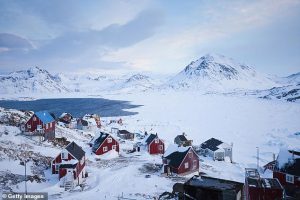
At 836,000 square miles, Greenland is a scarcly populated, arctic autonomous territory of Denmark. When comparing it to the purchase of Alaska from Russia in 1967, it can be estimated that Greenland’s total price would come out to approximately $230.25 million – though it’s not likely the same metrics would be use to determine worth
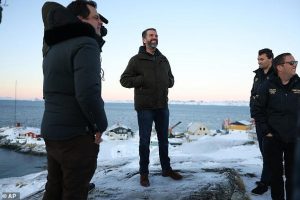
Donald Trump Jr. visited Greenland on Tuesday with three close Trump allies for what was initially being sold as a ‘personal’ trip. It soon became clear that his intentions are to further his father’s intention to buy the arctic territory
On the call, Trump remarked, ‘I just want to say, it’s a very special place. It needs security for itself, but also needs security, very much, for the world,’ Trump said through the phone.
Multiple politicians, including Danish Prime Minister Mette Frederiksen, sent a clear message to Trump: ‘Greenland is not for sale.’
Her remarks prompted Trump to cancel a planned state visit to Denmark on August 20, 2019.
But if it were, how much would it cost the U.S.?
Some have said the best comparison is looking at the U.S. purchase of Alaska from Russia in 1867.
Both Alaska and Greenland have cold, arctic climates, similarly scarce population density, strategic geographic placement and a richness of oil reserves.
The U.S. purchased Alaska, which is 586,412 square miles, for $7.2 million. In today’s dollars, that equates to around $153.5 million.
Greenland is about 150 percent the size of Alaska at 836,000 square miles. So by boosting that price by 50 percent, the total would come to approximately $230.25 million.
In examining past considerations for purchasing Greenland, history offers some intriguing comparisons. In 1946, the U.S. proposed buying the Arctic island for $100 million in gold, a sum that would equate to over $1.6 billion today.
Despite this valuation, both figures fall short of Greenland’s gross domestic product, which stood at $3.24 billion USD in 2021.
For further context, the U.S. bought the U.S. Virgin Islands from Denmark in 1917 for $25 million in gold, equivalent to approximately $616.2 million today.
The Louisiana Purchase from France in 1803 cost $15 million, roughly $418.8 million in today’s terms. These historical transactions highlight the uncertainty around how much a Greenland purchase might cost, should such a deal ever be pursued.
The logistics of such a transaction remain complex. Under the U.S. Constitution, Congress must approve any allocation of funds for land acquisition.
Even with a supportive Congress, whether they would back such a proposal is unclear.
When reports surfaced in August 2019 of then-President Trump considering the purchase of Greenland, political leaders in both Greenland and Denmark swiftly rejected the notion. Some dismissed it as ‘completely ridiculous’ or a ‘joke.’
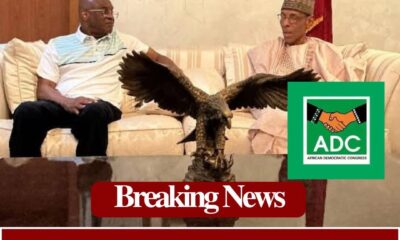



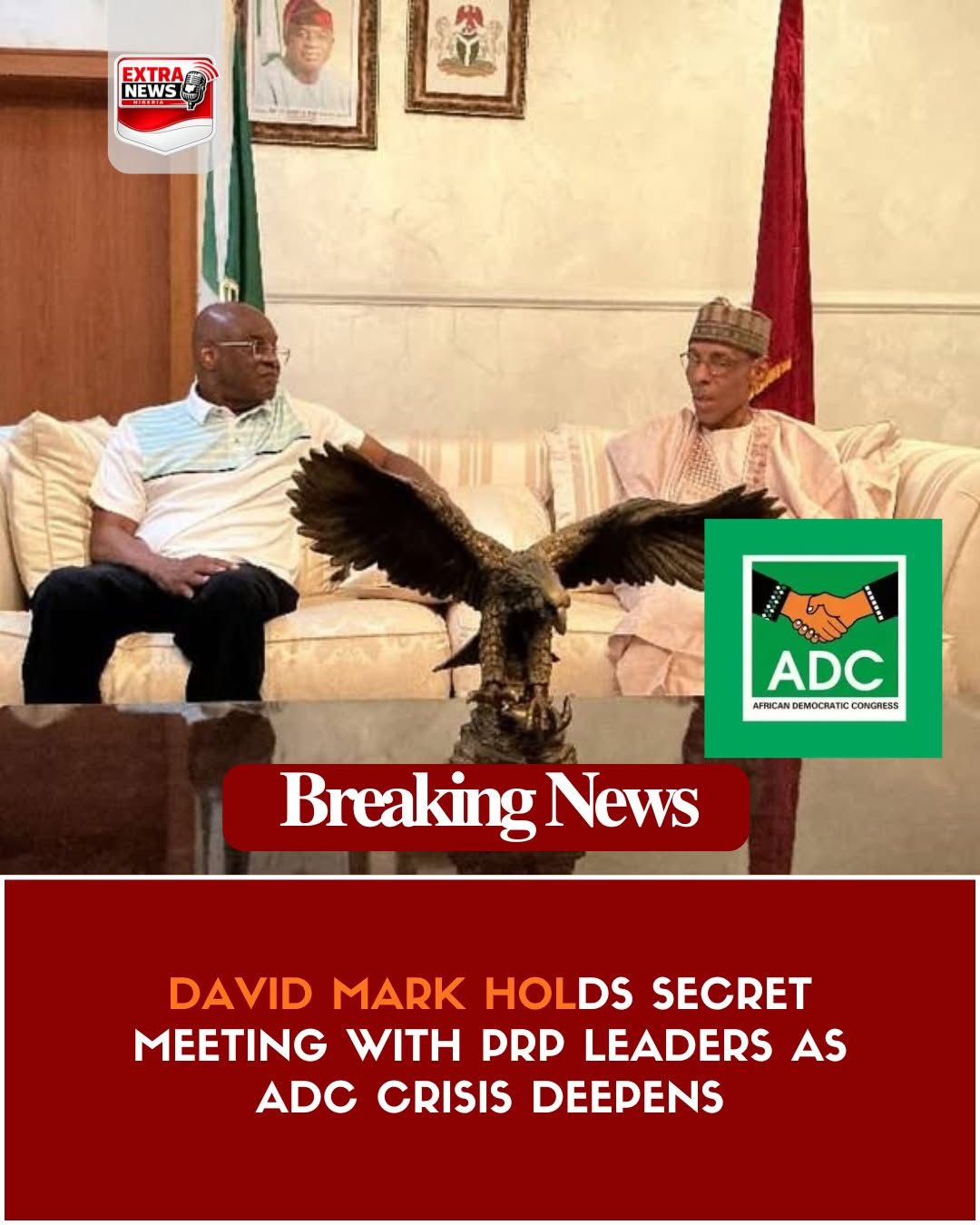
The embattled National Chairman of the African Democratic Congress, David Mark, on Friday held a closed-door meeting with leaders of the Peoples Redemption Party in Abuja. The private consultation is seen as a fresh round of political moves as the ADC continues to battle a lingering leadership crisis and growing internal divisions.
Top figures from both parties were said to be present at the meeting, including PRP National Chairman Hakeem Baba-Ahmed and senior ADC officials. The development is already drawing attention as opposition parties continue realignments ahead of the 2027 political season, with many watching closely for possible alliances and next steps in the party crisis.
Politics
“ADC is a Holy Party, Cannot be used to Scam Nigerians Again” – Hon Success Opara tells David Mark
ADC Party in Turmoil: Hon Success Opara Slams Leadership, Warns Against Scamming Nigerians
Abuja, Nigeria – The African Democratic Congress (ADC) is facing internal strife as Hon Success Opara, a prominent party official, has warned against attempts to use the party to deceive Nigerians. Opara specifically criticized the leadership of David Mark, stating that the party cannot be used to scam citizens again.
“ADC holy Party cannot be used to scam Nigerians again,” Opara said, emphasizing that those forming coalitions are hindering the party’s growth and denying youths opportunities to thrive.
“Those who are forming coalition don’t want to give the youths the chance to strive in the party,” she added.
Opara’s statement highlights the deepening divisions within the ADC, with concerns over leadership and the party’s direction.
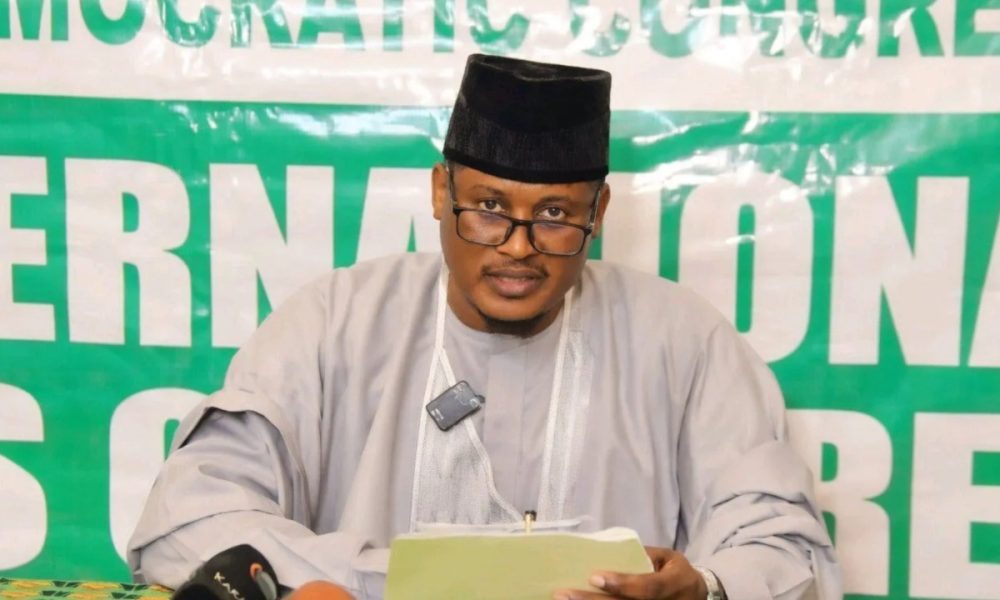
The factional National Chairman of the African Democratic Congress (ADC), Nafiu Bala Gombe, has announced that the party under his leadership will bar individuals above the age of 55 from contesting for political positions.
Gombe made the disclosure during an interview with BBC Hausa, where he outlined a vision centred on generational change and greater youth participation in politics.
“The African Democratic Congress (ADC) is a party that belongs to all Nigerians. What we are doing now is to ensure the party moves forward properly.
“We have decided that we will give the youths a real chance. The time has come for young people to take the lead in politics.
“If you are over 55 years old, you are not going to contest for positions in the ADC under our leadership.
“We want to bring in fresh blood, new ideas, and energy from the youth. Nigeria’s future depends on the young generation.
“The old ways have not worked well for the country. We need to open the door wide for youths to participate fully as candidates, leaders, and decision-makers,” he said.

David Mark Holds Secret Meeting With PRP Leaders as ADC Crisis Deepens

Chaos As Military Officers Exchange Blows During Tinubu’s Visit To Bayelsa (Videos)

HRH Ekwueme of Ochia Kingdom Iynched & kiIIed in Imo.

-
Business1 year ago
US court acquits Air Peace boss, slams Mayfield $4000 fine
-

 Trending1 year ago
NYA demands release of ‘abducted’ Imo chairman, preaches good governance
-

 Politics1 year ago
Mexico’s new president causes concern just weeks before the US elections
-

 Politics1 year ago
Putin invites 20 world leaders
-

 Politics1 year ago
Russia bans imports of agro-products from Kazakhstan after refusal to join BRICS
-
Entertainment1 year ago
Bobrisky falls ill in police custody, rushed to hospital
-
Entertainment1 year ago
Bobrisky transferred from Immigration to FCID, spends night behind bars
-
Education2 years ago
GOVERNOR FUBARA APPOINTS COUNCIL MEMBERS FOR KEN SARO-WIWA POLYTECHNIC BORI