
Politics
Hurricane disinformation rampant in US election campaign

Hundreds of people have lost their lives to hurricanes Helene and Milton in the southern US. On the campaign trail, Donald Trump is spreading hurricane disinformation, but Republicans are criticizing Kamala Harris.
Joe Biden had had enough. This was very clear when the US president gave a short statement to journalists on Thursday afternoon.
“Anyone who seeks to take advantage of our fellow Americans’ desperation, whether you’re a company engaging in price gouging or a citizen trying to scam your neighbors: we’ll go after you and we’ll hold you accountable,” he told reporters in Washington.
Biden was referring to incidents that have taken place in recent days and weeks in the states affected by hurricanes Helene and Milton. For example: People trying to fly out of Florida before Hurricane Milton made landfall in the early hours of Thursday morning reported on social media that they were being quoted exorbitant ticket prices. There were also reports of hugely inflated prices at hotels and private Airbnb accommodation in Florida this week.
Biden, however, didn’t just criticize the profiteers. He also condemned the “reckless, irresponsible disinformation and outright lies that continue to flow” since Hurricane Helene — much of which are being spread by the Republican presidential candidate, Donald Trump.
Trump spreads dangerous hurricane disinformation
In late September, Hurricane Helene devastated several southeastern US states, killing more than 200 people. As the cleanup operation was still ongoing, Trump railed against the Biden administration and Vice President Kamala Harris — who is also his Democratic rival for the presidency on November 5.
“The White House is doing nothing,” Trump declared at a campaign appearance in Wisconsin last Sunday. “They’ve abandoned us in, you know, what’s largely a Republican area” — where Helene has caused extensive damage. His followers reacted with vocal outrage.
But what Trump said is not true. Republican governors of affected states such as Georgia and Florida have stated that they are in contact with Biden, and have received the help they needed from Washington.
Despite this, Trump’s campaign rhetoric about the Biden administration’s supposed indifference has resonated with people more powerfully than the truth. “It has a huge impact on Americans’ trust in government,” said Kathryn Olmsted, a history professor at the University of California, Davis.
“If a presidential candidate, and former president, tells them that they cannot believe what the current government is saying, and that the current government is refusing to help them and is lying to them, then of course [Trump’s] supporters are going to think that what he says is true,” Olmsted, who conducts research into conspiracy theories, told DW by email.
Government battling hurricane rumors online
Trump also criticized FEMA, the US Federal Emergency Management Agency. Claiming that millions of FEMA dollars had gone to irregular migrants, Trump declared that, as a result, there was nothing left for victims of the hurricane. According to the former president, people who had lost everything in the hurricane were getting only $750 (about €685) in government aid.

Hurricane Milton barreled across Florida this week, spawning multiple tornadoes, knocking out power to millions and damaging countless homes and businesses
© Ricardo Arduengo/REUTERS
This, too, is false. FEMA does run a program that helps migrants, but the budget for that is completely separate from the funds for disaster relief. And $750 is just the initial emergency aid payment that those affected are being given to buy essentials like food, clothes and baby supplies. After this, those whose houses have been destroyed will be able to claim several thousand dollars in support. FEMA has detailed this information on a website set up specifically to counter disinformation.
The Biden administration is also actively addressing hurricane disinformation online. The White House has an account on the social media forum Reddit, where it is sharing pictures and information about the government’s response to hurricanes Helene and Milton.
‘Disinformation makes it more difficult to help people’
It’s an unusual approach by the US government. But so close to the US presidential election, there is more than just its own reputation at stake. The disinformation is harming those most urgently in need of help.
“Disinformation makes it much more difficult for government officials to help people,” said Olmsted. “Victims of a disaster might refuse to go to a shelter, or to evacuate, or to accept aid from the government.”
She said the effects of Trump’s words could clearly be seen in the way people responded to Hurricane Milton, which tore across Florida this week, causing millions of dollars in damage and killing at least 16 people.
“I’m sure it affected some Trump supporters,” said Olmsted. “He told them not to believe their government officials, so why would they listen to the evacuation orders?”
Harris’ makes controversial appearance on late night TV
Vice President Harris, the Democratic presidential candidate, also criticized Trump’s behavior in an interview with Stephen Colbert, the TV presenter of “The Late Show,” which is regarded as politically liberal.
“What upsets me so is the idea that any politician would play political games with these folks, with people who are in the midst of such suffering,” Harris said, on an episode broadcast on Tuesday evening. “And then, for the sake of political gain, tell these lies in a way that is meant to make people distrust the help that is there for them to receive.”
However, her appearance on the comedy talk show, during which she sipped a beer with Colbert, has made Harris, too, the object of criticism. The presenters of the conservative talk show “Fox and Friends” on the Trump-friendly network Fox News described it as extremely inappropriate. A presidential candidate should not be going on “lighthearted” programs like the “The Late Show” when people in North Carolina were still struggling with the aftermath of Hurricane Helene, they said.
This article was originally written in German.








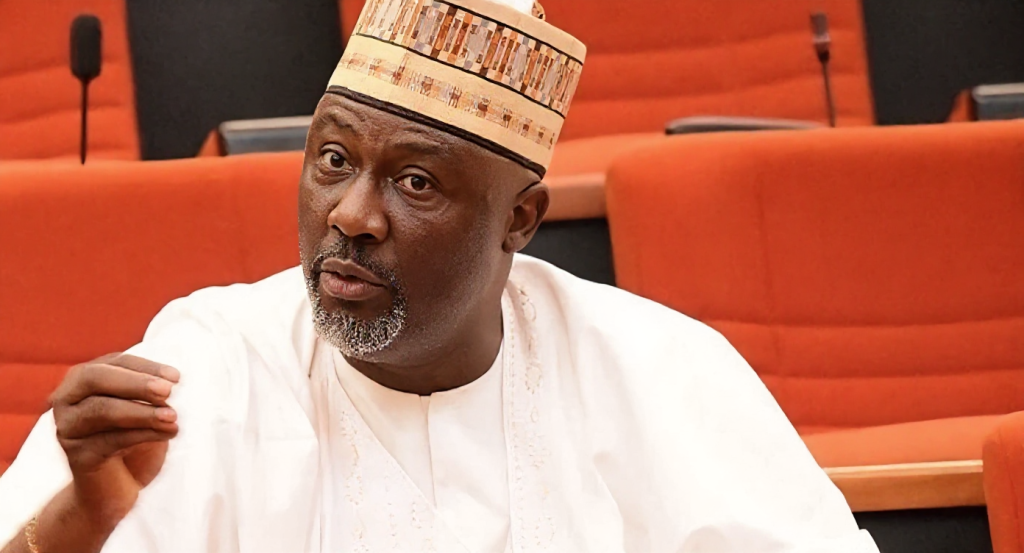
Former lawmaker, Dino Melaye Esq, has raised concerns over the Senate’s reported rejection of the electronic transmission of election results.
The move, according to Melaye, is a clear endorsement of election rigging and an indication of a sinister plan to rig the 2027 elections.
In a statement on Friday, the former lawmaker criticized the Senate’s decision, stating that it undermines the credibility of the electoral process.
The African Democratic Congress, ADC chieftain, also stated that the move opens the door for electoral manipulation and fraud.
He further warned that the rejection of electronic transmission of results is a step backwards for democracy in Nigeria.
Melaye called on lawmakers and citizens to stand up against “this blatant attempt to undermine the will of the people and ensure that future elections are free, fair, and transparent”.
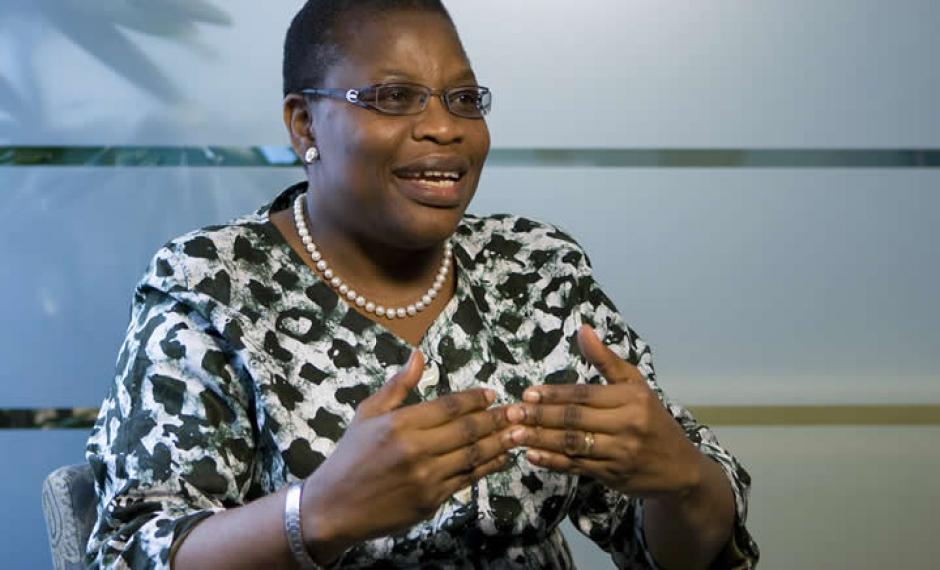
Former Minister of Education, Oby Ezekwesili, has said Nigerians have every reason to be mad at the Senate over the ongoing debate on e-transmission of election results.
Ezekwesili made this known on Friday when she featured in an interview on Arise Television’s ‘Morning Show’ monitored by DAILY POST.
DAILY POST reports that the Senate on Wednesday turned down a proposed change to Clause 60, Subsection 3, of the Electoral Amendment Bill that aimed to compel the electronic transmission of election results.
Reacting to the matter, Ezekwesili said, “The fundamental issue with the review of the Electoral Act is that the Senate retained the INEC 2022 Act, Section 60 Sub 5.
“This section became infamous for the loophole it provided INEC, causing Nigerians to lose trust. Since the law established that it wasn’t mandatory for INEC to transmit electoral results in real-time, there wasn’t much anyone could say.
“Citizens embraced the opportunity to reform the INEC Act, aiming to address ambiguity and discretionary opportunities for INEC. Yet, the Senate handled it with a “let sleeping dogs lie” approach. The citizens have every reason to be as outraged as they currently are.”
Politics
Electoral act: Senate’s action confirms Nigeria ‘fantastically corrupt’, ‘disgraced’ – Peter Obi
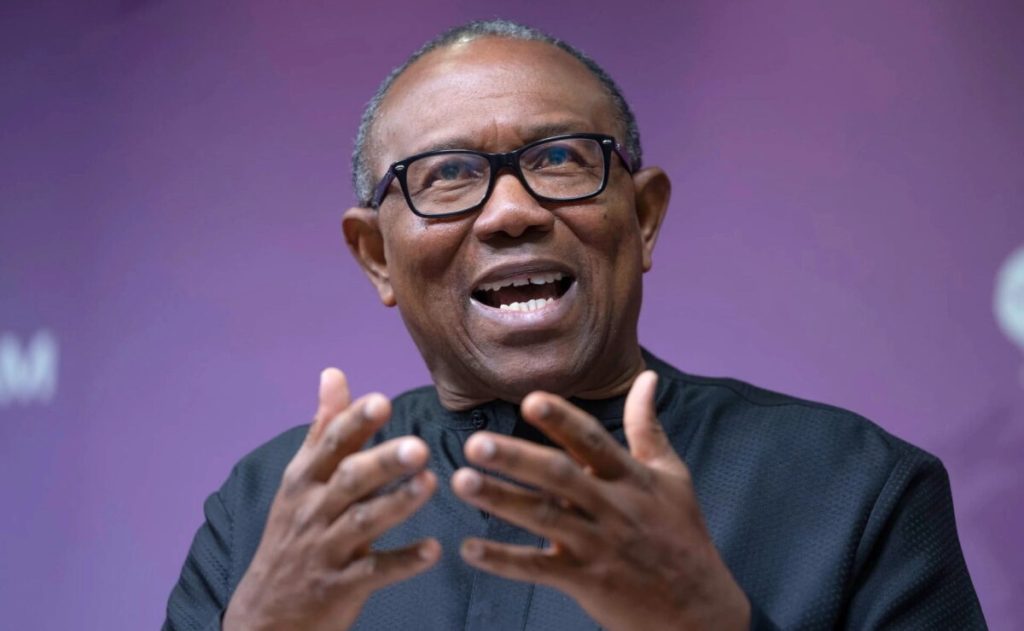
Former Labour Party presidential candidate, Peter Obi, has condemned the Senate’s refusal to make electronic transmission of election results mandatory, saying the move further exposes Nigeria as a fantastically corrupt and disgraced country.
Obi expressed his views in a statement shared on X on Friday, where he accused lawmakers of deliberately weakening Nigeria’s democratic process ahead of the 2027 general elections.
He explained that his reaction came after a brief pause to mourn victims of a deadly tragedy in Kwara State, where over 150 people reportedly lost their lives.
“Let us first pray for the souls of the innocent Nigerians lost in Kwara. That painful incident is why I delayed responding to the shameful development surrounding our electoral system,” he wrote.
Describing the Senate’s decision as intentional and dangerous, Obi said rejecting mandatory electronic transmission was not a simple oversight but a calculated attempt to block transparency.
“The Senate’s open rejection of electronic transmission of results is an unforgivable act of electoral manipulation ahead of 2027,” he said.
According to him, the action strikes at the heart of democracy and raises serious questions about the true purpose of governance in Nigeria.
“This failure to pass a clear safeguard is a direct attack on our democracy. By refusing these transparency measures, the foundation of credible elections is being destroyed. One must ask whether government exists to ensure justice and order or to deliberately create chaos for the benefit of a few.”
The former Anambra State governor linked the post-election controversies of the 2023 general elections to the failure to fully deploy electronic transmission of results, insisting that Nigerians were misled with claims of technical failures.
“
The confusion, disputes and manipulation that followed the 2023 elections were largely due to the refusal to fully implement electronic transmission,” he said.
He added that the so-called system glitch never truly existed.
Obi compared Nigeria’s electoral process with those of other African countries that have embraced technology to improve credibility, lamenting that Nigeria continues to fall behind.
“Many African nations now use electronic transmission to strengthen their democracy. Yet Nigeria, which calls itself the giant of Africa, is moving backwards and dragging the continent along.”
He criticised Nigeria’s leadership class, saying the country’s problems persist not because of a lack of ideas but because of deliberate resistance to meaningful reform.
“We keep organising conferences and writing policy papers about Nigeria’s challenges. But the truth is that the leaders and elite are the real problem. Our refusal to change is pushing the nation backwards into a primitive system of governance.”
Warning of the dangers ahead, Obi said rejecting electronic transmission creates room for confusion and disorder that only serves the interests of a small group.
He also recalled past remarks by foreign leaders who described Nigeria as corrupt, arguing that actions like this continue to justify those statements.
“When a former UK Prime Minister described Nigeria as ‘fantastically corrupt,’ we were offended. When former US President Donald Trump called us a ‘disgraced nation,’ we were angry. But our continued resistance to transparency keeps proving them right.”
Obi warned that Nigerians should not accept a repeat of the electoral irregularities witnessed in 2023.
“Let there be no mistake. The criminality seen in 2023 must not be tolerated in 2027.”
He urged citizens to be ready to defend democracy through lawful and decisive means, while also calling on the international community to closely monitor developments in Nigeria’s electoral process.
“The international community must pay attention to the groundwork being laid for future electoral manipulation, which threatens our democracy and development,” Obi stated.
He concluded by expressing hope that change is still possible if Nigerians take collective responsibility.
“A new Nigeria is possible but only if we all rise and fight for it.”

Police bust syndicate behind nude photo blackmail in Lagos

Man in shock after lady he lodged with in a hotel in Abuja flees with his car and other valuables

US Reacts As De@th Toll In Kwara Terror Attacks Hits 200

-
Business1 year ago
US court acquits Air Peace boss, slams Mayfield $4000 fine
-

 Trending1 year ago
NYA demands release of ‘abducted’ Imo chairman, preaches good governance
-

 Politics1 year ago
Mexico’s new president causes concern just weeks before the US elections
-

 Politics1 year ago
Putin invites 20 world leaders
-

 Politics1 year ago
Russia bans imports of agro-products from Kazakhstan after refusal to join BRICS
-
Entertainment1 year ago
Bobrisky falls ill in police custody, rushed to hospital
-
Entertainment1 year ago
Bobrisky transferred from Immigration to FCID, spends night behind bars
-
Education1 year ago
GOVERNOR FUBARA APPOINTS COUNCIL MEMBERS FOR KEN SARO-WIWA POLYTECHNIC BORI