Columns
“I Was a Spy for the CIA”: A Controversial DRUM Magazine Confession

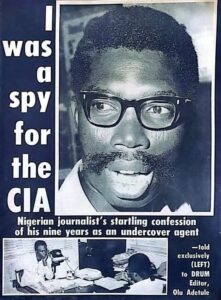
A dramatic magazine cover story about a Nigerian journalist who claimed to have worked undercover for the CIA for nine years.
A historic Drum Magazine cover featured a Nigerian journalist claiming he worked undercover for the CIA for nine years, revealing Cold War intrigue and media sensationalism in African journalism.
This image shows a striking magazine cover from Drum Magazine, carrying the headline “I Was a Spy for the CIA.” The cover promoted a sensational story in which a Nigerian journalist claimed he had secretly worked as an undercover agent for the Central Intelligence Agency for nine years.
According to the feature, the journalist made a “startling confession” revealing his alleged involvement in intelligence operations while working within the media. The story was reportedly narrated to the editor of Drum Magazine, which was known for publishing investigative reports, human-interest stories, and dramatic confessions during the mid-20th century.
Drum Magazine and Investigative Storytelling
Founded in South Africa in 1951, Drum Magazine became one of the most influential magazines in Africa during the 1950s, 1960s, and 1970s.
The magazine was known for publishing:
Investigative journalism
Crime and espionage stories
Celebrity and lifestyle features
Political commentary
Because of its bold editorial style, Drum often ran dramatic headline stories designed to attract readers across Africa.
The Cold War Context
If the confession was genuine, it would place the story within the broader global tensions of the Cold War.
During this period, intelligence agencies such as the Central Intelligence Agency frequently recruited informants and agents around the world. Journalists sometimes became valuable contacts because they:
Had access to information
Travelled frequently
Interacted with politicians and influential figures
Africa was also an important region during the Cold War, as global powers competed for political influence in newly independent nations.
Sensational Journalism and Public Curiosity
Stories like this attracted widespread attention because they blended real-world politics with intrigue and secrecy.
Magazine readers were fascinated by:
Claims of espionage
Secret intelligence networks
Personal confessions from insiders
However, like many dramatic magazine features of that era, some stories were written in a sensational narrative style, which sometimes blurred the line between strict investigative reporting and storytelling.
Historical Significance
Whether taken as investigative journalism or dramatic storytelling, the cover reflects several important aspects of African media history:
The influence of print magazines in shaping public discussion
Public fascination with espionage during the Cold War era
The bold editorial style that made Drum Magazine one of Africa’s most widely read publications
The story remains an interesting example of how African magazines captured the imagination of readers with tales of politics, secrets, and international intrigue.
Sources
Drum Magazine – Historical archives and editorial history
Studies on African journalism and media history in the 20th century
Documentation on the Central Intelligence Agency and Cold War intelligence activities.