
Business
IMF: Nigeria will navigate global shocks due to Tinubu’s reforms

The International Monetary Fund (IMF) says Nigeria will navigate global shocks due to the reforms implemented by President Bola Tinubu.
Axel Schimmelpfennig, IMF mission chief for Nigeria, spoke during a visit to Lagos and Abuja from April 2 to 15, where he led a delegation to hold discussions for the 2025 Article IV Consultations with Nigeria.
The team met with Wale Edun, minister of finance and coordinating minister of the economy; Abubakar Kyari, minister of agriculture and food security; Yemi Cardoso, governor of the Central Bank of Nigeria (CBN); ministry of environment and other stakeholders in the private sector, academia, labour unions, and civil society.
In a statement by the IMF, Schimmelpfennig said authorities had taken “important steps” to stabilise the economy, enhance resilience, and support growth.
The steps, he noted, include ending the CBN’s financing of the fiscal deficit, removing costly petrol subsidy, and improving the functioning of the foreign exchange market.
“The Nigerian authorities have taken important steps to stabilise the economy, enhance resilience, and support growth,” Schimmelpfennig said.
“The financing of the fiscal deficit by the central bank has ceased, costly fuel subsidies were removed, and the functioning of the foreign exchange market has improved. Gains have yet to benefit all Nigerians as poverty and food insecurity remain high.
”The outlook is marked by significant uncertainty. Elevated global risk sentiment and lower oil prices impact the Nigerian economy.
“The reforms since 2023 have put the Nigerian economy in a better position to navigate this external environment. Looking ahead, macroeconomic policies need to further strengthen buffers and resilience, while creating enabling conditions for private sector-led growth.
“The authorities communicated to the mission that they will implement the 2025 budget in a manner that is responsive to the decline in international oil prices.”
‘TIGHT MONETARY POLICY REQUIRED TO CURB INFLATION’
The IMF official also recommended a neutral fiscal stance to support monetary policy in bringing down inflation.
He added that fiscal savings from petrol subsidy reforms should be channelled into the national budget to protect critical investments.
Schimmelpfennig further advised that the CBN maintain a tight monetary policy stance to curb inflation.
“In particular, adjustments should protect critical, growth-enhancing investment, while accelerating and broadening the delivery of cash transfers under the World Bank-supported program to provide relief to those experiencing food insecurity,” he said.
“A tight monetary policy stance is required to firmly guide inflation down.”
Schimmelpfennig said the monetary policy committee’s data-dependent approach has served Nigeria well and will help navigate elevated macroeconomic uncertainty.








The Central Bank of Nigeria (CBN), has declared that banks and financial institutions must establish and maintain a temporary watch-list for Bank Verification Numbers (BVN) implicated in suspected fraudulent transactions.
According to the CBN in a circular dated March 12, 2026 and signed by its Director of Payments System Policy Department, Musa I. Jimoh, the apex bank said such a suspected BVN may remain on the temporary watchlist for a maximum period of twenty-four (24) hours during which the owner would be contacted to make clarifications.
The circular explained that the move is part of several new measures under a revised regulatory framework aimed at enhancing financial system stability.
“A BVN may remain on this temporary Watchlist for a maximum period of twenty-four (24) hours, during this period, the BVN owner shall be contacted to provide clarification regarding the identified transaction(s),” the circular stated.
The circular also sets an age requirement for BVN enrolment, restricting registration to individuals who have attained eighteen (18) years and above.
The CBN also added that amendments to phone numbers linked to a BVN shall be allowed only once.
“Amendments to phone numbers linked to a BVN shall be allowed only once,” the circular noted.
The apex bank stated that access to BVN databases will remain tightly controlled.
“Access to the BVN databases shall be exclusively granted to Central Bank of Nigeria (CBN) licensed financial institutions.
“Notwithstanding this provision, the Central Bank of Nigeria (the Bank) reserves the right to approve access to the BVN databases in extenuating circumstances and in accordance with the provisions of extant laws,” the circular said.
Financial institutions are expected to comply with the new requirements, and customers may be contacted by their banks if their BVNs are temporarily flagged during the new fraud monitoring process.
The new policy, as stated by the CBN, takes effect from May 1, 2026.
NNPC Reduces Fuel Price
The Nigerian National Petroleum Company Limited has reduced the pump price of Premium Motor Spirit, also known as petrol, at its retail stations in Lagos and Abuja.
The adjustment took effect on Wednesday as the national oil company reduced the price to N1,130 per litre in Lagos and N1,165 per litre in Abuja.
The new price means motorists in Lagos are now paying N100 less than the previous pump price of N1,230 per litre.
In Abuja, the new rate represents a reduction of N95 from the former price of N1,260 per litre.
Checks showed that the new price was already in place at several NNPC filling stations in Lagos, including outlets located along Isheri Oshun Road, Apple Junction and Ago Palace Way.
The same adjustment was also recorded in the Federal Capital Territory, where NNPC stations in areas such as Jabi and Wuse began selling petrol at N1,165 per litre.
The reduction comes at a time when many private oil marketers have not yet adjusted their pump prices to match the recent drop in the gantry price announced by the Dangote Petroleum Refinery.
Dangote Refinery had earlier lowered its gantry price for petrol by N100 per litre, bringing it down to N1,075 per litre.
The change followed a fall in international crude oil prices.
Global oil prices had earlier risen sharply due to tensions in the Middle East involving the United States, Iran and Israel.
The crisis raised fears of possible disruption to oil supply, especially around the Strait of Hormuz, an important route for global crude shipments.
Prices later began to fall after the President of the United States, Donald Trump, indicated that the conflict might end soon.
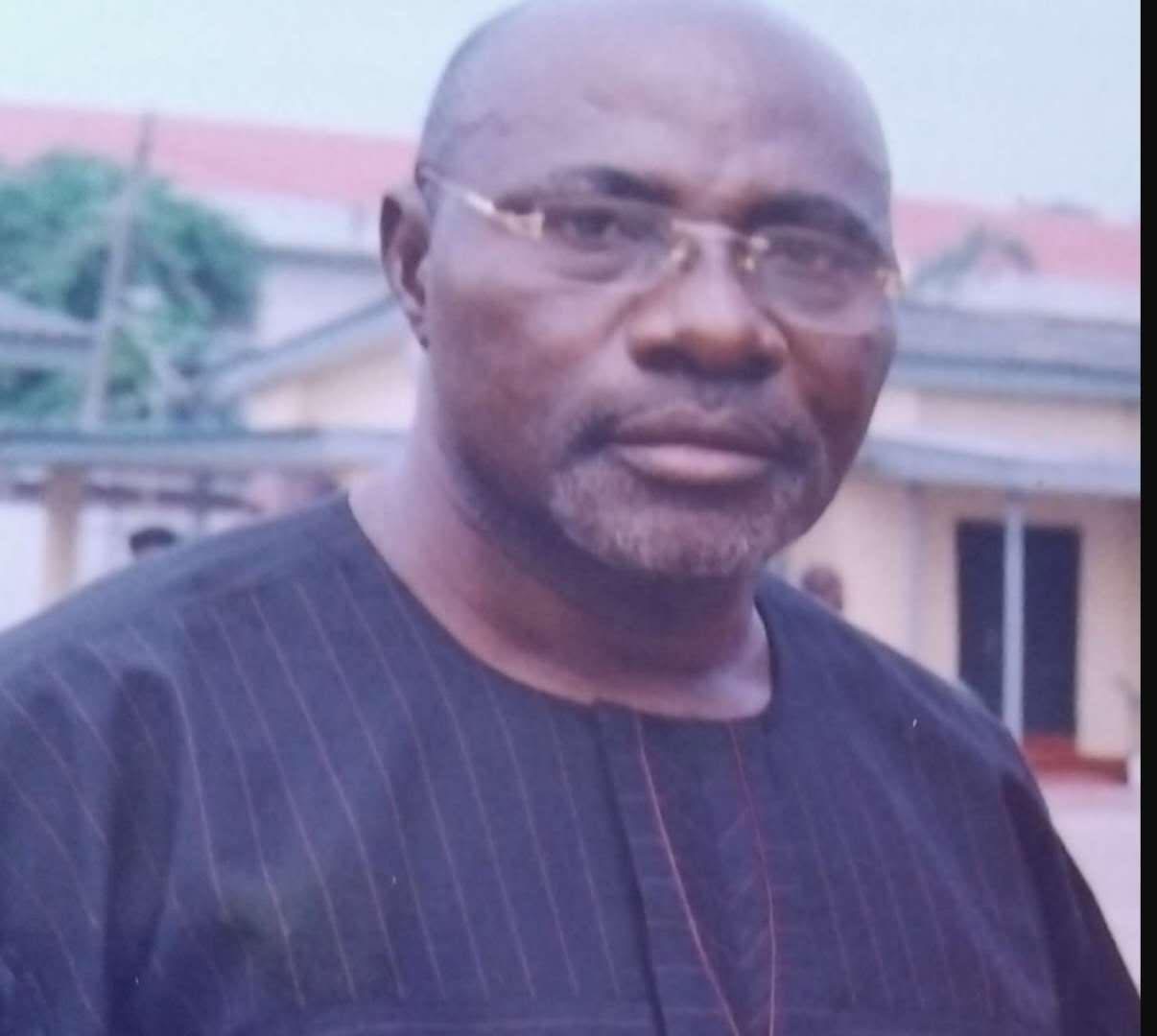
Grief has swept through the business and faith communities following the passing of Sir Innocent Chinedu Onuoha, the respected entrepreneur and Executive Chairman of InnoChris Group. He died peacefully in his sleep on December 11, 2025, at his home in Lagos. He was 71.
Born in 1954 in Umuoma Umuaro II Autonomous Community, Isiala Mbano Local Government Area of Imo State, Onuoha grew to become a symbol of enterprise, generosity, and unwavering faith. A devoted member and evangelist in the Anglican Communion, he lived a life that blended business success with service to God and humanity.
Long before many came to know his vast business interests, the name Innochris had already echoed in popular culture. In the 1990s, legendary Ogene music maestro Oliver De Coque famously chanted “Ugbo ndi oma Innochris eh!” in one of his songs — a line that celebrated the Onuoha brothers and helped make Sir Innocent Onuoha and his brother Christian Onugha widely known during that era.
Onuoha’s entrepreneurial journey began after years of professional experience working as secretary to a former Chief Engineer at Flour Mills of Nigeria. With determination and vision, he went on to establish InnoChris Group, a conglomerate that grew to include InnoChris Transport, InnoChris Computers, and InnoChris Spare Parts, serving customers across Nigeria.
Continues in comments below

Benita Enwonwu in the 1970s: Model, Actress, and Daughter of Ben Enwonwu

Kidnappers Took Loan With My Phone – Victim Recounts Ordeal

11 more arrested over Ozoro “r@ping festival”

-
Business1 year ago
US court acquits Air Peace boss, slams Mayfield $4000 fine
-

 Trending1 year ago
NYA demands release of ‘abducted’ Imo chairman, preaches good governance
-

 Politics1 year ago
Mexico’s new president causes concern just weeks before the US elections
-

 Politics1 year ago
Putin invites 20 world leaders
-

 Politics1 year ago
Russia bans imports of agro-products from Kazakhstan after refusal to join BRICS
-
Entertainment1 year ago
Bobrisky falls ill in police custody, rushed to hospital
-
Entertainment1 year ago
Bobrisky transferred from Immigration to FCID, spends night behind bars
-
Education2 years ago
GOVERNOR FUBARA APPOINTS COUNCIL MEMBERS FOR KEN SARO-WIWA POLYTECHNIC BORI